Visa Book Appointment: How to Secure the Earliest Slot

Booking a visa appointment used to feel like trying to snag concert tickets during a flash sale—blink and every slot is gone. Since the pandemic backlog, some embassies still report waiting lists of several months. Yet with the right tactics, you can often land an interview date weeks — sometimes even months — earlier than the average traveler.
In this guide, you will learn how visa-appointment calendars actually work, why slots appear to vanish in seconds, and eight proven strategies for scoring the earliest possible booking. We will focus on popular programs such as U.S. non-immigrant visas, Schengen short-stay visas, and UK visitor visas, but the principles apply almost everywhere.
1. How Visa Appointment Systems Release Slots
Most consulates rely on one of three release models:
- Rolling release, where new dates open every 24 hours at a fixed local time (common for the U.S. system powered by CGI Federal).
- Batch release, where a block of dates—often an entire month—is pushed live once or twice per week (seen in many Schengen states).
- Demand-adjusted release, where algorithms open ad-hoc slots as officers finish processing backlogs (increasingly used by the UK Visa & Citizenship Application Service, VCAS).
Understanding the model used by your destination tells you when to log in and refresh most aggressively.
| Region | Typical Release Pattern | Peak Booking Hour (local) |
|---|---|---|
| United States (CGI) | Rolling daily | 7:00–8:00 a.m. |
| Schengen (France, Spain, Italy) | Tuesday & Thursday batch | 10:00–11:00 a.m. |
| United Kingdom (VCAS) | Variable, demand-adjusted | 6:00–7:00 p.m. |
| Canada (VFS Global) | Daily micro-drops | 8:00–9:00 a.m. |
Source: public scheduling portals, sampled August–October 2025.
2. Factors That Influence Availability
- Travel seasonality: Expect tighter calendars three to four months before peak summer (June-August) and December holidays.
- Visa category: Student, work, and immigrant visas often have dedicated queues separate from tourist visas.
- Location capacity: A smaller consulate may handle a fraction of the daily appointments processed by a major embassy two hours away.
- Officer staffing & political events: Election cycles or changes in visa policy (for example, ETIAS in Europe) can spike demand overnight.
3. Preparation Checklist Before You Hunt for a Slot
Skimming available dates before you have your paperwork ready is risky—systems sometimes lock an appointment only if you finish payment within 10–15 minutes. Complete these tasks first:
- Valid passport with six-month buffer.
- Digital photo that meets destination requirements.
- Completed online form (e.g., DS-160, UK Visa Application Form, or Schengen form via VFS).
- Payment method that supports 3-D Secure or local bank integration.
- All family member data if booking a group slot.
Need a document refresher? See the internal guide “Checklist: Everything You Need Before Submitting an Online Visa Application.”
4. Eight Strategies to Secure the Earliest Appointment
1. Master the Release Clock
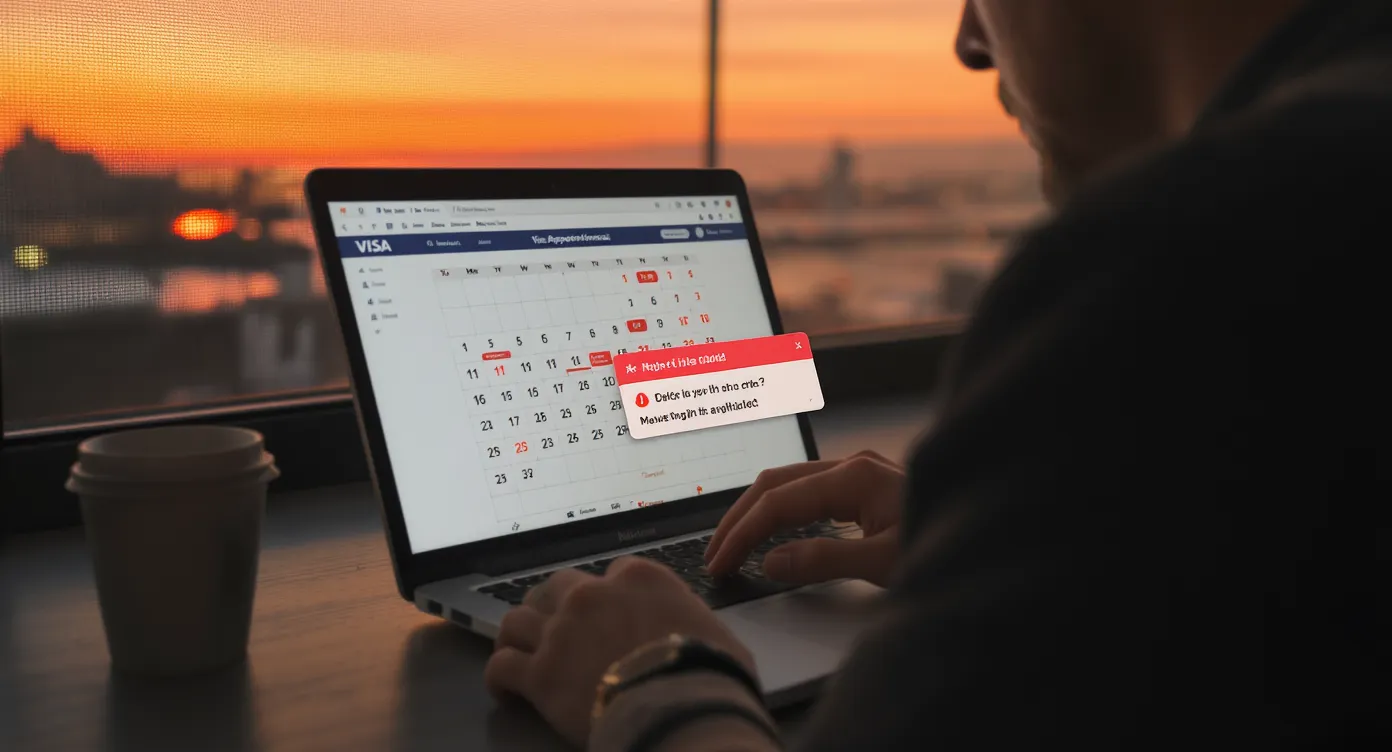
Set two alarms: one ten minutes before the expected drop and a second at the actual release minute. Log in early, park on the calendar view, and refresh only when the clock changes to avoid temporary IP blocks.
2. Exploit Time-Zone Differences
If you live several hours away from the consulate’s time zone, the release may fall in the middle of your night. Consider using a VPN endpoint inside the same country to avoid location-mismatch errors while you book from home.
3. Monitor Cancelled Slots in Real Time
Cancelled appointments are your golden tickets; they pop back onto the calendar randomly throughout the day. Tools such as Consulate Appointment Notifier (U.S.) or VFS CheckLater (Schengen) can push instant alerts to your phone. Many are open-source, but always double-check API rate-limit rules to avoid an account ban.
4. Search Multiple Locations
For the U.S., you can switch between any embassy or consulate within your home country after you pay the MRV fee. Major cities (New Delhi, São Paulo, Istanbul) process more volume, but second-tier posts (Chennai, Porto Alegre, Adana) sometimes have openings weeks earlier.
5. Refresh Responsibly—But Persistently
Embassy portals throttle users who hammer F5 every second. A safe cadence is one refresh every 30 seconds. Use browser extensions that simulate human interaction or, better yet, rely on mobile apps with built-in rate control.
6. Book First, Rearrange Later
Many systems allow one free reschedule. Grab the earliest date you see, then keep hunting for an even earlier cancellation. Just note the cut-off: U.S. applicants can reschedule up to 24 hours before the original appointment; Schengen rules vary by country.
7. Qualify for an Emergency or Priority Slot
Embassies set strict criteria—medical emergencies, funerals, or last-minute business travel impacting substantial economic value. Provide documentation such as hospital letters or conference invitations. The table below lists sample evidence types.
| Destination | Priority Fee | Typical Evidence Required |
|---|---|---|
| United States | None, but proof needed | Medical letter, death certificate, or academic start date |
| United Kingdom | £250 (Super Priority) | Business letter on company letterhead, medical/compassionate docs |
| Schengen (Germany) | €30 add-on | Proof of funeral, urgent medical referral, or invitation from government body |
8. Use a Reputable Service Provider
Professional visa agents and platforms like SimpleVisa aggregate data from multiple embassies, spot cancellations quickly, and, for some destinations, bypass the appointment entirely by routing you to an eVisa or visa-on-arrival process. If your itinerary allows, replacing an in-person visa with a digital alternative can shave weeks off preparation.
5. Common Mistakes That Kill Early Booking Chances
- Creating multiple accounts under different emails. Systems detect duplicates and may suspend every profile tied to your passport number.
- Waiting to pay the fee until you see a desirable slot. Many portals reveal calendars only after payment.
- Leaving the captchas blank while multitasking. A captcha timeout often forces you to log in again, losing the slot to someone faster.
- Using automation bots that violate TOS. Advanced anti-bot tools record mouse dynamics; accounts caught may be blocked for 72 hours.
6. What If No Appointments Are Available?
- Keep checking—capacity is typically released for the following month just after mid-month.
- Contact the consulate by email with a concise case for emergency processing.
- Explore third-country options. Some embassies allow “visa shopping” for residents abroad; always verify policy first.
- Switch to an eVisa path. For example, Indian e-Tourist Visas or Kenya eVisas eliminate the interview entirely.
7. Case Study: From 98 Days to 15 Days—A Real-World Timeline
Ana, a Brazilian engineer, needed a U.S. B-1/B-2 visa appointment before a January trade show. The first available date in São Paulo was March 28—98 days out. By employing three tactics—early-morning monitoring, location switching to Recife, and seizing a cancelled slot—she rescheduled to January 4, just 15 days away. Total extra cost? Zero. Time invested? About four hours across two weeks.
8. When a Traditional Appointment Isn’t Necessary
More than 70 countries now issue fully electronic visas or travel authorizations that require no embassy visit at all. If your destination appears in SimpleVisa’s online checker, you can complete the process in under 15 minutes. For a deeper dive, read “Why 1 Electronic Visa is a Convenient Option for Travelers?”
9. Quick Reference Timeline
- T–120 days: Start gathering documents; create portal account.
- T–90 days: Pay application fee; monitor daily drops.
- T–60 days: If no slot, expand search radius and set up cancellation alerts.
- T–30 days: Apply for emergency or priority service if criteria met.
- T–14 days: Lock in travel arrangements only after the appointment is confirmed.
10. The SimpleVisa Advantage for Travel Companies
If you run an airline, OTA, or tour operator, missed appointments mean cancelled trips. SimpleVisa’s API can surface live appointment wait times next to flight inventory or swap in an eVisa route when available, converting abandoned carts into confirmed bookings and ancillary revenue. Learn more in “Future of Travel APIs: From Flights to Visas in a Single Call.”
Final Thoughts
Securing the earliest visa appointment isn’t luck—it’s part timing science, part persistence, and part smart tooling. By preparing documents in advance, mastering release schedules, and leveraging cancellation monitoring (or a fully digital visa alternative through SimpleVisa), you can replace weeks of anxiety with a confirmed slot that fits your itinerary.
Ready to remove the guesswork? Check whether your next destination supports an instant eVisa at SimpleVisa.com and keep your passport—and calendar—open for the adventures ahead.