Travel in the US: Visa, ID, and Border Tips
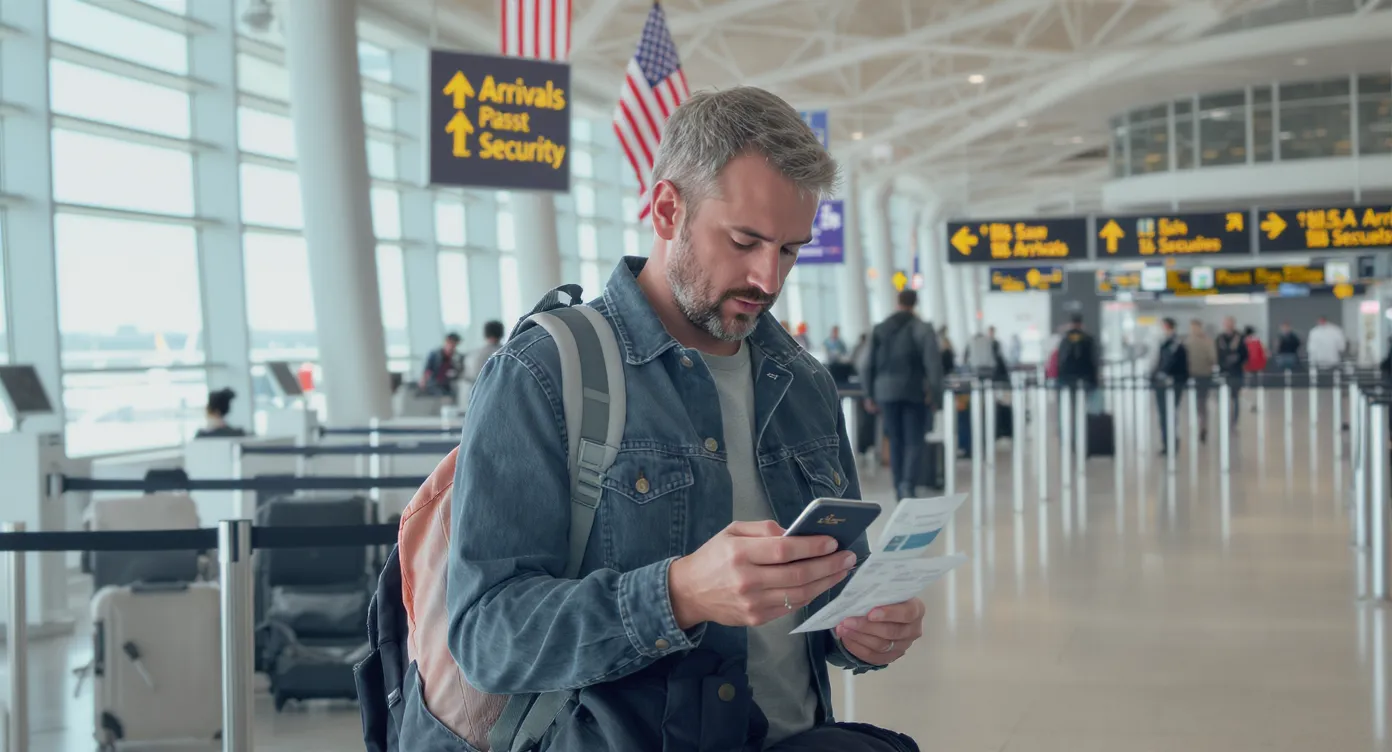
Planning to travel in the US soon? Whether you are flying in for a short city break, a business meeting, or a coast-to-coast road trip, getting your entry documents and ID right will save you time and stress. This guide brings together the essentials on visas and ESTA, passport and ID rules, border inspections, customs, and practical tips once you are inside the country.
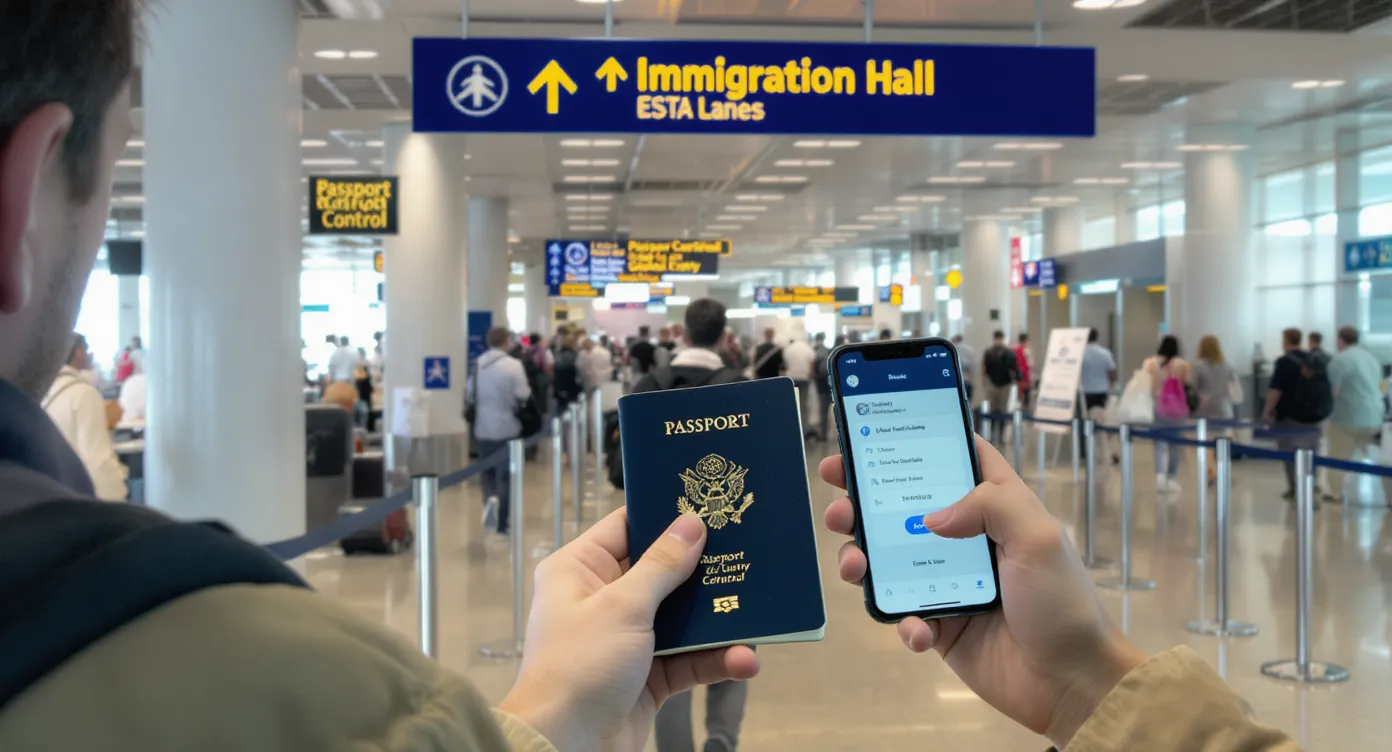
1) Do you need a visa, an ESTA, or neither?
The United States does not offer a general-purpose eVisa for tourists or business visitors. Most short trips fall into two groups:
- Visa Waiver Program travelers, who need an approved ESTA
- Travelers who need a traditional visitor visa, most commonly B1 or B2
Here is a quick way to think about it.
| Scenario | What you usually need | Typical stay limit | Key notes |
|---|---|---|---|
| Citizen of a Visa Waiver Program country | ESTA approval | Up to 90 days per visit | Apply online before travel, required for air, sea, and also land entries. No status change or extensions while in the US. |
| Not eligible for VWP | B1 or B2 visa (or combined B1/B2) | Up to 6 months, at CBP discretion | Apply via DS-160 and interview at a US embassy or consulate. |
| Transit through a US airport | ESTA if VWP eligible, otherwise C-1 transit visa | Short connection | The US does not offer sterile international transit. You must meet US entry requirements even for a layover. |
| Canadian citizen visiting for tourism or business | Generally, no visa and no ESTA | As admitted by CBP | Bring a valid passport and supporting documents for purpose of travel. Special rules apply for work or study. |
| Study, work, exchange, journalism, crew, or other purposes | Appropriate category visa (F-1, J-1, H-1B, I, C-1/D, etc.) | Varies by class | Purpose-specific rules and documents apply. |
Helpful resources:
- Official VWP overview and country list, DHS and State Department
- ESTA application portal, CBP: https://esta.cbp.dhs.gov/
- I-94 admission record lookup: https://i94.cbp.dhs.gov/
Related SimpleVisa guides:
- How long is USA Electronic Visa valid? https://simplevisa.com/how-long-is-usa-e-visa-valid/
- How long does it take to get a US electronic visa? https://simplevisa.com/how-long-does-it-take-to-get-a-us-electronic-visa/
- How can I verify the authenticity of an electronic visa website? https://simplevisa.com/how-can-i-verify-the-authenticity-of-an-electronic-visa-website/
Note on terminology: ESTA is a travel authorization for eligible Visa Waiver travelers, not a visa. Many travelers casually call it an e-visa, but US rules treat it differently from a B1/B2 visa.
2) Passport and ticket rules that catch travelers out
- Passport validity: The US applies a six-month validity rule for some travelers, but many nationalities are covered by the Six-Month Club. If your country is on that list, your passport only needs to be valid through your intended stay. When in doubt, renew or check the State Department’s passport validity guidance.
- Matching details: Your airline ticket must match your passport exactly, spelling and order included.
- Return or onward travel: If you enter under the Visa Waiver Program, you are expected to have a return or onward ticket on a participating carrier. Bring proof of onward travel.
- New passport, new ESTA: If you replace or renew your passport, you need a new ESTA.
- Land borders from Canada or Mexico: Since late 2022, most VWP travelers also need ESTA approval when arriving by land. Plan ahead.
3) Applying for ESTA or a US visitor visa, the short version
ESTA (for eligible VWP travelers)
- Apply online before you travel
- Receive a decision electronically, then travel with the passport you used in the application
- Valid up to two years or until your passport expires, whichever comes first, with multiple entries allowed
- Each visit is limited to 90 days, no extensions or changes of status inside the US
B1/B2 visitor visas (if you are not VWP eligible)
- Complete form DS-160 and pay the MRV fee
- Schedule a biometrics appointment and a consular interview
- Processing times vary by post and season, plan early
- Upon approval, you travel with the visa in your passport, your actual length of stay is set by CBP at entry and recorded on your I-94
Related SimpleVisa reading for smooth applications:
- 10 Tips for a Smooth Electronic Visa Application Process https://simplevisa.com/10-tips-smooth-electronic-visa-application/
- Electronic Visa Scams, How to Protect Yourself https://simplevisa.com/e-visa-scams-how-to-protect-yourself-from-fraud/
4) What to expect at the US border
Primary inspection
- Present your passport, ESTA or visa, and your completed customs declaration if required
- Biometric capture is standard for most non-US travelers, a photo and fingerprints
- Expect a few questions about your trip, where you are staying, and your return plan
Secondary inspection
- Some travelers are referred for additional screening. This can be random or based on your answers or records. Remain calm and answer questions clearly and truthfully.
Your I-94 record
- Your I-94 is your official admission record. It shows your status and the “admit until” date set by the officer. Always check it online after arrival at https://i94.cbp.dhs.gov/ and fix any error promptly.
Customs and agriculture
- Food, plants, seeds, and animal products are tightly controlled. Fresh fruit, meats, and certain snacks can trigger fines if undeclared.
- When in doubt, declare. CBP’s “Know Before You Go” rules are strict, and honest mistakes still lead to penalties.
- Currency and monetary instruments of 10,000 USD or more must be declared on the FinCEN 105. There is no limit on how much you can bring, but declaration is mandatory.
Digital privacy
- CBP has authority to inspect devices at the border. Consider traveling with minimal sensitive data, use strong device locks, and know your cloud access settings.
Time savers
- Global Entry for frequent visitors offers automated kiosks and TSA PreCheck benefits on domestic flights. Many non-US citizens are eligible to apply.
Authoritative sources:
- CBP Trusted Traveler Programs: https://www.cbp.gov/travel/trusted-traveler-programs
- CBP prohibited and restricted items: https://www.cbp.gov/travel/us-citizens/know-before-you-go/prohibited-and-restricted-items
- Currency reporting: https://www.cbp.gov/travel/us-citizens/know-before-you-go/currency
5) Domestic flights inside the US, ID that works
TSA accepts multiple identity documents for US domestic flights. The simplest option for international visitors is to carry your passport.
- Foreign passport: Accepted nationwide for TSA screening
- US passport, US passport card, state-issued driver’s license or ID card, and certain DHS trusted traveler cards are also accepted
- REAL ID: The federal enforcement date and rules can shift. A valid passport will keep you compliant regardless of state rollout. Check TSA’s latest list of acceptable IDs: https://www.tsa.gov/travel/security-screening/identification
- Minors under 18: When traveling with an adult on domestic flights, minors are not required by TSA to show ID. Airlines may ask for proof of age, bring a copy of a passport or birth certificate if you have it.
Pro tip: Even when you travel in the US domestically, keep a digital copy of your passport face page in a secure cloud folder that you can access offline.
6) Managing your stay and onward travel
- Track your 90 days if on ESTA: Time spent in Canada, Mexico, and adjacent islands often counts toward the same 90-day period under VWP. Do not assume a quick hop will “reset” your clock.
- Understand status and overstays: If you stay beyond your I-94 date, you may trigger multi-year reentry bars and future visa issues. Fix I-94 data errors early.
- Keep proof of ties: Return tickets, employer letters, or proof of study can help at the border if questions arise about your intent.
- Domestic travel in the US: Trains and buses often request photo ID for ticketing or boarding. Your passport works universally.
- Road trips and driving: Many states allow short-term driving on a valid foreign license. An International Driving Permit is recommended. Check the specific state DMV before driving.
7) Packing and customs tips that save time
- Food and gifts: Leave fresh produce, cured meats, and homemade items at home. Factory-sealed snacks are safer, but always check CBP rules and declare.
- Medication: Bring prescriptions in original labeled containers, plus a doctor’s letter for controlled substances. Keep medications in your carry-on.
- Electronics: Charge devices before landing. Officers may request that devices be powered on.
- Cash and cards: Notify your bank of travel. Consider carrying a backup card and a small amount of cash for arrival transit.
- Insurance: US healthcare is expensive. Travel medical insurance with emergency cover is strongly advised.
8) Special cases
- Traveling with children: Some airlines and border officers may request consent letters for minors traveling without one or both parents. Bring notarized consent and proof of relationship when applicable.
- Pets: Rules vary by species and origin. Most pets require proof of rabies vaccination, and some arrivals require quarantine planning. Confirm with CDC and your airline well in advance.
- Student and work arrivals: Have your supporting documents ready at the border, for example I-20 for F-1 students or employer petitions for work visas. Your purpose must match your visa class.
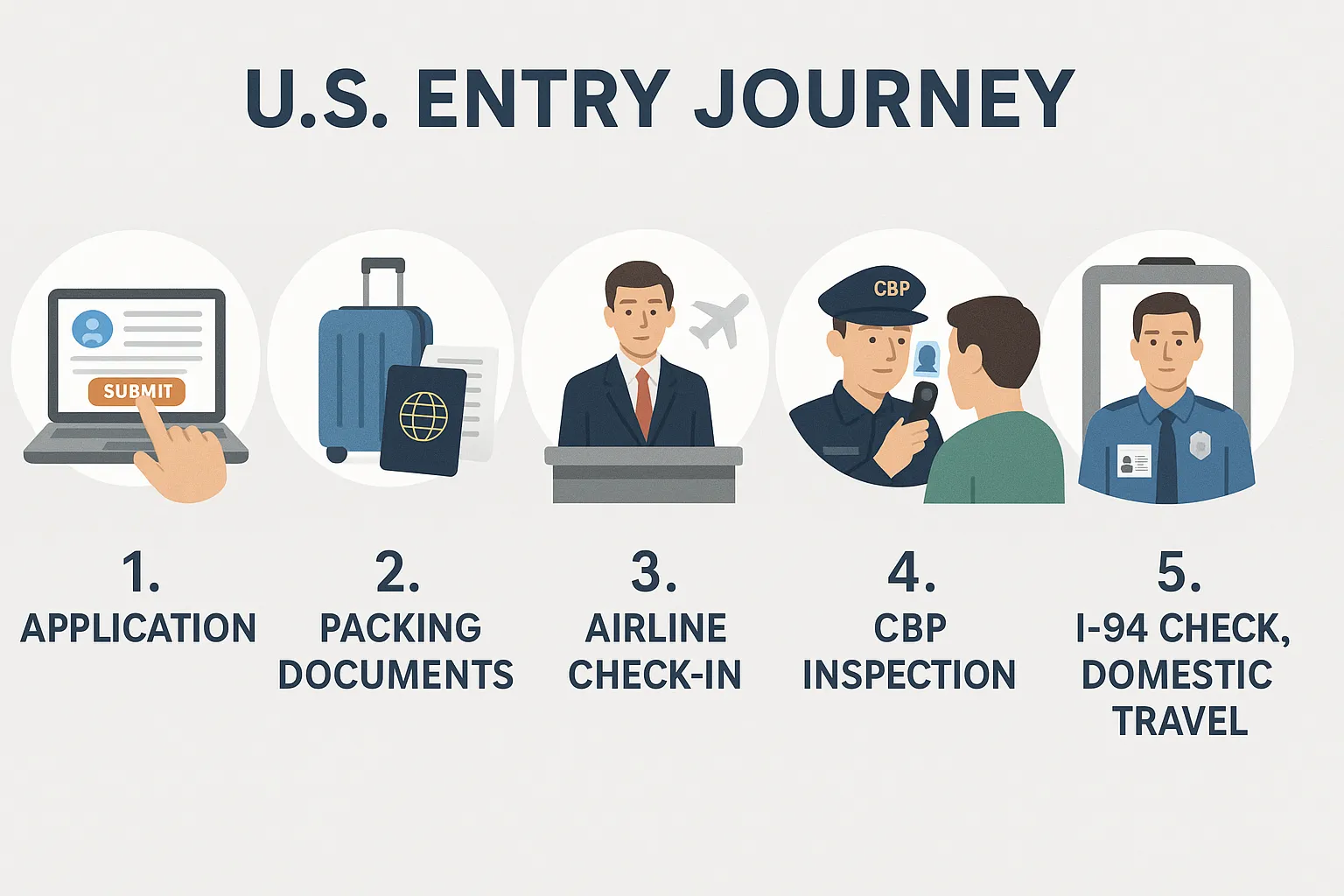
Quick checklist before you fly
- Verify you need ESTA or a visa based on your nationality and purpose
- Apply early, and only through official or trusted portals
- Confirm passport validity and match your ticket name exactly
- Save digital copies of your authorization, passport, and return itinerary in a secure folder
- Review CBP rules on food, cash, and restricted items, declare when in doubt
- After arrival, check your I-94 online and note the admit-until date
Related SimpleVisa guides to keep handy:
- How long is USA Electronic Visa valid? https://simplevisa.com/how-long-is-usa-e-visa-valid/
- How long does it take to get a US electronic visa? https://simplevisa.com/how-long-does-it-take-to-get-a-us-electronic-visa/
- Electronic Visa Scams, How to Protect Yourself https://simplevisa.com/e-visa-scams-how-to-protect-yourself-from-fraud/
FAQs
Do I need an ESTA if I am only transiting through a US airport? Yes, you must meet US entry requirements even for transit. VWP travelers need an approved ESTA. Others typically need a C-1 transit visa.
How far in advance should I apply for ESTA? Apply as soon as you plan your trip. Official guidance recommends at least 72 hours before departure. Airlines may deny boarding without a valid approval.
Can I extend my 90-day ESTA stay once in the US? No. ESTA entries under the Visa Waiver Program cannot be extended or changed to another status. Leave on time to avoid future travel problems.
Does my child need their own ESTA? Yes. Every traveler, including infants, must have an approved ESTA when required.
Is my foreign passport accepted for US domestic flights? Yes. A valid foreign passport is an acceptable TSA ID for domestic flights. Check TSA’s current list for any updates.
How long can I stay with a B1/B2 visa? Admission length is set by CBP and recorded on your I-94, commonly up to six months. Always check your I-94 after arrival.
What happens if my passport changes after I get ESTA? You must apply for a new ESTA linked to the new passport.
What foods are safe to bring? Commercially packaged, shelf-stable snacks are generally safer, but rules vary. Always declare food and review CBP’s prohibited and restricted items before you pack.
Make travel in the US simple
If you want a streamlined way to understand entry rules, gather documents, and avoid application mistakes, SimpleVisa can help. Our platform guides travelers step by step, and travel brands integrate our tools to surface the right border requirements inside booking flows.
- Explore SimpleVisa: https://simplevisa.com
- Compare more how-tos and security tips on our blog, including application timelines, validity rules, and scam prevention.
Rules and processing can change. Always verify requirements with official sources like CBP, TSA, and the US Department of State before you travel.