Travel Border Rules: What Airlines Check Before Boarding

If you have ever been stopped at check‑in and told you cannot board, you know the pain is real. Airlines do not just check your ticket and ID, they act as the first border control on behalf of destination governments. Carriers can be fined and forced to fly you back if you arrive without the right documents, which is why their ground staff follow strict “document compliance” rules on every international flight.
This guide explains exactly what airlines verify before boarding, how those checks work behind the scenes, and how to self‑audit your trip so you do not get denied at the counter.
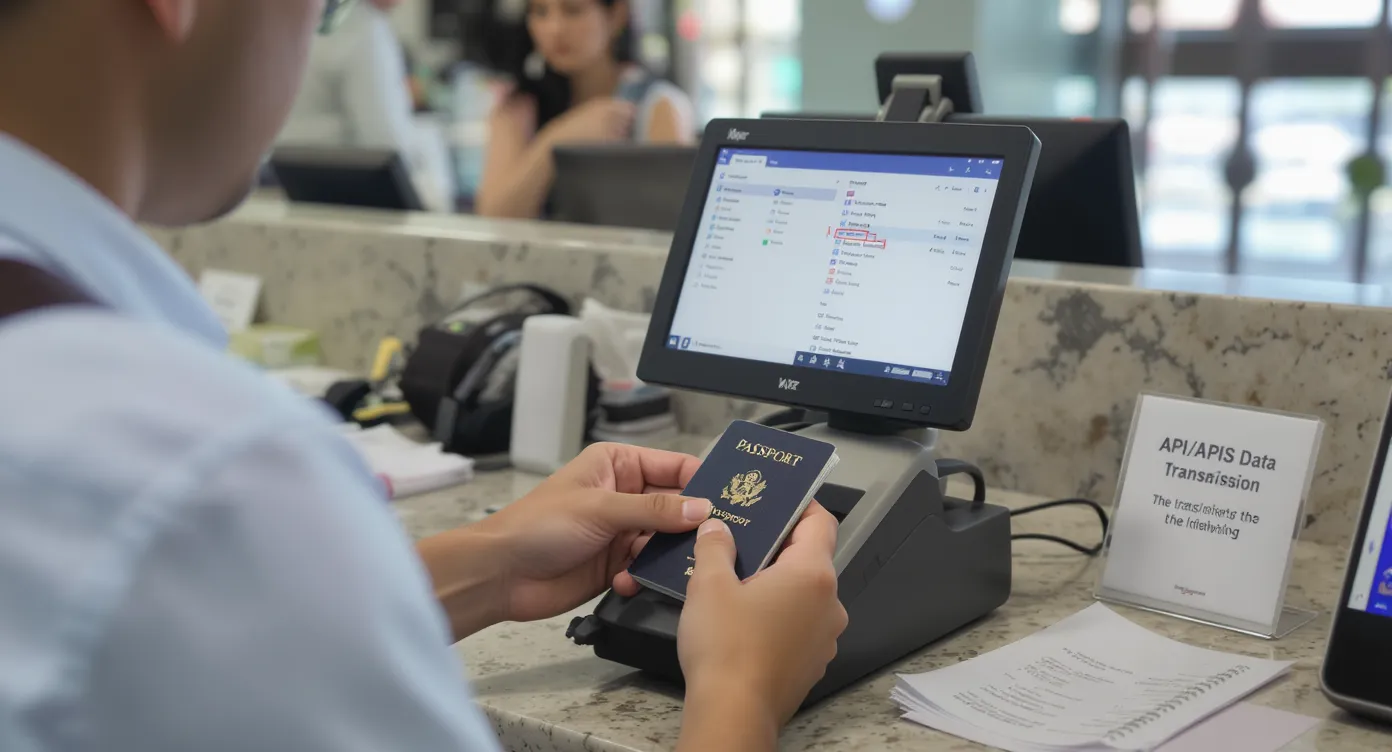
Why airlines check border rules
- Carrier liability and repatriation costs, if you arrive inadmissible, the airline usually pays the fine and your return flight.
- Timatic rules, nearly every airline uses IATA’s Timatic database to confirm passport, visa and health rules for your route and transit points. See IATA’s overview of Timatic for context.
- Government pre‑departure programs, airlines must transmit passenger data for risk checks and watchlist matching, for example U.S. APIS and TSA Secure Flight, UK Advance Passenger Information, and similar programs worldwide.
Useful references:
- IATA Timatic overview: https://www.iata.org/en/programs/passenger/timatic/
- U.S. CBP APIS: https://www.cbp.gov/travel/travel-industry-personnel/apis
- TSA Secure Flight: https://www.tsa.gov/travel/security-screening/secure-flight
- European Commission ETIAS information: https://travel-europe.europa.eu/etias_en
The 10 things airlines check before boarding
1) Passport validity and condition
- Minimum validity, many countries require your passport be valid for the duration of stay or 3 to 6 months beyond entry. Schengen typically requires 3 months beyond your planned departure date plus issuance within the last 10 years for many nationalities.
- Blank pages and damage, some borders want 1 to 2 blank pages. Torn covers, water damage, or peeling laminate can trigger a refusal.
- Machine readable and ePassport, most carriers scan the MRZ, some verify the ePassport chip.
2) Visa, eVisa, eTA or travel authorization
- Airlines confirm you hold the correct permit for your nationality, purpose and route, whether that is a visa in your passport, an eVisa, an eTA like Canada’s, or a pre‑travel authorization like ESTA or ETIAS when implemented.
- The details must match your passport exactly, name, number, nationality, dates.
- Learn the basics and common pitfalls in our quick primer, Electronic Visa Processing 101.
3) Transit visas and airport connections
- Many travelers are denied because they checked destination visas but missed a transit requirement, for example Schengen airport transit visas for specific nationalities, Canada eTA for air transits, Australia transit visas or UK airside transit visas.
- If your itinerary changes to a different airport or you must collect bags and re‑check, your transit may become an entry that requires a full visa.
4) Length of stay and onward or return travel
- If a country allows 30, 60 or 90 days, the airline checks your planned stay falls within that limit based on your return ticket.
- Proof of onward or return travel may be required by border officials. Some carriers will ask to see it at check‑in to avoid fines.
5) Health documents when required
- Yellow fever or polio certificates for certain routes, or special pilgrimage health rules. Airlines rarely act as medical screeners, but they will verify documented requirements that are enforced at the border.
- Check current guidance by destination on the CDC Traveler’s Health pages: https://wwwnc.cdc.gov/travel
6) Secure Flight and watchlist data
- For U.S. flights, the name, date of birth and gender you provide are used for TSA Secure Flight watchlist matching. Your boarding pass will not print until this clears.
7) Advance Passenger Information and PNR
- Airlines transmit your passport and itinerary data to border agencies before departure. Mismatches and missing data can stop you at the counter until they are corrected.
8) Exact name matches across all documents
- Your ticket name must match the machine‑readable name in your passport, including middle names where applicable. If your eVisa or eTA omits a middle name while the passport includes it, you may need to reapply.
9) Documents for children and special cases
- Some routes require consent letters for minors traveling with one parent or guardians, sometimes with certified translations. Adoption or custody paperwork may be requested.
10) Pre‑arrival online declarations
- A growing list of countries requires digital arrival cards or declarations before you fly, for example Singapore’s SG Arrival Card. Airlines may ask for proof that you completed these forms because immigration will expect them on arrival.
Quick reference table, what airlines verify and what you should show
| Airline check | What they look at | What you show | Notes |
|---|---|---|---|
| Passport validity and condition | Expiry date, blank pages, damage | Valid passport, undamaged | Many destinations expect 3 to 6 months validity beyond entry or exit dates |
| Visa or eVisa, eTA, ETIAS | Eligibility and exact data match | Printed or digital approval, linked to passport | Names and numbers must match your passport character for character |
| Transit permissions | Airport and country rules for your connection | Transit visa, eTA or proof of airside transfer | Missed transits are a leading cause of denied boarding |
| Length of stay and onward travel | Return date within limit, proof of exit | Return or onward ticket, sometimes proof of funds | Schengen has a 90 days in any 180 day rule for short stays |
| Health documents | Required vaccinations or declarations | Yellow fever card, e‑arrival forms | Rules change seasonally and by region |
| Watchlist, APIS and PNR | Pre‑departure data clearance | Correct name, DOB, passport details | Data must match your passport exactly |
| Minors and special cases | Anti‑trafficking safeguards | Consent letters, custody documents | Requirements vary by route and nationality |
Route spotlights
These are typical checks airlines perform on common routes. Always confirm the latest rules in Timatic and on official government sites.
-
United States, airlines run APIS and TSA Secure Flight checks. Visa Waiver Program travelers must hold a valid ESTA linked to an ePassport, or a visa for other categories. APIS guidance, https://www.cbp.gov/travel/travel-industry-personnel/apis.
-
Schengen Area, short‑stay visitors must respect the 90 days in any 180 day rule and passport validity rules. ETIAS is being phased in as a pre‑travel authorization for visa‑exempt nationals. ETIAS info, https://travel-europe.europa.eu/etias_en.
-
United Kingdom, visa‑exempt nationals are moving to the UK ETA system, which is checked pre‑departure. See the UK government’s ETA page, https://www.gov.uk/get-electronic-travel-authorisation.
-
Canada, most visa‑exempt air travelers need an eTA that the airline will verify electronically, including for many transits. Official overview, https://www.canada.ca/en/immigration-refugees-citizenship/services/visit-canada/eta.html.
-
Australia, eligible travelers use eVisitor or ETA, while others need a visa. Requirements are checked in the airline system before boarding. Home Affairs overview, https://immi.homeaffairs.gov.au/visas.
For deeper how‑to content on authorizations, see our guides to the ETIAS application process and What documents you need for a UK ETA.
How to self‑audit your trip in 12 minutes
- Map your full route, including every connection, change of airport and overnight layover.
- Check rules by passport, residency, destination and each transit point in an authoritative source like Timatic, and cross‑check against the destination’s official immigration website.
- Verify passport dates and pages, renew if you are close to the threshold. Do not travel with a damaged booklet.
- Confirm the exact authorization you need, eVisa, eTA, visa or upcoming ETIAS. Apply early enough to clear manual reviews. If you need help, start with our Electronic Visa Processing 101.
- Align dates, your authorization validity, length‑of‑stay limit and return ticket must all fit together.
- Prepare transit proofs, if a transit visa is needed, apply in advance. If an eTA covers transit, ensure it is approved and linked to your current passport.
- Complete any pre‑arrival forms. Take a screenshot or PDF receipt on your phone and in the cloud.
- Pack supporting documents, hotel confirmations, onward tickets, consent letters for minors and any vaccine certificates that are required for your route.
- Name accuracy check, your booking, passport and authorizations must match character for character. If not, fix the booking or reapply before you head to the airport.
- Save offline copies, store PDFs and images of your passport, approvals and tickets on your phone and in secure cloud storage. Our visa application checklist can help you organize files and formats.
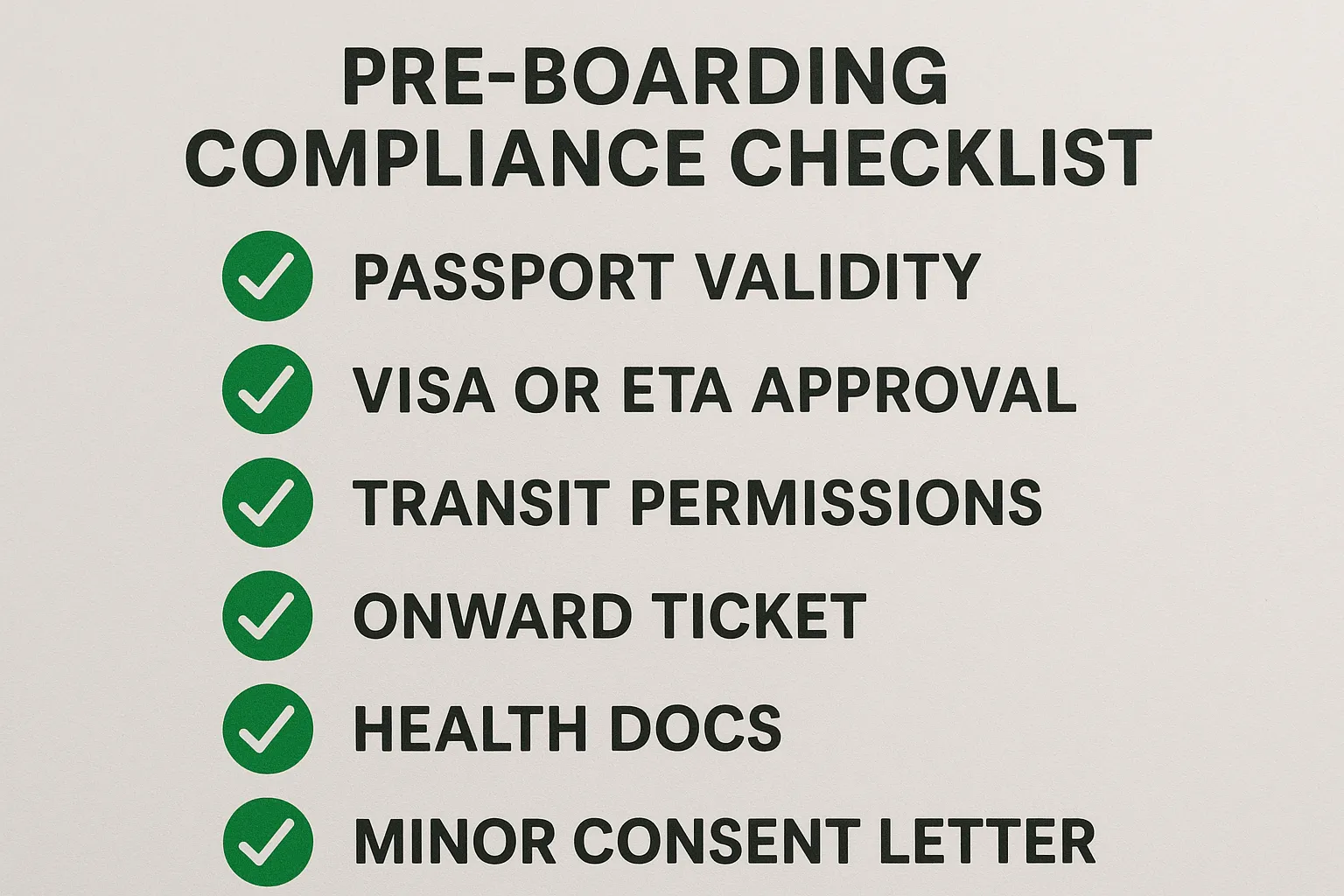
What to do if an airline says you cannot board
- Ask for the exact rule, request the Timatic rule text or the specific regulation they are applying.
- Check alternatives quickly, could a same‑day eVisa or eTA solve it, or could you rebook through a country that does not require a transit visa for your nationality.
- Fix name or data mismatches, small errors on an eVisa can often be corrected only by reapplying. Some eTAs approve in minutes, others take hours.
- Show proof of onward travel, if that is the blocker, buy a flexible or refundable onward segment that fits your stay limit.
- Escalate politely, ask for the station supervisor if you believe the rule is being misapplied. Stay calm and show your documentation clearly.
Pro tips that prevent denied boarding
- Apply early for anything that might require manual review, security hits, clarity on employment status, unusual travel history, or photo retakes.
- Keep everything digital and printable, even when authorizations are linked to your passport, many front‑line agents appreciate a clear PDF on your phone.
- Mind middle names and suffixes, inconsistent middle names cause many auto‑match failures.
- Double check transit rules after schedule changes, airline‑initiated reroutes can introduce a new visa or transit requirement overnight.
- For families, travel with birth certificates and notarized consent letters when traveling without both parents. Requirements vary by destination and route.
How SimpleVisa helps
Travelers
- Check requirements and complete applications with guided flows that reduce mistakes. Start with the essentials in our Electronic Visa Processing 101 or follow the how‑to for applying in 3 steps.
- Avoid surprises on European trips by reviewing our ETIAS application process guide and the common ETIAS mistakes to avoid.
Travel brands, airlines, OTAs and cruise lines
- Surface real‑time visa and transit rules in your booking flow, then let customers apply without leaving your site using our API, white‑label app or no‑code widgets. See how eVisa APIs work or compare API vs. white‑label integration models.
- Reduce denied boardings and unlock ancillary revenue by guiding passengers to the right authorization at the right time.
Final take
Airlines are required to enforce border rules before you fly, which means check‑in agents will verify much more than your identity. If you confirm passport validity, the correct visa or travel authorization, transit permissions, onward travel and any health or minor‑travel documents before departure, you remove the biggest sources of last‑minute stress. Rules can change without much notice, so always confirm with authoritative sources and your carrier. When in doubt, use a trusted service to check requirements and file applications early, so you spend your time flying rather than negotiating at the counter.