Visa Conditions Explained: Stays, Work Limits, Extensions
Visa conditions are the fine print that decide how long you can stay, what you are allowed to do, and whether you can extend or switch status. Misreading them can lead to fines, refused boarding, deportation or future visa denials. This guide explains the three pillars most travelers and travel managers ask about, stays, work limits, and extensions, and shows how to stay compliant in 2025’s increasingly digital border environment.
Stays: validity, length of stay and entries explained
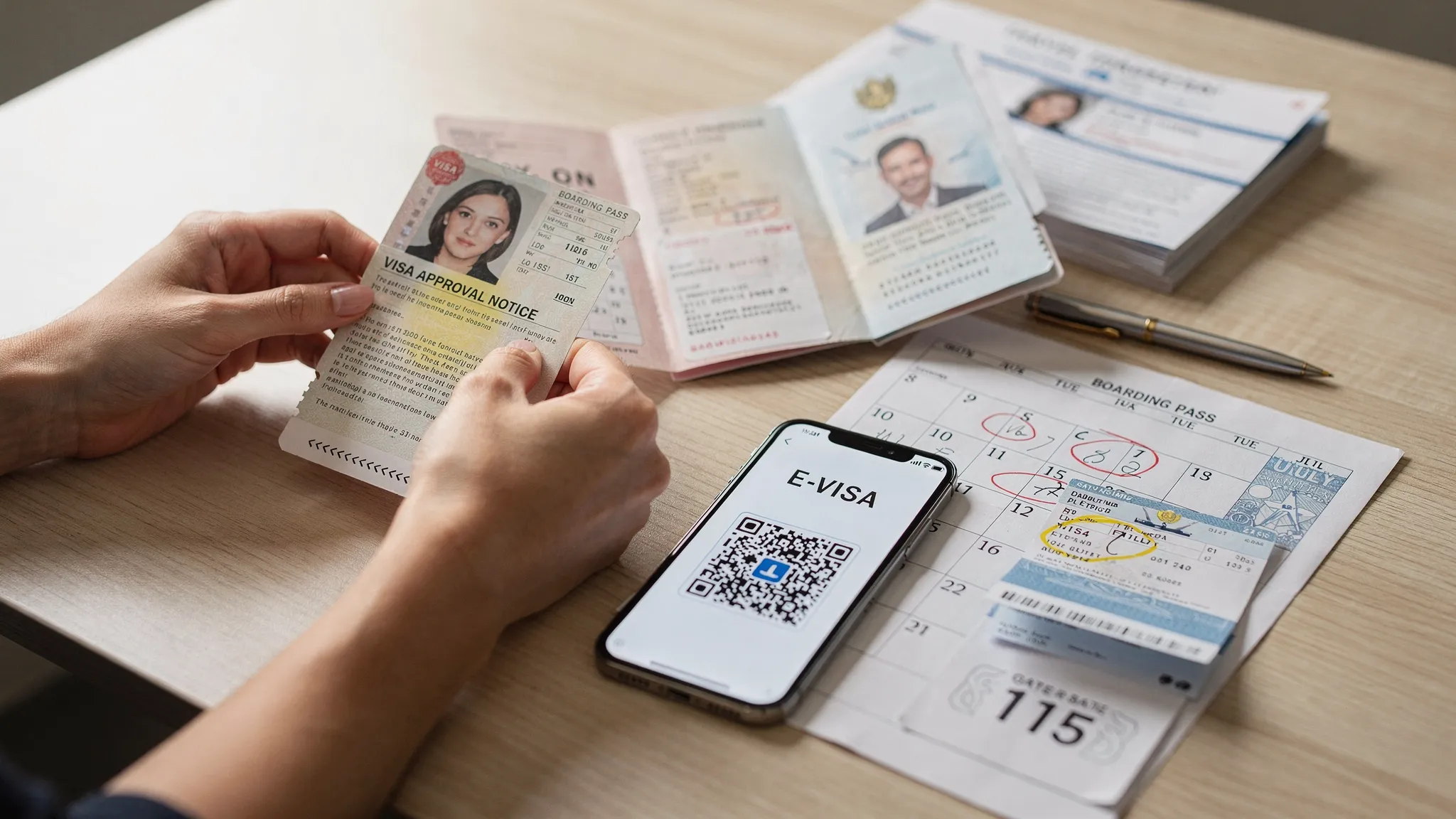
Before you look at the headline number of days, decode these three fields on any visa or e-visa approval notice.
- Validity window, the dates during which you can use the visa to enter. Many visas are valid for 1 to 24 months and allow multiple entries during that window.
- Length of stay, the maximum time you may remain per entry. This is often 14, 30, 60 or 90 days for visitors, even if the visa is valid longer.
- Number of entries, single, double, or multiple. Multiple-entry visas allow repeat visits within the validity window, subject to per-visit stay limits.
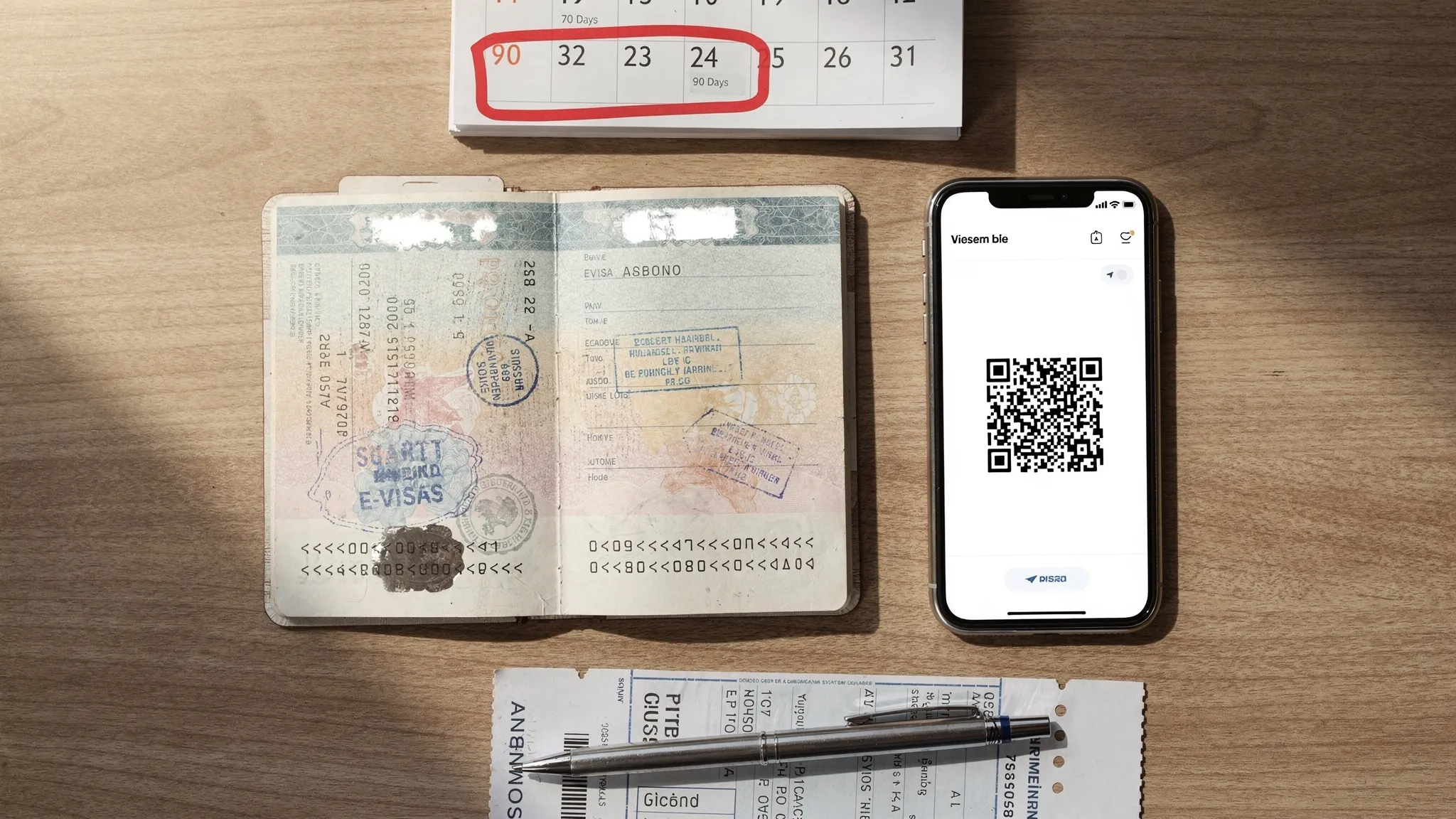
Some regions also apply rolling calculations. The Schengen Area’s common pattern is 90 days in any 180 days, which resets in a rolling fashion rather than on calendar quarters. Always track your days in and out.
Here is a high-level view of how conditions typically differ by visa category. Exact rules vary by country and nationality, so use this only as a starting point.
| Visa category | Typical per-entry stay | Typical validity window | Entries | Work rights at a glance | Extension outlook |
|---|---|---|---|---|---|
| Tourist/visitor | 14 to 90 days | 3 to 12 months | Usually multiple | No paid local work, meetings and tourism only | Often limited, sometimes require exit and reapply |
| Business visitor | 30 to 90 days | 3 to 12 months | Often multiple | Meetings, conferences, training. No local payroll work | Similar to tourist, case-by-case |
| Student | Program length plus buffer | Program length | Multiple | Limited part-time hours during term, full-time during breaks in some countries | Common with proof of enrollment and funds |
| Working holiday | 6 to 24 months | Same as stay | Multiple or re-entry permitted | Paid work allowed with caps on employer type or duration | Extensions sometimes restricted |
| Skilled work permit | 1 to 3 years | 1 to 3 years | Multiple | Paid work allowed for the sponsoring employer, role specific | Renewable if employment continues |
| Digital nomad/remote work | 6 to 12 months | 6 to 24 months | Multiple | Remote work for foreign employer usually allowed, no local payroll | Often renewable with income proof |
For a deeper primer on how rules shape your trip, see Visa Policy 101: Rules That Impact Your Trip at SimpleVisa: https://simplevisa.com/visa-policy-101-rules-that-impact-your-trip/
How to read your approval notice correctly
- Cross-check name, passport number and passport expiration dates. Any mismatch can void entry.
- Look for explicit conditions, for example “No work,” “Study limited to X hours,” “Police registration within 7 days.”
- Note whether the approval is electronically linked to your passport or issued as a PDF that must be carried. Some airlines still ask to see a printed copy at check in.
- Track your 24-hour clock on exit days. Overstaying even by a few hours can trigger automated fines in e-border systems.
Work limits: what you can and cannot do
Work permissions differ sharply by visa class. Three common misunderstandings cause trouble.
- Business visitor is not a work visa. Most countries permit meetings, conferences, attending trade fairs, and short client-site visits. They do not allow taking up local employment, being on local payroll, or performing billable services to local clients unless the visa explicitly allows it.
- Remote work on a tourist visa is not universally allowed. Some jurisdictions tolerate incidental remote work for a foreign employer, others consider any remunerated activity as work. When in doubt, apply for a proper remote work or digital nomad visa.
- Volunteering can be regulated. Unpaid does not always equal permitted. Roles in NGOs, healthcare or education can still require specific visas and background checks.
If your plan involves local hiring, sponsorship or immigration portals, you are in employer-compliance territory. For example, founders building teams in the UAE will deal with trade licenses, establishment cards and quota rules. See this practical 2025 guide to sponsoring employees in Dubai for a step-by-step overview of visa categories, preconditions and penalties: guide to sponsoring employees in Dubai.
Extensions, renewals and change of status
These terms are often conflated but they are not the same.
- Extension, you ask to stay longer on the same visa class without leaving. Many tourist and business visitor visas either do not allow this, or allow it only for specific reasons, medical, force majeure, family emergency.
- Renewal, you apply for a new visa with fresh validity. Some systems let you do this in country, others require you to exit and reapply.
- Change of status, you switch categories, for example visitor to student or worker. This is typically a formal process with stricter eligibility, employer or school documents, background checks and new fees.
A practical playbook that works in many countries, and helps you avoid last minute stress.
- Check whether your visa class is extendable at all. Many e-visas are single purpose and must be renewed, not extended.
- Apply early. Two to four weeks before your permitted stay expires is a common recommendation. You must remain in legal status while a decision is pending.
- Prepare documentation, reason letter, proof of funds and accommodation, onward travel flexibility, insurance, and any country-specific forms or photos.
- Keep evidence of submission. Receipts and case numbers can protect you from penalties if your application is still under review at exit control.
For step-by-step guidance tailored to digital permits, see How to Extend Your Stay with an Electronic Visa at SimpleVisa: https://simplevisa.com/how-to-extend-your-stay-with-an-e-visa/ and When Does an Electronic Visa Expire and How to Renew It at SimpleVisa: https://simplevisa.com/electronic-visa-expire-and-how-to-renew-it/
Special cases to watch in 2025
- 90 days in 180 days regimes, if you are moving in and out of regions using rolling stay limits, track days precisely. Overstays can be calculated automatically at exit.
- Police or address registration, several countries require in-country registration within a set number of days. Hotels sometimes do this on your behalf, private stays usually require you to do it.
- Entry caps on working holiday schemes, many programs use quotas that reset annually. Apply early and have backups.
- Digital nomad pathways, if you plan to work remotely beyond a few weeks, consider dedicated visas. They commonly require proof of foreign income above a threshold, international health insurance, and a clean record. If you are exploring nomad-friendly destinations that allow fast online processing, see SimpleVisa’s guide to Easiest eVisas to Get in 2025 for Digital Nomads: https://simplevisa.com/easiest-evisas-to-get-in-2025-for-digital-nomads/
Consequences of violating visa conditions
Most modern border systems are integrated with airline departure control, immigration databases and sometimes tax authorities. Typical outcomes of non-compliance include fines, removal or deportation, bans from re-entry for months or years, adverse notes that affect future applications, and for businesses, carrier fines for transporting inadmissible passengers and audit flags on sponsored entities.
If you realize you are in breach, act promptly. Contact the local immigration office, request the appropriate remedy, for example discretionary extension or exit within a short grace period, and document every step. Silence rarely improves outcomes.
A simple compliance checklist
- Verify your permitted stay, validity, and entries as soon as your visa is issued.
- Put an end-date and a 14-day reminder in your calendar for every stay.
- Keep copies, digital and printed, of your approval and supporting documents.
- Carry proof of funds, accommodation and onward travel, officers still ask for these at random checks.
- Do not perform paid work locally unless your visa allows it in writing.
- Start extension or renewal research at least one month before your planned exit.
- Save all receipts and case numbers, they matter at border control.
For travel teams and platforms: operationalizing visa conditions
If you manage travelers at scale, manual rule checks are risky and expensive. Embedding visa logic into booking and post-booking workflows can protect revenue and reduce support tickets.
- Use a rules engine or API to surface stay limits, entry rules and documents required based on passport and itinerary.
- Offer guided applications inside your booking flow, travelers complete forms once, and you collect ancillary revenue while reducing denied boardings.
- Add a no-code or white-label visa portal for after-sales, so travelers can extend, renew or reapply without leaving your brand environment.
SimpleVisa provides visa processing automation, an API for eligibility and applications, a white-label visa app, custom data services and a no-code implementation option already used on 400 plus sites. If you are evaluating how to add compliant, revenue-positive visa services, ask our team for a sandbox demo.
Bottom line
Understanding visa conditions comes down to three facts, how long you may stay per entry, what you are permitted to do during that stay, and whether you can extend or must renew. Decode your approval notice, track your days, and match your activities to your visa class. When plans change, act early. And if you manage travel for others, automate these checks to protect customers and your bottom line.
Get personalized, always up-to-date visa guidance in your booking flow with SimpleVisa: https://simplevisa.com