Visa Application Processing Fee: Govt vs Service Costs
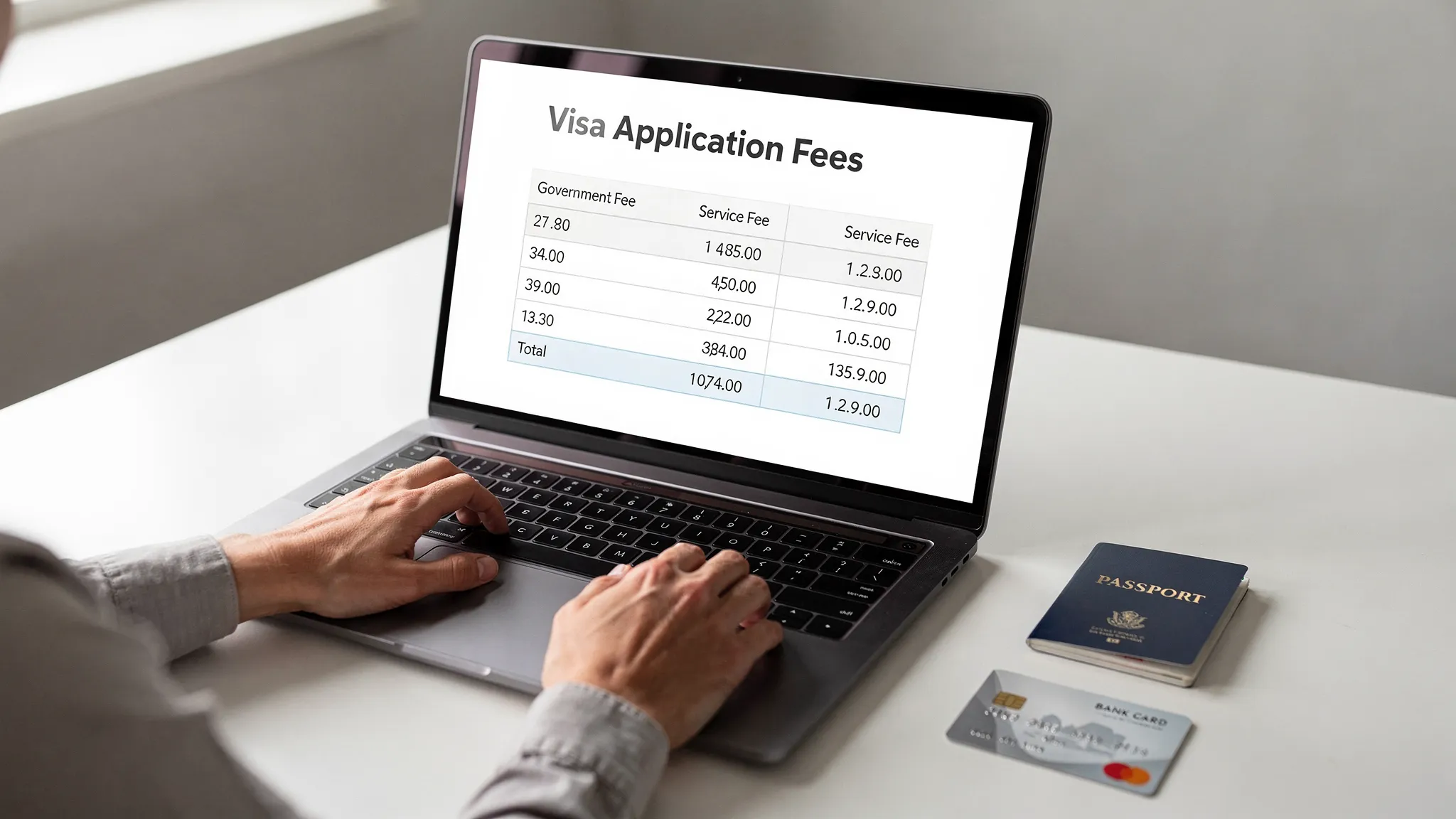
Visa pages often show multiple charges, and the labels can be confusing. One site lists an application fee, another mentions a processing fee, and a third adds a service fee. Here is how to decode what you are paying, why there are separate line items, and how to keep costs predictable whether you apply yourself or use a trusted visa partner.
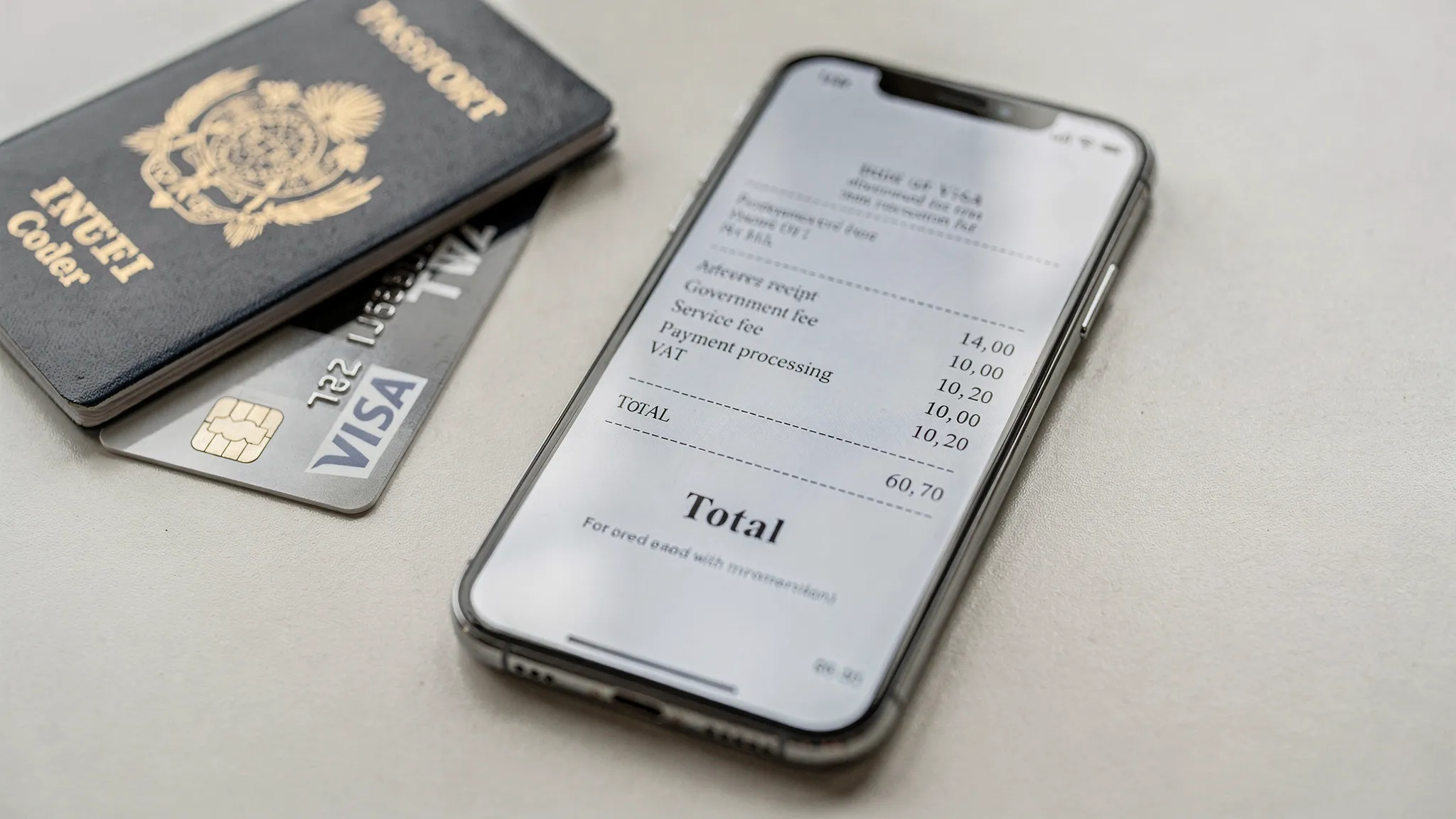
Government fee vs service fee, in plain English
Every visa or travel authorization you pay for typically includes two distinct cost categories.
-
Government fee, the amount charged by the issuing authority to accept and process your application. This can include statutory surcharges, security screening costs, biometrics or travel promotion levies. It is almost always non refundable once processing starts, even if you withdraw or are refused.
-
Service fee, the amount charged by a platform, agency or travel brand to guide you through requirements, pre check documents, streamline filing, provide support and status updates, and handle secure submission and payments. This fee compensates for technology, compliance, customer support, and in some cases faster handling where the government offers priority channels.
There can also be minor extras, for example payment gateway or currency conversion charges, taxes on private services like VAT or GST where applicable, and optional add ons like shipping for passport based visas.
Why the labels vary
The word processing is used by both governments and private platforms. A government may list a processing fee on its portal. A private site may list a processing fee for its own handling. Read the context carefully. Look for an itemized total that separates what goes to the government from what goes to the service provider.
What government fees actually fund
Government application fees support the cost of running a border program. Depending on the country and document, your official payment helps fund security checks, data systems, fraud prevention, and program administration. A few examples with widely published fees are below. Always verify current fees before paying since governments update them.
| Authorization | Official site | Official fee | Notes |
|---|---|---|---|
| U.S. ESTA | CBP ESTA | USD 21 | Includes a statutory travel promotion component and a processing component, fee non refundable once processed |
| UK ETA | GOV.UK ETA | GBP 10 | Per traveler, multiple entries within validity |
| Canada eTA | IRCC eTA | CAD 7 | Linked electronically to your passport |
| Australia ETA 601 | Home Affairs ETA | AUD 20 service charge | Charged via the official ETA app, eVisitor subclass 651 is separate and free for eligible EU passports |
| EU ETIAS | EU ETIAS | EUR 7 | For most travelers aged 18 to 70, exemptions exist, rollout timing subject to EU updates |
Fees are accurate as publicly listed at the time of writing and can change without notice. When in doubt, cross check on the official government domain.
What private service fees cover, and when they are worth it
A reputable visa service does more than relay your payment. The service component typically covers real work and infrastructure that remove risk and friction for travelers and travel brands.
- Rules engine checks by passport, trip purpose and dates, so you start on the correct document and avoid paying the wrong authority.
- Guided forms that reduce errors, with smart hints and validation that match country rules.
- Document coaching, for example automatic photo sizing or file compression and name checks.
- Payment acceptance in your currency with 3D Secure and fraud controls, plus fallback methods if a card fails.
- Real time status updates and alerts, including follow up when authorities request more information.
- Escalation paths and trained support when an application stalls or is refused, including re application guidance.
- Enterprise grade security for data, consent and audit logs that satisfy airline, OTA and TMC compliance teams.
If you are comfortable navigating the official portal, you can pay only the government fee. If you value error prevention, consolidated support across destinations, or embedding visa steps inside a booking flow, a service fee often pays for itself in saved time, fewer rejections and reduced stress.
For a deeper cost model, see SimpleVisa’s breakdown in Fee for Visa, How Costs Are Calculated.
Hidden costs travelers overlook
Even when a headline price looks low, the total you pay can drift up. Watch for these common gotchas.
- Currency conversion and foreign transaction charges by your bank if the site bills in a foreign currency.
- Duplicate payments when a card fails and you retry multiple times without confirming status.
- Reapplication after a refusal due to avoidable mistakes, most governments require a new fee.
- Add ons that are not clearly optional, for example insurance or “rush” handling where the government offers no priority lane for that document.
- Shipping or in person appointments for consular visas that are not obvious up front.
If a price looks far above the official fee for an eVisa or eTA, you may be looking at a private service. That can be legitimate, just make sure the service value is clear and the government portion is itemized.
How to evaluate any visa price in 60 seconds
Use this quick due diligence flow before you pay.
- Identify the site type, look for a clear statement about being an official government site or a private service provider. Government sites usually use a country code domain and government subdomain. Private services should disclose that they are not a government.
- Find the split, a trustworthy service will show government fee, service fee, and taxes or payment fees separately, all in your currency with a clear total before checkout.
- Confirm who is charging you, the merchant of record name on the final payment screen should match the brand you see on the site. Save the receipt.
- Check the refund policy, government fees are usually non refundable once processing starts. Make sure the service policy explains what happens if you cancel or if the government refuses your application.
- Verify timelines, see whether the government for your destination even offers expedited processing. If not, be skeptical of “rush” promises.
If you prefer a government only route, review our guide to safe direct applications, Visa Online, Trusted Ways to Apply and Track.
For airlines, OTAs and TMCs, show the split to lift conversion
Travelers abandon visa forms when fees look fuzzy or jump late in the flow. Transparent pricing does not just build trust, it converts. Product and eCommerce teams can implement three simple standards.
- Display a clear breakdown early, government fee and service fee as separate lines, with a short sentence explaining the value of each.
- Keep currency consistent with the booking, and disclose any tax that applies to the service component. Avoid surprise fees at the last step.
- Offer choice, a DIY link to the official portal for travelers who want it, and a guided option for those who prefer help. This improves satisfaction even when most choose the guided path.
Our analysis of visa form drop off shows clarity around fees is one of the fastest wins in the funnel. See practical UX examples in Why Travelers Abandon Visa Forms, and 6 UX Fixes That Convert.
How SimpleVisa handles fees
SimpleVisa is built for both travelers and travel businesses. In every flow, we separate what goes to the government from what funds the service so you can see exactly what you are paying for, before you pay. Partners can embed the experience directly in checkout or launch a branded portal with no code.
Highlights that matter for cost and clarity
- Visa processing automation with guided customer applications, reduces errors that lead to costly reapplications.
- API integration for travel sites, or a white label visa app and no code option for fast go live.
- Custom data services for eligibility and pricing, so you quote the right fee by passport and route.
- Premium eVisa management, approval tracking and high approval rates that improve customer satisfaction and reduce support costs.
- Proven scalability, service available on 400 plus sites, with ancillary revenue generation baked in.
If you want transparent pricing and a better conversion story, talk to our team about the model that fits you best. Start here, API vs White Label App, Which Visa Integration Model Suits You.
Case based examples, how totals are built
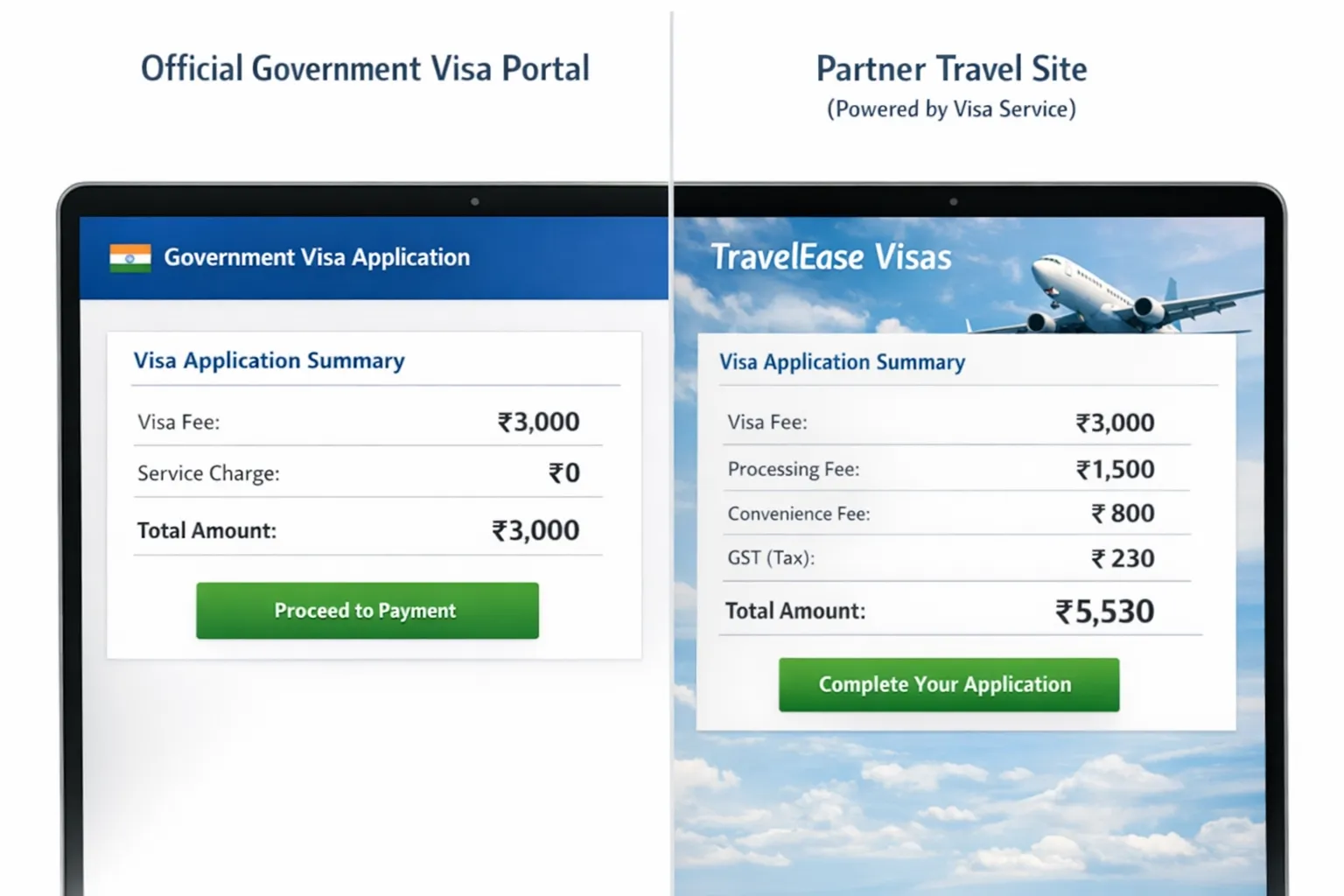
Below are simplified scenarios to show how a total might stack up. Numbers are illustrative only and exclude taxes or FX.
-
Traveler files a U.S. ESTA on the government site. Pays USD 21 government fee. Total, USD 21.
-
Traveler files a UK ETA with a private service. Pays GBP 10 government fee plus a GBP 15 service fee for guided filing and 24 by 7 chat support. Total, GBP 25.
-
Airline embeds a visa widget in checkout for Canada eTA. The booking shows CAD 7 government fee plus a CAD 12 service fee for automated eligibility checks, pre filled data and OTA branded support. Total, CAD 19.
The government portion is fixed by the authority. The service portion reflects the level of help, automation and support provided by the platform or partner.
What to do if a price looks off
- Cross check the official fee on the government site for that document.
- Ask the provider to confirm whether their listed price includes the official fee or if it is a service only charge.
- Review the provider’s credentials and security practices. A reputable service will publish security, compliance and support information clearly.
- If you suspect a scam, do not enter payment details. Apply via the official portal or a well known platform with transparent pricing.
Bottom line
Visa application processing fees have two parts. The government fee is the official price to accept and process your application. The service fee is what a provider charges to make the process faster, easier and safer. Both can be valid. The key is itemization, clarity in your currency, and a service that actually reduces risk.
If you want to add transparent visa pricing to your booking flow, or you prefer a white label portal that spells out costs cleanly, SimpleVisa can help you go live quickly and generate ancillary revenue while improving customer experience. Visit SimpleVisa to learn more.