Booking for Visa Application: Proofs That Work
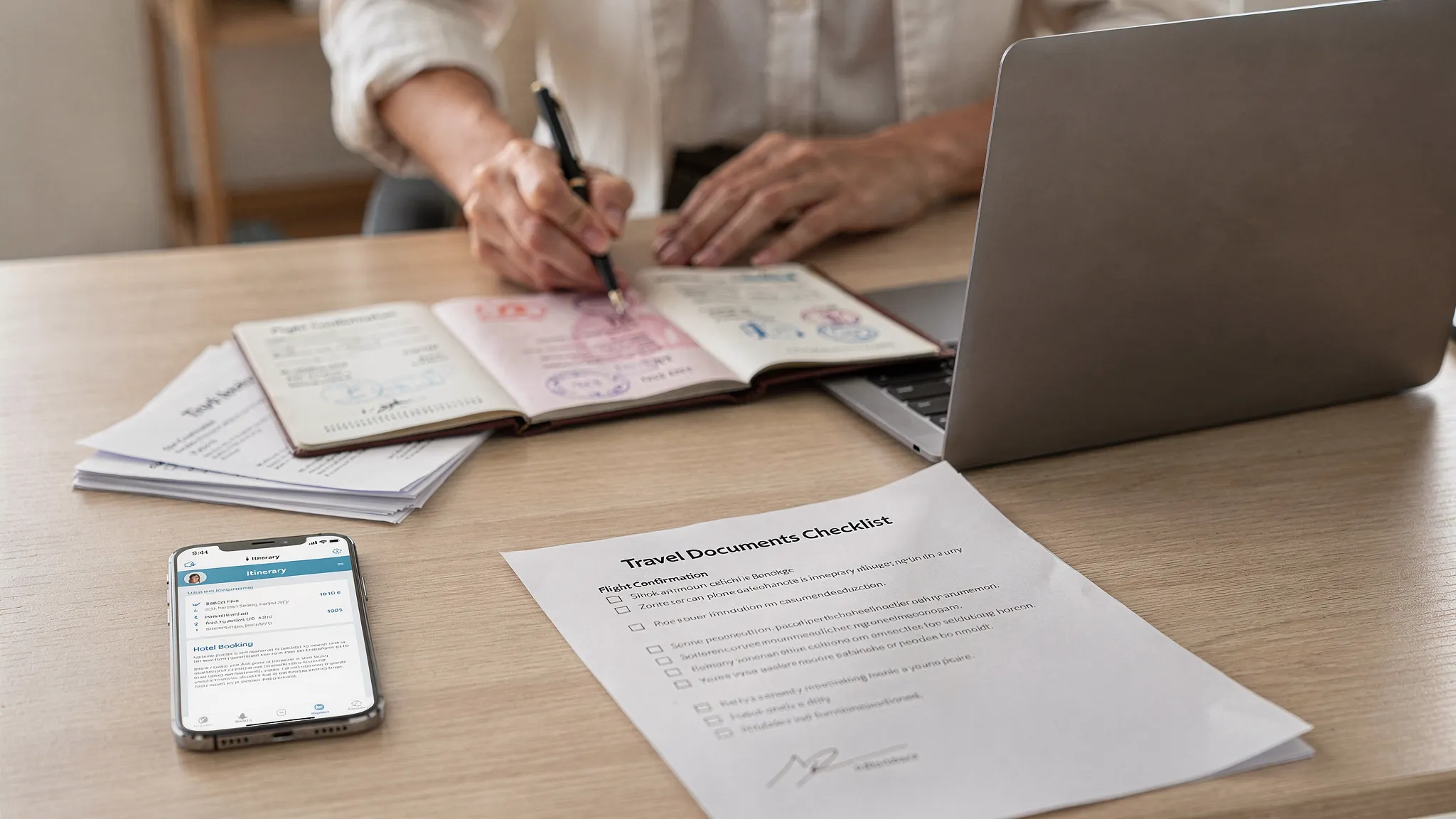
Confused about whether you must pay for flights and hotels before your visa is approved? You are not alone. Most consulates want to see credible bookings as proof of your itinerary, but they rarely require non‑refundable purchases. The key is submitting verifiable, consistent documents that match your travel purpose and dates.
This guide explains which booking proofs work for visa applications, how to obtain them without financial risk, and the quality checks officers use when reviewing your file.
What consulates actually ask for
- Schengen short‑stay rules require supporting documents that show your travel plan, for example transport reservations and accommodation, not necessarily paid tickets. See Article 14 of the EU Visa Code for the list of supporting documents. EU Visa Code on EUR‑Lex
- The UK advises visitors to provide plans and proofs but does not require you to buy travel in advance. GOV.UK guidance: visit visa supporting documents
- The United States explicitly warns not to purchase tickets before a decision is made. U.S. Department of State, Visitor Visa
- Canada requests an itinerary and accommodation evidence if available, plus proof of funds and ties. IRCC visitor visa documents
- Australia may ask for your travel plans and where you will stay to assess a visit. Australian Visitor visa (subclass 600)
Policy details differ by country, but the pattern is consistent. You can submit reservations or itineraries that are cancelable and still satisfy the requirement.
The 5‑point acceptance test for any booking proof
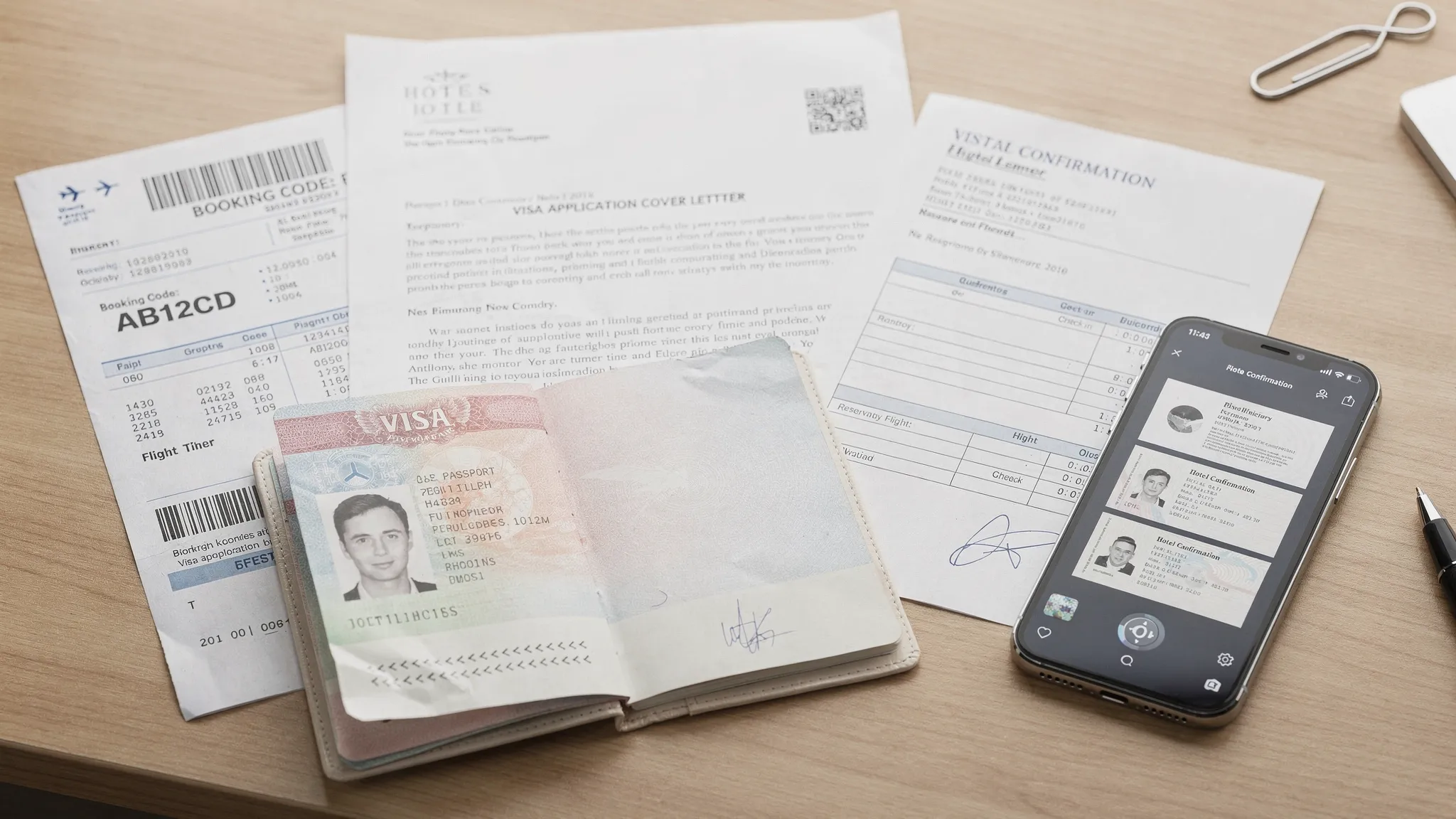
Before you upload a flight or hotel confirmation, check that it includes:
- Your full name, exactly as in your passport MRZ
- Dates that match the visa application and your other documents
- A reservation or booking code that can be verified by the provider
- Supplier details, for example airline or hotel name and contact
- The document issue date, ideally recent
If a proof fails two or more of the items above, it risks being ignored or flagged for clarification.
Proofs that work for a visa application
1) Flight reservation or itinerary
What works
- A round‑trip reservation or exit ticket that lists passenger names, dates, cities, flight numbers, and a six‑character PNR or booking code. The ticket can be on hold, unpaid, or fully refundable.
Good to know
- Many embassies accept reservations rather than purchased tickets, especially for short‑stay visitor visas.
- If your trip is one‑way, include an onward ticket to a third country or a written explanation that fits visa rules.
Avoid
- Screenshots of search results without a booking code
- Edited PDFs or unverifiable itineraries
2) Accommodation booking
What works
- Hotel or rental confirmations that show the guest name, address, check‑in and check‑out dates, and a confirmation number. Prefer reservations with free cancellation.
- For stays with family or friends, include a signed invitation or sponsorship letter, a copy of the host’s ID, and proof of address. Some countries require an official host certificate.
Avoid
- Bookings that do not cover each night of your stated stay
- Name mismatches with your passport
3) Onward or return proof
What works
- A confirmed return flight, a bus or rail ticket leaving the country, or cruise documentation showing departure from the territory.
Avoid
- Open itineraries with no evidence of exit when the country requires proof of return or onward travel
4) Tours, conferences, cruises, and event confirmations
What works
- Paid or reserved tour invoices, cruise booking confirmations, conference registration emails, and corporate invitation letters that include dates and contact details.
Avoid
- Informal emails without official headers or contact information
5) Internal transport for complex routes
What works
- Domestic flight, train, or bus bookings that connect your cities in date order. This is useful for multi‑city Schengen plans where you must show how you will move between countries.
Avoid
- Gaps that create unexplained days in your itinerary
Quick reference: booking proofs that work and what to avoid
| Proof type | What works | Low‑risk way to obtain | Common mistakes |
|---|---|---|---|
| Flights | Reservation with PNR, full names, dates, routes | Hold or refundable fare, or a reservation with free cancellation window | No PNR, wrong names, dates not aligned with hotel |
| Accommodation | Confirmations per night of stay, with address and confirmation number | Free‑cancellation hotel bookings or official host invitation | Uncovered nights, informal addresses, name mismatch |
| Onward/return | Exit ticket or transport out of the country | Bus, rail, ferry, or flight reservation that is refundable | No onward proof where required |
| Tours/events | Official confirmations with dates, organizer contact | Pay small deposit with clear cancellation terms | Screenshots of invitations without verifiable details |
| Internal transport | Domestic legs connecting your route | Refundable or flexible fares | Unexplained itinerary gaps |
Country and visa‑type nuances in plain English
- Schengen short‑stay visas, reservations are fine. Officers look for a coherent route, accommodation for each night, and evidence you will leave on time. See the EU Visa Code.
- UK Standard Visitor visas and ETA, provide plans and proofs, but you are not required to buy non‑refundable tickets before a decision. GOV.UK guidance.
- US B‑1/B‑2, do not pay for tickets before issuance. Bring a realistic itinerary and documents proving ties and funds. U.S. Department of State.
- Canada TRV and eTA, a simple itinerary and accommodation proofs help, plus funds and ties. IRCC documents list.
- Many eVisas, the online form asks for intended dates and lodging details, not paid tickets. At the border you may still be asked for onward travel and accommodation.
Get the proofs without risking your money
- Use refundable or flexible fares. Many airlines and OTAs sell fares that are fully refundable or cancelable for a small fee. Check fare rules before purchase.
- Use hotel bookings with free cancellation. Most major platforms offer free cancellation until a date near check‑in. Align that deadline with your expected visa decision date.
- Use official holds and 24‑hour cancellation policies. For flights to or from the United States, airlines must either allow a free 24‑hour cancellation or hold the fare for 24 hours if booked seven or more days before departure. Read the U.S. DOT 24‑hour rule.
- Pay small deposits for tours and cruises with clear refund terms. Keep the terms page as part of your submission.
- If you use a reservation service that issues time‑limited bookings, ensure the booking is verifiable during your application window. Never submit fabricated or altered documents.
Consistency checks visa officers routinely perform
- Names and passport details match across passport, forms, flights, hotels, invitations
- Dates align across all documents, with no uncovered nights
- Your route makes sense for the time available, including internal legs
- Exit evidence exists within the allowed stay period
- Funds and employment or family ties support the trip plan
Small inconsistencies do not always mean a refusal, but multiple mismatches can trigger extra questions or delays. If you changed your itinerary after submitting, upload updated proofs with a short note.
Red flags to avoid
- Unverifiable bookings, reservation codes that do not resolve, or ghost PNRs
- Obvious edits in PDFs or images, for example mismatched fonts or layers
- Overly ambitious multi‑country plans without internal transport
- One‑way arrivals with no onward plan where onward proof is expected
- Accommodation booked under someone else’s name with no explanation
Formatting and file tips that help approvals
- Prefer PDFs over screenshots when possible
- Keep file sizes reasonable and legible, typically under 2 to 5 MB per file
- Use the same email and phone across bookings so officers can recognize you
- Translate key details when not in English, for example address lines
- Name files consistently, for example 2025‑03‑Paris‑Hotel‑Surname.pdf
Special scenarios and how to document them
Staying with family or friends
- Provide a signed invitation, host ID, and proof of address. Add your relationship and purpose in a simple cover letter.
Open‑jaw or multi‑country trips
- Show internal transport that connects your entry and exit cities, plus accommodation for each segment.
One‑way travel with onward exit later
- Include a booked bus or low‑cost flight that shows you will leave the country or area within the allowed period.
Group or family applications
- Duplicate the core proofs for each traveler and ensure names match. Add parental consent for minors where required.
Cruises
- Submit the cruise confirmation and the port call schedule. Add any required shore visas depending on ports of call.
For travel brands, make booking proofs effortless in your flow
If you run an airline, OTA, cruise line, or tour operator, you can cut support tickets and lift conversion by guiding customers to the right proofs at the right time.
- Surface destination‑specific proof requirements inside your booking or post‑booking flow
- Accept uploads of flight and hotel confirmations, then nudge customers when documents expire or change
- Offer a guided visa application experience that aligns dates and names across documents
SimpleVisa provides visa processing automation with API integration, a no‑code or white‑label app, and custom data services that help travel sellers capture the correct proofs and increase ancillary revenue. Learn about integration options and go live fast on your checkout or trip management pages. Explore SimpleVisa
Helpful templates and checklists
- Plan requirements before you pay for anything: My Travel Visa Planner
- Assemble the full packet beyond bookings: Checklist for online visa applications
- Avoid name‑mismatch problems that derail approvals: Handling name mismatches
- Understand border‑proofs officers ask for on arrival: Border crossing requirements
Bottom line
For most short‑stay visas and eVisas, you can submit reservations instead of non‑refundable tickets. What matters is that your proofs are verifiable, consistent, and proportionate to your trip. Use refundable or free‑cancellation options, align dates across all documents, and keep everything readable and recent.
If you prefer a guided path that reduces guesswork for you or your customers, integrate a SimpleVisa flow that collects the right proofs, checks them for consistency, and streamlines submission. Travel made simple starts with documentation that works. Get started with SimpleVisa