Visa Travel Visa: What It Means and When It Applies
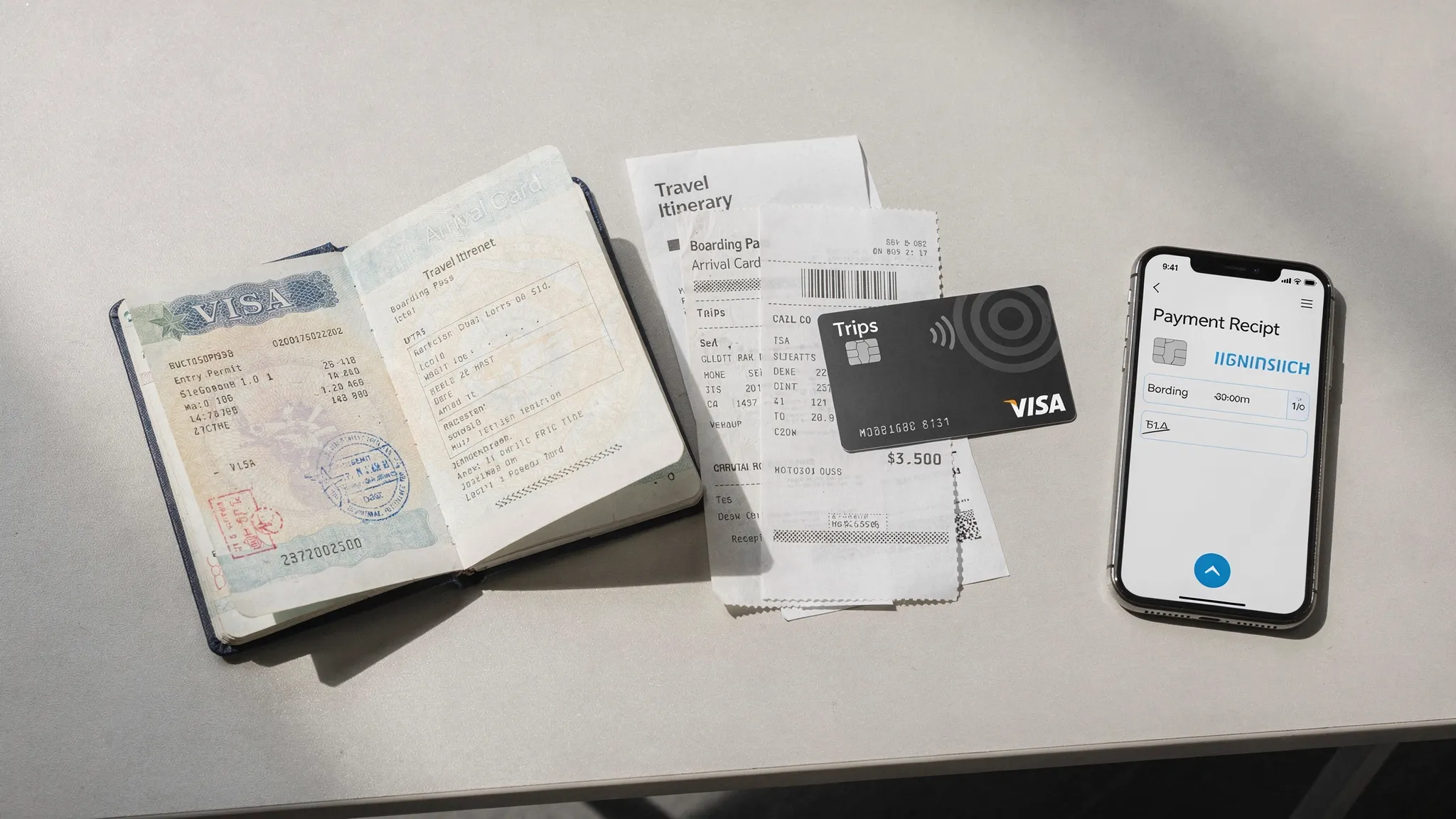
People often type (or see) the phrase “Visa Travel Visa” when they are trying to answer a basic question: “Do I need a visa to travel?” The confusion is understandable because “Visa” can mean two completely different things:
- Visa (capital V): the global card-payment network.
- A travel visa: an immigration document (or electronic permission) that lets you enter a country.
On top of that, many countries now use eVisas and travel authorizations (like ESTA, ETA, and the upcoming ETIAS), which feel “visa-like” but are not always legally called visas.
Is “Visa Travel Visa” an official immigration term?
Usually, no. “Visa Travel Visa” isn’t a standardized label used by governments. In practice, it shows up as:
- A search phrase people use when they are unsure what “visa” they need for a trip.
- A generic label inside travel websites, booking confirmations, or help articles that group “visas for travel” content.
- A card statement descriptor in some cases, where “VISA” relates to payments, not immigration.
So the key is to determine which “Visa” you’re dealing with and whether you actually need a travel visa (or a different entry requirement).
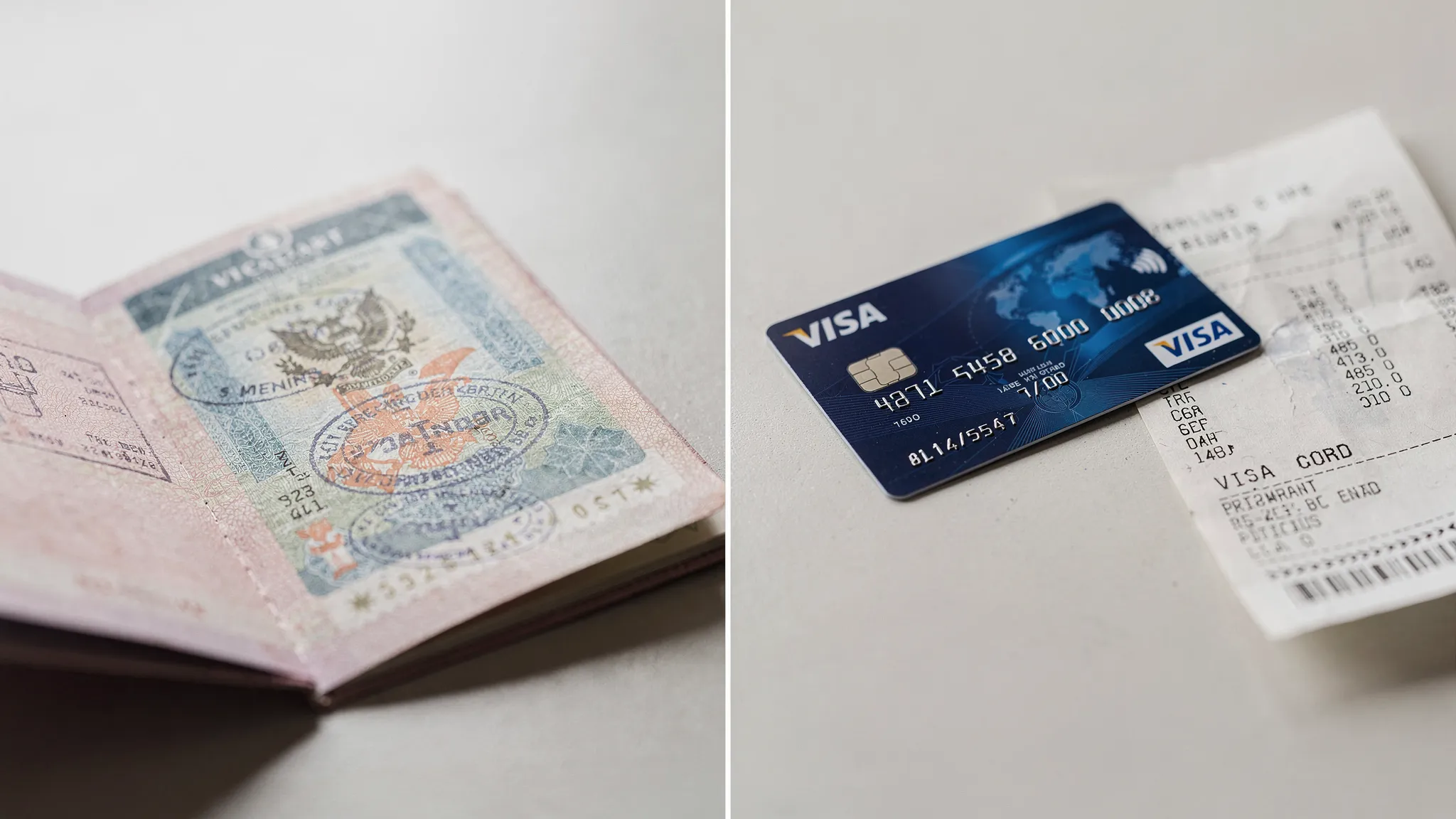
The 3 most common meanings behind “Visa Travel Visa”
1) You mean a travel visa (immigration)
A travel visa is a permission issued by a country that allows a traveler to request entry for a specific purpose (tourism, business, study, transit) and under specific conditions.
Depending on the destination, a travel visa might be:
- A traditional (consular) visa placed in your passport (often after an embassy/consulate process).
- An eVisa issued online and linked electronically to your passport (you typically receive a PDF or reference number).
If you’re still getting oriented, SimpleVisa’s Travel Visa Basics article breaks down the “before you book” checks that prevent most border issues.
2) You mean a travel authorization (not always a visa)
Many destinations require pre-travel authorization for visa-exempt travelers. Common examples include:
- ESTA for eligible travelers to the United States.
- ETA systems used by multiple countries (the UK is rolling out/expanding its ETA requirements).
- ETIAS (planned for Schengen Area visa-exempt visitors), which is explicitly not a visa, but a pre-screening authorization.
Official references:
- U.S. ESTA information via the U.S. Customs and Border Protection
- EU ETIAS information via the official ETIAS site
- UK Electronic Travel Authorisation overview via the UK government
3) You mean Visa as in card payments (a billing/charge label)
Sometimes people search “Visa travel visa” after seeing “VISA” in a payment context, such as:
- A card transaction line on a bank statement
- A payment receipt for flights, hotels, or a travel service
In that case, the word “Visa” is about how you paid, not whether you need an immigration visa.
A practical tip: if the phrase appears next to an amount, a merchant name, and a transaction date, it is almost certainly payment-related.
When does a travel visa apply?
A travel visa requirement is determined by rules that combine your traveler profile and your trip details. The same destination can be visa-free for one passport and visa-required for another.
Factors that usually determine whether you need a visa
- Nationality/passport (the biggest factor)
- Destination country (and sometimes specific territory rules)
- Purpose of travel (tourism vs business vs work vs study)
- Length of stay (e.g., “up to 30 days” vs “up to 90 days”)
- Number of entries (single-entry vs multiple-entry)
- Transit rules (some itineraries trigger transit visas, even without leaving the airport)
“Visa applies” can also mean “visa is required for your activity”
A common mistake is thinking: “I’m not moving there, so it’s tourist travel.” In reality, activities matter. Some countries treat certain activities (paid work, long-term assignments, journalism, volunteering, filming, extended study) as outside a tourist permission, even if you’re only staying briefly.
Visa vs eVisa vs eTA/ETA: a quick comparison
Here’s a simple way to understand what the requirement actually is.
| Requirement type | What it is | Typical application channel | Common use cases | Key nuance |
|---|---|---|---|---|
| Visa-free entry | No prior visa/authorization required (but conditions still apply) | None (you present passport at the border) | Short tourism/business visits | You may still need proof of onward travel, funds, or accommodation |
| eTA / ETA / ESTA | Pre-travel authorization for visa-exempt travelers | Online application | Short stays for tourism/business/transit | Not always legally a “visa,” but can still be required to board |
| eVisa | A visa issued digitally and tied to your passport | Online application (official portal or authorized provider) | Tourism, business, sometimes transit or special categories | Document uploads and stricter data checks are common |
| Consular (sticker) visa | Traditional visa issued via embassy/consulate process | Embassy/consulate or official visa center | Longer stays, work/study, complex cases | Often involves appointments, biometrics, and longer lead times |
For a deeper “what’s the difference” read, see SimpleVisa’s guide on electronic vs regular visas.
How to tell what “Visa Travel Visa” means in your situation
Use this quick reality check:
- If you are looking at a booking flow or travel checklist: it likely refers to immigration requirements (visa, eVisa, ETA).
- If you are looking at a bank transaction or receipt: it likely refers to Visa card payments.
- If you’re on a government page: use the government’s terms. If they say “ETA” or “ESTA,” treat it as distinct from a visa, even if it feels similar.
How to confirm whether you need a visa (without guessing)
Visa rules change, and unofficial summaries can be outdated. A reliable approach is:
- Start with the destination government immigration site (or official eVisa/ETA portal).
- Confirm rules based on your passport, your dates, and your purpose.
- For multi-country itineraries, check each border crossing, not just the final destination.
If you’re comparing multiple sources, prioritize information from:
- Government immigration authorities
- Embassy/consulate pages
- Airline-ready requirements tools (some travelers use the IATA Travel Centre, which reflects how airlines validate documentation at check-in)
Why this terminology matters for travel companies
For airlines, OTAs, cruise lines, and tour operators, vague wording like “Visa Travel Visa” creates avoidable friction:
- Travelers may confuse Visa (payment) with visa (immigration).
- Customers abandon forms when they don’t understand what they’re buying.
- Misunderstandings increase support tickets, chargebacks, and worst case, denied boarding.
A better pattern is to label the service clearly, for example:
- “Entry requirements (visa/eVisa/ETA)”
- “Check if you need a visa”
- “Apply for eVisa / travel authorization”
If you’re building or improving a booking flow, SimpleVisa supports travel businesses with visa processing automation via API integrations, a white-label visa application app, and data services that can help surface the right requirements and guide travelers through the correct application path. You can also explore the broader concept in SimpleVisa’s overview of border crossing requirements.
The bottom line
“Visa Travel Visa” is usually a sign that someone is trying to clarify one of two things: how to pay (Visa) or how to enter a country (a travel visa or authorization). Once you separate those meanings, the next step is straightforward: confirm whether your trip requires visa-free entry, an eTA/ETA/ESTA, an eVisa, or a consular visa, and apply using official or trusted channels.
If your business needs to make that determination inside the booking journey, the goal is the same: turn a confusing moment into a clear, guided decision, before the traveler reaches the airport.