Visa API vs Timatic: What Travel Sellers Should Use in 2026

In 2026, “Do my customers have the right documents?” is no longer a side question for airlines, OTAs, cruise lines, and TMCs. With more eVisas, eTAs, and pre-travel authorizations coming online (and rules changing faster than your content team can update help pages), document compliance is now a core part of conversion, customer support load, and operational risk.
That reality is why many travel sellers end up evaluating the same two paths:
- Timatic, the long-standing travel document rules reference used widely in airline operations.
- A Visa API, a programmatic way to check requirements and, increasingly, to guide travelers through online visa processing inside your booking or post-booking journey.
They are not interchangeable. They solve different problems, at different moments of the traveler journey. This guide breaks down what each is best at, what changes in 2026, and what most travel sellers should implement depending on their distribution model.
What Timatic is (and why it is still relevant in 2026)
Timatic is best understood as an operational compliance reference. In many airline and ground-handling contexts, it is used to answer questions like:
- Can this passenger board this flight?
- What passport validity, visa, onward ticket, or health documentation rules apply?
- What changes when the traveler is transiting, using a particular carrier, or entering for a specific purpose?
This is why Timatic remains closely associated with airport workflows. It is built for speed and standardization at decision points like check-in and boarding, where agents need a clear answer and airlines want to reduce the risk of non-compliance.
For background, IATA provides a public-facing entry point to airline-oriented requirements content via the IATA Travel Centre.
The main limitation of Timatic for travel sellers
Even when the rules are accurate and accessible, Timatic is not designed to be a commerce and application engine. Travel sellers trying to monetize visas (or reduce friction before the airport) typically need more than “requirement text.” They need:
- Structured, product-ready data that can be queried and returned in consistent formats
- A guided flow that collects traveler inputs and documents
- Status tracking and notifications
- Payment and submission orchestration (where applicable)
That gap is where visa-focused APIs and platforms come in.
What a Visa API is (in practical travel-seller terms)
A Visa API is a travel API that lets your product (website, app, agent desktop, post-booking portal) programmatically:
- Check entry requirements based on itinerary and traveler profile
- Trigger or embed a guided visa application experience
- Automate parts of travel document collection and validation
- Track application status, and operationalize updates via events or webhooks
In other words, a Visa API is usually built to power travel document automation and to make “visa help” a product you can sell, not just a support article.
SimpleVisa, for example, offers API integration, a white-label visa application app, custom data services, and no-code implementation options for travel brands. If you want a deeper primer on how this works end-to-end, see How eVisa APIs work: Step by Step.
Visa API vs Timatic: the core differences that matter in 2026
The fastest way to choose is to map tools to the job you need done.
| Dimension | Timatic (typical fit) | Visa API (typical fit) |
|---|---|---|
| Primary job | Operational compliance decision support | Productized eligibility checks plus online visa processing workflows |
| Best moment in journey | Day-of-travel, check-in, boarding readiness | Pre-booking, checkout, post-booking, pre-departure |
| Output style | Human-readable requirements summary (often used by agents) | Machine-friendly data and flows suited for automation and UX |
| Traveler experience | Indirect, traveler usually never sees it | Direct, traveler interacts with guided steps inside your brand |
| Revenue impact | Mostly risk reduction | Risk reduction plus ancillary revenue potential |
| Integrations | Common in airline ops stacks | Built for web/app embedding, partner portals, and booking flows |
The key takeaway is simple: Timatic helps decide if travel is permitted. A Visa API helps customers become permitted to travel.
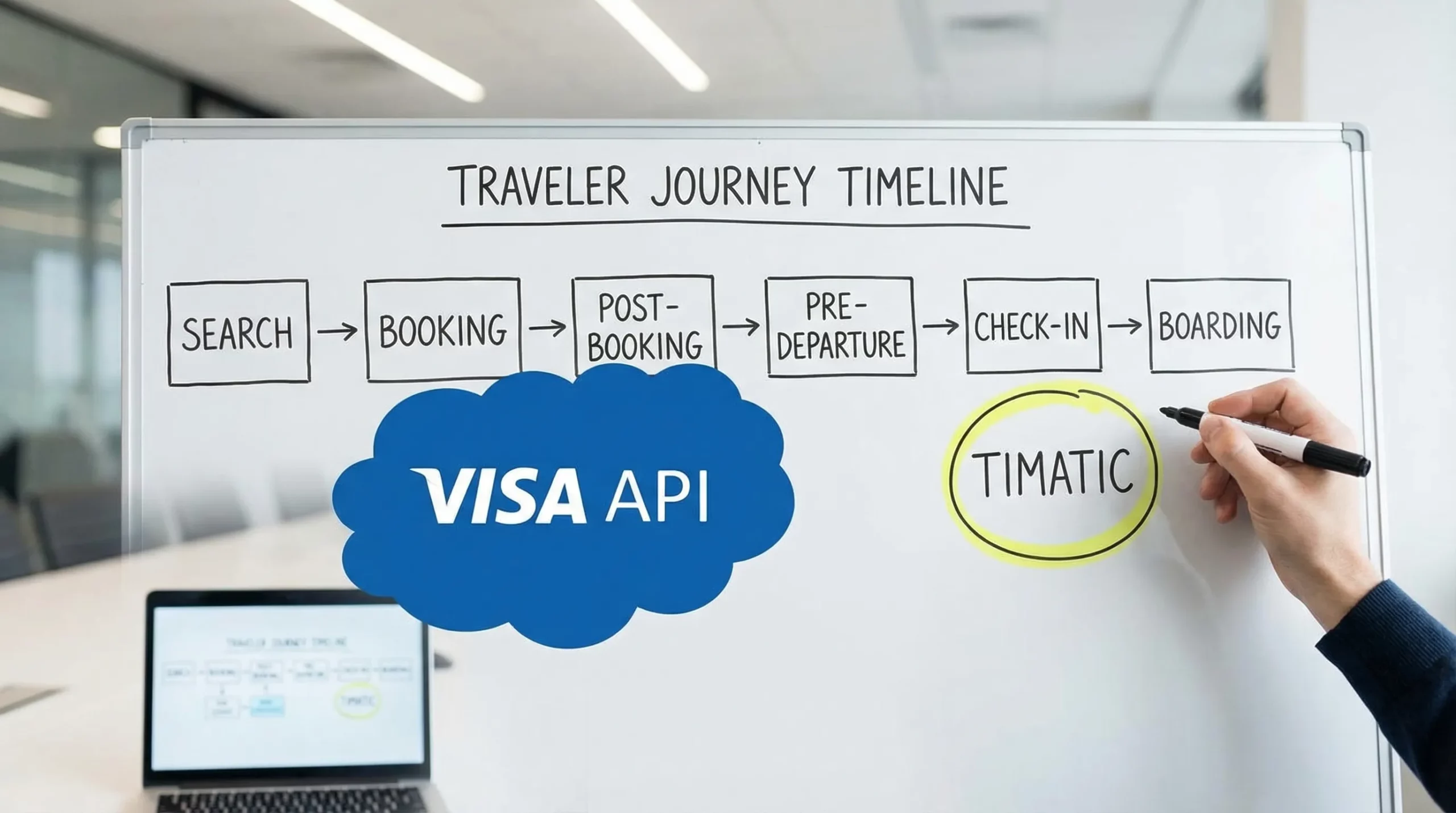
What changed by 2026 (and why many stacks need both)
A lot of travel sellers used to treat document compliance as an airport problem. In 2026, it is increasingly a conversion and servicing problem.
1) More digital authorizations, more “soft friction” in booking
Europe’s ETIAS remains a major example of the shift toward digital pre-screening. Even when the authorization is simple, customers still need to understand if they need it, when to apply, and what happens if it is pending. For official context, see the European Union’s ETIAS page.
The UK’s ETA rollout is another driver of increased pre-travel admin for previously visa-exempt travelers. The UK government maintains updates on the Electronic Travel Authorisation (ETA).
These systems increase the value of:
- Earlier eligibility checks (at search, checkout, and post-booking)
- An embedded “apply now” path that does not send travelers away to figure it out alone
2) Support teams now need explainable, auditable answers
When rules change, customers do not just ask “Do I need a visa?” They ask:
- “Why am I not eligible with my passport?”
- “Why does transit change the requirement?”
- “Why did my colleague not need this last month?”
A visa workflow tool must be able to surface clear reasoning and collect the data needed to resolve edge cases. If you are building an internal playbook, SimpleVisa’s broader view of the category is summarized in What Is Travel Document Automation? Definitions, Benefits, and Myths.
3) “Rules only” is not enough for commercial teams
If your KPI is attach rate or ancillary revenue per booking, you need more than requirement text. You need:
- Placement testing in the booking flow
- Friction-reduced forms
- Status nudges and reminders
- Reporting that ties document actions to booking outcomes
For travel sellers, this is why the question becomes “Timatic or Visa API?” less often than “How do we combine them without duplicating logic?”
When Timatic is the right primary tool
Timatic is the right primary tool when your main problem is boarding compliance and your workflows are heavily tied to airline operations.
Choose Timatic-first if you are:
- An airline, ground handler, or airport-focused operator whose core need is consistent check-in decisions
- Optimizing for day-of-travel execution, not selling a visa product
- Focused on reducing denied boarding, re-accommodation costs, and compliance escalations
That said, even airlines increasingly treat visas as a pre-departure workflow, not only a check-in workflow. If you want to reduce day-of-travel exceptions, you typically add a second layer upstream.
When a Visa API is the right primary tool
A Visa API is the right primary tool when you want to build visa readiness into your digital customer journey, especially if you want to monetize it.
Choose Visa API-first if you are:
- An OTA or travel marketplace that needs to embed requirements contextually during booking
- A tour operator selling packages where visa friction can kill conversion
- A cruise line dealing with complex port and shore-entry rules
- A TMC that wants to standardize traveler compliance and reduce agent workload
In these models, Timatic can still be relevant downstream for airline partners, but the commercial win happens upstream.
The most common best-practice architecture in 2026: a layered approach
Many mature travel sellers implement a layered compliance approach:
Layer 1: pre-booking and post-booking visa readiness (Visa API)
Use a Visa API (or a visa management platform) to:
- Check eligibility early
- Offer eVisa or eTA applications directly inside your flow
- Guide document capture and reduce application errors
- Provide status tracking, reminders, and customer support visibility
This is how visa help becomes a measurable product line. It is also how you reduce the “I found out at the airport” failure mode.
If you are designing that journey, you may find these SimpleVisa guides useful:
- Building a Seamless Post-Booking Visa Journey: Tools & Templates
- Ultimate Guide to Marketing eVisa Services During the Booking Flow
Layer 2: day-of-travel verification (Timatic or equivalent ops-grade rules)
Keep an operational rules reference for the airport edge cases:
- Last-minute itinerary changes
- Irregular operations (IRROPS)
- Complex transit routings
- Agent escalation decisions
This layer protects operations, but it rarely creates a great traveler experience by itself.
A decision framework for travel sellers (no fluff)
If you are trying to decide what to implement in 2026, ask these questions in order.
1) What is your primary business goal?
- If it is risk control at check-in, Timatic-first.
- If it is conversion lift and ancillary revenue, Visa API-first.
- If it is both, plan for a layered model.
2) Where does friction happen today?
If you see high volumes of:
- “Do I need a visa?” tickets
- Abandoned bookings after destination selection
- Last-minute cancellations or no-shows related to entry docs
You need upstream automation, not just a rules reference. SimpleVisa has a practical view on form friction in Why Travelers Abandon Visa Forms—and 6 UX Fixes That Convert.
3) Do you need data, a workflow, or both?
This is where many projects go wrong.
- Data-only solves “tell me what’s required.”
- Workflow solves “help me complete what’s required.”
If your goal is fewer support tickets and higher completion rates, you usually need workflow capabilities (guided applications, document validation, status tracking), not just content.
4) How fast do you need to ship?
If you want to validate demand quickly, look for:
- No-code or low-code embedding
- White-label options (for a branded experience without rebuilding forms)
- Clear implementation patterns (checkout, post-booking, email reminders)
SimpleVisa covers go-live trade-offs in API vs. White-Label App: Which Visa Integration Model Suits You?.
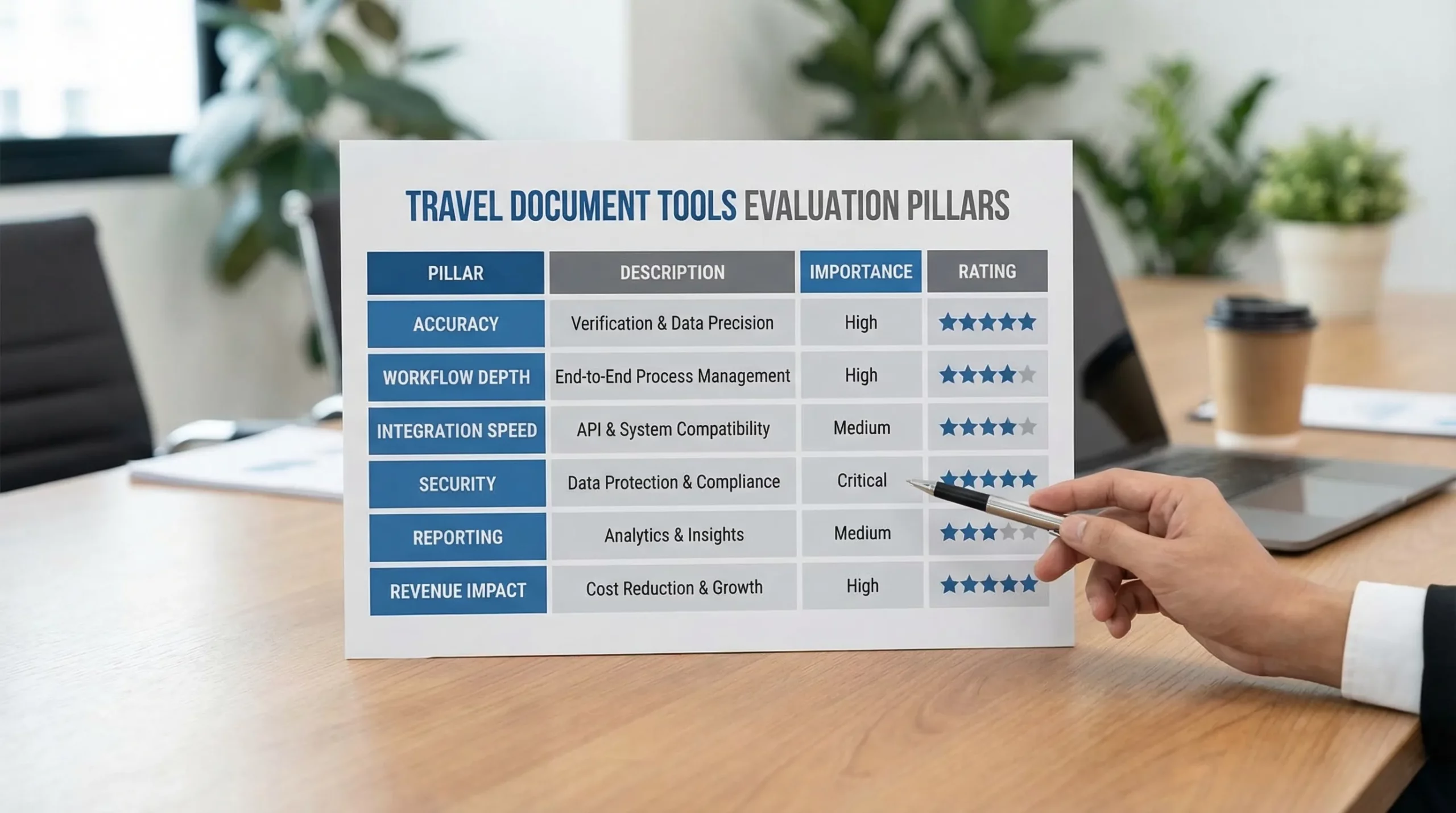
Evaluation checklist (what to demand from any vendor in 2026)
Whether you are procuring Timatic access, a Visa API, or both, align stakeholders (Product, Ops, Legal, CX, and Engineering) around a shared checklist.
| Requirement | Why it matters in 2026 |
|---|---|
| Personalization inputs | Rules depend on nationality, residency, transit, and travel dates, so your tool must model those inputs cleanly |
| Update governance | Policy changes happen frequently, you need clarity on how updates are sourced, reviewed, and pushed |
| Explainability | CX teams need readable “why” outputs, not just yes or no answers |
| Workflow depth | If selling eVisas, you need guided steps, document upload, and error prevention |
| Status + notifications | Customers need reminders and visibility, operations need fewer surprises |
| Security and privacy | You are handling identity documents, demand strong controls and clear retention policies |
| Reporting | You cannot optimize what you cannot measure (attach rate, completion time, approval rate) |
If you want a structured procurement angle, SimpleVisa’s How to Evaluate a Visa Processing Company is designed as a business buyer’s framework.
So, what should travel sellers use in 2026?
Most travel sellers should not treat this as a winner-takes-all decision.
- If you are primarily an airline operations organization, you will likely keep Timatic (or an ops-grade equivalent) as a core compliance reference.
- If you sell travel online and want to reduce friction while creating ancillary revenue, you will likely add a Visa API layer that turns requirements into guided customer action.
- If you want the strongest outcome, implement a layered stack: Visa API upstream for automation and conversion, Timatic downstream for airport-grade decisioning.
Where SimpleVisa fits
SimpleVisa is built for travel sellers that want to operationalize visa readiness earlier in the journey. Its solutions can be integrated via API into booking flows, offered through a white-label visa application app, or delivered as custom data services, with a no-code implementation option.
If your 2026 roadmap includes online visa processing, travel document automation, and new ancillary revenue streams, start by mapping your current funnel and ops pain points, then validate an integration model that matches your shipping capacity.
You can explore the platform at SimpleVisa or dive into the product-side strategy in Future of Travel APIs: From Flights to Visas in a Single Call.