Land Border eVisas: Where Travelers Get Caught in 2026
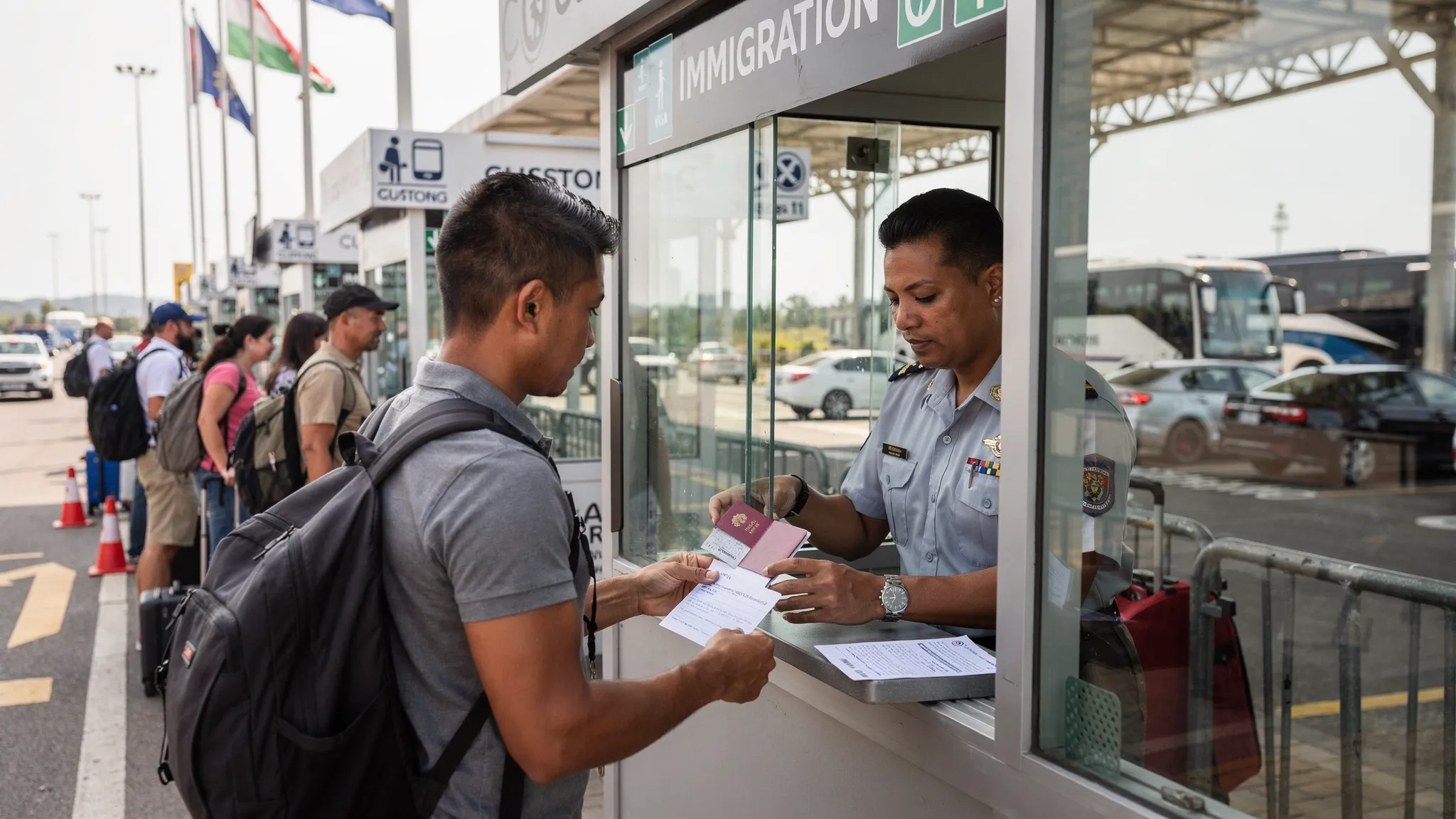
Getting an eVisa approved can feel like the hard part is over, until a traveler arrives at a land border and hears some version of: “This isn’t valid here,” “We can’t verify it,” or “You need additional paperwork.” In 2026, land crossings are still one of the most common places where otherwise legitimate electronic visas (and eTAs/ETAs) turn into delays, missed connections, or denied entry.
This guide breaks down where travelers get caught at land borders, why it happens even with an approved eVisa, and how travel businesses can reduce disruptions by checking the right data early and guiding customers through the edge cases.
Why land borders are different (and tougher) than airports
Airports tend to have the most standardized document checks: airline check-in systems, centralized border IT, and more routine exposure to eVisas and digital travel authorizations.
Land borders are the opposite in many regions. Processes can vary not only by country, but by crossing point, shift, and even connectivity on the day.
Common structural reasons land borders create more eVisa friction:
- Port-by-port rules: Some countries limit eVisa use to specific ports of entry, and “land” may be excluded entirely.
- Connectivity and verification gaps: Officers may rely on online lookups or QR validation, but internet and systems can be inconsistent at remote posts.
- Higher “mixed-document” travel: Overland itineraries often involve buses, ferries, private vehicles, short hop day trips, and multi-country loops, all of which increase the chance a traveler breaks an eVisa condition without realizing it.
- Less pre-screening by carriers: Airlines often prevent boarding if documentation is wrong. At land borders, the traveler can reach the checkpoint before anyone flags a mismatch.
The 7 land border eVisa traps that catch travelers in 2026
The traps below are not “gotchas” in the sense of obscure loopholes. They are practical mismatches between what a traveler thinks they bought and what the border post can accept or verify.
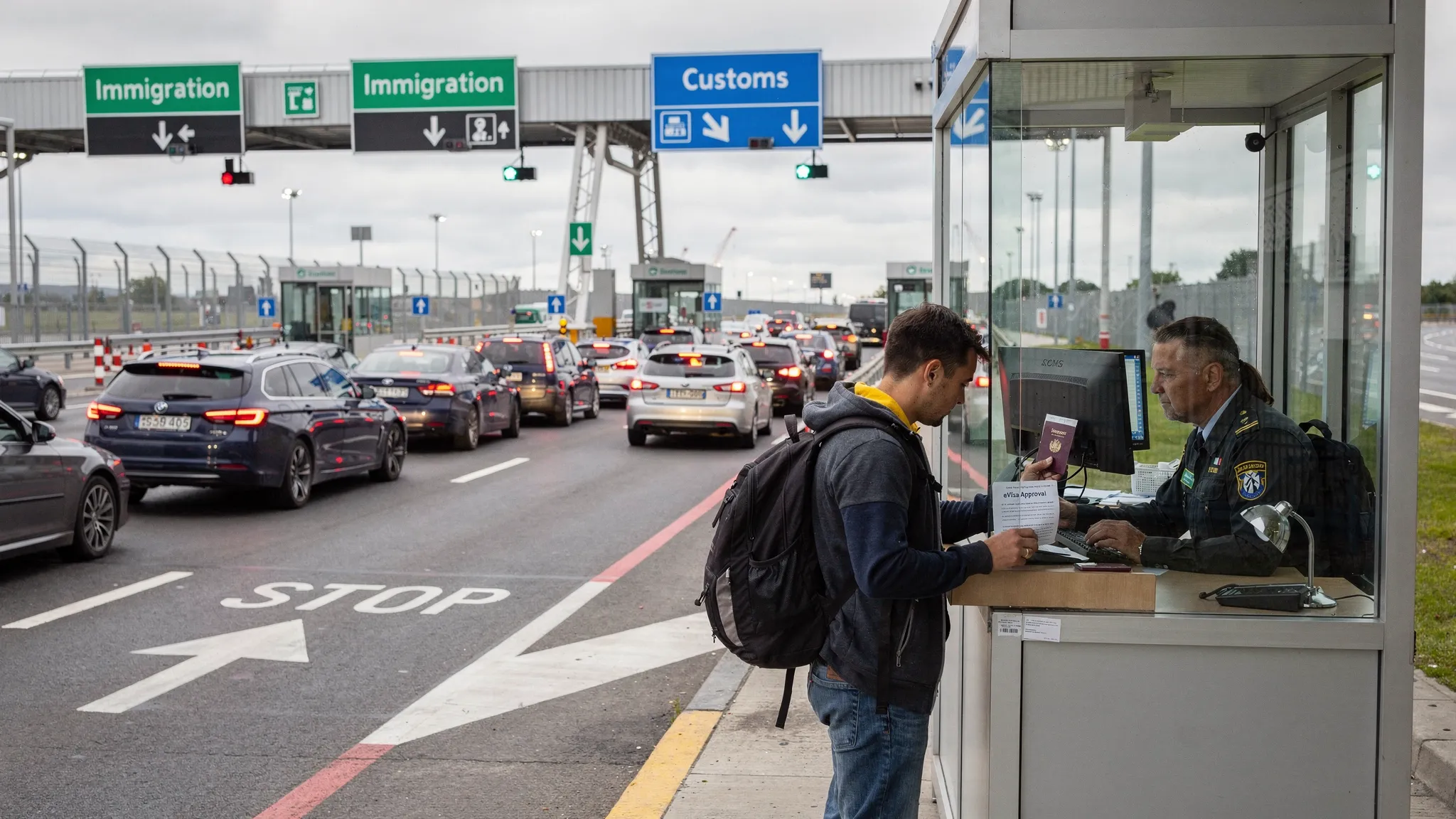
1) The eVisa is real, but not valid for land entry
Many eVisas are issued for tourism, but that does not automatically mean they are valid at every entry method (air, land, sea). Some destinations explicitly restrict eVisas to air entry (or to major airports) while land borders require a different document or a consular visa.
How travelers get caught:
- They search “Does Country X offer an eVisa?” and stop there.
- They do not notice “valid at airports only” or “valid at designated ports.”
How to prevent it:
- Confirm mode of entry and eligible ports of entry before booking transport.
- If the itinerary includes overland segments, validate that the eVisa supports land border entry, not just entry in general.
2) The traveler enters at a port not on the approved list
Even when land entry is allowed, some eVisas only work at listed border crossings. Travelers often assume any crossing is fine, especially when crossing within the same region.
How travelers get caught:
- They take the “most convenient” crossing recommended by a driver, local agent, or mapping app.
- A tour changes the route due to weather, protests, road closures, or queue times.
What to do if already at the wrong crossing:
- Ask (politely) whether entry is possible at an alternative nearby crossing that is on the eligible list.
- Be prepared for a detour, and build buffer time into overland itineraries.
3) Single-entry rules collide with multi-stop overland itineraries
Overland trips often involve “out and back” movement that feels like one journey but counts as multiple entries. A common example is leaving a country for a day trip and re-entering later.
How travelers get caught:
- They hold a single-entry eVisa and unknowingly use their entry.
- They exit and try to re-enter, then discover they need a second visa or a multi-entry authorization.
Prevention:
- Check the eVisa’s number of entries (single vs multiple) alongside the real itinerary.
- If the trip includes border-hopping, ensure the traveler buys the correct entry type up front.
Related reading for travelers and support teams: When does an electronic visa expire and how to renew it?
4) “Valid from” dates, entry windows, and length of stay get confused
Land border issues frequently come down to timing misunderstandings:
- A visa can be approved but not yet valid for entry.
- A visa can be valid for entry within a window, but the traveler arrives outside that window.
- The allowed length of stay can be mistaken for the visa’s overall validity period.
Why it’s worse at land borders:
Overland travel is more prone to schedule drift. A delay of one day can push entry outside an allowed window.
Prevention:
- Treat “validity,” “entry window,” and “duration of stay” as three separate checks.
- Apply earlier and plan buffers. Simple advice still holds: do not wait until the week of travel for documents with variable processing.
5) Passport, name, or number mismatches that slip through until the border
A border officer’s system typically expects an exact match, especially for passport number, nationality, date of birth, and name order.
Common mismatch patterns:
- Traveler applied using a different passport than the one they bring.
- A middle name is included in one document but not the other.
- A typo in passport number, issuance date, or expiration date.
- Confusion between “given name” and “surname” fields.
This is one of the most preventable causes of border friction.
Prevention:
- Copy names exactly as shown in the passport’s machine-readable zone.
- Run a cross-check between ticket, passport, and eVisa.
Helpful deep dive: Handling name mismatches on tickets, passports, and eVisas
6) The border post cannot verify the eVisa (QR, portal, or offline problem)
Even if the traveler is fully compliant, land border staff may be unable to verify an electronic authorization due to:
- intermittent internet,
- a scanning device that fails to read a QR,
- a system outage, or
- inconsistent training across posts.
What travelers should carry:
- An offline copy on the phone (PDF or screenshot) plus a printed copy when recommended.
This does not mean paper is “required,” but it often helps in real-world edge cases.
Related: Do you need to print an electronic visa?
7) “Visa approved” does not mean “nothing else needed”
Many countries still expect travelers to meet conditions at the border, even with an eVisa in hand. Land borders often ask more questions because travelers arrive without an airline carrier pre-check.
Common additional items requested:
- proof of onward travel,
- accommodation details,
- proof of sufficient funds,
- travel insurance (destination-dependent),
- a completed arrival form or customs declaration.
Prevention:
- Build a destination-specific document checklist and keep it with the traveler’s trip records.
Practical resource: Checklist: Everything you need before submitting an online visa application
Quick reference table: where travelers get caught, and the fastest fix
| Land border pitfall | Why it happens | What usually fixes it fastest |
|---|---|---|
| eVisa not valid for land entry | eVisa program limited to airports or specific ports | Re-route to an eligible port or obtain the correct visa class (may require consular processing) |
| Wrong border crossing | eVisa valid only at listed entry points | Detour to an approved crossing (build buffer time) |
| Single-entry eVisa used up | Traveler exits and re-enters on a multi-stop itinerary | Apply for a new eVisa or switch to multi-entry where available |
| Entry window missed | Delays in overland travel, misunderstanding “valid from” dates | Adjust itinerary, reapply if the entry window is strict |
| Passport/name mismatch | Typos, wrong passport used, inconsistent name fields | Amend or reapply (some destinations cannot correct after issuance) |
| Verification failure (QR/portal) | Connectivity or system outage at border post | Present printed copy/offline PDF, show confirmation number, request supervisor check |
| Missing supporting docs | eVisa is only one requirement | Provide proofs (onward ticket, hotel, funds), avoid arguing “but I have a visa” |
A practical land border checklist for travelers
If a trip includes overland segments, travelers should treat documentation like a “border-ready kit,” not just an approval email.
- Confirm the eVisa is valid for land entry and check eligible ports of entry.
- Re-check single vs multiple entry against the actual itinerary.
- Verify valid from date, entry deadline, and allowed length of stay.
- Match passport details exactly (name order, passport number, nationality).
- Save the eVisa approval offline and consider carrying a printed copy.
- Keep core supporting docs handy (onward plan, lodging, funds, insurance if required).
- Add buffer time for detours, queues, and additional questions at crossings.
What travel businesses should do differently in 2026
For travel sellers, land-border failures are not just a customer experience problem. They can create chargebacks, rebooking costs, support spikes, and reputational damage.
The operational fix is not “tell travelers to read the government site.” It is making land-border constraints visible at decision points.
Capture “mode of entry” as structured data
If the booking journey only stores destination and dates, you miss the key variable that drives many eVisa restrictions.
At minimum, store:
- country (and region) of entry,
- mode of entry (air, land, sea),
- intended entry point when known.
Put port restrictions and entry rules into the booking and post-booking flow
The best time to prevent a wrong border crossing is before the traveler buys a nonrefundable bus ticket.
This is where a visa data service or travel API that returns entry constraints can materially reduce friction, especially for multi-country itineraries.
If you are exploring this approach, SimpleVisa supports multiple deployment models (API integration in your booking flow, a white-label visa application app, or custom data services) to guide customers through border requirements while creating ancillary revenue.
For background on embedding visa logic into travel experiences: What is travel document automation?
Automate consistency checks (passport, names, and document validation)
Land borders are unforgiving about identity mismatches. Automated validation and clear UX prompts reduce avoidable errors that would otherwise surface at the checkpoint.
If you support customers at scale, consider building a playbook for “high risk” mismatches and escalation paths.
Related (technical, for product and engineering teams): How eVisa APIs work: step by step
Provide a land-border “proof pack” by default
Even when an eVisa is electronic, travelers benefit from a single bundle that contains:
- the eVisa approval (PDF),
- the confirmation number or reference,
- a plain-language summary of conditions (entry window, stay length, entries, ports),
- required supporting documentation reminders.
This reduces last-minute panic and decreases support contacts when a border post is slow or offline.
Frequently Asked Questions
Are eVisas valid at land borders? Sometimes. Some eVisas allow land entry, others are restricted to airports or specific ports. Always check whether land entry and your specific crossing are permitted.
If my eVisa is approved, can I still be denied entry at a land border? Yes. Approval is one requirement. Officers can still deny entry if the visa is not valid for that port, the entry window is missed, identity details do not match, or supporting documents are insufficient.
Should travelers print an eVisa for a land border crossing? If printing is allowed, it is often helpful. Land borders can have connectivity or scanning issues, and a printed copy plus an offline PDF can speed up manual verification.
What if the border officer says they cannot find my eVisa in the system? Ask if they can verify using the reference number, QR, or an alternative lookup method. Present the offline copy or printed approval, and request a supervisor check if appropriate.
How can travel companies reduce land-border documentation problems at scale? Capture mode of entry, validate port restrictions early, automate identity consistency checks, and give travelers a clear proof pack and reminders in the post-booking journey.
Reduce land border surprises with guided eVisa journeys
Land borders are where small data gaps become big disruptions. If you are a travel business looking to reduce denied boardings and border failures while unlocking ancillary revenue, SimpleVisa helps you integrate visa checks and guided applications into your customer journey (via API, white-label app, or data services).
Learn more at SimpleVisa.