Travel Visa Documents vs Entry Proofs: Know the Difference
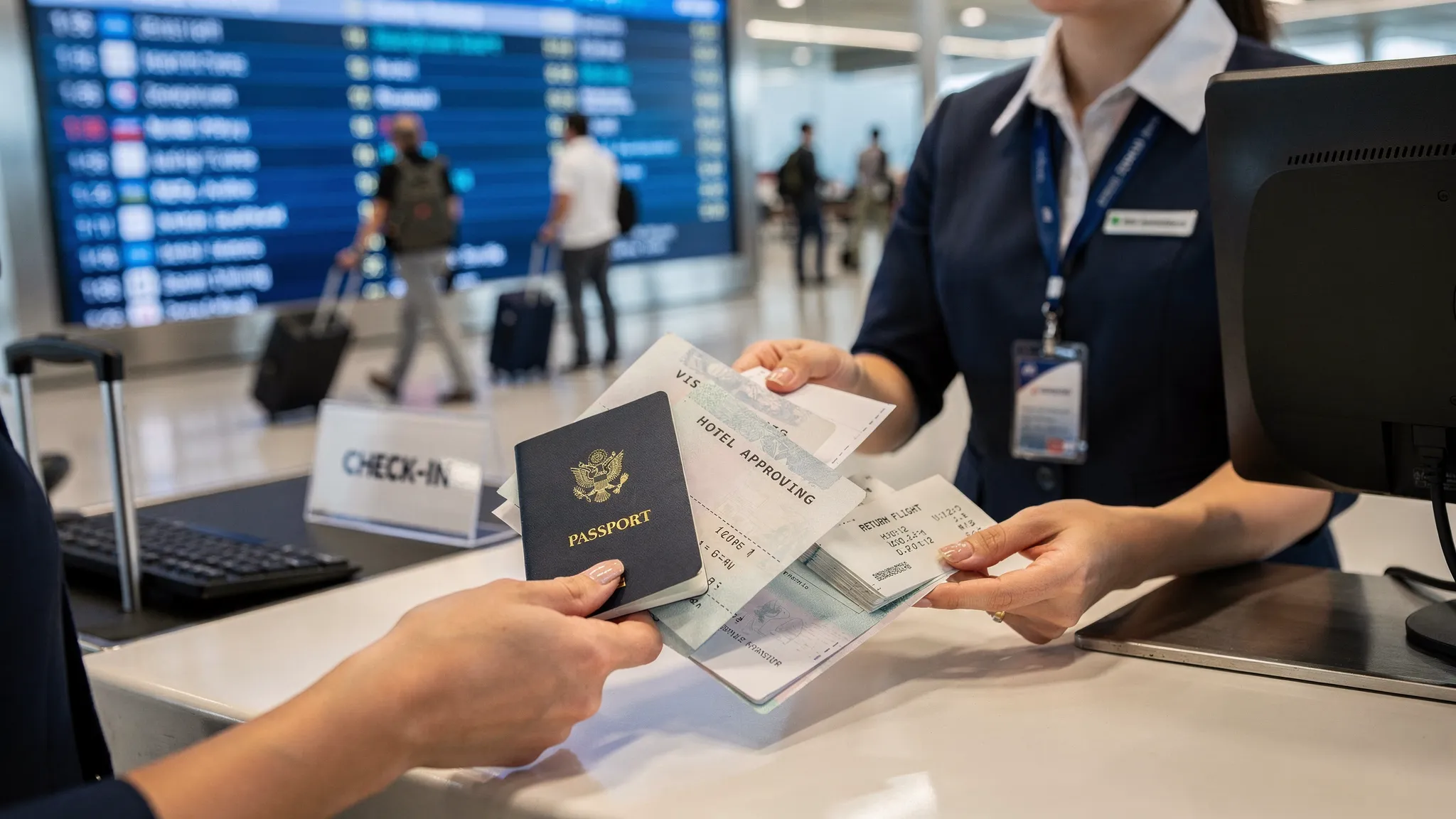
A traveler can have an approved visa and still be asked for a return ticket at check-in. Another traveler may be visa-free but still need an electronic travel authorization before boarding. A third may have every document saved on their phone but be delayed because the accommodation proof does not match the itinerary.
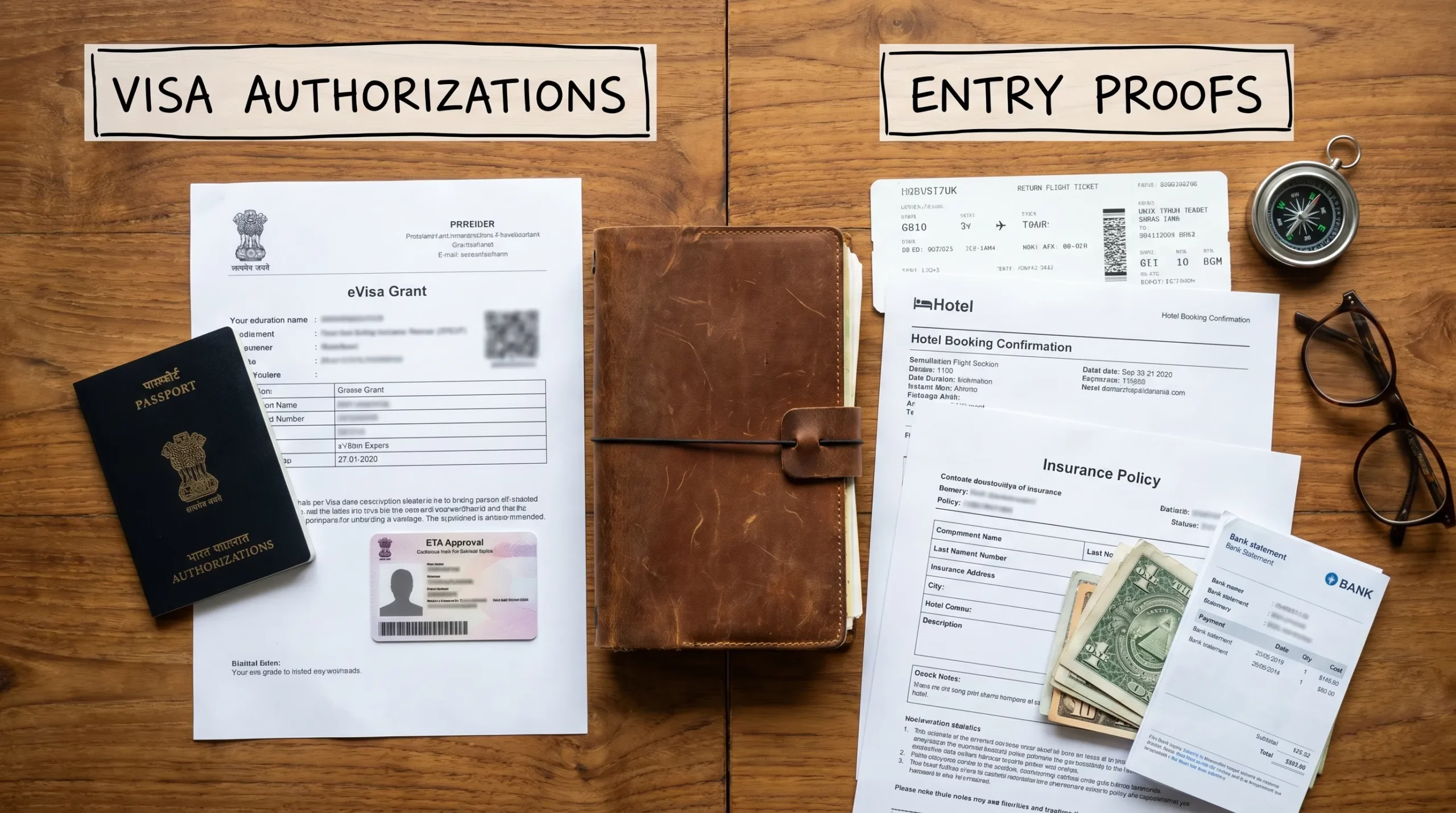
That confusion usually comes from mixing up two related but different categories: travel visa documents and entry proofs. Both can affect whether a traveler boards, crosses a border, or completes a smooth visa application, but they answer different questions.
The simplest way to separate them
Travel visa documents answer: “Do you have permission, or pre-permission, to travel to this destination for this purpose?”
Entry proofs answer: “Can you show that your specific trip meets the conditions attached to entry?”
A visa, eVisa, ETA, ESTA, or similar authorization may be required before travel. Entry proofs are the supporting evidence a traveler may need to show during the visa application, at airline check-in, at border control, or sometimes all three.
This distinction matters because border requirements are not only about having the right authorization. They are also about proving identity, purpose, duration, onward plans, funds, health compliance, and other destination-specific conditions.
What counts as a travel visa document?
A travel visa document is the formal authorization, or evidence of authorization, connected to a traveler’s right to seek entry. It can be physical, digital, or electronically linked to a passport.
Common examples include a traditional visa sticker in a passport, an approved electronic visa, an eVisa approval letter, an Electronic Travel Authorization, a transit visa, or a resident permit used for entry. In some systems, the traveler may not receive a printable document at all because the authorization is stored digitally and linked to the passport number.
A key point is that a visa document usually does not remove the border officer’s final authority. The U.S. Department of State explains that a visa allows a traveler to go to a port of entry and request admission, but it does not guarantee entry. Many other countries follow the same practical principle.
For travelers, that means an approved visa is essential when required, but it is not the entire border-crossing story. For travel businesses, it means a visa management platform should not stop at “visa required” or “visa approved.” It should also help surface the evidence a traveler may need for the journey.
What counts as an entry proof?
“Entry proof” is a practical travel-industry term rather than one universal legal category. It refers to the documents, confirmations, or records that help prove a traveler meets the conditions of entry.
Examples include return or onward tickets, accommodation bookings, proof of funds, travel medical insurance, invitation letters, conference registration, school acceptance letters, employment letters, vaccination certificates, customs or health declarations, and proof of family relationship for minors or dependent travelers.
Some of these documents may also be requested during the visa application itself. For example, a hotel booking can be a supporting document for an eVisa application and later an entry proof at the border. The document is the same, but the context changes.
Travel visa documents vs entry proofs: quick comparison
| Category | Main purpose | Typical examples | When checked | Common mistake |
|---|---|---|---|---|
| Travel visa documents | Show authorization or pre-authorization to travel or seek entry | Visa sticker, eVisa, ETA, ESTA, transit visa, residence permit | Before boarding, during online check-in, at immigration, sometimes during booking | Assuming approval guarantees entry |
| Entry proofs | Show the trip meets entry conditions | Return ticket, hotel booking, funds, insurance, invitation letter, health certificate | During visa application, check-in, border control, or post-arrival checks | Assuming they are unnecessary once a visa is approved |
| Passport and identity documents | Prove identity and nationality | Passport, national ID where accepted, emergency travel document | Almost every stage of travel | Treating passport validity as separate from visa validity |
| Travel purpose documents | Support the reason for travel | Business invitation, student letter, event ticket, medical appointment letter | Visa application and sometimes border control | Applying under the wrong travel purpose |
Documents that are easy to confuse
Some documents sit close to the line between visa documentation and entry evidence. Understanding their role helps prevent avoidable delays.
| Document | Visa document, entry proof, or both? | Why it matters |
|---|---|---|
| Passport | Neither a visa nor an entry proof, but the core identity document | Most visas and eVisas are tied to passport details, so a mismatch can invalidate the authorization |
| Approved eVisa PDF | Visa document and proof of authorization | Travelers may need to present it digitally or as a printed backup, depending on the destination |
| ETA or ESTA approval | Pre-travel authorization | It may allow boarding, but it is not the same as a long-stay visa or work permit |
| Return or onward ticket | Entry proof | Shows the traveler intends to leave within the permitted stay |
| Accommodation booking | Entry proof and sometimes visa supporting evidence | Helps confirm itinerary, local address, and travel purpose |
| Bank statement or proof of funds | Entry proof and often visa supporting evidence | Shows the traveler can support themselves during the stay |
| Invitation letter | Entry proof and often application evidence | Supports business, family, event, or private-visit purposes |
| Travel insurance | Entry proof in some destinations | May be required for health, Schengen-style medical coverage, or specific visa categories |
The safest approach is to treat documents by function, not by file name. A PDF called “visa confirmation” is not the same as a hotel confirmation. A flight booking can support an application, but it does not replace a visa. A passport proves identity, but it does not prove that a traveler has enough funds or the right travel purpose.
Why a visa can be approved but entry still questioned
A visa application is usually reviewed before travel, often based on the information available at that time. Border control happens later, at the moment the traveler seeks entry. By then, the officer may consider updated facts, travel behavior, itinerary inconsistencies, document mismatches, or security checks.
This is why travelers may still be asked questions such as where they are staying, how long they will remain, what they will do during the trip, how they will pay for the stay, and when they plan to leave.
Electronic systems have made this faster, but not always simpler. The European Union’s ETIAS information portal describes ETIAS as a travel authorization for visa-exempt travelers, not a visa. Similarly, systems like ESTA, UK ETA, and Australian ETA are designed to pre-screen eligible short-term visitors, but they do not replace every possible entry condition.
In practical terms: visa-free does not mean document-free, and eVisa-approved does not mean proof-free.
When each document is usually requested
Travelers often expect document checks to happen only at immigration. In reality, checks can occur throughout the journey.
During booking, a travel company may display visa or authorization requirements based on passport, destination, trip dates, and itinerary. This is where accurate travel API data and clear messaging can prevent customers from discovering requirements too late.
During the visa or eVisa application, the traveler may need to upload supporting evidence. This could include a passport scan, photo, accommodation proof, invitation letter, financial evidence, or travel insurance, depending on the destination and travel purpose. For more preparation detail, see SimpleVisa’s online visa application checklist.
At airline check-in, staff may verify that the traveler has the required visa, eVisa, ETA, or transit authorization. Airlines often rely on document-checking systems and destination rules because transporting a passenger without proper documents can create operational and compliance problems.
At the border, officers may check both the authorization and the supporting evidence. A traveler may be asked to show return travel, accommodation details, proof of funds, insurance, or the reason for visiting. This stage is especially important for travelers with flexible itineraries, long stays, one-way tickets, or complex multi-country trips.
Common real-world scenarios
Scenario 1: The traveler has an eVisa but no onward ticket
A traveler applies for an eVisa, receives approval, and assumes the trip is fully cleared. At check-in or arrival, they are asked for proof of onward travel. If the destination requires evidence that the traveler will leave before the visa expires, the eVisa alone may not be enough.
The eVisa proves authorization. The onward ticket proves compliance with the permitted duration of stay.
Scenario 2: The traveler is visa-free but still needs an ETA
A passport holder may not need a traditional visa for short tourism, but they may still need an electronic travel authorization before boarding. This is common in countries using pre-screening systems for visa-exempt travelers.
In this case, the traveler does not need a visa sticker, but they do need a digital authorization. They may also need entry proofs such as a return ticket and accommodation details.
Scenario 3: The itinerary includes transit or multiple borders
A traveler flying from one country to another through a third country may need a transit visa, airport transit authorization, or proof of onward travel. Cruise itineraries, multi-city trips, and self-transfer flights can create similar complexity.
The key is that each border may apply its own rules. A valid visa for the final destination does not automatically satisfy transit requirements.
Why this distinction matters for travel businesses
For airlines, OTAs, tour operators, cruise lines, and travel management companies, the difference between visa documents and entry proofs is not just educational. It affects conversion, customer satisfaction, support workload, denied boarding risk, and ancillary revenue.
When requirements are unclear, travelers may abandon bookings, submit incomplete applications, call support teams, or arrive at the airport unprepared. When requirements are presented too late, the travel brand may become the first place the customer blames, even if the rule comes from a government or border authority.
A well-designed border crossing solution separates three layers:
- Eligibility and authorization: Does this traveler need a visa, eVisa, ETA, or other permission for this itinerary?
- Application evidence: What documents are required to submit a complete application?
- Entry readiness: What proofs should the traveler carry to satisfy arrival conditions?
This is where travel document automation becomes valuable. Instead of showing a static “check visa rules” message, automation can guide customers through requirements based on passport, destination, travel purpose, dates, and routing. To learn more about the broader concept, read SimpleVisa’s guide to travel document automation.
For businesses, the commercial upside is also clear. Guided online visa processing can become a useful ancillary service when it is embedded responsibly into the booking journey. The customer gets clearer guidance, and the travel provider creates a smoother path from booking to border crossing.
How to prepare travelers without overwhelming them
The goal is not to give every traveler a long legal checklist. The goal is to show the right requirement at the right moment.
A practical traveler-facing workflow should start with the basics: passport nationality, destination, travel dates, transit points, and purpose of travel. From there, it should separate “apply before travel” tasks from “carry for entry” tasks. This prevents travelers from thinking an approved eVisa means every other document can be ignored.
Before departure, travelers should confirm these essentials:
- Their passport details match the visa, eVisa, ETA, ticket, and booking records.
- Their authorization covers the correct purpose, dates, number of entries, and destination.
- They have proof of onward or return travel if required.
- They can show accommodation, host, or local contact details if asked.
- They have financial, insurance, health, or invitation documents when destination rules require them.
- They have digital backups and, where useful, printed copies.
For a broader pre-booking overview, SimpleVisa’s travel visa basics guide explains what travelers should check before committing to an itinerary.
How SimpleVisa helps clarify the journey
SimpleVisa helps travel businesses simplify border crossing administration by integrating visa and travel authorization services into the customer journey. Depending on the business model, teams can use API integration, a white-label visa application app, custom data services, or no-code implementation options.
That matters because visa documents and entry proofs should not be treated as one generic upload step. A customer may need to apply for an eVisa, upload supporting evidence, receive approval, and still carry entry proofs for arrival. Clear separation reduces confusion and helps travel brands deliver a more trustworthy experience.
For travel companies, a visa management platform can support guided applications, premium eVisa management, and ancillary revenue generation while making the traveler experience feel less fragmented. The result is not just faster form completion. It is better border readiness.
Frequently Asked Questions
Is an eVisa the same as an entry proof? No. An eVisa is a travel visa document or digital authorization. It may be used as proof of authorization, but entry proofs usually refer to supporting evidence such as return tickets, accommodation, funds, insurance, or invitation letters.
Does a visa guarantee entry into a country? Usually not. A visa or eVisa generally allows a traveler to seek entry, but border authorities can still assess admissibility on arrival. Travelers should carry any required entry proofs and follow the conditions of their visa.
Can I be denied boarding if I have a visa but lack another document? It can happen if the airline must verify additional requirements, such as transit authorization, return travel, passport validity, or destination-specific documentation. Requirements vary by route, passport, and destination.
Do visa-free travelers need entry proofs? Often, yes. Visa-free entry means a traveler may not need a traditional visa, but they may still need an ETA, health declaration, onward ticket, accommodation proof, or evidence of sufficient funds.
Should travel businesses collect entry proofs during the visa application? Only when required and with appropriate data protection practices. Some proofs are needed for application submission, while others may simply need to be communicated clearly so the traveler can carry them at departure and arrival.
Make visa and entry requirements easier to understand
Travelers do not want to decode border rules across multiple government portals, airline emails, and booking confirmations. They want one clear journey that tells them what to apply for, what to upload, and what to carry.
If your travel business wants to simplify visa checks, guide customers through online visa processing, and add border crossing solutions directly into the booking flow, SimpleVisa can help. Explore API, white-label, data service, and no-code options to make travel documentation clearer from booking to arrival.