Travel Visa Documents You Need Before Booking Flights
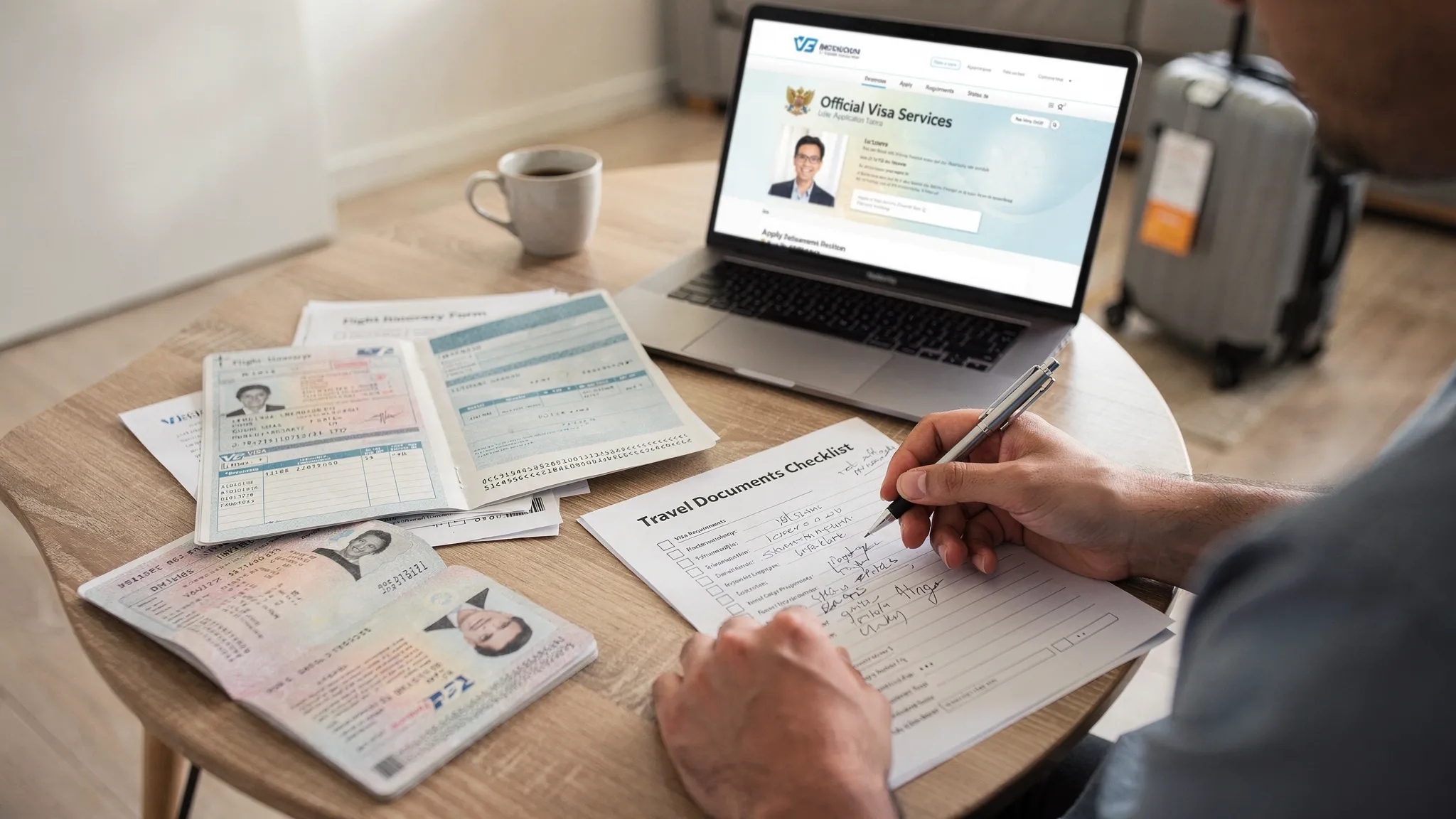
Before you pay for flights, pause for one essential check: do you have the right travel visa documents for your route, passport, purpose of travel, and transit points?
Many travelers treat visas as a post-booking task. That can work for simple trips, but it can also create expensive problems if you discover too late that your passport expires too soon, your layover requires a transit visa, or your destination needs an eVisa before the airline will let you board.
This guide explains which documents to check before booking flights, which ones you may need later for the visa application, and how to avoid the most common pre-departure surprises.
Why visa documents should come before flight booking
Airlines are often required to verify that passengers have the right entry or transit documents before boarding. If your documents do not meet the destination’s rules, you may be denied check-in even if you already paid for the ticket. Tools such as the IATA Travel Centre exist because entry rules vary by nationality, route, destination, residence status, travel purpose, and even transit airport.
Checking travel visa documents before booking helps you answer five practical questions:
- Can I enter the destination with my passport?
- Do I need a visa, eVisa, electronic travel authorization, or transit visa?
- Is my passport valid long enough for the trip?
- Will the visa processing time fit my travel dates?
- Should I book refundable flights or wait until approval?
Some visa applications ask for confirmed travel dates, accommodation, or proof of onward travel. Others advise applicants not to buy nonrefundable tickets until the visa is granted. The safest approach is to understand the requirement first, then book with the right level of flexibility.
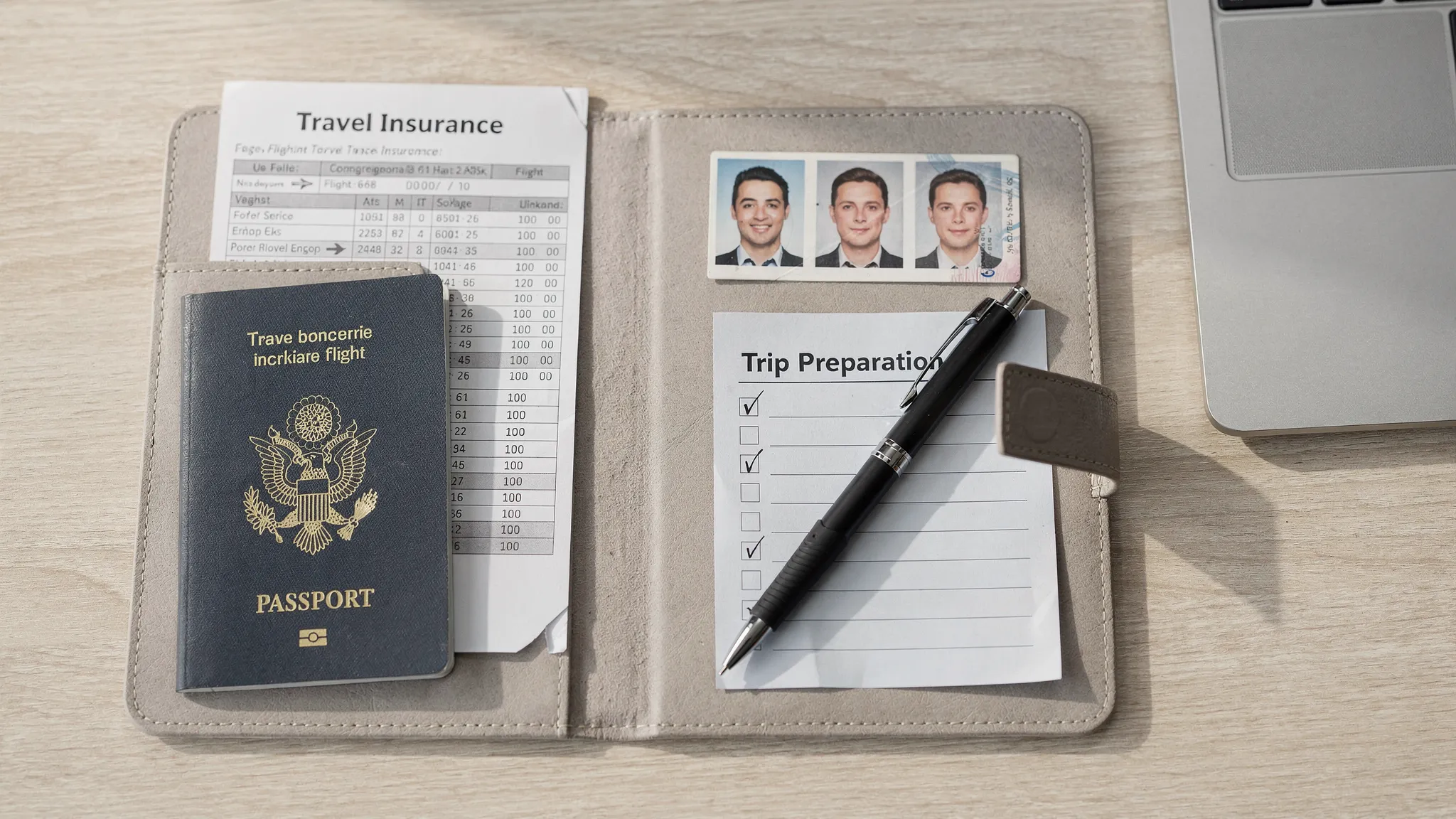
Quick checklist: documents to review before booking flights
You may not need every document before you buy a ticket, but you should know whether each one will be required. Use this table as a pre-booking scan before committing to flights.
| Document or information | Check before booking? | Why it matters |
|---|---|---|
| Valid passport | Yes | Many countries require 3 to 6 months of validity beyond arrival or departure. |
| Blank passport pages | Yes | Some destinations still require blank pages for entry stamps or visa labels. |
| Visa, eVisa, or eTA requirement | Yes | Your nationality may require approval before boarding. |
| Transit visa rules | Yes | A layover can create a separate document requirement. |
| Travel dates and itinerary | Yes | Visa validity and permitted stay must match your trip. |
| Return or onward travel proof | Usually | Some countries and airlines may ask for proof that you will leave. |
| Accommodation or host address | Usually | Many visa forms require at least a first-night address or host contact. |
| Proof of funds | Sometimes | Some visas require bank statements, payslips, or sponsor letters. |
| Passport photo and digital scan | Usually | Online visa processing often requires specific photo and file formats. |
| Travel insurance or health documents | Sometimes | Requirements vary by country, visa type, and traveler profile. |
| Invitation, business, or study letter | If applicable | Needed when your trip purpose is not simple tourism. |
| Minor consent documents | If applicable | Children traveling with one parent or without parents may need extra proof. |
1. Your passport: validity, condition, and blank pages
Your passport is the foundation of almost every travel visa document check. Before you compare flight prices, confirm three things: expiration date, physical condition, and blank pages.
A common rule is that a passport must be valid for at least six months beyond the date of arrival, although some countries use three months beyond departure or another formula. Do not assume that a valid passport is automatically acceptable. A passport expiring shortly after your trip can still block boarding or visa approval.
Also check for damage. Water damage, peeling laminate, unreadable passport numbers, torn pages, or a damaged machine-readable zone can cause problems at check-in, border control, or during an online visa application.
Finally, check blank pages. Electronic visas are often linked digitally to the passport, but border officers may still need space for entry and exit stamps. If your passport is nearly full, renew it before booking an international itinerary.
2. The correct visa, eVisa, or travel authorization
The document you need depends on your nationality, destination, length of stay, and purpose of travel. For short leisure trips, you may need one of the following:
- A visa-free entry, with no pre-approval required
- An electronic travel authorization, such as an eTA, ETA, ESTA, or ETIAS-style authorization where applicable
- An electronic visa, also called an eVisa
- A traditional consular visa issued after a more detailed application
These are not interchangeable. An eVisa is generally a visa issued through an online process. An electronic travel authorization is usually a lighter pre-screening requirement for visa-exempt travelers. A traditional visa may require biometrics, an appointment, or submission through an embassy, consulate, or visa center.
If you are unsure which applies, start with official government sources for your destination. For example, the United States provides official ESTA information through U.S. Customs and Border Protection, while the UK explains its ETA system on GOV.UK. For Europe, the official EU travel authorization website is the best source for ETIAS updates.
For a broader overview, SimpleVisa’s guide to travel visa basics explains how visas, eVisas, and eTAs differ before you book.
3. Transit visa documents for layovers
Transit rules are one of the most overlooked reasons travelers run into trouble. A flight connection in a third country can trigger a separate visa or authorization requirement, even if you never plan to leave the airport.
Before booking, check whether your itinerary includes:
- A self-transfer between airlines
- A terminal change that requires immigration clearance
- An overnight layover
- A baggage re-check in the transit country
- A connection through a country with strict transit rules for your passport
A cheaper flight with a long or complex layover may become more expensive if you need another visa, extra processing time, or a hotel near the airport. When comparing flights, include document requirements in the real cost of the route.
4. Proof of onward or return travel
Some destinations require proof that you will leave before your authorized stay ends. Airlines may also ask for onward travel documentation at check-in if the destination requires it.
Before booking your outbound flight, check whether the country expects a return ticket, onward ticket, or itinerary showing your next destination. This is especially important for one-way travel, backpacking trips, digital nomad routes, and multi-country itineraries.
If you are not ready to lock in a return date, consider flexible fares, refundable tickets, or airline hold options where available. Avoid creating fake tickets or altered documents. False documentation can lead to visa refusal, denied boarding, or future immigration problems.
5. Accommodation details or host information
Many visa applications ask where you will stay. For tourists, this may be a hotel booking, rental confirmation, or first-night address. For family visits, it may be a host’s full name, address, phone number, immigration status, or invitation letter.
You do not always need to pay for accommodation before applying, but you should know what the visa form requires. Some travelers book refundable accommodation to support a visa application, then finalize plans later.
If you will stay in multiple cities, keep the itinerary consistent. Your flight dates, accommodation dates, and requested visa validity should tell the same story.
6. Proof of funds and ties to your home country
Visa officers may want evidence that you can afford the trip and intend to follow the visa conditions. The exact requirements depend on the country and visa type, but common documents include bank statements, payslips, tax documents, employment letters, school enrollment letters, or sponsor letters.
This matters before booking because you may discover that your destination requires recent documents, minimum financial evidence, translated records, or proof of employment. If you need time to collect bank statements or employer letters, that should affect your travel timeline.
For travelers applying for a business, student, medical, or long-stay visa, financial and purpose-specific documents can be more important than the flight itself.
7. Digital passport photo and passport scan
Online visa processing usually requires a clear passport scan and a compliant digital photo. Requirements can be strict: file size, file type, background color, head position, no shadows, no glare, and no filters.
Before booking a flight, check whether you can produce acceptable digital copies quickly. A blurry passport scan or rejected photo can delay an otherwise simple eVisa application.
A practical setup includes a high-resolution scan of your passport bio page, a recent passport-style photo, and secure cloud backup. If your passport photo has changed significantly, or if the application requires a recent photo within a specific number of months, get a new one before you apply.
SimpleVisa’s online visa application checklist goes deeper into document quality, file preparation, and pre-submission checks.
8. Travel insurance, vaccination, and health documents
Not every country requires travel insurance or vaccination records, but some do. Requirements can depend on where you are arriving from, not just where you are a citizen.
For example, certain countries may require proof of yellow fever vaccination if you have recently visited or transited through a risk area. Other visas may require medical insurance covering the full stay, especially for longer visits, students, or specific regional travel zones.
Before booking, check whether your destination requires:
- Travel medical insurance
- Vaccination certificate
- Health declaration
- Medical exam results
- COVID-era or other public health documentation, if reintroduced or destination-specific
Health rules can change quickly during outbreaks or regional emergencies, so verify close to booking and again before departure.
9. Purpose-specific documents: business, study, events, or family visits
Your trip purpose can change the required visa documents. A traveler attending meetings may need different documentation from a tourist visiting the same country for the same number of days.
Common purpose-specific documents include:
- Business invitation letter
- Conference registration confirmation
- Student admission letter
- Internship or training documentation
- Medical appointment confirmation
- Family invitation or proof of relationship
- Sponsorship letter
Check this before booking because the wrong visa category can create problems even if you are approved. For example, a tourist eVisa may not allow business activities, paid work, study, or volunteering. Your flight itinerary should match the visa category you are eligible to use.
10. Extra documents for minors, dual citizens, and name changes
Some travelers need additional documentation before booking flights.
Children traveling internationally may need birth certificates, parental consent letters, custody documents, or copies of parents’ passports. Rules vary by country and airline, especially when a child travels with one parent, with relatives, or as an unaccompanied minor.
Dual citizens should decide which passport they will use before booking. The name and passport number on the ticket, visa application, and travel authorization must match the passport used for travel. Some countries also require citizens to enter and exit using that country’s passport.
If your name recently changed due to marriage, divorce, adoption, or legal name change, verify that your passport, visa, ticket, and supporting documents align. Name mismatches can be difficult and costly to fix after ticketing.
Should you book flights before or after applying for a visa?
There is no single answer. The right sequence depends on the destination’s rules and your risk tolerance.
| Situation | Safer booking approach |
|---|---|
| Visa-free or simple eTA trip | Check eligibility first, then book, then apply within the recommended window. |
| Standard eVisa with fast processing | Confirm requirements, book flexible flights, then apply promptly. |
| Consular visa with uncertain approval | Avoid nonrefundable flights until approval unless the embassy requires a booking. |
| Visa requiring travel dates | Use refundable flights, reservation holds, or flexible tickets where possible. |
| Multi-country itinerary | Check every destination and transit point before booking any segment. |
| Urgent travel | Prioritize routes with fewer transit risks and consider expedited processing if officially available. |
The U.S. Department of State and many other authorities remind travelers that a visa does not guarantee entry and that final travel plans should be made carefully. Even after approval, border officers can ask about your purpose, funds, onward travel, or accommodation.
Common mistakes to avoid before booking flights
The most expensive visa mistakes often happen before the application is even submitted. Watch for these issues:
- Booking a nonrefundable ticket before checking passport validity
- Assuming visa-free rules apply to every passport you hold
- Ignoring transit visa requirements for cheaper connecting flights
- Applying for the wrong visa category because the flight dates looked simple
- Using a nickname or shortened name on the airline ticket
- Forgetting that eVisas are often linked to a specific passport number
- Booking travel dates outside the visa validity window
- Waiting until peak travel season to collect documents
A five-minute document check before checkout can save days of rework later.
A simple pre-booking workflow for travelers
Use this order before you commit to flights:
- Check passport validity, blank pages, and condition.
- Confirm visa, eVisa, eTA, and transit requirements for your full route.
- Review estimated processing times and application windows.
- Identify required documents for your travel purpose.
- Decide whether you need flexible flights or refundable accommodation.
- Book flights only when the visa timeline and document requirements are realistic.
- Apply for the visa or authorization as early as the rules allow.
- Save digital and printed copies of approvals and supporting documents.
This approach does not remove every travel risk, but it dramatically reduces avoidable surprises.
What this means for airlines, OTAs, and travel businesses
For travel companies, visa uncertainty is not only a traveler problem. It affects conversion, support volume, denied boarding risk, and ancillary revenue. If customers discover visa requirements after booking, they may blame the booking experience even when the rule comes from a government.
Travel document automation can bring visa checks earlier in the journey. With a visa management platform, travel brands can surface destination-specific requirements during search, checkout, or post-booking. SimpleVisa supports travel businesses through API integration, white-label visa application flows, custom data services, guided customer applications, and no-code implementation options.
For airlines, OTAs, tour operators, cruise lines, and travel management companies, this turns a stressful administrative step into a clearer customer experience and a potential ancillary service. You can explore the broader strategy in SimpleVisa’s guide to travel document automation or compare implementation options in API vs. white-label app.
Frequently Asked Questions
Do I need a visa before booking a flight? Not always, but you should check visa requirements before booking. Some visas require travel dates, while others recommend waiting for approval before buying nonrefundable flights. The key is to understand the requirement and processing time before you pay.
Can I apply for an eVisa without a flight ticket? Sometimes. Many eVisa applications ask for intended travel dates rather than a paid ticket, but some request an itinerary or proof of travel. Check the destination’s official requirements before applying.
Is a passport enough to book an international flight? A passport is usually enough to make a booking, but it may not be enough to travel. You may also need a visa, eVisa, eTA, transit visa, proof of onward travel, or health documentation.
What happens if my visa is denied after I book flights? You may need to change, cancel, or postpone your trip according to the airline’s fare rules. This is why flexible or refundable bookings are safer when visa approval is uncertain.
Do I need a visa for a connecting flight? It depends on your nationality, transit country, airport, airline, baggage arrangements, and whether you pass through immigration. Always check transit rules before booking a route with layovers.
Should I print my electronic visa? Many eVisas are digitally linked to your passport, but carrying a printed copy is still wise. Some airlines, border officers, or local authorities may ask to see proof, and a paper backup helps if your phone battery dies or internet access is limited.
Make visa checks part of the journey
Travel should not start with uncertainty at the check-in counter. Whether you are planning a personal trip or designing a booking flow for thousands of customers, the best time to clarify travel visa documents is before flights are booked.
SimpleVisa helps travel businesses simplify border crossing administration with guided visa applications, online visa processing, API integrations, white-label tools, and no-code options. If your customers book international travel through your platform, adding visa checks earlier can improve confidence, reduce friction, and create a valuable ancillary revenue opportunity.
Visit SimpleVisa to learn how smarter visa workflows can fit into your travel experience.