Visa Help for Dual Citizens: Avoid Passport Mistakes
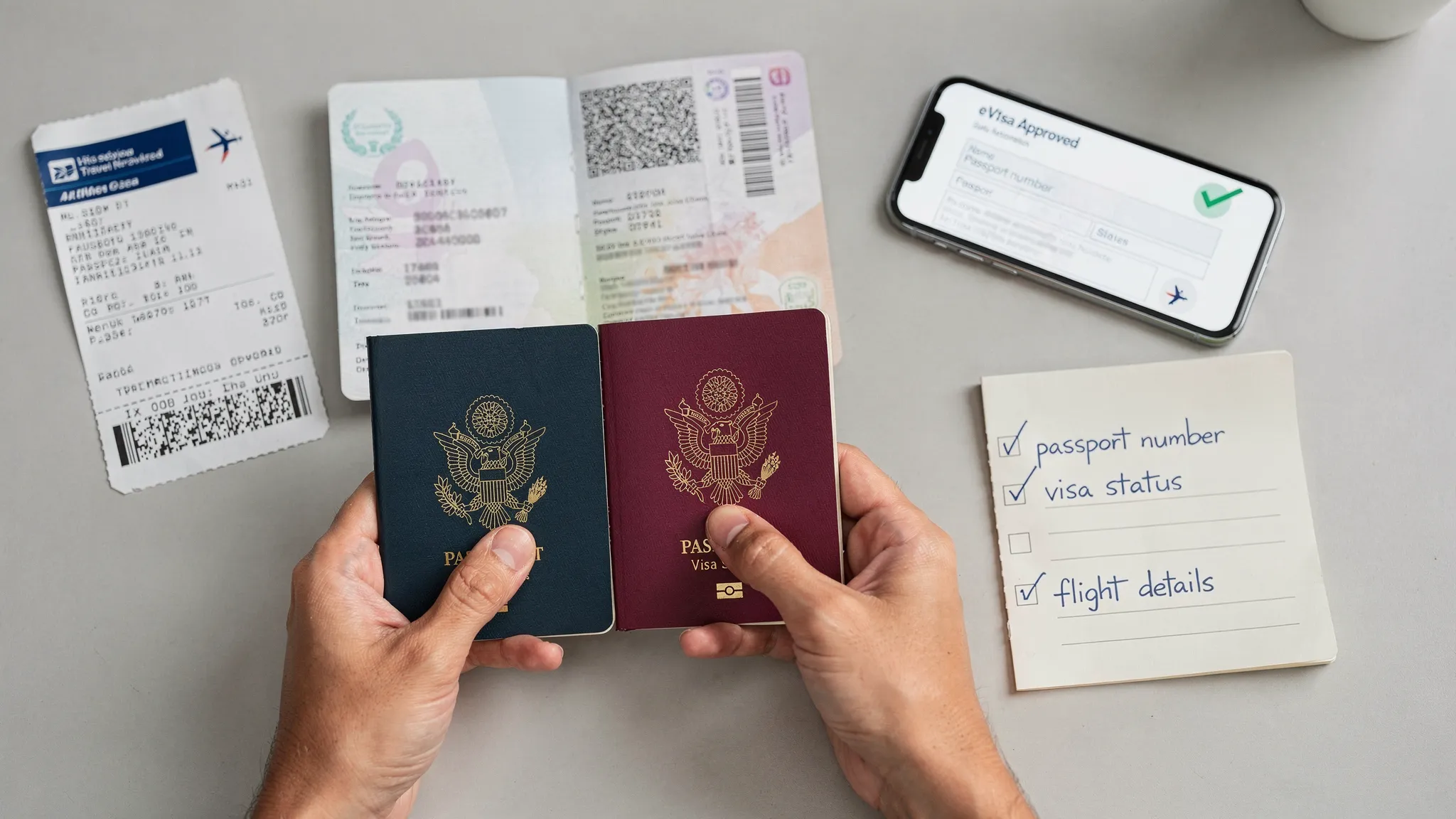
Visa help for dual citizens often starts with one deceptively simple question: which passport should I use? The answer can affect whether you need an eVisa, whether an airline lets you board, whether border officers can match your travel authorization, and whether you run into problems when leaving a country.
Dual citizenship can make travel easier, especially when one passport offers visa-free access or a faster electronic visa process. But it also creates more room for passport mistakes. A visa application may be approved under one passport, while your flight booking, check-in details, or border record shows another. In the worst cases, travelers face denied boarding, delays at immigration, or the need to reapply for a visa at the last minute.
This guide explains the most common passport errors dual citizens make, how to choose the right passport for each trip, and what to check before submitting an online visa application.
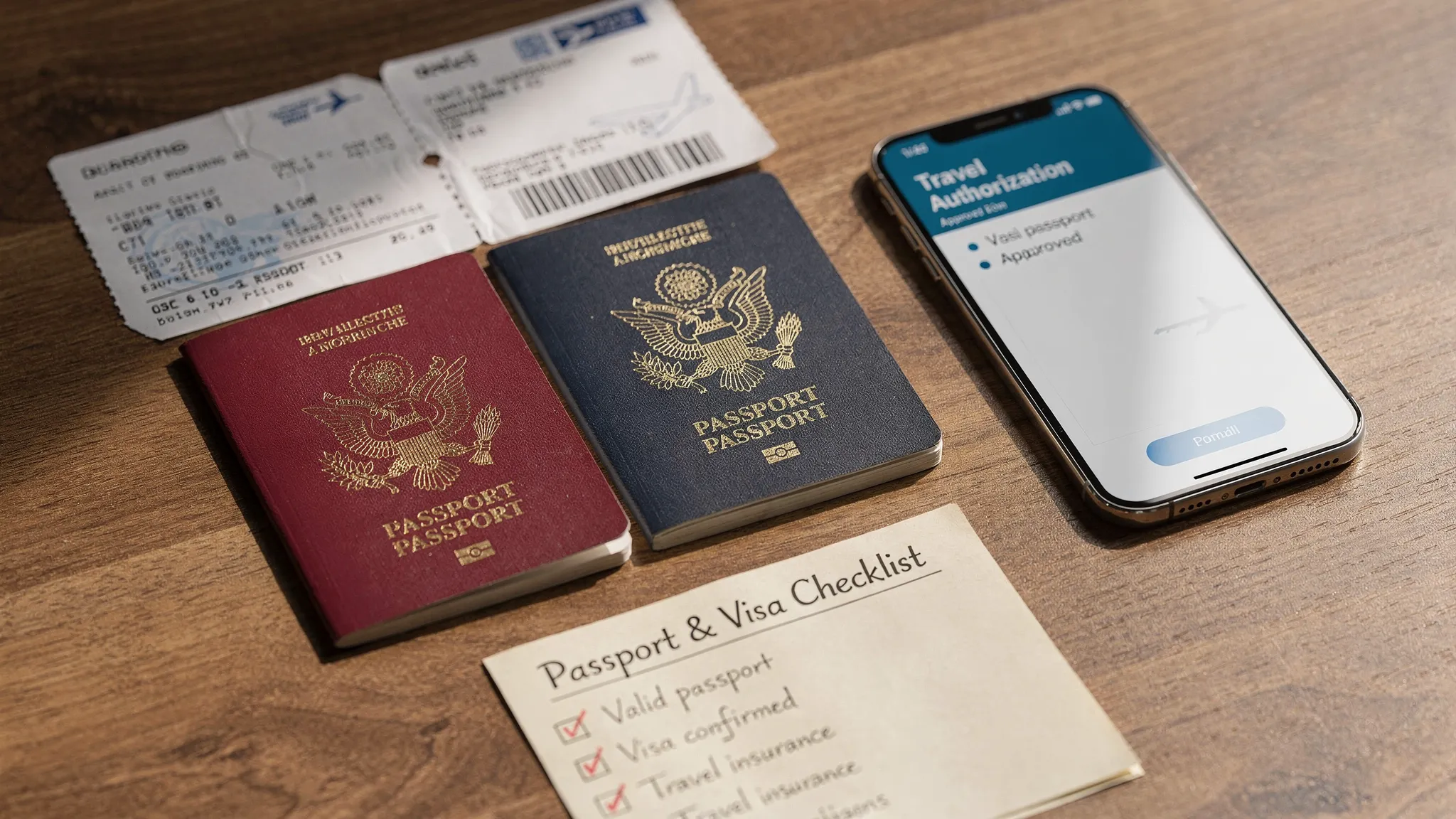
Why dual citizens face unique visa and passport risks
For most travelers, one passport means one set of visa rules. For dual citizens, every trip may involve two legal identities for travel purposes. Each passport can trigger different entry requirements, eVisa eligibility, visa fees, permitted stay lengths, and border procedures.
The complexity increases because modern electronic visa and travel authorization systems are usually tied to a specific passport number. If you apply for an eVisa with Passport A but arrive with Passport B, the airline or border officer may not be able to verify your authorization. Even if both passports belong to you, the system may treat them as separate documents.
Airlines also have their own document-checking obligations. Before boarding international passengers, carriers often verify that the traveler has the correct passport, visa, eVisa, or electronic travel authorization for the destination. If the passport shown at check-in does not match the document used in the visa application, the safest decision for the airline may be to deny boarding until the discrepancy is resolved.
There is also a legal dimension. Some countries require their citizens to enter or leave using that country’s passport. For example, the U.S. Department of State states that U.S. citizens, including dual nationals, must use a U.S. passport to enter and leave the United States. Canada also advises that most dual Canadian citizens need a valid Canadian passport to fly to Canada, according to the Government of Canada’s dual citizenship travel guidance. Australia similarly advises Australian citizens to use an Australian passport when entering and leaving Australia.
The takeaway is simple: visa-free access is not the only factor. The “best” passport is the one that satisfies immigration law, matches your visa or eVisa, and aligns with your booking and check-in details.
The golden rule: keep one passport chain consistent
When possible, use the same passport throughout the travel chain for a specific destination. That means the passport used for your visa application should match the passport used for your airline booking, online check-in, departure control, arrival immigration, hotel registration where required, and departure from that country.
Think of it as a single passport chain. Every system in the journey should point to the same travel document.
This matters most for electronic visa and ETA systems. An eVisa is not just a PDF in your email. It is usually stored in a government database and connected to the passport number entered during the application. A small difference, such as one wrong digit, an old passport number, or a second passport used at the airport, can make an approved visa appear missing.
There are exceptions. If you are entering a country where you are a citizen, that country may require you to use its passport even if another passport offers smoother airline routing or visa-free access. In that case, you may still use your other passport for a different leg of the journey, but you need to understand exactly which document to show at each stage.
Common passport mistakes dual citizens should avoid
Passport mistakes are rarely dramatic at first. They usually begin as small inconsistencies during booking or online visa processing. The problem is that border systems are designed to match exact identity data.
| Passport mistake | Why it causes problems | How to avoid it |
|---|---|---|
| Applying for an eVisa with one passport and traveling with the other | The eVisa may be electronically linked to the passport used in the application | Use the same passport for the application, flight, check-in, and arrival |
| Booking flights under a name that differs from the passport | Airlines may reject check-in if the ticket name does not match the travel document | Copy the name exactly from the machine-readable zone of the passport |
| Using a foreign passport to enter a country where you are a citizen | Some countries require citizens to enter and leave on their national passport | Check official government rules for each citizenship you hold |
| Switching passports between entry and exit | Immigration systems may not find a matching entry record | Exit with the same passport you used to enter, unless official rules say otherwise |
| Choosing the visa-free passport without checking transit rules | A transit country may have different requirements based on the passport shown | Check every airport, layover, and border crossing in the itinerary |
| Forgetting passport expiry rules | Some destinations require several months of validity beyond arrival or departure | Check validity rules before applying for the visa or booking nonrefundable travel |
| Omitting a second nationality when the form asks for it | Incomplete disclosure can trigger delays, refusal, or future credibility issues | Answer nationality and citizenship questions truthfully and consistently |
| Assuming an eVisa transfers automatically to a new passport | Many electronic visas do not transfer automatically after passport renewal | Check whether you must update, transfer, or reapply before travel |
These issues are especially common when travelers renew one passport but forget that an existing electronic visa is attached to the old passport. If that happens, read destination-specific rules carefully. In some cases, you may need to carry both passports. In others, you may need to apply again or request a transfer. SimpleVisa’s guide on how to transfer your electronic visa to a new passport explains the general process, but requirements vary by country.
How to choose which passport to use
The right passport depends on the destination, the purpose of travel, and whether either country of citizenship has mandatory passport-use rules. Do not choose based only on convenience or visa cost.
Start with the country you are entering. If you are a citizen of that country, check whether you are required to enter on that country’s passport. This rule can override everything else. If you are not a citizen of the destination, compare the visa requirements for both passports. One may qualify for visa-free entry, an ETA, or a faster eVisa, while the other may require a consular visa.
Next, check transit points. A passport that works for your final destination may not be the best document for a layover if you need to clear immigration, change airports, or self-transfer baggage. Transit requirements are often overlooked because travelers focus only on the final country.
Finally, look at practical details. Passport validity, blank pages, name format, gender marker, place of birth fields, and previous travel history can all affect a visa application. If one passport is close to expiry, damaged, or uses a name that does not match your ticket, it may create more risk than it solves.
| Question to ask | Why it matters |
|---|---|
| Am I a citizen of the country I am entering? | Citizen passport rules may apply |
| Which passport has simpler visa or eVisa access? | Eligibility and processing time may differ by nationality |
| Will I transit through another country? | Transit rules can depend on the passport presented |
| Which passport will I use for the ticket? | Airline check-in depends on exact document matching |
| Does the passport meet validity requirements? | Many destinations require extra validity beyond the trip |
| Is my name identical across passport, ticket, and eVisa? | Name mismatches can cause check-in or border delays |
| Has this passport been used for prior visas or refusals? | Some applications ask about prior travel history or refusals |
If you are unsure, verify with official government sources, your airline, or a qualified immigration professional. Visa rules change often, and dual citizenship can create country-specific obligations that generic travel advice may miss.
Special situations that require extra care
Entering a country where you are a citizen
This is the most important dual-citizen scenario. If you hold citizenship in the country you are visiting, you may be treated as a citizen there, not as a foreign visitor. That means you may not be eligible for a tourist visa or eVisa in your other nationality, even if the online portal technically lets you start an application.
For example, a dual U.S. citizen should not rely on a second passport and an ESTA to enter the United States. The U.S. rule is to use a U.S. passport. Similar rules or strong recommendations exist in other countries, including Canada and Australia.
Traveling with children who have dual citizenship
Families often run into passport mistakes when children have different citizenship combinations from their parents. A child may need a passport from the destination country, a consent letter from a non-traveling parent, or additional documents proving the parent-child relationship.
Do not assume that a child can travel under the same visa logic as the adults. Check each traveler separately, including infants and minors. Many electronic authorization systems require every traveler to have an individual approval, even when traveling as a family.
Name changes and different name formats
Dual citizens sometimes hold passports with slightly different names. One passport may include a middle name, hyphenated surname, married name, patronymic, accent mark, or a different order of family and given names. These differences can create problems when tickets, eVisas, and passports do not align.
The safest approach is to book and apply using the exact name shown on the passport you will present for that leg of travel. If your documents are already inconsistent, review SimpleVisa’s guide to handling name mismatches on tickets, passports, and eVisas before making changes.
One-way trips and long stays
Dual citizens may assume they do not need proof of onward travel if one passport gives them broader rights. But airlines and border officers may assess the traveler based on the passport presented at check-in or entry. If you are using a passport as a visitor, you may still need to show return or onward travel, accommodation details, proof of funds, or a valid visa for the next country.
This is especially relevant for digital nomads, students, and people relocating temporarily. A passport may get you through the border, but your purpose of stay must still match the authorization you are using.
A pre-trip passport audit for dual citizens
Before booking or applying for a visa, run a short passport audit. It can prevent most dual-citizen travel document problems.
- List every citizenship and passport you hold: Include expired passports if they contain valid visas or prior entry stamps that may matter.
- Check destination rules for each nationality: Compare visa-free entry, eVisa eligibility, ETA requirements, and consular visa requirements.
- Identify mandatory citizen-passport rules: If you are entering a country where you are a citizen, confirm whether you must use that country’s passport.
- Choose the passport for each border crossing: Decide which passport you will show at departure, transit, arrival, and exit.
- Match the visa application to the chosen passport: Enter the passport number, expiry date, issuing country, and name exactly as shown.
- Book travel using the same passport details: Make sure the airline booking and check-in record match the document linked to your visa or eVisa.
- Carry sensible backups: Keep digital and printed copies of approvals, plus both passports if you may need to prove citizenship or show a visa in an old passport.
This audit is especially useful for multi-country itineraries. A traveler might use one passport to enter Country A, a different passport to enter Country B, and a citizen passport to return home. That can work, but only if each border crossing has a clear document plan.
eVisa and electronic visa pitfalls for dual citizens
Electronic visa systems make travel faster, but they are unforgiving about data accuracy. For dual citizens, the biggest risk is applying with the wrong identity profile.
When completing an online visa application, pay close attention to citizenship questions. Some forms ask for “nationality,” “citizenship,” “country of passport,” “other nationalities,” and “country of birth.” These fields are not always interchangeable. If the form asks whether you hold another nationality, answer truthfully. If it asks for the passport you will travel with, use the document you will actually present.
Also check whether the destination allows dual citizens of that destination to apply as foreign visitors. If you are considered a citizen, the correct path may be renewing that country’s passport rather than applying for an eVisa under your other nationality.
Before submitting, compare these details against your passport:
- Full name, including middle names and surname order
- Passport number and issuing country
- Date of birth and place of birth
- Passport issue and expiry dates
- Gender marker, if requested
- Travel dates, purpose of visit, and accommodation details
- Any declared second nationality or prior passport details
If something changes after approval, such as a passport renewal, name change, or corrected flight itinerary, do not assume the eVisa remains valid. Check the issuing authority’s update rules. Some systems allow corrections, while others require a new application. For a broader preparation workflow, use a pre-submission online visa checklist before paying fees.
What travel businesses should do when customers are dual citizens
For airlines, OTAs, tour operators, cruise lines, and travel management companies, dual-citizen passport mistakes create avoidable support tickets and unhappy customers. They can also lead to abandoned bookings when travelers are unsure which visa path applies.
A better approach is to ask the right questions early in the booking flow. Instead of checking only the passport nationality entered for the ticket, travel businesses can guide customers through nationality, residence, destination, transit, and passport-validity logic. This creates a clearer path to the correct visa application or travel authorization.
SimpleVisa helps travel businesses streamline this process through visa processing automation, API integration, white-label visa application flows, no-code implementation options, and custom data services. The goal is not just to sell an ancillary product. It is to reduce friction at the point where travelers are most likely to make costly document mistakes.
For dual citizens, a guided flow can surface reminders such as “use the same passport for your eVisa and check-in,” “check citizen passport rules for this destination,” or “your authorization may be tied to your passport number.” Those small prompts can prevent major disruption at the airport.
Frequently Asked Questions
Can dual citizens travel with two passports? Yes, many dual citizens carry both passports when traveling. However, you should know which passport to present at each stage. Some countries require their citizens to enter and leave using that country’s passport, while other countries may require you to use the passport linked to your visa or eVisa.
Which passport should I use for an eVisa application? Use the passport you plan to present for that destination, unless the destination’s citizenship rules require a different document. The passport number on the eVisa application should match the passport used at airline check-in and border control.
Can I enter a country with one passport and leave with another? In general, you should leave a country using the same passport you used to enter so immigration systems can match your entry record. There may be exceptions for citizens or special cases, so check official rules before switching passports.
Do I need to declare my second citizenship on a visa application? If the form asks about other nationalities or citizenships, answer truthfully. Omitting a second citizenship when asked can cause delays, refusal, or problems with future applications.
What happens if my eVisa is linked to an old passport? It depends on the destination. Some countries allow you to travel with both the old passport containing the linked visa and the new passport. Others require a transfer or a new application. Always verify before travel.
Should my airline ticket match my passport or my citizenship? Your airline ticket should match the passport you will present for check-in and travel. The name must be consistent with the travel document, not just your preferred name or another passport you hold.
Make dual-citizen visa checks easier for your customers
Dual citizenship can be a travel advantage, but only when passport, visa, and booking details align. For travel businesses, these edge cases are exactly where guided border crossing solutions add value.
If your customers need clearer visa guidance during booking or post-booking, SimpleVisa can help you integrate automated visa checks and guided applications through an API, white-label app, data service, or no-code option.
Request a SimpleVisa demo to see how smarter visa workflows can reduce passport mistakes, improve the customer experience, and create new ancillary revenue opportunities.