Travel Visa Documents for Minors: Parent Checklist
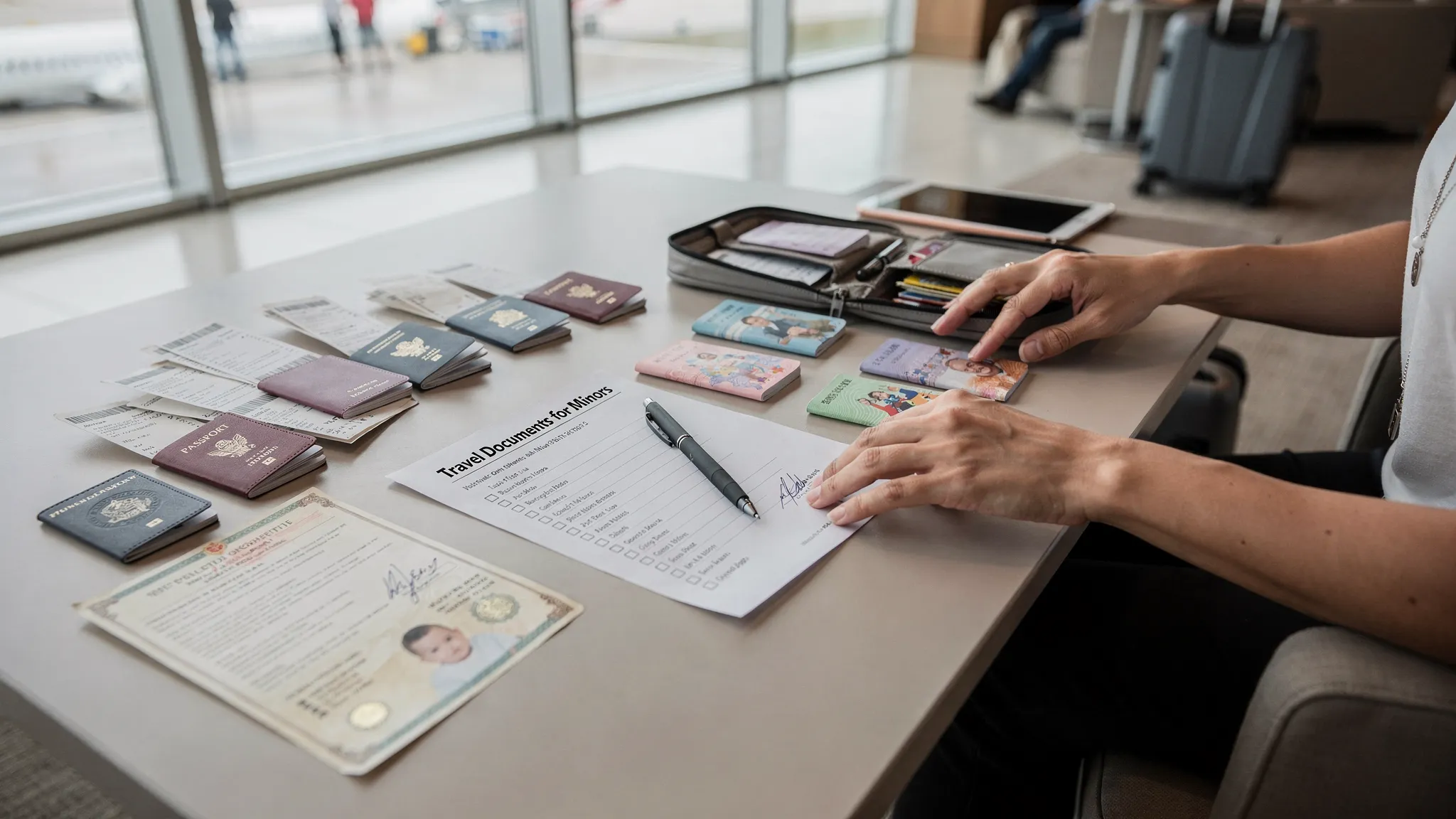
International trips with children are memorable, but they also come with an extra layer of border documentation. A passport and a boarding pass may not be enough. Depending on the child’s nationality, destination, family situation, and who is accompanying them, parents may need to prepare proof of relationship, consent letters, custody documents, and a separate visa or electronic visa for each minor.
This parent checklist for travel visa documents for minors will help you organize the essentials before you book, before you apply, and before you arrive at the airport.
Why minors often need extra travel documents
Border officials pay close attention to minors because travel documentation helps confirm identity, nationality, parental authority, and child protection safeguards. Even when a child is traveling with a parent, officers or airline staff may ask for evidence that the accompanying adult has permission to travel with the child.
Rules vary by country, but the pattern is consistent: minors usually need their own passport, their own visa or eVisa when required, and supporting documents when the adult traveling with them is not both legal parents. For example, the U.S. Department of State has specific passport consent rules for children under 16, while the UK government explains that adults may need permission from everyone with parental responsibility before taking a child abroad in certain circumstances.
Because requirements can change quickly, always verify the official rules for the destination, any transit country, and the airline before departure. A family can be fully compliant for one route but missing a document for another.
The core parent checklist for minor travel documents
Use the table below as a practical starting point. Not every item applies to every family, but reviewing each category helps prevent last-minute surprises during check-in, online visa processing, or immigration control.
| Document | Who may need it | What to check |
|---|---|---|
| Child’s passport | Nearly all minors traveling internationally | Validity, blank pages, exact name, passport number, expiry date |
| Visa, eVisa, or eTA | Children traveling to destinations that require authorization | Each child usually needs a separate approval linked to their passport |
| Birth certificate | Parents proving relationship to the child | Full names of parent or parents, certified copy if required |
| Parental consent letter | One parent, relatives, school groups, or another adult traveling with the child | Signatures, dates, destination, travel dates, contact details, notarization if recommended |
| Custody or court order | Separated, divorced, sole custody, or guardianship situations | Whether the document clearly allows international travel |
| Adoption or guardianship documents | Adoptive parents, legal guardians, foster care cases | Legal proof of authority to travel with the child |
| Name change documents | Parent or child has a different surname on documents | Marriage certificate, divorce decree, legal name change order |
| Airline unaccompanied minor paperwork | Children flying alone or using airline supervision services | Airline age rules, fees, pickup details, contact forms |
| Travel itinerary and accommodation proof | Often requested for visa applications | Flight reservations, hotel booking, host invitation, return or onward ticket |
| Health or vaccination documents | Destination-specific or school group travel | Required vaccines, medical letters, prescriptions, travel insurance |
| Emergency contacts and copies | All families | Digital and printed backups stored separately from originals |
For a broader pre-submission list, SimpleVisa also has a general online visa application checklist that covers photos, proof of funds, itinerary documents, and secure application preparation.
Passport rules for minors: start here
A minor’s passport is the foundation of almost every international travel document process. Even infants typically need their own passport for international travel, and many countries will not allow entry if the passport expires too soon after arrival.
Before applying for a visa or electronic travel authorization, confirm that the child’s passport details are final. If you renew the passport after receiving an eVisa, the approval may no longer match the travel document. In many systems, the visa is electronically linked to the passport number used in the application.
Parents should check:
- The child’s full name exactly as printed in the passport.
- Passport expiry date and destination validity rules.
- Whether the passport has enough blank pages for stamps.
- Whether both parents or legal guardians must authorize passport issuance.
- Whether the child’s passport photo meets current standards.
Name accuracy matters. A small mismatch between a passport, ticket, and eVisa can cause delays or denied boarding. If your family has hyphenated surnames, multiple surnames, accents, or recent name changes, review SimpleVisa’s guide to handling name mismatches on tickets, passports, and eVisas.
Visa, eVisa, and eTA requirements for children
A common mistake is assuming that a parent’s visa covers the child. In most cases, it does not. If the destination requires a visa, electronic visa, or electronic travel authorization, each traveler, including a baby or toddler, may need their own application.
The parent or guardian usually completes the visa application on behalf of the child, but the child is still the applicant. The approval must match the child’s passport, not the parent’s passport.
When preparing a minor’s eVisa or visa application, pay special attention to these fields:
- Applicant name, date of birth, nationality, and passport number.
- Parent or guardian information, if requested.
- Travel purpose, such as tourism, family visit, transit, or study.
- Accommodation details and local contact information.
- Upload requirements for passport scans, photos, birth certificates, or consent letters.
Fees also vary. Some countries charge the same visa fee for minors and adults. Others reduce or waive fees for children under a certain age. Do not assume a child is exempt unless the official application system or a trusted visa management platform confirms it.
If you are still determining whether your child needs a visa, start with the basics in Travel Visa Basics: What to Know Before You Book.
Parental consent letters: when and what to include
A parental consent letter is one of the most important documents for minors traveling without both parents. It is not always legally required, but it is widely recommended for cross-border travel involving one parent, grandparents, relatives, coaches, teachers, or family friends.
The Canada travel guidance on children and travel recommends carrying a consent letter when a child travels abroad alone, with only one parent or guardian, with friends or relatives, or with a group. U.S. Customs and Border Protection also provides guidance for children traveling with one parent or another adult.
A strong consent letter should include the child’s full name, date of birth, passport number, the accompanying adult’s details, destination, travel dates, and the consenting parent or guardian’s contact information. It should also clearly state that the child has permission to travel internationally for the stated trip.
Many families choose to have the letter notarized, especially when only one parent is traveling. Some destinations or airlines may specifically request notarization, certified translations, or original signatures, so check in advance.
Special family situations that may require extra documents
Family travel does not always fit a simple two-parent template. If your situation involves separated parents, guardianship, adoption, foster care, or different surnames, prepare additional proof before the trip.
| Travel situation | Documents to consider |
|---|---|
| Child travels with one parent | Consent letter from the non-traveling parent, birth certificate, custody order if relevant |
| Child travels with grandparents or relatives | Consent letter from parent or legal guardian, copy of parent ID, child’s birth certificate |
| Child travels with a school, sports team, or tour group | Group authorization forms, parental consent, emergency contacts, medical permissions |
| Parent and child have different last names | Birth certificate, marriage certificate, divorce decree, or name change document |
| One parent has sole custody | Certified custody order or court document showing travel authority |
| One parent is deceased | Death certificate, birth certificate, custody or guardianship documents if applicable |
| Adopted child travels internationally | Adoption order, amended birth certificate, passport, visa or eVisa |
| Legal guardian travels with child | Guardianship order or official authorization proving legal responsibility |
For separated or divorced parents, do not rely on informal assumptions. Some custody orders restrict international travel or require advance notice. If there is any dispute or uncertainty, speak with a qualified legal professional before booking.
Timing: when parents should prepare each document
Families often focus on flights and hotels first, but minor travel documents should be planned early. Some items, such as a child passport or court-certified document, can take longer than an eVisa.
| Timing | Parent action |
|---|---|
| Before booking | Check passport validity, destination visa rules, transit rules, and consent requirements |
| 2 to 4 months before travel | Renew or apply for child passports, request custody or birth certificate copies if needed |
| 4 to 8 weeks before travel | Prepare visa or eVisa documents, confirm photo and scan specifications |
| 2 to 4 weeks before travel | Submit visa applications when timing rules allow, prepare consent letters, review airline policies |
| 1 week before travel | Print approvals, save digital copies, verify names across passport, ticket, and visa |
| 24 to 72 hours before departure | Recheck flight, visa status, entry rules, health requirements, and document folder |
Some electronic visa systems are fast, but fast does not mean risk-free. Applications can be delayed because of incomplete uploads, unclear scans, inconsistent names, payment issues, or manual review. Minors may also need documents that adults do not, so build in extra time.
Transit countries matter too
Parents sometimes check only the final destination and forget the layover. This can create problems when a family has a long connection, changes airports, exits the transit zone, or has separate tickets.
A child may need a transit visa or authorization even if the family does not plan to stay in the country. Rules depend on nationality, airport, connection time, ticketing arrangement, and whether the traveler must pass through immigration.
Before choosing a route, confirm:
- Whether the child’s passport nationality requires a transit visa.
- Whether the family will stay airside or pass border control.
- Whether baggage must be collected and rechecked.
- Whether an overnight layover changes the entry requirement.
- Whether the airline requires document verification before boarding.
This is especially important for families booking multi-country itineraries or separate low-cost carrier tickets.
How to organize the family document packet
Once documents are ready, organize them in a way that works at the airport, not just at home. The best system is simple: originals together, copies accessible, digital backups secure.
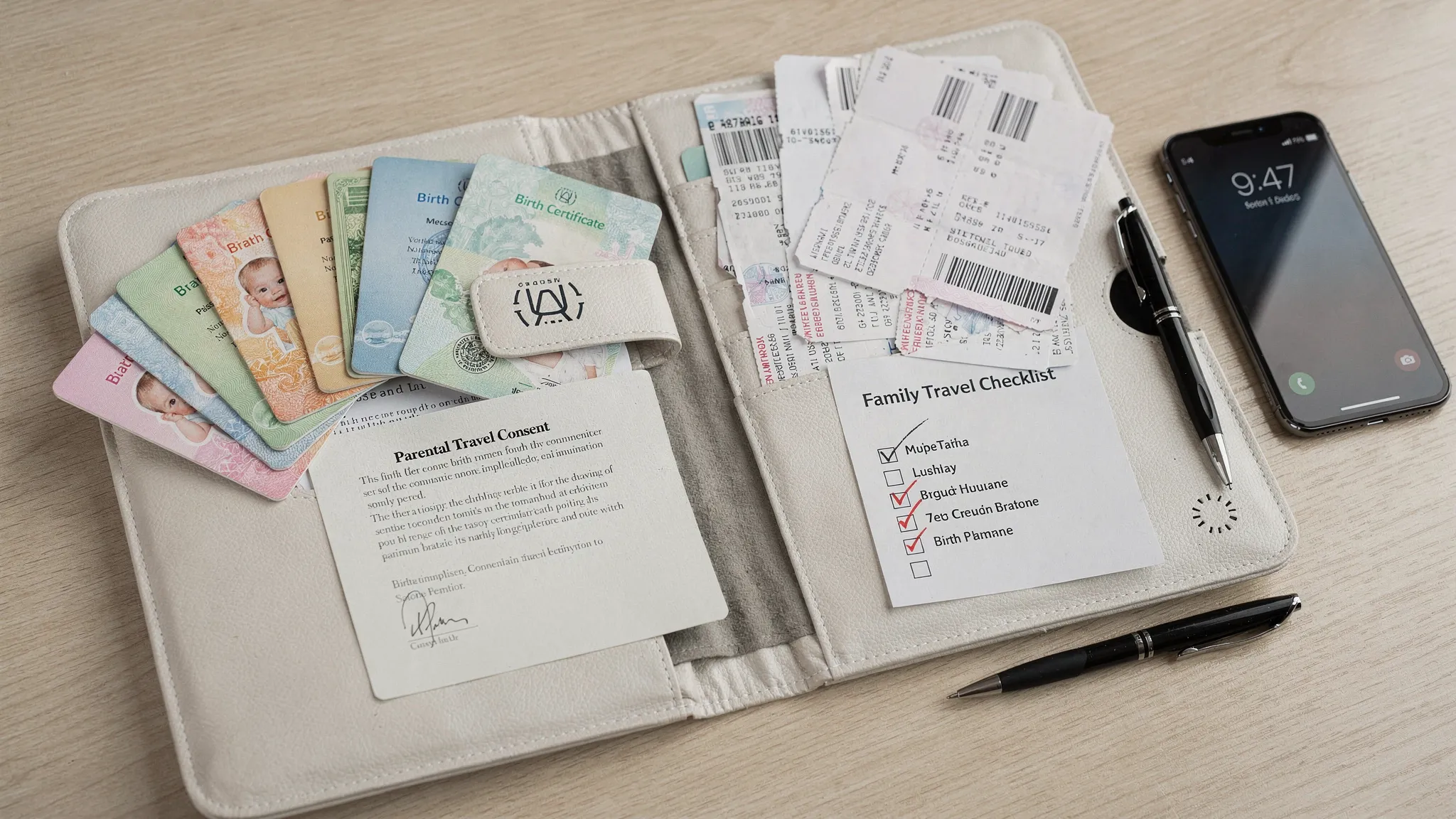
Keep passports, visas, consent letters, and birth certificates in the adult’s carry-on bag, not checked luggage. Store digital copies in an encrypted cloud folder or secure travel app. Avoid sending full passport scans over unsecured messaging apps or public Wi-Fi.
For each child, create a small document set with the child’s passport copy, visa or eVisa approval, birth certificate copy, consent letter if applicable, insurance details, and emergency contacts. If a child is traveling with another adult, that adult should have the documents needed to answer questions at check-in and immigration.
If you are applying online, use a trusted portal, a secure connection, and accurate scans. SimpleVisa’s guide on how to apply for a travel visa online safely explains how to avoid scams, protect personal data, and track applications securely.
Common mistakes parents should avoid
The most common problems are rarely dramatic. They are usually small document gaps that become stressful at the airport.
Parents should avoid assuming that children are automatically included in a parent’s visa, forgetting consent documentation for one-parent travel, using a child’s old passport number on an eVisa, booking a route without checking transit requirements, and waiting until the final week to request certified copies.
Another frequent issue is inconsistent names. If the child’s surname differs from the accompanying parent’s surname, carry documents that explain the relationship. If the ticket uses a nickname or omits a middle name that appears on the passport, correct the issue early.
Finally, remember that airline rules and border rules are separate. An airline may refuse boarding if it cannot verify documents, even when the traveler believes the destination will accept them. Check both.
A note for travel businesses serving families
For airlines, OTAs, tour operators, and travel agencies, minor travel documentation is a high-support moment. Parents often need reassurance, and generic visa prompts may not cover family-specific requirements such as consent letters, custody documents, or child-specific eVisa applications.
Travel document automation can improve the experience by asking the right questions at the right time: passenger age, nationality, destination, transit points, and accompanying adult. A guided flow can then surface relevant document requirements and help customers complete applications without leaving the booking journey.
SimpleVisa helps travel businesses streamline visa and border crossing administration through API integration, white-label visa application apps, custom data services, and no-code implementation options. For family travel sellers, that can mean clearer guidance for parents, fewer support questions, and new ancillary revenue opportunities through guided visa applications.
Frequently Asked Questions
Does a baby need a passport for international travel? In most cases, yes. Infants and children generally need their own passport for international travel, even when they are listed on a parent’s booking.
Does every child need a separate eVisa or travel authorization? Usually, yes. If the destination requires an eVisa, ETA, or similar authorization, each minor typically needs a separate approval linked to their own passport.
Can one parent travel internationally with a child? Often yes, but the traveling parent should carry a consent letter from the non-traveling parent when appropriate, plus proof of relationship and any custody documents that apply.
Do I need a notarized consent letter for my child? It depends on the destination, airline, and family situation. Notarization is often recommended because it strengthens the credibility of the letter, and some authorities may request it.
What if my child has a different last name than me? Carry documents that prove your relationship, such as a birth certificate, adoption order, marriage certificate, divorce decree, or legal name change document.
Should I print my child’s electronic visa? Yes, it is wise to carry both a printed copy and a secure digital copy. Some border or airline systems can verify eVisas electronically, but printed backups help if there is a technical issue.
Do minors need travel documents for cruises or day trips across borders? They may. Cruise itineraries, shore visits, and land border crossings can trigger visa, eVisa, or consent requirements, even for short stays.
Make minor travel documentation easier
Family travel should not be derailed by missing paperwork. Parents can reduce stress by checking passport validity early, confirming visa rules for every child, preparing consent letters when needed, and keeping organized copies throughout the trip.
If your travel business wants to guide families through visa and border requirements inside the booking flow, SimpleVisa can help. Our visa processing automation, travel API, white-label app, and data services make it easier to provide clear document guidance, support online visa processing, and create a smoother journey for parents traveling with minors.