Travel Visa Documents for Last-Minute Departures
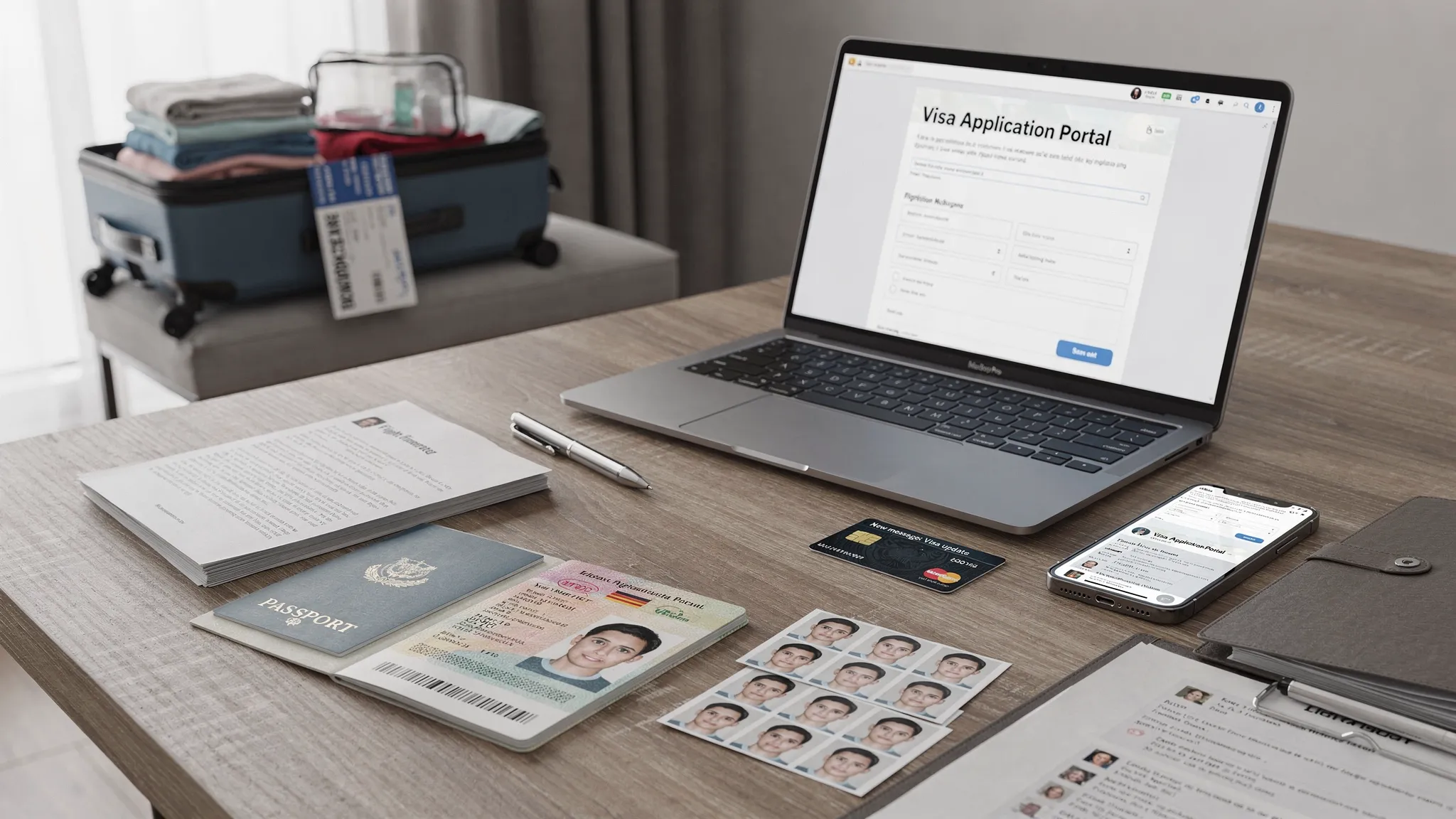
A last-minute trip can be exciting until one missing travel visa document turns into denied boarding, a missed connection, or an expensive rebooking. The challenge is that border requirements are not universal. They depend on your passport, destination, route, purpose of travel, length of stay, and sometimes even your transit airport.
The good news: many destinations now support electronic visa, eVisa, ETA, or online visa processing systems that can help urgent travelers move faster than traditional embassy appointments. The catch is that faster does not mean document-free. If you are leaving soon, the priority is not to gather every possible paper. It is to identify the exact requirements, prepare clean digital files, and make sure every detail matches your passport before you submit anything.
This guide breaks down the documents to check first, how to organize them quickly, and what travel businesses can do to reduce last-minute visa stress for customers.
First, confirm which travel authorization applies
Before collecting documents, confirm what kind of entry permission you need. A traveler who qualifies for an ETA may only need a passport and a few personal details, while another traveler on the same flight may need a full eVisa application with proof of funds, accommodation, and a business invitation letter.
Use official government sources whenever possible. The U.S. Department of State travel pages, the official ESTA portal, and the EU’s ETIAS information site are examples of sources travelers can use to verify destination-specific rules.
| Authorization type | Typical use case | Last-minute document risk |
|---|---|---|
| Visa-free entry | Short visits for eligible passports | You may still need onward travel proof, passport validity, or arrival forms. |
| eTA, ETA, or ESTA | Pre-travel authorization for eligible visa-exempt travelers | Approval can be fast, but it is not guaranteed before departure. Apply before check-in whenever possible. |
| eVisa | Online visa application for tourism, business, transit, or other purposes | More supporting documents may be required, and processing time varies by country. |
| Visa on arrival | Entry permission issued at the airport or border | You may still need photos, cash, a hotel address, proof of funds, or pre-registration. |
| Consular visa | Embassy or consulate-issued visa | Usually the least suitable for last-minute departures unless an emergency appointment is available. |
If you are not sure which category applies, do not guess. Applying for the wrong document can be worse than applying late because fees may be non-refundable and errors can delay approval.
The urgent travel visa document checklist
For last-minute departures, focus on documents that are most commonly requested across visa and electronic travel authorization systems. Exact rules vary, but the following items should be checked immediately.
| Document | Why it matters | Last-minute check |
|---|---|---|
| Valid passport | Most visas and eVisas are linked to a specific passport number. | Confirm expiry date, blank pages if required, and that the passport is not damaged. |
| Passport scan or photo | Online applications usually require a clear image of the bio page. | Capture all four corners, avoid glare, and make the MRZ lines readable. |
| Digital passport photo | Many eVisa systems require a recent compliant photo. | Use a plain background, neutral expression, no shadows, and no heavy filters. |
| Flight itinerary | Authorities may ask for arrival, departure, or onward travel details. | Make sure dates match the requested visa validity and purpose of stay. |
| Accommodation details | Some applications require hotel bookings or a host address. | Have the full address, phone number, and booking confirmation ready. |
| Proof of funds | Certain destinations ask travelers to show financial capacity. | Use recent bank statements or official financial documents if required. |
| Purpose-of-travel documents | Business, study, medical, and family visits often require extra proof. | Prepare invitation letters, enrollment letters, conference details, or medical appointment proof. |
| Travel insurance or health documents | Some countries require insurance, vaccination records, or health declarations. | Check whether coverage limits or certificate formats are specified. |
| Payment card | Online visa processing requires successful payment before review begins. | Use a card enabled for international and 3-D Secure payments. |
| Email and phone access | Visa decisions and follow-up requests are usually sent digitally. | Use an inbox you can access while traveling and check spam folders. |
If you want a broader preparation list, see SimpleVisa’s online visa application checklist for a more complete pre-submission review.
Passport details are the first priority
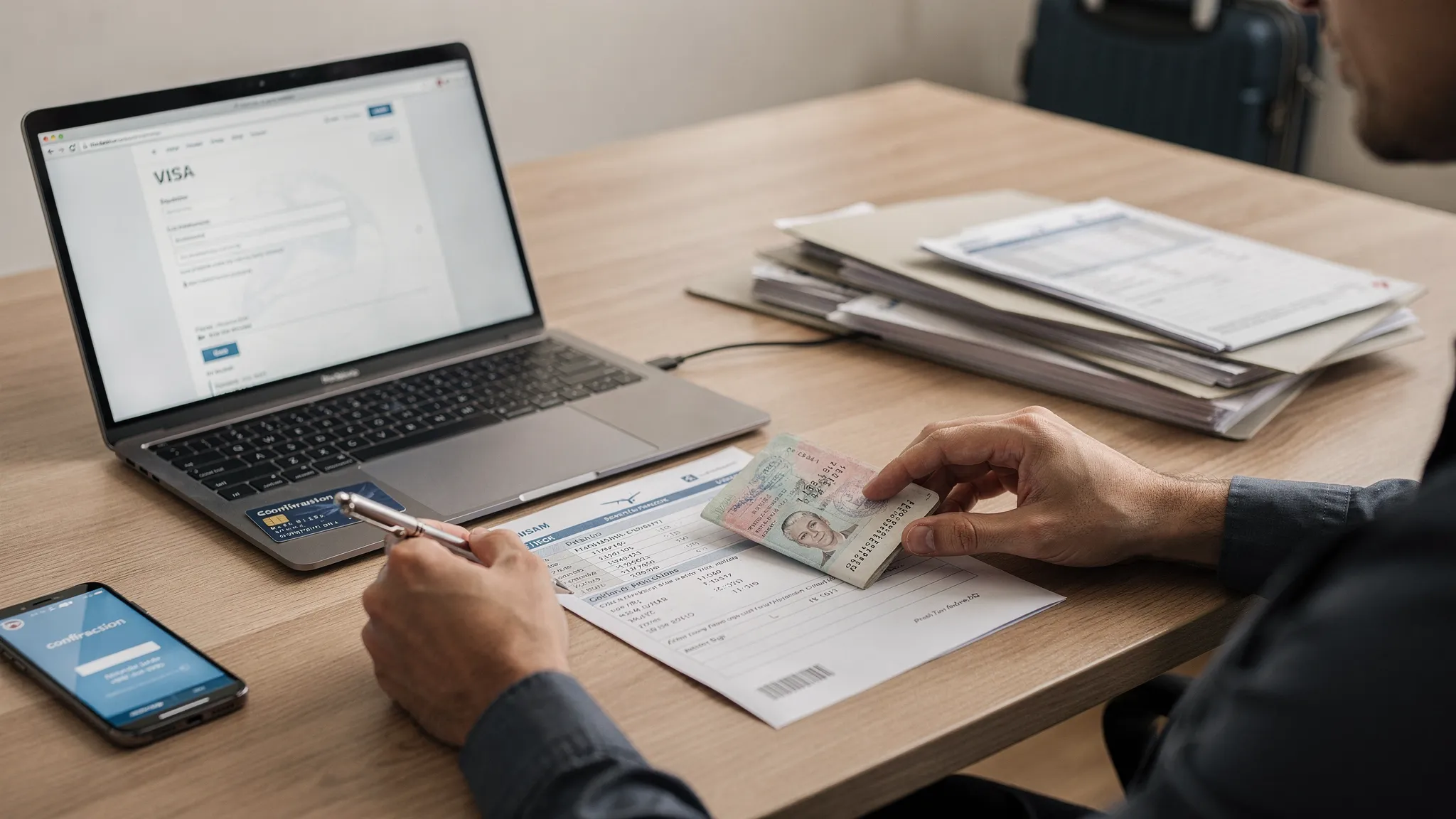
When time is short, passport accuracy matters more than anything else. Most electronic visa systems link the approval to the passport used during the application. If you apply with the wrong passport number, an old passport, or a name that does not match the machine-readable zone, the authorization may not work at check-in or at the border.
Check these details carefully before starting your visa application:
- Full name exactly as shown on the passport
- Date of birth and nationality
- Passport number, issue date, and expiry date
- Gender or sex marker if requested
- Country of issue and place of issue if requested
- Signature page, if your destination requires a signed passport
Name formatting is a common last-minute problem. Middle names, hyphenated surnames, accents, apostrophes, and name order can create mismatches between tickets, passports, and eVisas. If you notice an inconsistency, fix it before you apply or before you check in. For deeper guidance, read SimpleVisa’s guide to handling name mismatches on tickets, passports, and eVisas.
How to prepare digital files fast
A rushed application often fails because the documents are technically unusable, not because the traveler is ineligible. Blurry passport scans, cropped photos, oversized files, unreadable PDFs, and shadows across the passport page can trigger manual review or rejection.
For digital files, use this simple standard: the reviewing system or officer should be able to read the document without zooming, rotating, or guessing. Save files with clear names such as passport-bio-page.pdf, hotel-booking.pdf, or business-invitation.pdf. If the application portal lists accepted formats, follow them exactly. Do not upload screenshots if the system asks for PDF scans or JPEG images.
For passport photos, avoid taking a selfie in poor lighting. Use a plain wall, face the camera directly, remove hats and tinted glasses unless medically necessary, and make sure the image has no filters. Some countries provide exact size, background, and file-resolution requirements, so verify the instructions before submitting.
Security also matters. Last-minute pressure is exactly when travelers are most vulnerable to fake visa websites and phishing messages. Apply through official portals or trusted services, avoid public Wi-Fi for payment, and never share passport scans through unsecured messaging channels. SimpleVisa has a full guide on how to apply for a travel visa online safely.
A practical 72-hour timeline for last-minute departures
If you have three days or less before departure, treat the visa process like a countdown. The goal is to remove uncertainty early and avoid finding out at the airport that a required document is missing.
| Time before departure | What to do | Why it matters |
|---|---|---|
| 72 to 48 hours | Confirm entry rules, passport validity, transit requirements, and the correct visa type. | This is the best window to catch major eligibility problems. |
| 48 to 24 hours | Prepare files, submit the application, pay the fee, and monitor email for confirmation or document requests. | Many delays come from missed follow-up requests or failed payments. |
| 24 to 6 hours | Download the approval, save offline copies, print a backup, and confirm airline check-in requirements. | Airlines may verify authorization before boarding. |
| 6 hours to departure | Carry passport, approval notice, itinerary, accommodation proof, and supporting documents in your hand luggage. | You need access even if checked baggage is delayed or gate agents ask for proof. |
Some systems approve applications quickly, but travelers should not rely on instant approval. For example, U.S. Customs and Border Protection advises travelers to apply for ESTA as soon as they begin planning travel and at least 72 hours before departure. Other countries have different timelines, and manual review can happen even when most applications are processed quickly.
If time is extremely tight, look for official priority or expedited processing options where available. SimpleVisa also covers practical ways to expedite an electronic visa application.
Extra documents for specific traveler situations
Not every traveler needs the same supporting documents. Last-minute departures become more complex when the trip involves business, family travel, transit, cruises, or multiple countries.
Business travelers
Business visitors may need a company invitation letter, conference registration, employer letter, proof of meetings, or evidence that they will not take local employment. The letter should match the trip dates and clearly describe the purpose of travel.
Families and minors
Children often need their own visa, eVisa, ETA, or arrival authorization. Some countries may ask for birth certificates, parental consent letters, custody documents, or copies of parents’ passports. Families should not assume that a parent’s approval covers a child.
Transit passengers
Transit rules are easy to overlook. Some airports require a transit visa or electronic travel authorization even if you do not plan to leave the airport. This is especially important for self-transfer itineraries, separate tickets, overnight layovers, or airport changes.
Multi-country trips
If you are visiting multiple countries, check each border separately. A visa for one destination does not automatically authorize entry into neighboring countries. For regions with shared travel areas, rules may depend on the first country of entry, the main destination, or the total length of stay.
Cruise and shore visits
Cruise travelers may need documents for multiple ports, including countries where they only disembark for a few hours. Visa-on-arrival rules can also differ for sea arrivals and air arrivals, so verify port-specific requirements before departure.
Common last-minute visa mistakes to avoid
When travelers are rushing, small mistakes can have large consequences. These are the errors most likely to disrupt a last-minute departure.
| Mistake | Possible consequence | Prevention |
|---|---|---|
| Applying with a passport that expires too soon | Rejection or denied boarding | Check destination passport validity rules before applying. |
| Using a nickname or shortened name | Mismatch with passport or ticket | Copy names directly from the passport. |
| Forgetting transit authorization | Denied boarding on a connecting flight | Check every country in the route, not only the final destination. |
| Uploading poor-quality scans | Manual review or refusal | Use clear, complete, well-lit images. |
| Choosing the wrong visa purpose | Refusal or entry problems | Match the visa type to the actual trip purpose. |
| Ignoring follow-up emails | Application stalls before approval | Monitor inbox, spam, and portal status until departure. |
| Assuming approval guarantees entry | Border issues on arrival | Carry supporting documents and comply with entry conditions. |
An eVisa or ETA is permission to travel or seek entry under specific conditions. It does not remove the need to answer border questions or show supporting documents if requested.
What travel businesses should do for last-minute customers
Last-minute visa stress is not only a traveler problem. Airlines, OTAs, tour operators, cruise lines, and travel management companies often deal with the consequences: abandoned bookings, support tickets, missed departures, and frustrated customers who did not realize they needed a travel authorization.
Travel document automation can help by surfacing visa requirements at the right moment in the customer journey. Instead of sending travelers away to research rules after booking, travel businesses can guide them through border requirements inside the booking flow, post-booking emails, or a branded application experience.
SimpleVisa supports travel businesses with visa processing automation, API integration for travel sites, white-label visa application apps, custom data services, and no-code implementation options. These border crossing solutions can help customers complete guided visa applications while creating a relevant ancillary revenue opportunity for the travel brand.
For businesses deciding how to implement a visa management platform, SimpleVisa’s guide to API vs. white-label app integration explains the main options.
Frequently Asked Questions
Can I get a travel visa on the same day as my flight? Sometimes, but it depends entirely on the destination, your nationality, the visa type, and whether automated approval is available. Some eVisas and ETAs are issued quickly, while others require manual review. Always check official processing guidance and apply as early as possible.
What is the most important document for a last-minute visa application? Your passport is the most important document because most electronic visas and travel authorizations are linked to it. The passport details on the application must match exactly, including name, number, nationality, and expiry date.
Do I need to print my eVisa or ETA for a last-minute departure? Many electronic visas are digitally linked to your passport, but a printed backup is still wise. Airlines, border officers, or local authorities may ask to see proof, and a printout helps if your phone battery dies or you lose internet access.
What should I do if my visa approval has not arrived before check-in? Check the application portal, email inbox, and spam folder first. If there is no approval, contact the issuing authority or your visa service provider. Do not assume you can board without the required authorization, since airlines may deny boarding.
Can a travel company help customers with last-minute visa documents? Yes. Travel companies can use online visa processing tools, APIs, or white-label applications to show requirements, guide customers through applications, and reduce document errors before departure.
Make last-minute departures easier to manage
Last-minute travel is always time-sensitive, but visa documents do not have to be chaotic. The key is to verify the correct authorization, prepare passport-based documents carefully, submit through trusted channels, and keep digital and printed backups ready for check-in and arrival.
For travel businesses, the opportunity is clear: customers need help at the exact moment visa requirements become urgent. SimpleVisa helps travel brands integrate guided visa applications, online visa processing, and border crossing solutions into the customer journey. To explore API, white-label, no-code, or data-service options, visit SimpleVisa.