What Counts as Valid Travel Visa Documents in 2026
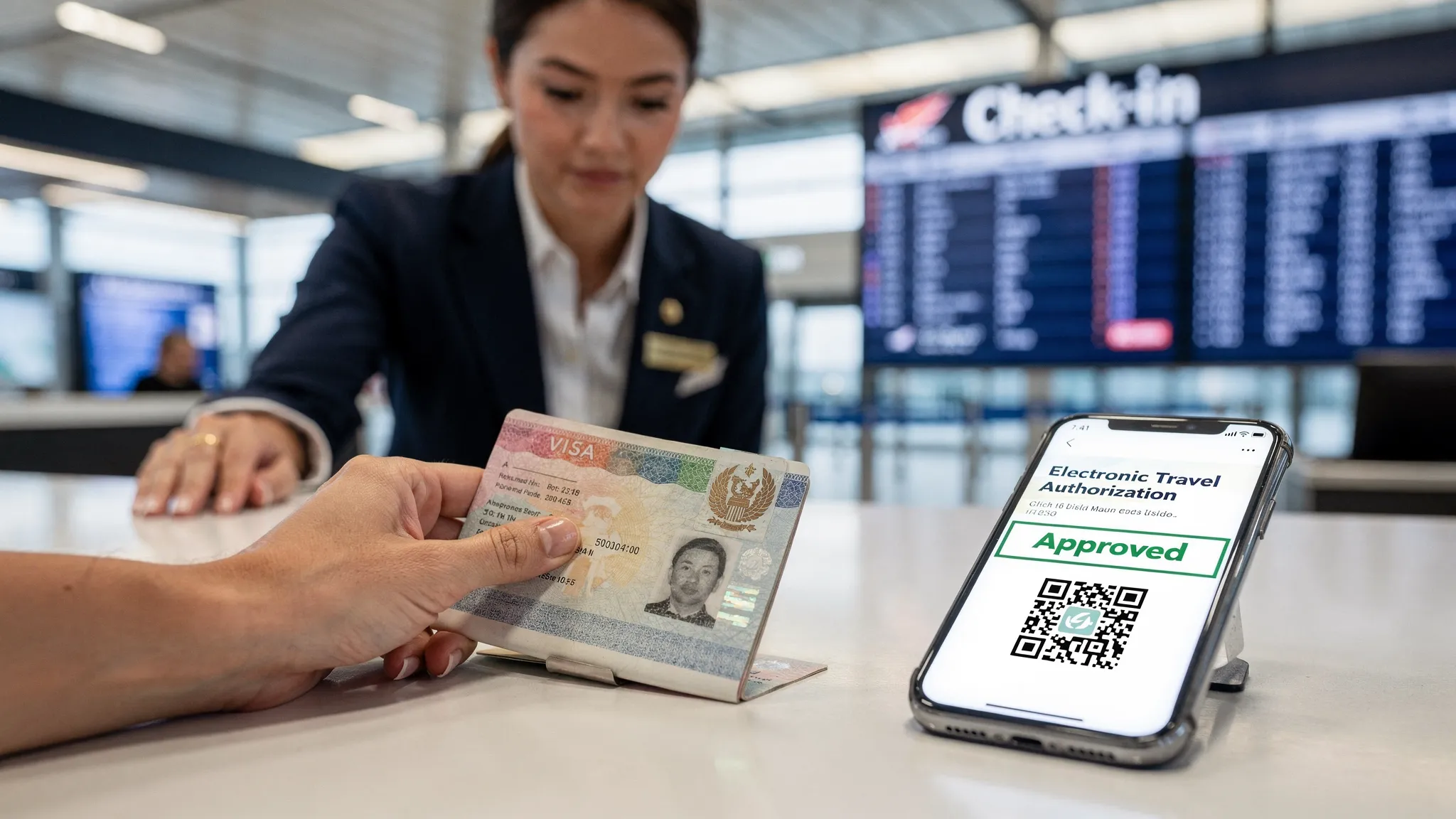
Travel visa documents are becoming more digital, but the basic question has not changed: will the airline, immigration system, or border officer accept what the traveler presents?
In 2026, valid travel visa documents can include a traditional visa sticker, an electronic visa, an electronic travel authorization, a digital immigration status, or a pre-approval document for visa on arrival, depending on the destination and the traveler’s passport. But a document is only valid if it is official, current, readable, linked to the correct passport, and suitable for the traveler’s purpose and itinerary.
For travelers, that means fewer assumptions and more careful pre-trip checks. For airlines, online travel agencies, tour operators, and travel management companies, it means document validation is now a critical part of the customer journey.
What makes a travel visa document valid in 2026?
A valid travel visa document is an official travel authorization or supporting record that satisfies the entry, transit, or stay rules of the destination country at the time of travel. It must also be accepted in the format required by the immigration authority, which may be digital, printed, embedded in a passport, or verifiable through a government system.
In practical terms, a visa document should pass eight checks:
- It was issued by a government authority or an authorized visa channel.
- It is linked to the same passport the traveler will use.
- The traveler’s name, date of birth, nationality, and passport number match exactly.
- The visa or authorization is valid on the arrival date and throughout the intended stay, where required.
- The visa category matches the purpose of travel, such as tourism, business, study, work, transit, or medical treatment.
- The number of permitted entries has not been exhausted.
- The stay limit and conditions are compatible with the itinerary.
- The document is readable, complete, and verifiable online or at the border.
This is where many travelers get caught out. A document can look official but still be unusable because it is expired, tied to an old passport, issued for the wrong purpose, or accepted only at specific airports or land borders.
The main types of valid travel visa documents
Different countries use different terms, and the terminology can be confusing. An ETA, ESTA, eTA, ETIAS-style authorization, or eVisitor may not be legally classified as a visa, but it may still be a required border-crossing document. The key is not the label. The key is whether the traveler needs it to board, transit, or enter.
| Document type | Does it count as a visa or travel authorization document? | What must be true for it to be valid |
|---|---|---|
| Passport | It is the core identity travel document, not a visa by itself | It must be valid, undamaged, accepted by the destination, and meet minimum validity rules |
| Visa sticker or vignette | Yes, for destinations that still issue physical visas | It must be affixed to the correct passport, legible, unexpired, and match the trip purpose |
| Electronic visa (eVisa) | Yes, when issued by the destination country | It must be approved, linked to the traveler’s passport, and valid for the itinerary |
| Electronic travel authorization | Yes, where required for visa-exempt travelers | It must be approved before travel and linked to the correct passport |
| Visa on arrival pre-approval | Sometimes, depending on the country | It must be accepted by the arrival port and accompanied by any required payment, photos, or forms |
| Residence permit or digital immigration status | Often, for residents returning to a country | It must be current and accepted as proof of right to enter or re-enter |
| Supporting documents | They support an application or border decision but usually do not replace a visa | They must be authentic, recent, and consistent with the application |
| Payment receipt or application confirmation | Usually no | It only proves submission or payment unless the authority states it is an approved authorization |
For a broader overview of visa categories before booking, see SimpleVisa’s guide to travel visa basics.
Passport validity is still the foundation
Even with an approved electronic visa, the passport remains the primary document. In most cases, the eVisa or travel authorization is electronically linked to the passport number used in the application. If the traveler renews the passport, loses it, damages it, or travels with a different nationality passport, the visa may no longer be usable.
Passport requirements vary by country, but the most common checks include:
- Minimum validity, often three or six months beyond arrival or departure.
- Blank pages for stamps where physical stamping is still used.
- Machine-readable identity page with a clear MRZ code.
- Biometric chip for certain electronic travel authorization programs.
- No significant damage, water stains, torn pages, or altered details.
International passport and machine-readable document standards are shaped by ICAO Doc 9303, which underpins much of the modern border document ecosystem. For travelers, the takeaway is simple: if the passport cannot be read reliably by a machine or officer, a valid visa may not be enough to avoid delays.
What counts as a valid eVisa?
An electronic visa is usually issued as a digital approval record, often accompanied by a PDF, email, QR code, reference number, or online status page. In many destinations, the border officer can verify the eVisa directly against the passport. In others, the traveler may still need to show a printed copy or saved PDF.
A valid eVisa should include or confirm the traveler’s identity, passport details, visa type, allowed stay, validity dates, entry rules, and issuing authority. If any of these details conflict with the passport or itinerary, the traveler should correct the issue before departure.
The most common mistake is treating the approval email as the visa itself. Sometimes the email contains the approved authorization. Sometimes it only confirms that the application was received. Travelers should look for clear wording such as “approved,” “granted,” or “authorized,” plus a reference number or downloadable grant notice.
If you are preparing an online application, SimpleVisa’s online visa application checklist covers the documents and scans to prepare before submission.
What counts as valid supporting documentation?
Supporting documents do not always grant entry, but they often determine whether a visa application is approved or whether a border officer is satisfied on arrival. In 2026, many visa systems request digital uploads during application, then reserve the right to ask for originals or additional proof later.
Common supporting documents include proof of accommodation, return or onward travel, bank statements, employer letters, invitation letters, conference registration, school admission letters, travel insurance, vaccination certificates, and parental consent documents for minors.
To be valid, supporting documents should be accurate, recent, complete, and consistent. A hotel booking under a different name, a bank statement with missing pages, or an invitation letter that does not match the stated travel dates can trigger additional review.
Validity standards for uploaded files
Most online visa processing systems now apply automated checks to uploaded files. A scan that is technically “the right document” can still be rejected if it is unreadable or cropped.
| File issue | Why it can cause problems | Better practice |
|---|---|---|
| Cropped passport scan | The MRZ, passport number, or issuing authority may be missing | Capture the full bio page with all edges visible |
| Glare or shadow | Automated systems may fail to read text or facial images | Use even lighting and avoid reflective surfaces |
| Low-resolution photo | Facial recognition and manual review become harder | Follow the portal’s size, format, and background rules |
| Mismatched names | The officer may suspect a different person or incomplete identity | Use the spelling from the passport, including middle names if required |
| Old financial proof | It may not show current ability to fund the trip | Use recent statements when the destination asks for financial evidence |
| Untranslated documents | Officers may not be able to verify the content | Provide certified translations where required |
What does not count as a valid visa document?
Some documents are useful, but they do not prove legal permission to travel. A flight ticket does not replace a visa. A hotel reservation does not replace an eTA. A screenshot of a half-loaded government page may not be accepted at the airport.
The following are especially risky:
- A visa application receipt without approval.
- A payment confirmation for government fees.
- An expired eVisa saved from a previous trip.
- A visa linked to a canceled or replaced passport.
- A document issued for tourism when the traveler intends to work.
- A single-entry visa already used on a previous arrival.
- A PDF where the QR code, barcode, or reference number is missing.
- A third-party “guarantee letter” that is not recognized by immigration authorities.
The distinction matters because carriers often check travel documents before boarding. If the visa record cannot be verified, the traveler may be denied boarding even before reaching the destination border.
Fraud, altered documents, and AI-generated files
Document fraud is a growing concern in digital visa systems. Edited bank statements, altered hotel confirmations, synthetic letters, and manipulated receipts are easier to create than they were a decade ago. Immigration authorities and travel businesses are responding with stronger document verification, metadata analysis, biometric checks, and cross-system validation.
This is not limited to visa processing. The same forensic principles behind tools such as AI-powered invoice and receipt fraud detection show why pixel-level analysis, metadata review, and contextual checks are increasingly important whenever organizations rely on uploaded documents.
For travelers, the lesson is straightforward: never edit official documents except where the issuing authority explicitly allows redaction. Submitting false or manipulated documents can lead to refusal, cancellation of an existing visa, removal from a country, or future travel bans.
For travel companies, document fraud is also an operational and reputational risk. A scalable visa management process should not rely only on manual visual inspection, especially when high-volume bookings involve multiple passports, jurisdictions, and document types.
Special cases in 2026: transit, multi-country trips, and old passports
Travelers often focus on the destination but forget the route. Transit countries may require separate documentation, even if the traveler never leaves the airport. Some airports allow sterile international transit without a visa for eligible travelers, while others require a transit visa based on nationality, destination, airline, terminal, or layover duration.
Multi-country itineraries introduce another layer of complexity. A regional visa or authorization may allow travel across multiple participating countries, but only under specific stay limits and entry conditions. A national visa may permit entry into one country but not neighboring countries. A residence permit may simplify re-entry to the issuing country but may not replace a visa for another stop.
Old passports are another common issue. Some countries allow travelers to carry an old passport containing a valid visa together with a new passport. Others require a transfer, new application, or updated eVisa record. If the authorization is electronic, assume the passport number matters unless official guidance says otherwise.
A practical 2026 validation checklist
Before travel, every traveler or travel business should run a short document audit. This is especially important for last-minute trips, group travel, business travel, student travel, and families with minors.
| Check | Question to ask | Why it matters |
|---|---|---|
| Identity | Do the passport and visa details match exactly? | Name and passport mismatches are a common cause of delays |
| Validity | Is the document valid on every relevant travel date? | Some visas expire before the trip ends or before re-entry |
| Purpose | Does the visa type match the traveler’s activity? | Tourism, business, study, and work rules differ |
| Entry count | Are there enough entries left? | Single-entry visas cannot be reused after exit |
| Stay limit | Does the itinerary fit the permitted stay? | Overstays can trigger fines or future refusals |
| Route | Are transit documents required? | Layovers can create separate visa obligations |
| Format | Is a printout, QR code, app, or online proof required? | Border and airline processes vary by country |
| Backup | Are digital and offline copies available? | Connectivity, battery, or email access can fail during travel |
A useful rule is to validate documents at three moments: before booking, after visa approval, and again 48 to 72 hours before departure. Rules can change, and travelers may change flights, passports, hotels, or dates without realizing that the visa implications changed too.
What travel businesses should do differently
For travel companies, valid travel visa documents are no longer a back-office concern. They affect conversion, customer satisfaction, denied boarding risk, and ancillary revenue. A traveler who discovers a missing eVisa after booking may blame the booking platform, even if the rule was technically the traveler’s responsibility.
Modern travel document automation helps solve this by surfacing requirements inside the booking flow or post-booking journey. Instead of sending customers to search government websites on their own, travel brands can guide them through requirements based on passport, destination, transit points, travel dates, and trip purpose.
SimpleVisa supports travel businesses with visa processing automation, API integration, white-label visa application flows, no-code implementation options, guided customer applications, and custom data services. For teams exploring the operational side, SimpleVisa’s guide to travel document automation explains the benefits and common implementation models.
The best systems help travel brands answer three questions quickly: does this traveler need a document, can they apply online, and what proof must be collected before departure?
Frequently asked questions
Is an eVisa a valid travel visa document? Yes, if it is approved by the destination authority, linked to the correct passport, valid for the travel dates, and accepted for the traveler’s purpose of visit. Some countries require travelers to carry a printed or saved copy even when the record is electronic.
Is an ETA the same as a visa? Not always. Many electronic travel authorizations are designed for visa-exempt travelers and are legally different from visas. However, if the destination requires one, it functions as a mandatory travel authorization for boarding or entry.
Does a visa approval email count as proof? Sometimes, but not always. The traveler should confirm that the email is an approval notice, not just a receipt or submission confirmation. The safest proof includes an approval status, reference number, passport details, and any QR code or downloadable grant notice provided by the authority.
Can I travel with a valid visa in an old passport? It depends on the destination. Some countries accept a valid visa in an old passport if the traveler also carries the new passport. Others require a visa transfer or a new application, especially for electronic visas linked to a passport number.
Do I need supporting documents if I already have a visa? Often yes. Border officers may still ask for proof of accommodation, return travel, funds, insurance, invitation, or purpose of visit. A visa allows travel to the border, but entry decisions may still involve additional checks.
What should travel companies validate before departure? At minimum, companies should validate passport details, visa or authorization status, travel dates, entry count, purpose of travel, transit requirements, and document format. Automated checks reduce manual work and help prevent last-minute surprises.
Make visa document checks simpler for your customers
Valid travel visa documents in 2026 are not just about having “a visa.” They are about having the right authorization, tied to the right passport, in the right format, for the right journey.
If your travel business wants to reduce border-document confusion, guide customers through online visa processing, or add visa services as an ancillary revenue stream, SimpleVisa can help you integrate visa checks and guided applications into your booking flow, white-label app, or data service.