How to Increase Ancillary Revenue With eVisa Upsells
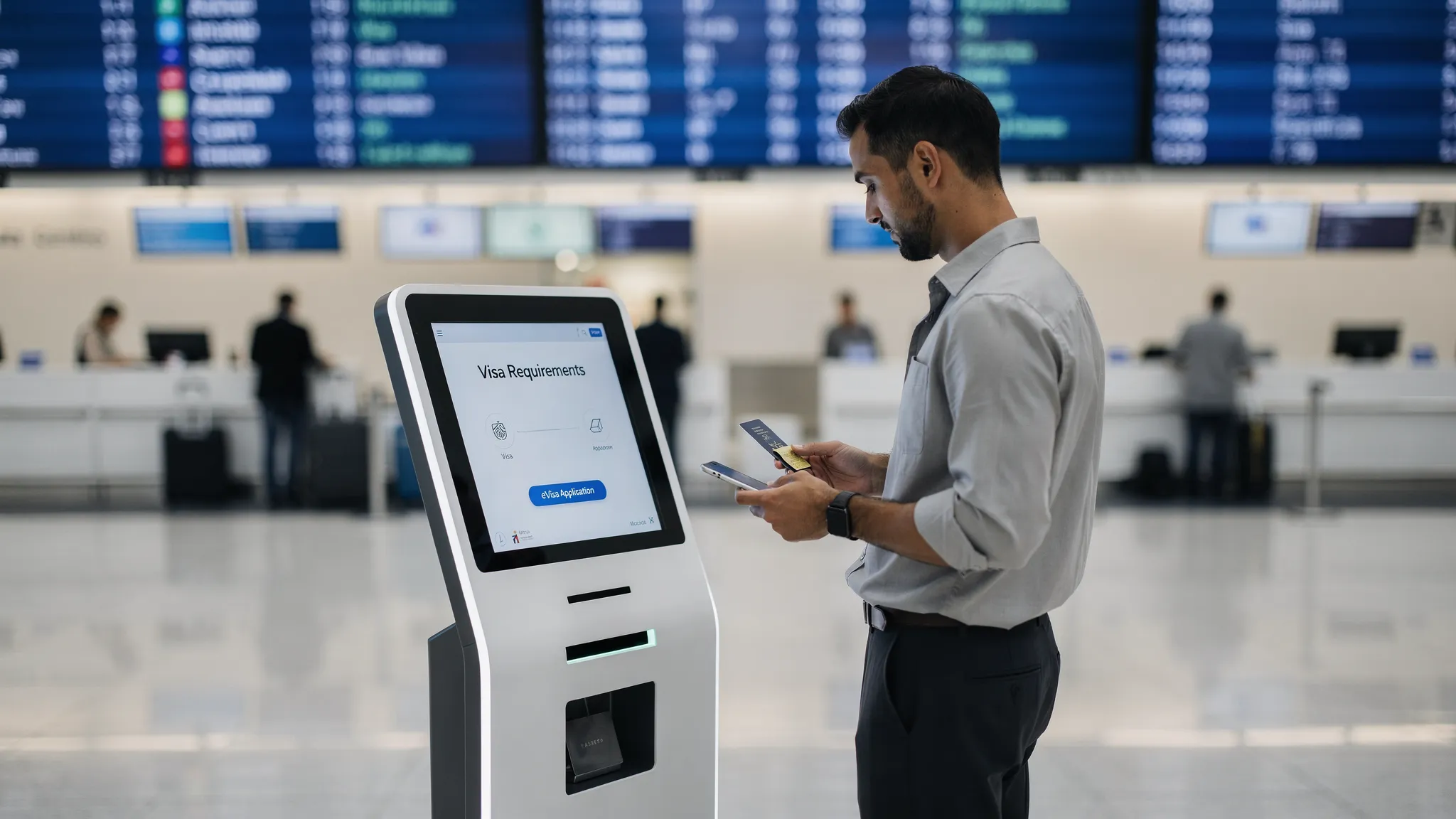
Ancillary revenue works best when the add-on feels less like an extra and more like a solution. That is exactly why eVisa upsells deserve a more prominent place in the travel booking journey.
For airlines, OTAs, tour operators, cruise lines, TMCs, and travel marketplaces, an eVisa is not just another optional product. It can be a trip-critical requirement. If a traveler needs an electronic visa, ETA, or travel authorization, helping them complete it at the right moment improves the customer experience while creating a meaningful revenue opportunity.
The challenge is execution. A generic “add visa” banner is easy to ignore. A contextual, personalized, well-timed eVisa offer can convert because it answers a pressing traveler question: “Can I enter the country I just booked?”
Below is a practical playbook for increasing ancillary revenue with eVisa upsells without adding friction, damaging trust, or overwhelming your support team.
Why eVisa Upsells Are a Strong Ancillary Revenue Opportunity
Travel brands have traditionally monetized extras such as seats, baggage, insurance, transfers, lounge access, and local activities. Those products still matter, but border requirements are becoming a bigger part of the travel commerce experience.
Industry reporting from IdeaWorksCompany and CarTrawler has consistently shown that ancillary revenue is a major profit center for airlines, with global airline ancillary revenue estimated above $100 billion annually in recent years. The broader lesson applies beyond airlines: customers are willing to pay for add-ons when they are relevant, timely, and clearly valuable.
An eVisa upsell has three qualities that many ancillaries lack.
First, it is often essential. If a traveler cannot satisfy entry requirements, the trip may be disrupted regardless of how good the flight, hotel, or package is.
Second, the need is highly predictable. Once you know the traveler’s nationality, destination, transit points, travel dates, and purpose of travel, you can identify likely visa or authorization requirements.
Third, the traveler has strong intent. The best moment to solve a visa application problem is when the trip is already being planned or confirmed.
That makes online visa processing a natural fit for travel businesses that want to increase ancillary revenue while reducing traveler anxiety.
Treat eVisas as Part of the Trip, Not a Random Add-On
The most successful eVisa upsells are not presented as generic ads. They are positioned as part of trip readiness.
A traveler does not wake up wanting to buy “travel document automation.” They want to avoid denied boarding, last-minute panic, confusing government websites, and paperwork mistakes. Your offer should be framed around those outcomes.
This is the same principle that powers strong ancillary merchandising in other categories. A traveler going to a specific island may respond to a local mobility add-on such as an electric cart rental in Les Saintes because it solves a concrete, destination-specific need. eVisa upsells work best for the same reason: they are relevant when they are tied to the traveler’s actual route, passport, and timing.
The goal is not to sell every traveler a visa service. The goal is to identify the travelers who may need help, present the right information clearly, and make the next step easy.
Where to Place eVisa Upsells in the Booking Journey
Timing has a major impact on attach rate. Offer too early, and the traveler may not have enough context. Offer too late, and they may already be stressed or unwilling to start a new process.
The best approach is to use multiple light-touch moments rather than one aggressive sales prompt.
| Journey stage | Traveler mindset | Best eVisa message | Primary KPI |
|---|---|---|---|
| Search results | Comparing routes and prices | “Check entry requirements for this destination” | Click-through rate |
| Trip details page | Evaluating trip feasibility | “You may need travel authorization before departure” | Eligibility check starts |
| Checkout | Ready to purchase | “Complete entry requirements after booking” | Attach rate |
| Confirmation page | Trip is confirmed | “Next step: prepare your eVisa application” | Application starts |
| Post-booking email or app | Organizing documents | “Submit before your recommended deadline” | Completion rate |
| Pre-departure reminder | Avoiding last-minute issues | “Your travel authorization status matters before check-in” | Late conversions |
Checkout is valuable because intent is high, but post-booking is often where eVisa upsells perform best. At that point, the traveler has committed to the trip and is ready to complete practical tasks.
A strong strategy uses both. Mention the requirement during booking, then make completion easy immediately after purchase.
7 Practical Ways to Increase Ancillary Revenue With eVisa Upsells
1. Personalize the offer by passport, destination, and travel date
A generic visa message can create confusion. A personalized message creates confidence.
Instead of saying “Need a visa?” use data already available in the booking flow to generate a more useful prompt. For example: “Based on your passport and destination, you may need an electronic travel authorization before departure.”
For travel businesses, this requires a rules layer that can interpret nationality, destination, length of stay, transit, and travel purpose. A reliable travel API for eVisa workflows can help surface eligibility and application options directly inside the customer journey.
2. Lead with the requirement, then present the service
Travelers are more likely to convert when they understand why the offer matters. Start with the practical problem before introducing the paid solution.
A weak message says: “Add eVisa service for $X.”
A stronger message says: “Travel authorization may be required for this trip. Check your eligibility and complete your application online in a guided flow.”
This shifts the offer from a sales pitch to a service.
3. Make pricing transparent from the first paid step
Visa-related fees can be sensitive because travelers may already be comparing official government fees, service fees, and processing options. Hidden costs reduce trust and increase abandonment.
Separate the pricing components clearly where possible: government fee, service fee, optional premium support, and any expedited processing if available for that destination. If a fee is non-refundable, say so before payment.
Transparency may reduce short-term clicks from low-intent users, but it improves qualified conversions and lowers refund disputes.
4. Keep the application experience inside your brand environment
Sending travelers to a third-party site at the wrong moment can break trust. It can also reduce conversion because users may not understand whether the service is connected to their booking.
A white-label visa application experience helps maintain continuity. The traveler sees the same brand context, receives guided instructions, and can complete the visa application without feeling abandoned.
If your team wants to compare implementation paths, SimpleVisa’s guide to API vs. white-label visa integration explains when each model makes sense.
5. Use urgency carefully and honestly
Urgency can help, but fear-based messaging can damage the customer relationship.
Avoid vague warnings such as “You may be refused entry if you do not buy now.” Instead, use clear timing guidance: “Some applications require manual review. We recommend starting as soon as your trip is confirmed.”
If processing times vary by destination or traveler profile, say that. Trust is a revenue asset.
6. Reduce document friction with guided steps
Many visa form abandonments happen when travelers are asked for documents they do not have ready, or when upload requirements are unclear. A strong eVisa upsell is not only about the offer. It is about the application completion experience.
Use plain-language guidance for passport scans, photos, accommodation proof, return tickets, invitation letters, and other common requirements. If your platform can validate file format, image quality, or missing fields before submission, you reduce avoidable errors and improve completion rates.
This is where a visa management platform can create value beyond revenue. Better guidance supports higher application quality and fewer support tickets.
7. Follow up with status-based reminders
The eVisa upsell journey does not end at payment. Travelers want to know what happens next.
Status updates, missing-document reminders, and deadline notifications can improve completion rates and reduce support volume. They also reinforce the value of the service because travelers can see that their application is being managed.
If you offer other relevant ancillaries, such as insurance, airport transfers, or destination activities, status emails can also become useful moments for additional trip-ready recommendations. Keep those recommendations secondary so the visa journey remains clear.
Revenue Models for eVisa Upsells
The right commercial model depends on your traffic, customer relationship, integration depth, and risk tolerance. The most important rule is to choose a model that is easy to explain internally and externally.
| Model | How it works | Best fit | Watch out for |
|---|---|---|---|
| Fixed service fee | Traveler pays a clear fee for guided processing | Simple checkout flows and predictable margins | Must separate service fee from government fees |
| Revenue share | Provider and travel brand split net service revenue | Partnerships with minimal operational lift | Requires clear reporting and reconciliation |
| Commission per application | Travel brand earns a set amount per completed application | High-volume travel sellers | May underperform on complex visas with higher service value |
| Dynamic markup | Pricing varies by destination, urgency, or service level | Sophisticated merchandising teams | Needs careful governance to protect trust |
| White-label SaaS plus revenue share | Travel brand uses a branded visa flow and shares revenue | OTAs, airlines, TMCs, and agencies seeking brand control | Requires agreement on support, data, and reporting responsibilities |
For most travel businesses, a revenue-share or fixed-fee model is the easiest way to start. As volume grows, more advanced pricing and segmentation can be tested.
Copy That Converts Without Creating Confusion
Visa messaging should be clear, specific, and calm. Travelers are dealing with regulated documents, so the tone must be helpful rather than promotional.
| Weak copy | Better copy | Why it works |
|---|---|---|
| “Add visa now” | “Check entry requirements for your trip” | Starts with the traveler’s need |
| “Don’t risk being denied entry” | “Some travelers need authorization before boarding” | Avoids fear-based pressure |
| “Fast visa approval guaranteed” | “Guided application to help reduce avoidable mistakes” | Avoids misleading guarantees |
| “Complete later” | “Start now so you have time to fix missing documents” | Gives a practical reason to act |
| “Visa service fee applies” | “Government and service fees are shown before payment” | Builds price transparency |
Never imply that an eVisa guarantees entry. Border officials can still make final admission decisions. The promise should be a smoother application process, clearer guidance, and better preparation.
Automate the Parts That Do Not Scale Manually
Manual visa support can quickly become expensive. Requirements change, traveler questions vary by nationality, document rules are easy to misunderstand, and support teams may struggle to keep up across hundreds of destinations.
Automation helps by turning visa requirements into a structured, repeatable workflow. For travel brands, that can include eligibility checks, dynamic document lists, guided forms, secure payment, application tracking, and status notifications.
SimpleVisa helps travel businesses streamline this process through visa processing automation, API integration for travel sites, white-label visa application experiences, custom data services, guided customer applications, premium eVisa management, and no-code implementation options. The aim is not simply to add a checkout widget. It is to make border crossing administration easier for both the business and the traveler.
If you are still defining the category internally, this overview of travel document automation can help align product, operations, and commercial teams.
How to Estimate the Revenue Upside
Before launching, create a simple model. You do not need perfect data to start. You need assumptions that can be tested.
Use this formula:
Monthly eVisa revenue = total bookings × eligible booking share × attach rate × net revenue per application
For example, imagine a travel brand with 100,000 monthly bookings. If 30% of bookings are eligible for an eVisa offer, attach rate is 6%, and net revenue per completed application is $12, the monthly revenue would be:
100,000 × 30% × 6% × $12 = $21,600
This is a hypothetical model, not a benchmark. The real outcome depends on your routes, traveler origins, destination mix, pricing, seasonality, and UX quality.
| Monthly bookings | Eligible share | Attach rate | Net revenue per application | Estimated monthly revenue |
|---|---|---|---|---|
| 100,000 | 30% | 2% | $12 | $7,200 |
| 100,000 | 30% | 5% | $12 | $18,000 |
| 100,000 | 30% | 8% | $12 | $28,800 |
The biggest lever is usually not price. It is relevance. Better targeting, clearer copy, and smoother completion often improve revenue more sustainably than simply raising fees.
KPIs to Track After Launch
To increase ancillary revenue with eVisa upsells, measure both commercial and customer experience outcomes. A high attach rate is not useful if applications are abandoned, support tickets rise, or travelers lose trust.
| KPI | What it measures | Why it matters |
|---|---|---|
| Eligibility check rate | Share of travelers who start a visa requirement check | Indicates offer relevance and placement quality |
| Attach rate | Share of eligible bookings that purchase or start the eVisa service | Core revenue conversion metric |
| Ancillary revenue per booking | Visa-related revenue divided by total bookings | Helps compare eVisa performance with other ancillaries |
| Application completion rate | Share of started applications that are submitted | Reveals form friction and document issues |
| Approval or success rate | Share of applications that reach a successful outcome where applicable | Shows application quality and guidance effectiveness |
| Support contact rate | Visa-related support contacts per application | Indicates whether the flow is clear enough |
| Refund or dispute rate | Refunds and chargebacks linked to visa services | Signals pricing, expectation, or eligibility problems |
For a deeper KPI framework, see SimpleVisa’s guide on metrics to track after deploying a visa management platform.
Common Mistakes That Reduce eVisa Upsell Revenue
Offering the service to everyone
Broad targeting may create more impressions, but it can also create confusion. If a traveler clearly does not need an eVisa, do not show the offer as if they do. Use eligibility logic before merchandising.
Hiding the fee until the end
Travelers are sensitive to visa costs. Surprise fees increase abandonment and complaints. Show the fee structure before the traveler invests too much time.
Overpromising approval
No travel brand should promise guaranteed entry or guaranteed visa approval unless that is legally and operationally accurate for the specific product, which is rarely the case. Focus on guided applications, error reduction, and convenience.
Treating post-booking as an afterthought
Many teams optimize checkout and forget the confirmation page, email sequence, and app notifications. Post-booking is where travelers are often most willing to complete administrative tasks.
Ignoring support readiness
Even with automation, travelers may ask questions about document quality, names, passport validity, processing times, and status updates. Prepare support scripts and escalation paths before launch.
A Simple 30-Day Rollout Plan
You can start small and scale based on performance. A focused pilot is usually better than a broad launch with weak targeting.
| Timeline | Action | Goal |
|---|---|---|
| Days 1 to 7 | Identify high-potential routes, destinations, and traveler nationalities | Build a focused pilot segment |
| Days 8 to 14 | Choose integration model, pricing approach, and support responsibilities | Remove operational uncertainty |
| Days 15 to 21 | Launch in post-booking emails or confirmation pages | Test demand with lower checkout risk |
| Days 22 to 30 | Review attach rate, completion rate, revenue, and support tickets | Decide what to optimize before scaling |
Once the pilot proves demand, expand into checkout, mobile app notifications, agent workflows, and API-driven personalization.
FAQ
What is an eVisa upsell? An eVisa upsell is an offer that allows travelers to check, start, or complete an electronic visa or travel authorization application as part of a booking or post-booking journey.
Where should travel brands place eVisa upsells? The best placements are trip details pages, checkout, confirmation pages, post-booking emails, app notifications, and pre-departure reminders. Post-booking often works especially well because the traveler has already committed to the trip.
How do eVisa upsells increase ancillary revenue? They create a new revenue stream from a trip-critical service. Travel brands can earn revenue through service fees, commissions, or revenue-share models while helping travelers complete required documentation.
Do travelers need an eVisa for every international trip? No. Requirements depend on nationality, destination, transit points, travel purpose, length of stay, and passport details. That is why personalized eligibility checks are essential.
Can an eVisa service guarantee entry? No. Even with an approved electronic visa or travel authorization, final admission decisions may rest with border authorities. Messaging should be clear about this limitation.
Do I need a full API integration to start selling eVisas? Not always. Some travel businesses start with a white-label app or no-code implementation, then move to deeper API integration as volume and product needs grow.
Turn Border Requirements Into a Better Travel Experience
The most profitable eVisa upsells are not aggressive add-ons. They are timely, personalized services that help travelers feel prepared.
SimpleVisa helps travel businesses integrate guided online visa processing into booking flows, post-booking journeys, white-label experiences, APIs, and custom data services. If you want to grow ancillary revenue while simplifying border crossing administration for your customers, explore SimpleVisa and see how eVisa automation can fit into your travel stack.