VFS e Visa Services: What Travelers Should Check First
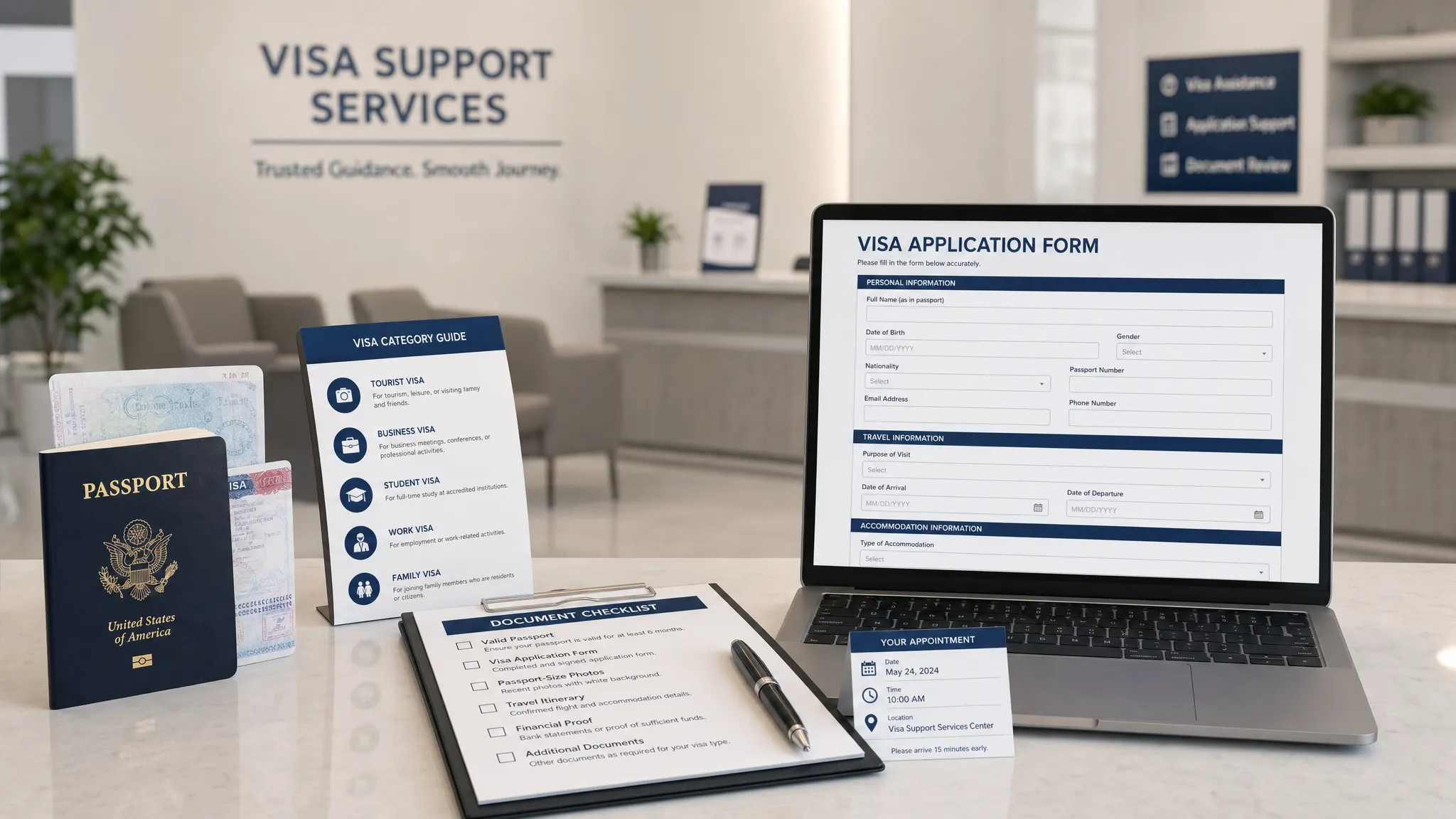
VFS e Visa services can be useful, but they can also be confusing because “VFS” does not mean the same thing for every destination. In some cases, VFS Global helps governments collect applications, book appointments, receive documents, or manage biometric enrollment. In other cases, travelers may apply through a government eVisa portal and only use VFS for a related step.
Before you upload your passport scan, pay a fee, or schedule an appointment, it is worth slowing down. Visa rules are country-specific, passport-specific, and purpose-specific. A small mismatch, such as choosing the wrong category or using an unofficial website, can delay your trip or lead to a refusal.
This guide explains what travelers should check first when they encounter VFS e Visa services, especially if they are applying online, traveling soon, or comparing different visa support options.
What “VFS e Visa services” usually means
VFS Global is an outsourcing and technology services company used by many governments to support parts of the visa process. It is not usually the immigration authority that decides whether your visa is approved. The final decision normally belongs to the embassy, consulate, border agency, or immigration department of the destination country.
That distinction matters because travelers often assume that applying through VFS guarantees a visa or that VFS can override government requirements. In reality, VFS may help with operational steps such as appointment scheduling, document collection, service fee payment, application tracking, passport return, or biometric submission.
The phrase “VFS e Visa services” can refer to several different experiences:
- A fully online eVisa application supported by a government or authorized service provider.
- An online form followed by an in-person VFS appointment for documents or biometrics.
- A visa application center visit where the final visa is still a sticker or physical endorsement.
- A VFS-hosted information page that directs travelers to the correct government process.
So the first rule is simple: do not assume that “online” means fully digital, and do not assume that “VFS” means the requirements are the same for every country.
Check the official application route before entering personal data
The most important first check is whether you are on the correct website. Visa applications require sensitive information, including passport details, travel dates, financial documents, employment records, family information, and sometimes biometric appointment data. You should only submit that information through an official government portal or an authorized provider page.
Start with the destination country’s official embassy, consulate, or immigration website. If that site directs you to VFS, use the link provided there. You can also verify the provider through the official VFS Global website, but the government source should remain your primary reference for visa categories, eligibility, and final rules.
Be cautious if a website promises guaranteed approval, uses urgent fear-based language, hides fees until the final page, or uses a domain name that looks similar to an official site but is not the real one. Scammers often target travelers searching for fast eVisa help, especially for popular destinations or peak travel periods.
A legitimate visa process should clearly explain who is collecting your information, which government the application is for, what fees are mandatory, what services are optional, and how your data will be used.
Confirm that an eVisa is available for your passport and trip
An eVisa is not automatically available to every traveler. Eligibility usually depends on nationality, passport type, destination, purpose of travel, length of stay, and sometimes where you are applying from.
For example, a destination might offer an eVisa for tourism but require a different process for work, study, journalism, volunteering, medical treatment, or family reunification. Another country might allow eVisas for ordinary passports but not for emergency, temporary, refugee, or diplomatic travel documents.
Before you begin a VFS e Visa application, confirm these basics:
| What to check | Why it matters | Where to verify |
|---|---|---|
| Your nationality and passport type | Visa eligibility can change by passport, even for the same itinerary | Official immigration or embassy website |
| Purpose of travel | Tourism, business, study, work, and family visits often require different categories | Visa category guidance page |
| Length of stay | Overstaying the allowed period can create immigration problems | Visa conditions and entry rules |
| Number of entries | Single-entry and multiple-entry visas are not interchangeable | Visa validity details |
| Transit rules | A layover can trigger visa or transit authorization requirements | Airline, airport, and government sources |
If you are still unsure which type of authorization you need, SimpleVisa’s guide to travel visa basics before you book explains the differences between visas, eVisas, eTAs, and visa-on-arrival options.
Match the visa category to your full itinerary
Many visa issues happen because travelers check only the destination city and forget the full route. Your visa needs may be affected by layovers, cruise stops, overland border crossings, separate tickets, airport changes, and return routes through different countries.
If your trip includes multiple countries, do not assume that one visa covers all of them. Some regional systems allow travel across participating countries under specific conditions, while others require separate authorizations for each border crossing. Even transit can be complicated if you need to collect baggage, change airports, pass through immigration, or stay overnight.
The safest approach is to map your trip day by day before applying. List every country where you will enter, transit, or re-enter. Then compare that itinerary with the visa’s permitted entry points, validity window, and stay conditions. For more complex trips, the SimpleVisa article on aligning travel documents with your itinerary is a useful companion checklist.
Prepare documents to the required standard before uploading
Online visa systems can reject documents for reasons that seem minor to travelers but matter to automated checks and consular review teams. A blurry passport scan, cropped photo, unreadable bank statement, or mismatched travel date can cause delays.
Common document requirements include a passport bio page, recent photo, travel itinerary, proof of accommodation, proof of funds, invitation letter, employment or school documents, travel insurance, previous visas, or residence permits. Requirements vary widely, so follow the exact list for your visa category rather than copying a checklist from another traveler.
Pay close attention to technical standards. Some portals specify file type, file size, image dimensions, background color for photos, scan clarity, and whether documents must be in color. If your name contains accents, multiple surnames, hyphens, or different ordering across documents, enter it exactly as instructed and make sure supporting documents are consistent.
Before submitting, use a dedicated checklist like everything you need before an online visa application to avoid missing the basics.
Understand whether you still need an appointment or biometrics
A major misconception about eVisas is that the entire process is always remote. Some visa routes begin online but still require an in-person appointment at a VFS visa application center. This is especially common when biometrics, original documents, passport submission, or identity verification are required.
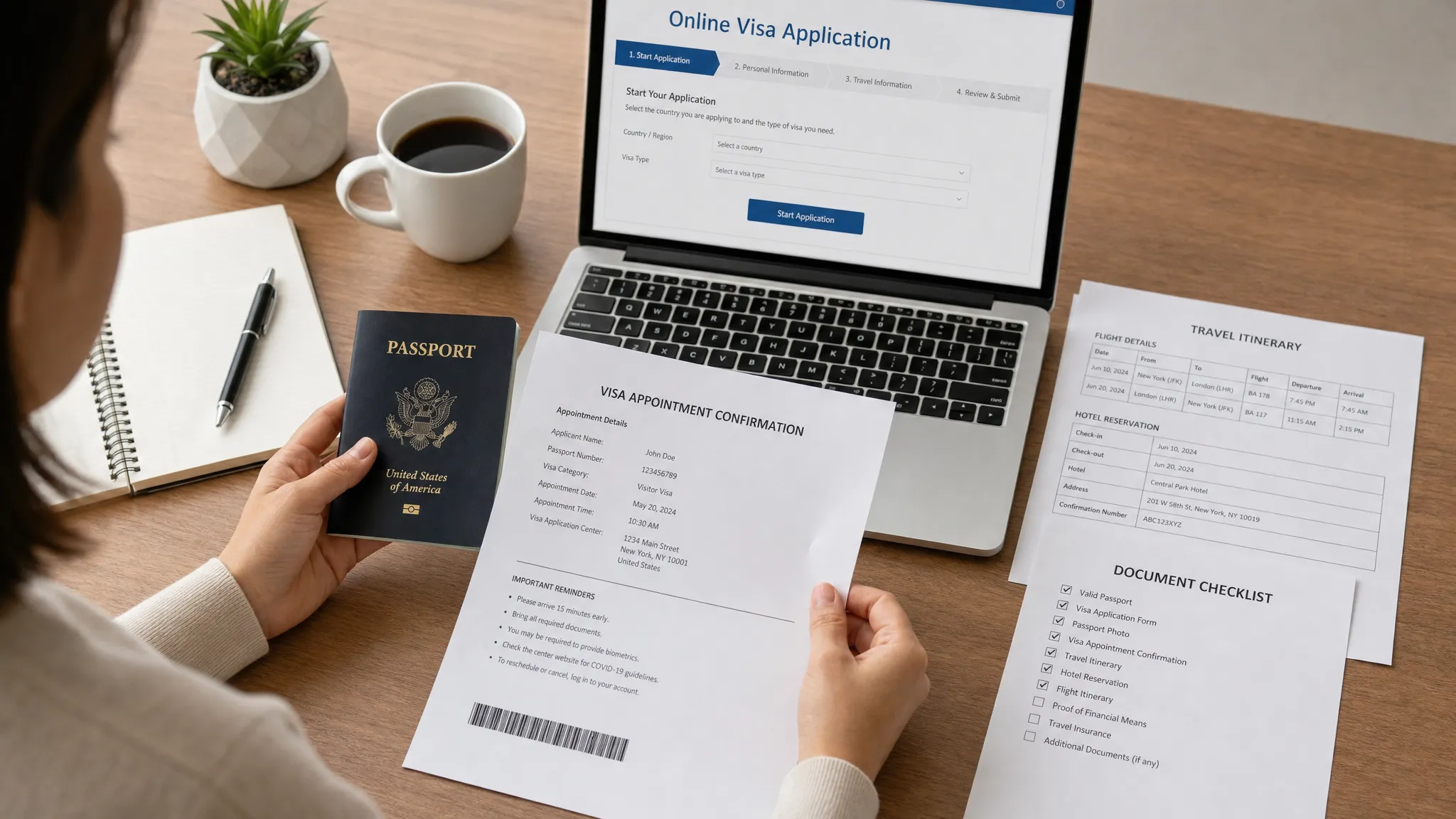
If a VFS appointment is part of your process, check the location carefully. Visa application centers may serve specific jurisdictions, and choosing the wrong location can create problems. Also confirm whether you need to bring printed forms, appointment confirmation, original documents, photocopies, photo prints, payment receipts, or courier labels.
Appointment availability can change quickly during peak travel seasons. If your trip is time-sensitive, do not book non-refundable travel until you understand the visa timeline and the earliest available appointment date.
Review government fees, VFS fees, and optional services separately
Visa costs are not always a single fee. You may see a government visa fee, a VFS service fee, payment processing charges, courier fees, SMS updates, photocopying, photo services, form-filling support, premium lounge access, or other optional add-ons.
The key is to separate mandatory fees from optional services. Optional services can be convenient, but they should not be mistaken for faster approval or a higher chance of success unless the official process explicitly says so. A premium appointment experience does not usually change the government’s decision criteria.
Before paying, check:
- The total amount in the payment currency.
- Whether fees are refundable if you cancel or receive a refusal.
- Whether optional services are pre-selected.
- Whether the payment page belongs to the official process.
- Whether you will receive a receipt or reference number.
Keep copies of all receipts and confirmation emails. If your application requires follow-up, these references may be needed to track your case.
Check processing times with realistic expectations
Published processing times are estimates, not guarantees. They may begin only after your application is complete, after biometrics are submitted, or after the embassy receives your passport and documents. Weekends, public holidays, incomplete files, security checks, peak seasons, and additional document requests can extend the timeline.
If you are applying through a VFS-supported route, understand which organization controls each stage. VFS may manage intake and logistics, while the government authority reviews the application. If a decision is pending, VFS may not be able to accelerate it beyond the options allowed by the destination government.
Apply as early as the official rules allow, especially if you need your passport returned before another trip. If you hold multiple passports, have recent travel to sensitive destinations, or are applying for a category that requires extra review, build in more time.
Verify the approval details before you travel
Receiving an approval email is not the final step. You should check the visa or eVisa document line by line as soon as it arrives. Mistakes can happen, and some errors must be corrected before boarding.
Review your full name, passport number, date of birth, nationality, visa type, validity start date, validity end date, number of entries, permitted stay duration, and any special conditions. Make sure the visa matches the passport you will use for travel. If you renewed your passport after applying, check whether the visa remains valid or whether you need a new application.
Also remember that a visa generally allows you to travel to a border or request entry. It does not always guarantee admission. Border officers may still ask about your itinerary, accommodation, funds, return ticket, insurance, or purpose of travel. Carry digital and printed copies of important documents in case your phone battery dies or internet access is unavailable.
Common mistakes to avoid with VFS e Visa applications
Many problems are preventable. The table below summarizes frequent mistakes and a safer alternative.
| Common mistake | Why it causes problems | Safer approach |
|---|---|---|
| Applying through the first search result | Sponsored or unofficial pages can look official | Start from the government website or verified VFS page |
| Choosing the wrong visa category | The documents and decision criteria may not match your trip | Match category to purpose, stay length, and itinerary |
| Uploading low-quality scans | Review teams may not be able to verify details | Use clear, complete, color scans where required |
| Ignoring appointment requirements | The application may not progress without biometrics or passport submission | Check whether online submission is only the first step |
| Booking too close to departure | Processing delays can affect flights and hotels | Apply early and avoid relying on best-case timelines |
| Not checking the approved visa | Errors may be noticed only at check-in or the border | Verify every detail immediately after approval |
For a deeper look at avoidable online application errors, see SimpleVisa’s guide to common electronic visa mistakes.
What travelers should do if something looks wrong
If you notice a mistake before submission, correct it before paying or booking an appointment. If the application has already been submitted, check the official guidance for amendments, cancellation, or reapplication. Some systems allow corrections; others require a new application.
If you suspect you used an unofficial or fraudulent website, contact your bank or card issuer quickly, monitor your identity documents, and verify your visa status only through official channels. Do not submit a second application without understanding whether duplicate applications can create issues.
If your travel date is approaching and your application is still pending, look for official escalation or priority options only. Avoid anyone claiming they can guarantee approval through personal contacts or unofficial shortcuts.
A note for travel businesses helping customers apply
For airlines, online travel agencies, tour operators, cruise companies, and travel platforms, visa uncertainty can create customer anxiety and operational friction. Travelers often discover requirements late, misunderstand eVisa eligibility, or arrive at the airport with incomplete documents.
SimpleVisa helps travel businesses streamline border requirement support and visa applications through options such as API integration, white-label application flows, no-code implementation, and custom data services. If your business wants to guide customers earlier in the booking journey, SimpleVisa can help make visa administration easier to manage while creating ancillary revenue opportunities.
Frequently Asked Questions
Is VFS Global the same as the embassy or immigration authority? No. VFS Global commonly acts as an outsourcing partner for governments, but the destination government normally makes the final visa decision. Always follow the official government rules for your visa type.
Does using VFS e Visa services guarantee approval? No. A correctly submitted application can still be refused if you do not meet the destination country’s requirements or if the reviewing authority needs information you cannot provide.
Can every traveler apply for an eVisa through VFS? No. Eligibility depends on nationality, passport type, destination, trip purpose, stay length, and the specific visa program. Some travelers must use a different route, such as an embassy appointment or government portal.
Do I need to visit a VFS center if I apply online? Sometimes. Some applications are fully online, while others require an in-person appointment for biometrics, passport submission, or document verification. Check the instructions for your exact destination and visa category.
What should I check after my eVisa is approved? Verify your name, passport number, date of birth, visa category, validity dates, number of entries, permitted stay, and any conditions. If anything is wrong, follow the official correction process before traveling.
Should I print my eVisa? Many travelers should carry both a digital and printed copy, even when the visa is electronically linked to the passport. Airlines and border officers may ask to see proof of approval or supporting documents.
VFS e Visa services can make parts of the process more convenient, but they do not remove the need for careful checks. Verify the official route, confirm your eligibility, prepare documents properly, understand fees and appointments, and review your approval before departure. Those few steps can prevent the most common visa surprises before they disrupt your trip.