Saudi eVisa Cost in 2026: Fees, Add-Ons, and Refunds
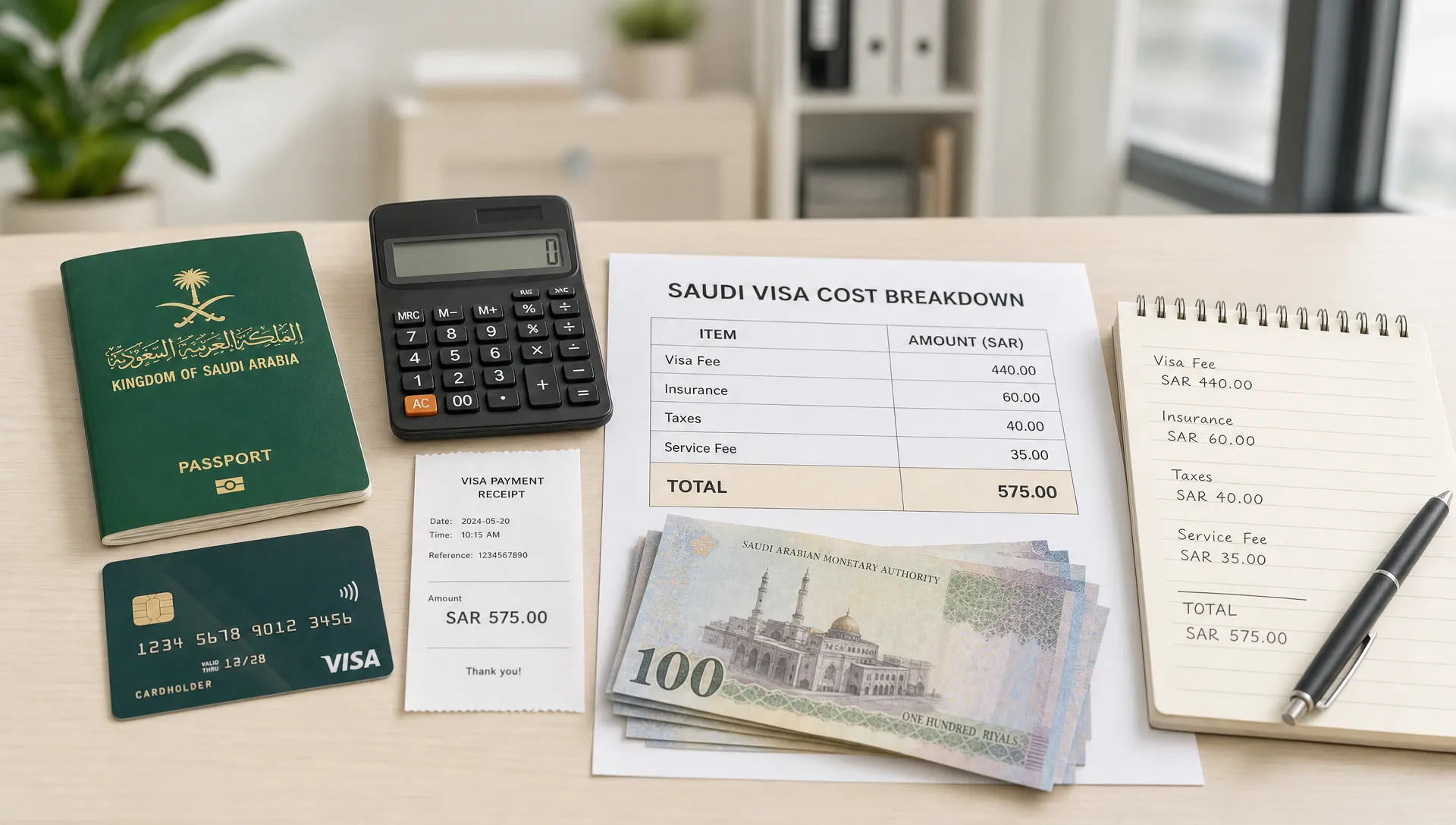
If you are budgeting for Saudi Arabia in 2026, the most important thing to know is that the Saudi eVisa cost is not just one line item. The advertised visa fee is only part of the total. Most travelers also pay mandatory visitor medical insurance, taxes or checkout charges where applicable, possible currency conversion fees, and, if they use an agency or travel platform, a service fee.
As of mid-2026, a practical budget for a standard Saudi tourist eVisa is SAR 300 for the visa fee, plus mandatory insurance and checkout charges. Many travelers should expect the final official-channel checkout to be around SAR 500 or more per applicant before optional third-party support or bank fees. The final amount shown at checkout is the only amount that matters, since insurance pricing, payment routing, and policy updates can change.
For US dollar planning, SAR 300 is roughly USD 80 using the long-standing exchange rate of about SAR 3.75 to USD 1. Your card issuer may use a different rate or add a foreign transaction fee.
Saudi eVisa cost in 2026: the quick breakdown
The safest way to think about Saudi eVisa pricing is as a stack of charges. Some are official and unavoidable. Others depend on the website, travel agency, payment method, or level of assistance you choose.
| Cost component | What it pays for | 2026 budgeting note |
|---|---|---|
| Visa fee | The government charge for the Saudi tourist eVisa | Commonly built around SAR 300 per applicant, but always confirm at checkout |
| Mandatory medical insurance | Visitor health insurance linked to the visa application | Priced during the application and can vary by policy or portal |
| Taxes and checkout charges | VAT where applicable, payment gateway costs, or other official checkout items | Shown before payment on legitimate application flows |
| Optional service fee | Help from a travel agency, visa provider, booking site, or concierge service | Varies by provider and should be disclosed separately |
| Currency conversion and card fees | Your bank or card network converting SAR into your billing currency | Usually outside the visa receipt and visible on your card statement |
| Reapplication costs | A new application if the first one has errors, is rejected, or is the wrong visa type | Often the full cost again, since paid visa fees are generally not refundable |
This is why two travelers can see different final totals even when applying for the same destination. One may apply directly through an official channel in SAR, while another may apply through a travel seller in USD or EUR with added assistance, customer support, or bundled services.
If you want a broader framework for comparing official charges with service charges, SimpleVisa has a useful guide on how visa fees are calculated.
What the official Saudi eVisa fee usually includes
The Saudi tourist eVisa is a digital travel authorization for eligible travelers visiting Saudi Arabia for tourism and, for eligible cases, individual Umrah outside restricted Hajj-related periods. The official Saudi tourism visa portal and official travel guidance should always be checked before applying, especially if your nationality, purpose of travel, or itinerary has changed.
In cost terms, the official eVisa checkout usually combines three things.
First, there is the visa charge itself. This is the core government fee for processing and issuing the electronic visa. In 2026 planning, SAR 300 remains the key base figure most travelers should know, but the amount displayed in the application flow is the authority to rely on.
Second, there is mandatory medical insurance. This is one of the main reasons the final Saudi eVisa cost is higher than the base visa fee. It is not the same as a broader travel insurance policy that covers trip cancellation, baggage delay, or missed flights. It is typically visitor health coverage connected to the visa process.
Third, there may be taxes, payment processing items, or other checkout charges. These are not always easy to separate when you only look at the final card charge, so travelers should download or save the receipt immediately after payment.
For travelers whose Saudi trip includes Umrah, visa rules can matter as much as price. SimpleVisa covers eligibility, timelines, and practical points in its guide to the Saudi Arabia eVisa for Umrah and tourism.
Add-ons that can change the total price
Some add-ons are legitimate and useful. Others are unnecessary for travelers who are comfortable applying on their own. The key is to know which charges are mandatory, which are optional, and which are simply bank or payment effects.
Mandatory insurance is not really optional
Travelers sometimes compare the Saudi eVisa fee with visa prices for other countries and assume the base fee is the full cost. For Saudi Arabia, mandatory insurance is part of the practical cost of getting the eVisa. If you already have travel insurance from your credit card or employer, that does not usually remove the insurance charge embedded in the visa application process.
That said, you may still want separate travel insurance for cancellation, baggage, delays, or higher medical limits. That is a travel planning decision, not a way to reduce the official eVisa checkout.
Third-party service fees can be worth it, but only if clear
A travel agency, tour operator, airline, OTA, or visa assistance provider may charge a service fee on top of the official visa and insurance cost. This can be reasonable if the provider checks documents, guides the traveler through eligibility, supports multiple passengers, manages customer questions, or reduces errors in a booking flow.
The red flag is lack of transparency. A trustworthy provider should make it clear which part of the amount is the official visa-related cost and which part is its own service fee. If the website only shows one inflated total without explaining what is included, compare carefully before paying.
Rush processing claims should be read carefully
Saudi eVisas are often processed quickly, but no third party can guarantee an outcome or force an immigration authority to approve an application. If a provider sells urgent handling, the value may be faster document review, faster submission, or priority customer support. It should not be presented as guaranteed government approval.
This is a common area where travelers overpay. If your departure is close, paying for help can reduce administrative stress, but it cannot fix ineligibility, an invalid passport, a wrong visa type, or inaccurate personal details.
Currency conversion can quietly increase the cost
If the checkout is in SAR but your card is billed in USD, EUR, GBP, or another currency, your bank may apply its own exchange rate. Some cards also charge a foreign transaction fee. If the checkout offers dynamic currency conversion, compare the displayed converted amount with your card issuer's usual rate before accepting it.
For families or groups, this matters. A small percentage fee on one visa may not feel large, but it adds up quickly across four, six, or ten applications.
Mistakes can be the most expensive add-on
The most painful Saudi eVisa add-on is not a service fee. It is a preventable reapplication. A passport number typo, wrong date of birth, name mismatch, or incorrect nationality can make a visa unusable even if it is approved.
In many visa systems, correcting an issued visa is not as simple as editing a profile. You may need to apply again and pay again. Before payment, compare every field against the passport, not against memory, an airline profile, or an old booking.
Saudi eVisa refunds: what travelers should expect
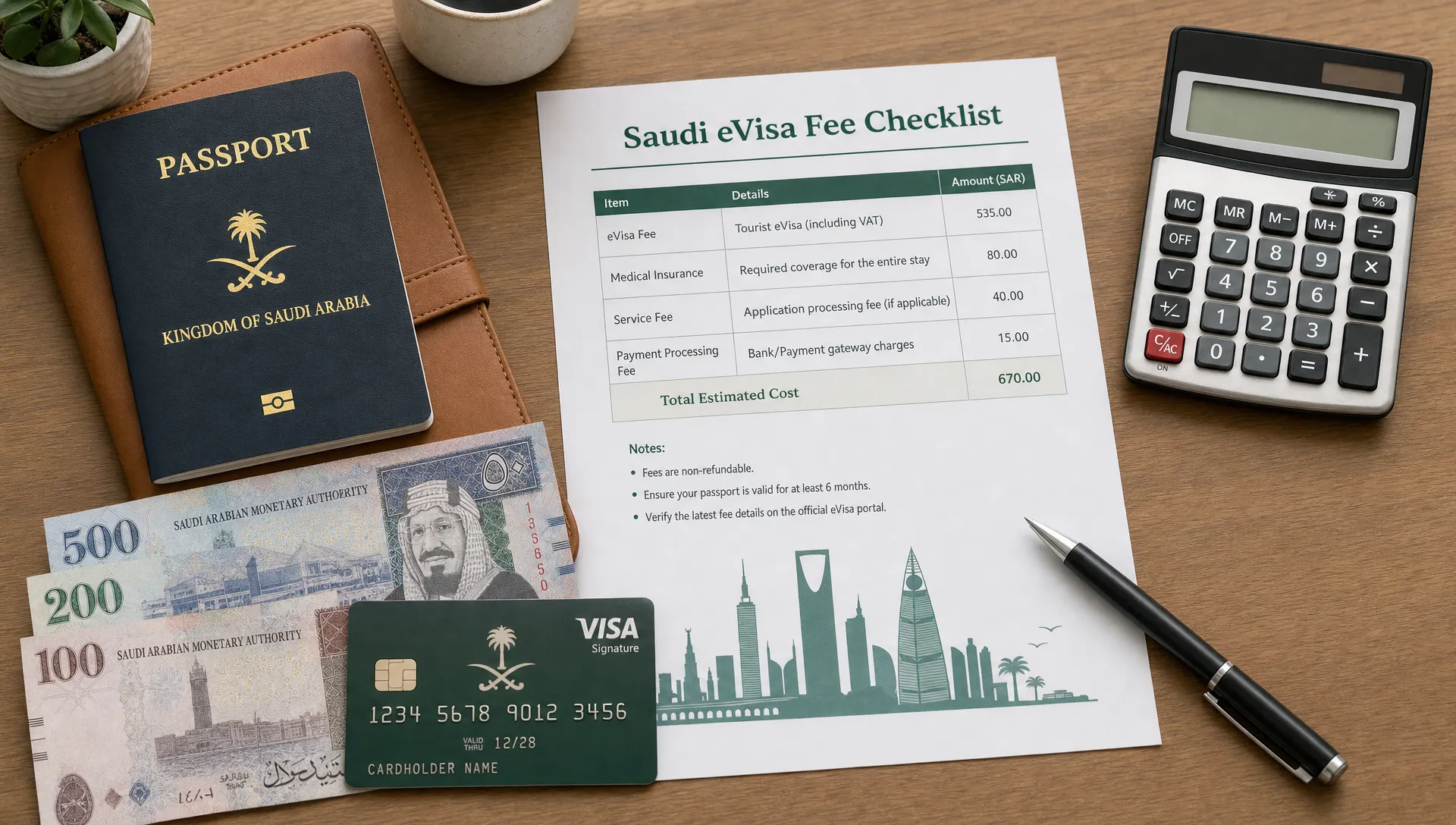
The most important refund rule is simple: do not assume your Saudi eVisa fee is refundable after submission. Visa fees are generally treated as payment for processing, not payment for a guaranteed approval or a completed trip.
Exact refund handling can depend on the official portal, payment gateway, insurance terms, and any third-party provider involved. Still, the practical expectations below will help you budget safely.
| Situation | Likely refund outcome | What to do |
|---|---|---|
| Application is refused | Government and processing fees are generally non-refundable | Review the refusal reason and confirm the correct visa route before applying again |
| Traveler cancels the trip | Visa fees are generally non-refundable | Check separate travel insurance, airline, and hotel cancellation terms |
| Traveler applies for the wrong visa type | Usually no automatic refund | Do not reapply until you confirm the correct category and eligibility |
| Duplicate payment or technical error | May be reviewed, but not guaranteed | Contact the official portal or provider quickly with transaction IDs and receipts |
| Third-party service not yet performed | Depends on provider terms | Read cancellation terms before paying and ask for written confirmation |
| Data error made by traveler | Often requires a new application | Check passport details before submission to avoid paying twice |
A refund request is strongest when there is a clear payment error, such as a duplicate charge, failed application session with a completed card debit, or provider-side issue. Even then, keep screenshots, receipts, application numbers, and bank transaction references.
If you used a third-party provider, separate the refund question into two parts: the official visa-related amount and the provider's service fee. A provider may have already performed document review or submission work, even if the visa authority has not approved the application.
Cost examples for common traveler situations
Because the final amount can vary, it is better to use scenarios than to rely on a single universal price. These examples are planning estimates, not guaranteed quotes.
| Scenario | Cost logic | Budgeting tip |
|---|---|---|
| Solo tourist applying through an official channel | Visa fee plus mandatory insurance and checkout charges | Expect more than the SAR 300 base fee and save the final receipt |
| Solo tourist using a visa assistance provider | Official visa-related cost plus provider service fee | Check whether support, document review, or customer service is included |
| Family of four | Four separate visa applications, each with its own official charges | Multiply the full checkout amount, not just the base visa fee |
| Traveler with a passport expiring soon | Possible delay, refusal, or need to renew passport before applying | Confirm passport validity before paying any visa fee |
| Traveler with an error on an issued visa | Potential new application and full repayment | Verify spelling, numbers, dates, and nationality before submission |
| Traveler applying close to departure | Possible service fee for urgent help, but no guaranteed approval | Apply early enough to avoid paying for stress rather than value |
The biggest budgeting mistake is multiplying SAR 300 by the number of travelers and assuming that is the full amount. A more realistic estimate starts with the full checkout total for one traveler, then multiplies by the number of applicants, then adds card or service fees.
How to avoid overpaying or paying twice
Saudi eVisa costs are easier to control when you treat the application like a financial transaction and a legal document at the same time. The payment step should be the last step after eligibility, passport details, and travel purpose are clear.
Use this short checklist before you pay:
- Confirm your nationality is eligible for the eVisa or that you are applying through the correct route.
- Check that your passport will remain valid for the required period for your trip.
- Enter names exactly as they appear in the passport, including order and spelling.
- Review passport number, date of birth, issue date, and expiry date digit by digit.
- Confirm that the trip purpose matches the visa category, especially for Umrah, business, work, study, or family visits.
- Save the final checkout page, payment receipt, application number, and issued visa document.
- Be cautious with websites promising guaranteed approval or guaranteed refunds after refusal.
If you are applying as part of a package tour, ask the organizer for an itemized breakdown. You do not necessarily need the cheapest provider, but you should know what you are paying for.
For a deeper explanation of official charges, support fees, and what processing fees actually cover, see SimpleVisa's guide to visa processing fees.
What travel businesses should show customers
For airlines, OTAs, tour operators, hotel groups, and travel agencies, Saudi eVisa pricing is not just a compliance detail. It is part of customer experience. Travelers dislike surprises at checkout, and visa-related cost confusion can create avoidable support tickets, abandoned bookings, and refund disputes.
A clear visa cost display should separate the main components: official visa fee, mandatory insurance, taxes or payment charges, service fee, and estimated bank or currency effects where relevant. If the final price can change, say so before the customer commits.
This is especially important for Saudi Arabia because many trips are time-sensitive. A traveler going for a major event, conference, religious travel, or a fixed tour date may be willing to pay for guided help, but only if the value is clear. If a service fee includes document checks, guided forms, or customer support, name those benefits directly.
Travel businesses should also avoid language that implies approval is guaranteed. A better message is that guided application flows can reduce avoidable errors and help customers understand requirements before submission.
Frequently Asked Questions
How much is the Saudi eVisa in 2026? For budgeting, expect a base visa fee commonly built around SAR 300, plus mandatory medical insurance and checkout charges. Many travelers should plan for an official-channel total around SAR 500 or more per applicant before optional service fees or bank conversion costs.
Is medical insurance included in the Saudi eVisa cost? Medical insurance is usually part of the visa application cost structure, which is why the final checkout is higher than the base visa fee. This is separate from broader travel insurance that may cover cancellation, baggage, or delays.
Are Saudi eVisa fees refundable if my application is rejected? In most cases, visa fees are treated as processing fees and are generally non-refundable after submission, even if the application is refused. Always confirm eligibility and details before paying.
Can I get a refund if I entered the wrong passport number? Usually, traveler-made data errors do not create an automatic refund right. If the visa is issued with incorrect details, you may need to apply again and pay again. Contact the portal or provider, but budget as if correction is not guaranteed.
Is visa on arrival cheaper than the Saudi eVisa? Not necessarily. Visa on arrival may have similar official costs and can add airport uncertainty, queues, payment issues, or eligibility risk. For many travelers, the eVisa is easier to verify before departure.
Do children pay the same Saudi eVisa fee? Children generally need their own visa application when a visa is required, so families should budget per traveler rather than per booking. Check the application flow for the exact amount before payment.
Can I use a Saudi tourist eVisa for Umrah? Eligible travelers may use the Saudi tourist eVisa for individual Umrah outside restricted Hajj-related periods, but rules can change and Hajj is not covered by the tourist eVisa. Check the latest official guidance before applying.
Make Saudi eVisa costs simpler for your customers
If your travel business sells Saudi trips, events, flights, hotels, or packages, visa pricing should be clear before checkout, not explained after a customer gets confused. SimpleVisa helps travel businesses streamline visa applications with automation, API integration, white-label app options, and custom data services, so customers can understand border requirements and complete guided applications with fewer mistakes.
When eVisa costs are transparent, travelers make better decisions and support teams spend less time untangling avoidable payment and refund questions.