Turkey eVisa Website: Safe Steps to Apply Online
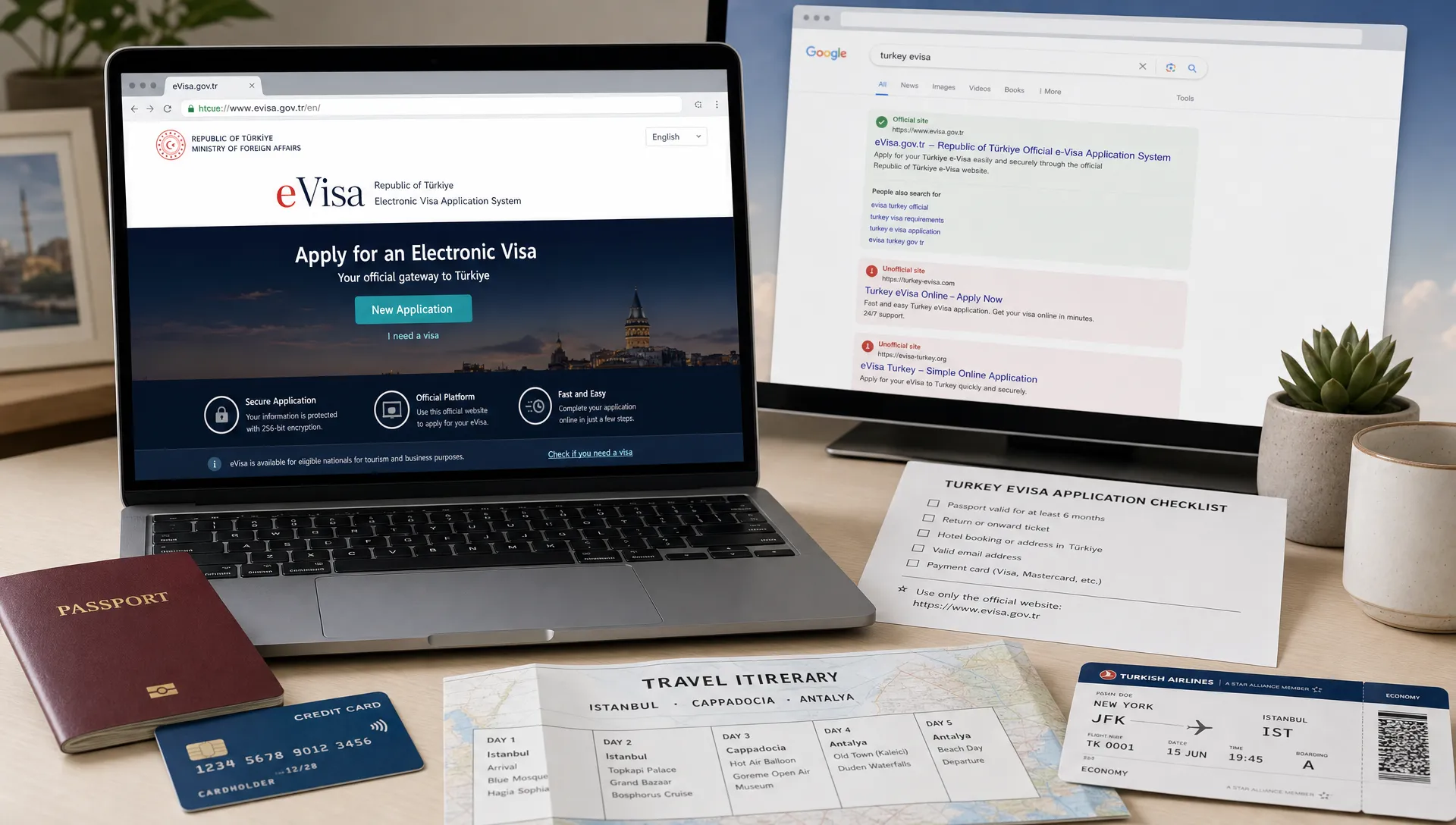
Applying for a Turkish eVisa should be straightforward, but the safest path starts before you type a single passport number. The Turkey eVisa website is a government portal used by eligible travelers to apply online for short-term visits, usually for tourism or business. The risk is that search results can include paid intermediaries, lookalike pages, and outdated advice that make the process more confusing than it needs to be.
The goal is simple: use the correct portal, confirm eligibility, enter details exactly as they appear in your passport, pay securely, and verify the approved eVisa before you travel. If you are a traveler, this helps you avoid avoidable refusals or boarding problems. If you run a travel business, it helps you give customers clearer guidance at a critical pre-trip moment.
Start with the official Turkey eVisa website
The official Republic of Türkiye Electronic Visa Application System is hosted on the evisa.gov.tr domain. If you want to apply directly, begin with the official Electronic Visa Application System and check that the browser address matches the government domain before entering personal information.
Searches for the ‘evisa gov tr website’ often lead to a mix of official results, ads, travel forums, and visa service providers. Some third-party services are legitimate and may charge a service fee for assistance, but they should clearly explain that they are not the government portal. A copycat site, by contrast, may imitate official wording, hide fees until payment, or collect passport details without clear accountability.
A safe habit is to verify the site twice: once before starting the form and again before payment. SimpleVisa also has a more focused companion guide on how to use the Turkey eVisa site safely if you want a dedicated checklist.
Confirm that an eVisa is the right document for your trip
Not every traveler can use the Turkey eVisa system. Eligibility depends on factors such as nationality, passport type, travel purpose, arrival date, and sometimes supporting documents. Some travelers can apply fully online, some must meet extra conditions, and others may need to apply through a Turkish embassy or consulate instead.
A Turkey eVisa is generally intended for short-term tourism or business travel. It is not a substitute for a residence permit, work authorization, student visa, or long-stay visa. If your plans include employment, study, relocation, media work, or other regulated activities, do not rely on a tourist or business eVisa without checking the correct official route.
The official system will normally ask for your country or region of travel document, travel document type, and intended arrival date before showing your available option. Read the conditions displayed for your nationality carefully. Validity period, allowed length of stay, number of entries, and supporting document requirements can vary.
Prepare your information before opening the form
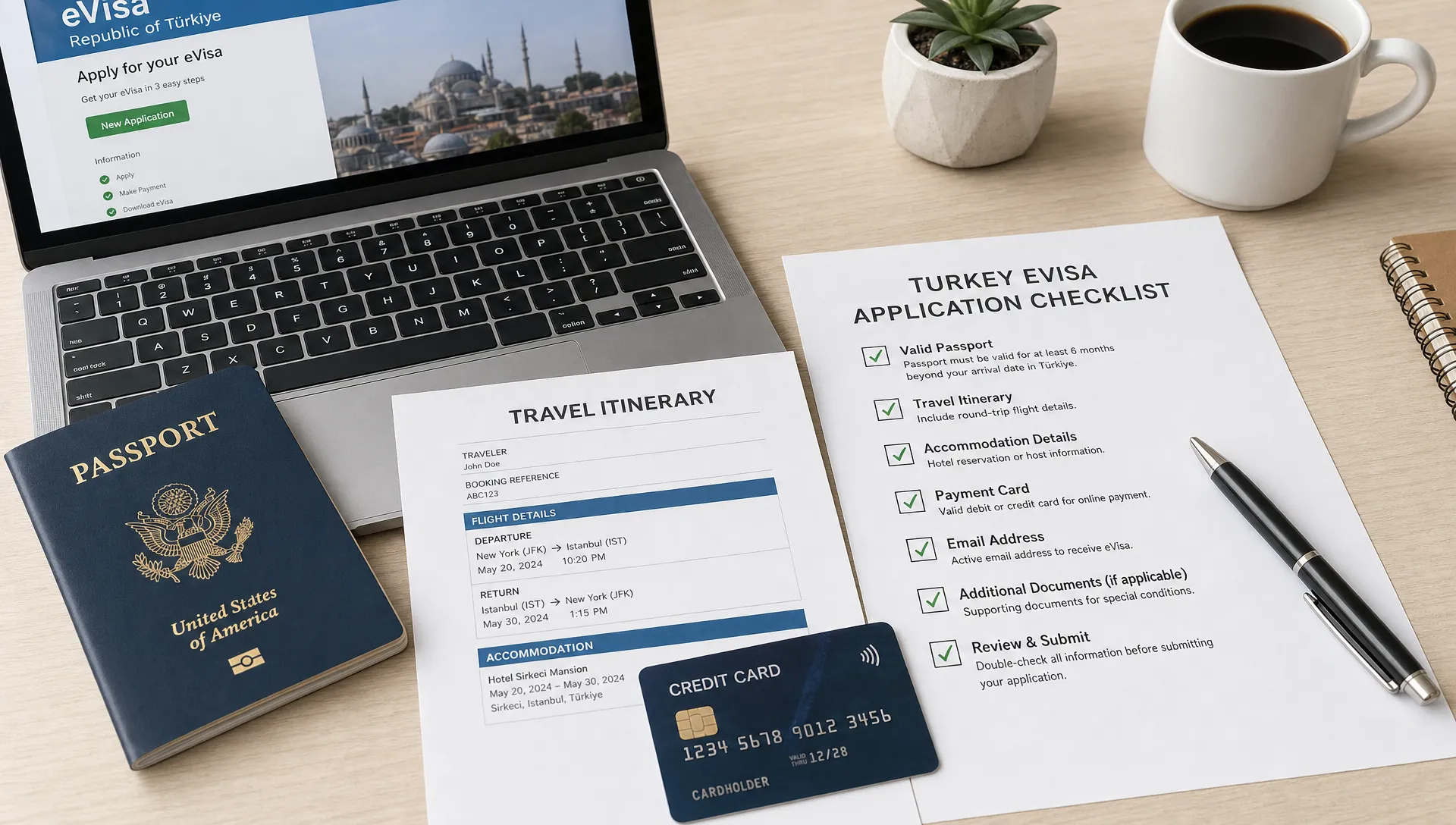
Most eVisa errors come from rushing. Before you begin, gather everything in one place and make sure the details are consistent across your travel documents and booking records.
You will usually need:
- The passport you will use to enter Türkiye.
- Your planned arrival date and basic itinerary.
- A valid email address you can access immediately.
- A payment card accepted by the online system.
- Supporting documents if the official portal says they are required for your nationality.
- Separate traveler details for each person in your party.
Use the passport that will be valid for travel, not an old passport or a passport you plan to renew before departure. If your passport number changes after you receive an eVisa, you may need a new application because the eVisa is tied to the passport details entered.
Safety checks before you apply
Use this quick table to separate a safer application experience from common warning signs.
| Checkpoint | Safer sign | Red flag |
|---|---|---|
| Domain | The address uses the official evisa.gov.tr government domain |
The domain adds extra words, misspellings, or unfamiliar endings |
| Security | The page uses HTTPS and the address is spelled correctly | A padlock appears, but the domain is not the official one |
| Fees | Charges are shown before you confirm payment | Service fees are hidden until the final step |
| Claims | The site explains eligibility and conditions | The site promises guaranteed approval |
| Data collection | The form asks for information relevant to the application | The site requests unrelated data or unusual uploads |
| Communication | Emails match the application process and reference your submission | Messages come from random accounts or ask for payment outside the site |
HTTPS matters, but it is not enough on its own. Fraudulent websites can also use secure certificates. The domain, payment flow, transparency, and data handling are just as important.
Step 1: Check eligibility on the official portal
Start by entering your nationality or travel document country, passport type, and intended arrival date. Do not assume your friend, colleague, or family member has the same requirements as you, even if you are traveling together. A different passport can mean a different visa rule.
If the system shows conditions, read each one slowly. Some travelers may need to hold a valid supporting document, such as a visa or residence permit from a specified country, when the official portal requires it. If you cannot meet a condition, do not proceed as if it does not apply.
Step 2: Enter passport details exactly
Your name, surname, date of birth, passport number, passport issue date, and passport expiry date should match your passport exactly. Be careful with letters and numbers that look similar, such as O and 0 or I and 1. If your passport has multiple name fields, follow the structure shown in the travel document.
Small errors can create large problems. An approved eVisa with the wrong passport number or date of birth may not match your airline check-in record or border inspection record. Review each field before moving forward.
Step 3: Review validity, stay limit, and entry type
Before payment, check the eVisa details displayed by the system. Pay attention to the valid-from date, valid-until date, maximum stay, and whether the visa is single-entry or multiple-entry. These details are not the same for every traveler.
The validity period is the window in which the eVisa can be used. The allowed stay is the maximum time you can remain during a visit. Travelers sometimes confuse these two concepts, which can lead to overstays or incorrect travel planning.
Step 4: Pay securely and save proof
Use a secure internet connection and avoid submitting passport or payment details over public Wi-Fi. Before entering card information, confirm the domain again. If a page redirects you to an unfamiliar payment flow, pause and verify that you are still in a legitimate process.
After payment, save any confirmation number, receipt, or application reference. Take a screenshot only if it does not expose sensitive card data. Use a password-protected device or secure cloud storage if you save copies of travel documents.
Step 5: Download and verify the approved eVisa
Once approved, download the eVisa and compare every detail against your passport. Check your name, passport number, nationality, date of birth, and validity dates. If something is wrong, do not wait until the airport to investigate.
Keep both a digital copy and a printed copy if possible. Many systems are electronic, but a paper copy can still be useful if you have connectivity issues, a low phone battery, or an airline counter agent asks to see the document.
Step 6: Track the application without resubmitting unnecessarily
If you do not receive the email immediately, check spam and promotions folders. Make sure you used the correct email address. If tracking is available, use your application reference through the official channel rather than starting a duplicate application right away.
Duplicate applications can create confusion, especially if traveler details differ between submissions. If you are uncertain, use the official portal’s support or status tools where available.
Common mistakes that can create problems
Most Turkey eVisa issues are preventable. The most common ones are not technical failures, but mismatches between the application and the traveler’s real documents or plans.
Watch out for these mistakes:
- Applying with the wrong passport or an old passport number.
- Selecting the wrong nationality or travel document type.
- Ignoring supporting document conditions shown by the official portal.
- Confusing the eVisa validity period with the permitted length of stay.
- Waiting until the day of departure to apply.
- Assuming children or group members are covered by one traveler’s approval.
- Using a copycat site because it appeared above the official result in search.
If you are unsure whether a site is legitimate, SimpleVisa’s guide on verifying the authenticity of an electronic visa website explains practical checks that apply beyond Türkiye as well.
What if you use a third-party visa service?
Using a third-party service is not automatically unsafe. Some travelers prefer help with form completion, document review, reminders, or customer support. Travel agencies, tour operators, online travel agencies, and corporate travel teams may also need a structured way to guide many customers at once.
The key is transparency. A reputable provider should explain what it does, what fees it charges, how it handles personal data, and whether it is acting as an intermediary rather than the government. It should not guarantee approval, hide the official route, or encourage travelers to provide false information.
For travel businesses, the broader lesson is that automation works best when it reduces friction without hiding important decisions. That same thinking applies across commercial operations, from visa guidance to autonomous B2B prospecting platforms that qualify opportunities at scale. In both cases, reliable data, clear workflows, and human oversight matter.
Extra guidance for travel businesses
Visa confusion often appears late in the booking journey, when the traveler has already paid for flights, hotels, tours, or insurance. A missed eVisa requirement can become a support issue, a refund dispute, or a poor customer experience.
Travel brands can reduce that risk by showing visa guidance earlier, based on the traveler’s passport and destination. The safest systems make it clear when a traveler may be eligible for an eVisa, when conditions apply, and when official or consular guidance is needed. They also avoid storing sensitive passport data unless it is necessary and protected.
For airlines, OTAs, tour operators, and travel management companies, adding reliable visa support can also create a useful ancillary service. The priority should be accuracy first: a traveler who understands the requirement and completes the right process is more likely to reach the trip without last-minute disruption.
Frequently Asked Questions
What is the official Turkey eVisa website? The official website is the Republic of Türkiye Electronic Visa Application System on the evisa.gov.tr domain. Always verify the domain before entering passport or payment information.
Can everyone apply for a Turkey eVisa online? No. Eligibility depends on nationality, passport type, travel purpose, arrival date, and sometimes supporting documents. If the official system says you are not eligible, you may need a consular visa instead.
How long does a Turkey eVisa take to process? Many eVisa applications are processed quickly, but timing can vary. Apply early enough to fix errors, meet conditions, or choose another visa route if needed.
Do I need to print my Turkey eVisa? It is smart to carry both a digital copy and a printed copy. Even when systems are electronic, a printed copy can help during airline check-in or if your device is unavailable.
Is it safe to use a visa service instead of applying directly? It can be safe if the provider is transparent about fees, data handling, and its role as an intermediary. Avoid any service that hides the official route, promises guaranteed approval, or uses unclear payment methods.
Make Turkey eVisa guidance simpler for your customers
If your travel business needs to help customers understand visa requirements before departure, SimpleVisa can support that journey with visa processing automation, API integration, white-label application options, and custom data services. Clearer guidance helps travelers apply with confidence and helps travel brands reduce avoidable support friction.