Indian eTourist Visa: How It Works in 2026
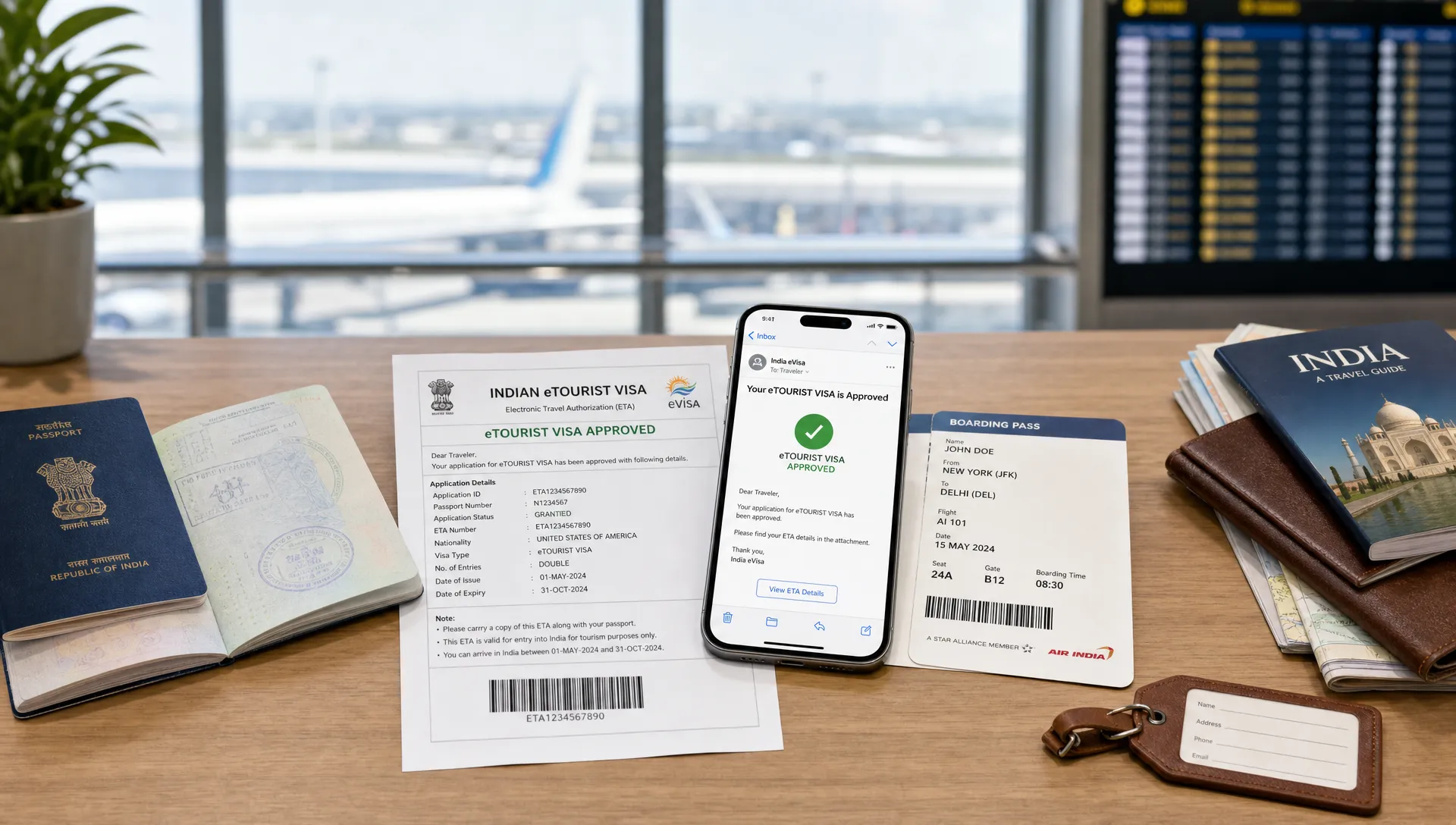
For many visitors, India’s electronic tourist visa is the simplest way to enter the country for sightseeing, short leisure travel, visiting friends or relatives, and certain short recreational activities. The Indian eTourist visa replaces a consulate visit with an online application, digital payment, and an electronic travel authorization sent by email.
That convenience does not mean every application is automatic. In 2026, travelers still need to choose the right visa duration, apply within the correct time window, upload documents in the right format, and enter through an approved airport or seaport. For travel businesses, the details matter even more because visa confusion can lead to support tickets, missed flights, and unhappy customers.
This guide explains how the Indian eTourist visa works in 2026, what travelers should prepare, and where operators can reduce friction in the customer journey.
What Is the Indian eTourist Visa?
The Indian eTourist visa is part of India’s eVisa program. Instead of sending a passport to an embassy or consulate, eligible travelers submit an online form, upload a passport scan and photo, pay the government visa fee, and receive an Electronic Travel Authorization by email.
The authorization must be presented at boarding and on arrival in India. Immigration officers then verify the traveler’s passport, biometric information, and travel authorization before granting entry.
A key point is that the Indian eTourist visa is not the same as a visa on arrival. The traveler must apply before departure and receive approval before traveling. Airlines may deny boarding if the traveler cannot show a valid eVisa approval for the passport used in the application.
The official government application portal is the Indian eVisa portal. Travelers should use official or trusted channels and be careful with lookalike websites, since incorrect data, inflated fees, or poor document handling can create avoidable problems.
Who Can Use the Indian eTourist Visa in 2026?
Eligibility depends mainly on nationality, passport type, travel purpose, and entry route. India maintains a list of countries whose citizens can apply for an eVisa, and that list can change. Travelers should always confirm eligibility before purchasing non-refundable flights.
In general, an applicant needs:
- A passport from an eligible country
- An ordinary passport, not a diplomatic, official, or special travel document
- At least six months of passport validity from the expected arrival date in India
- At least two blank passport pages for immigration stamps
- A clear digital passport-style photo and passport bio page scan
- A return ticket or onward ticket and enough funds for the stay
- A travel purpose that matches tourism rules
The Indian eTourist visa is intended for tourism, casual visits to friends or relatives, short recreational trips, and similar non-business purposes. It is not suitable for employment, long-term study, journalism, missionary work, most NGO or volunteer activities, or activities that require a separate permit.
Travelers with Pakistani passports, or certain travelers of Pakistani origin, may be directed to a regular visa process rather than the eVisa route. Travelers planning to visit Protected or Restricted Areas may also need additional permits, even if their eTourist visa is approved.
For document-level details, including passport scans, photo formatting, and fee considerations, SimpleVisa has a separate guide to India eVisa document requirements. Canadian passport holders can also review this dedicated guide for Canadian travelers applying for an Indian eVisa.
Indian eTourist Visa Types and Validity
India has offered several eTourist visa validity options. The exact availability can depend on nationality and current government policy, but travelers commonly see short-stay and longer-validity options.
| Visa option | Typical use case | Entries | Validity concept | Important note |
|---|---|---|---|---|
| 30-day eTourist visa | Short holidays, quick family visits, stopover-style trips | Usually double entry | Valid for a short period connected to arrival | Best for travelers with fixed dates |
| 1-year eTourist visa | Repeat tourism visits within a year | Usually multiple entry | Valid from the date the authorization is granted | Each stay is still subject to a maximum duration |
| 5-year eTourist visa | Frequent leisure travelers | Usually multiple entry | Valid for several years from approval | Passport validity and stay limits still matter |
The longer-validity options do not mean a traveler can remain in India continuously for the full visa period. Maximum stay rules apply per visit, and they can vary by nationality. Many travelers are limited to shorter continuous stays, while some nationalities may be allowed longer stays under specific conditions.
Travel businesses should avoid displaying only the headline validity, such as 1 year or 5 years, without explaining the stay limit. A traveler may assume that a 1-year eTourist visa allows a full year in India, which is not how the program works.
When Should Travelers Apply?
The correct timing depends on the visa option. Shorter eTourist visas generally have a shorter application window, while 1-year and 5-year options may allow travelers to apply further in advance.
A practical rule for 2026 is to avoid last-minute applications. Although many eVisa decisions are issued quickly, processing can take longer if payment is delayed, documents are unclear, data does not match the passport, or the application needs additional review.
For travel businesses, the best customer experience is to surface visa requirements early in the booking flow, not in a pre-departure email two days before travel. If a traveler discovers too late that their passport expires soon or their nationality is not eligible for the eVisa, the trip may become difficult or impossible to rescue.
How the Indian eTourist Visa Application Works
The application process is straightforward in concept, but small mistakes can cause delays. Travelers should complete the form carefully and match all details exactly to the passport.
- Confirm eligibility and travel purpose: Check that the traveler’s nationality, passport type, purpose of travel, and intended entry point are compatible with the Indian eTourist visa.
- Choose the correct visa duration: Select the option that fits the itinerary, expected future trips, and application timing window.
- Prepare the required files: Have a clear passport bio page scan and a recent passport-style photo ready before starting the form.
- Complete the online form: Enter personal details, passport information, travel dates, address in India, occupation, and background questions.
- Pay the visa fee: Fees vary by nationality, visa type, and government policy. Government visa fees are generally non-refundable, even if the application is refused.
- Monitor the application status: The traveler should save the application ID and check email carefully, including spam or junk folders.
- Print or save the approval: Carry a printed copy or accessible digital copy of the Electronic Travel Authorization when traveling.
The passport used for the application must be the passport used for travel. If a passport is renewed after approval, the traveler should verify the current rule before departure, since airlines and border officers must be able to connect the approval to the traveler’s valid passport.
What Happens After Approval?
After approval, the traveler receives an Electronic Travel Authorization. This document is not a free pass to enter India without inspection. It allows the traveler to board and present themselves for immigration clearance at an approved entry point.
On arrival, the traveler should be ready to show:
- The passport used in the application
- The eVisa approval or Electronic Travel Authorization
- Return or onward travel details
- Accommodation information or the address of the host in India
- Evidence of sufficient funds if requested
India’s eVisa program generally requires arrival through designated international airports or seaports. Departure may be possible from a broader list of authorized immigration checkpoints, but travelers should confirm the current entry and exit rules before booking unusual routes. Entering India by land with an eTourist visa is usually not the right assumption, even if the traveler can exit through certain land checkpoints.
Common Indian eTourist Visa Mistakes to Avoid
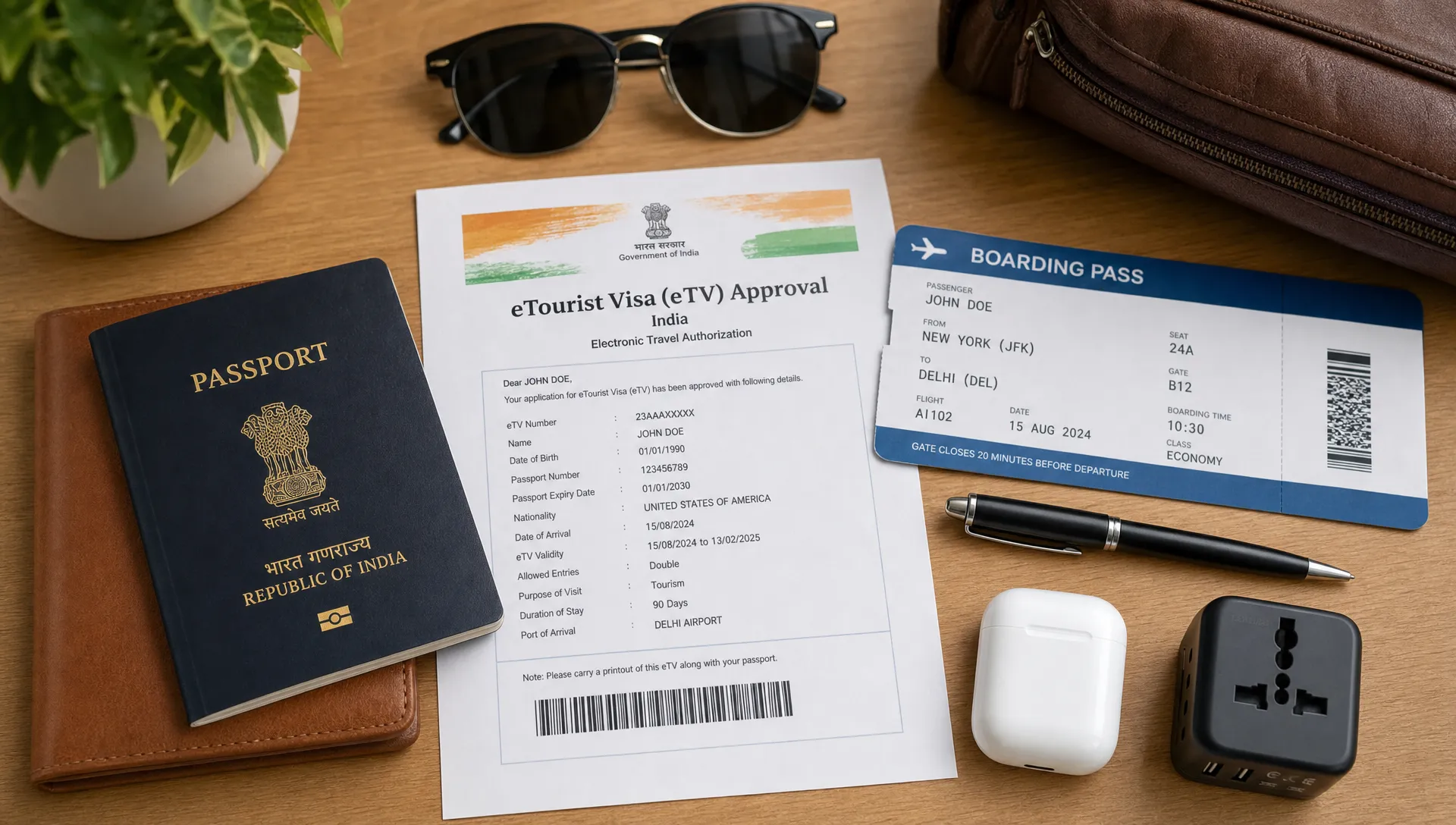
Most eVisa problems are preventable. The challenge is that travelers often discover the issue only when the application is delayed, when the airline checks documents, or when immigration asks questions on arrival.
| Mistake | Why it matters | Better approach |
|---|---|---|
| Applying with a passport that expires too soon | The traveler may fail eligibility checks or airline document checks | Renew the passport before applying if validity is close |
| Uploading a poor photo or blurry passport scan | The application may be delayed or rejected | Use clear, well-lit files that match the official specifications |
| Choosing the wrong visa category | Tourist visas do not cover work, business meetings, or restricted activities | Match the visa category to the actual trip purpose |
| Assuming approval is instant | Processing can take longer than expected | Build in a buffer before departure |
| Entering through a non-approved route | eVisa entry is limited to designated points | Confirm entry airport or seaport before ticketing |
| Ignoring stay limits | Visa validity and maximum stay are different concepts | Explain both validity and allowed duration per visit |
Names are another frequent source of errors. The name, date of birth, passport number, nationality, and gender on the application should match the passport exactly. If the passport has multiple given names, hyphenated names, or a long surname, travelers should take extra care.
Fees, Refunds, and Payment Issues
Indian eTourist visa fees are not one-size-fits-all. The amount can vary based on nationality, selected validity, and current government rules. Payment provider charges may also apply. Because fees can change, travel brands should avoid hardcoding prices unless they have a reliable data update process.
Travelers should also understand that payment does not guarantee approval. Visa fees are generally non-refundable once paid, even if the application is refused or the traveler decides not to travel.
Payment failures can create confusion because an application may appear submitted but not move forward until payment is properly completed. A good application workflow should clearly show whether payment was successful and should store the application reference so the traveler can recover or track the case.
What Travel Businesses Should Know in 2026
For airlines, online travel agencies, tour operators, cruise sellers, destination management companies, and booking platforms, the Indian eTourist visa is more than an administrative detail. It is part of trip readiness.
A strong visa experience can reduce customer anxiety and create ancillary revenue, but only if the guidance is timely, accurate, and easy to understand. A weak experience can create expensive support issues and reputational risk.
Travel businesses should focus on five practical improvements:
- Show visa requirements before checkout when nationality, destination, and travel dates are known
- Separate visa validity from maximum permitted stay in customer-facing copy
- Validate passport expiry and document format before submission
- Flag travelers who may need a regular visa instead of an eVisa
- Keep fee, timing, and entry-point logic updated as rules change
This is also where travel context matters. Visa readiness is one part of a broader pre-trip checklist. For customers heading into India’s heat, monsoon humidity, or long sightseeing days, small packing prompts can improve satisfaction, from refillable water bottles to natural skincare and sun care basics that fit their routine.
For travel companies, the commercial opportunity is not only selling a visa service. It is helping travelers feel prepared from booking to boarding.
Indian eTourist Visa vs Regular Tourist Visa
The eTourist visa is often the fastest and most convenient route, but it is not always the correct one.
| Situation | eTourist visa may work | Regular visa may be better |
|---|---|---|
| Short leisure trip | Yes, if nationality and entry point are eligible | Usually not necessary |
| Frequent tourist visits | Often, depending on available validity | Consider if stay needs exceed eVisa limits |
| Work or paid activity | No | Yes, a different visa category is needed |
| Journalism or documentary work | Usually no | Yes, specialized permission may be required |
| Long-term study | No | Yes, a student visa may be needed |
| Ineligible nationality or passport type | No | Yes, apply through an Indian mission |
If the traveler’s situation does not fit cleanly into the eTourist rules, it is safer to check official guidance or consult the appropriate Indian mission before applying. Applying under the wrong category can create refusal risk and may complicate future travel.
Frequently Asked Questions
Is the Indian eTourist visa the same as a visa on arrival? No. Travelers must apply online and receive approval before departure. The approval is then checked by the airline and by Indian immigration on arrival.
How long does the Indian eTourist visa take in 2026? Many applications are processed within a few days, but timing is not guaranteed. Travelers should apply with a buffer, especially during peak travel periods or if documents need correction.
Can I extend an Indian eTourist visa? In most cases, the eTourist visa is non-extendable and non-convertible. Travelers who need a longer stay should review the correct visa category before traveling.
Can I work in India on an eTourist visa? No. The eTourist visa is for tourism and related short visits. Work, paid assignments, journalism, long-term study, and certain other activities require a different visa or permission.
Do children need their own Indian eTourist visa? Yes. Each traveler, including infants and children, needs a separate visa or travel authorization linked to their own passport.
Can I enter India at any airport with an eTourist visa? No. eVisa entry is limited to designated airports and seaports. Travelers should confirm that their arrival point is approved before booking flights or cruises.
What should I do if my eTourist visa application is rejected? Review the refusal information, check whether any data or document issue caused the problem, and consider applying through the appropriate official route. Fees are generally non-refundable, so it is important to get the first application right.
Make India Visa Handling Simpler for Your Customers
The Indian eTourist visa can be simple for travelers, but only when the right information appears at the right moment. Passport validity, visa category, stay limits, fee logic, document quality, and entry-point rules all need to line up before departure.
SimpleVisa helps travel businesses streamline visa application workflows with automation, API integration, white-label visa application options, guided customer applications, and custom data services. Whether you want to add visa support inside a booking flow or provide a no-code path for customers, the goal is the same: fewer avoidable errors, better trip readiness, and a smoother border-crossing experience.
For India travel in 2026, that kind of clarity can be the difference between a customer who feels uncertain and a customer who boards with confidence.