How to Spot a Legit e Visa Website
Applying for a visa online should make travel easier, not riskier. Yet fake portals, lookalike government pages, inflated service fees, and phishing emails have made it harder for travelers to know which e visa website they can trust.
The good news is that most fraudulent sites share patterns. Once you know what to inspect, you can quickly separate a legitimate eVisa website from one that is risky, misleading, or outright fake. This guide gives travelers, travel agents, airlines, OTAs, and tour operators a practical way to evaluate any online visa page before sharing passport details or paying a fee.
Start with one question: who is actually handling the application?
A legitimate online visa path usually falls into one of three categories.
First, there are official government portals operated by immigration, border, or foreign affairs authorities. These are often the safest place to verify requirements, even if the application interface is not always user-friendly.
Second, there are authorized outsourcing partners appointed by governments to collect applications, biometrics, or service fees. These providers should clearly disclose their relationship with the relevant authority.
Third, there are private visa service providers. Some are legitimate and useful, especially when travelers want guidance, document checks, or a smoother application flow. However, private providers must be transparent that they are not the government, must explain their fees, and must not imply guaranteed approval.
If a website hides which category it belongs to, treat that as your first warning sign.
Check the domain before you trust the design
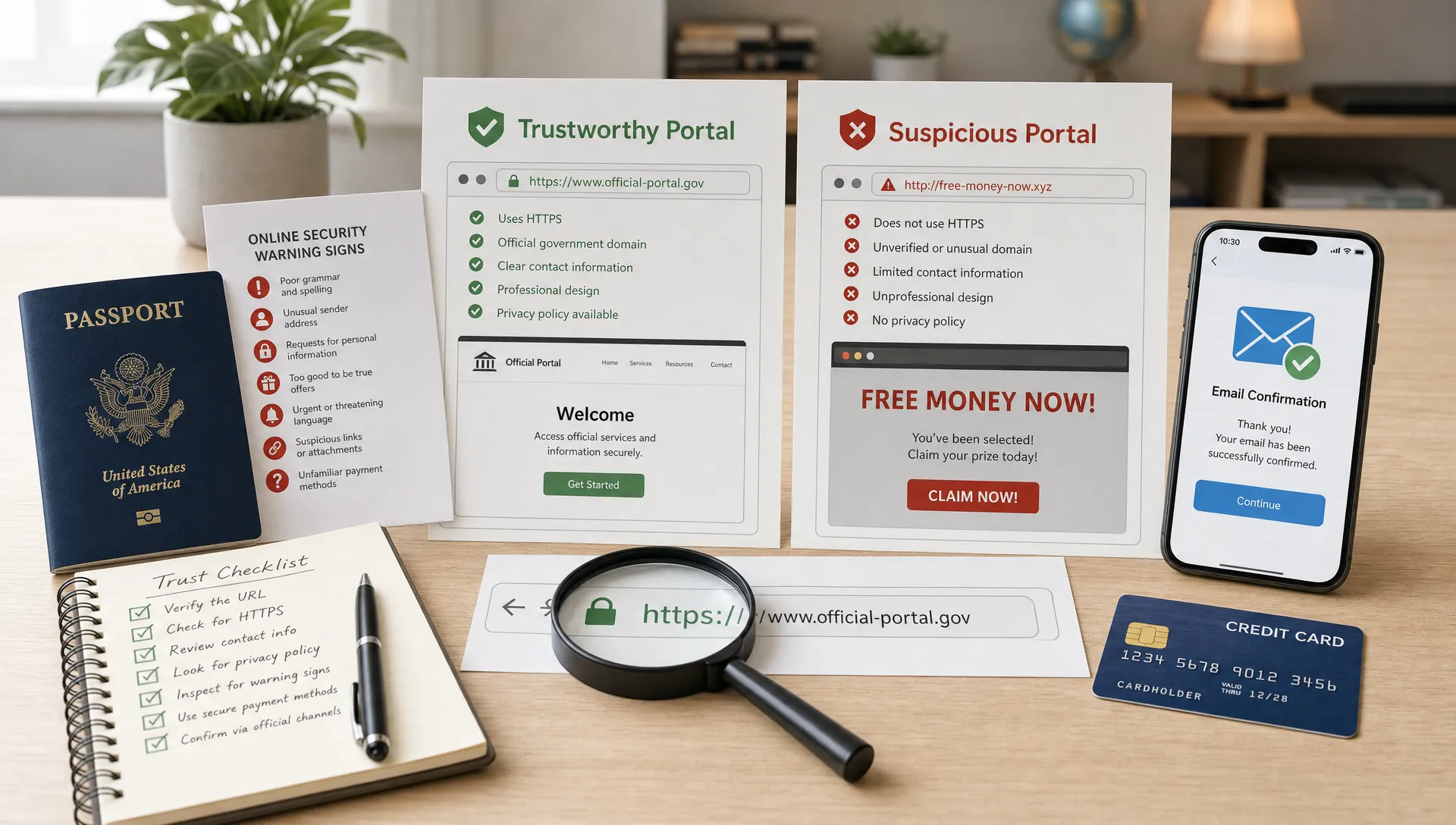
Fraudulent eVisa websites often look polished. They may use national flags, official-looking seals, photos of passports, or urgent language like “approved in minutes.” Design alone tells you very little.
The domain is more useful. Government portals often use official government domains, though formats vary by country. Some use “.gov,” while others use country-specific government structures such as “.gouv,” “.gov.uk,” or official ministry domains. Never assume that a site is official just because it includes the country name plus words like “visa,” “immigration,” or “eta.”
Before entering personal data, compare the website address with links from the country’s official embassy, immigration department, or foreign affairs ministry. If you found the site through an ad, do not rely on the ad title. Open a separate browser tab, search for the official government authority, and verify whether that authority links to the same portal.
For a deeper traveler-focused checklist, SimpleVisa also covers how to verify the authenticity of an electronic visa website before you apply.
Understand what HTTPS proves, and what it does not
A padlock icon and “https://” in the browser bar are important, but they are not enough. HTTPS means the connection between your browser and the website is encrypted. It does not prove that the company behind the site is honest, authorized, or competent.
Think of HTTPS as the minimum technical requirement. A legit eVisa website should have it, but a scam website can have it too.
What should you check next? Look for a valid certificate, consistent branding, working navigation, a privacy policy, clear contact details, and pages that do not feel hastily copied. Broken forms, spelling errors in official names, mismatched logos, and payment pages that suddenly redirect to unrelated domains are all signs to slow down.
Compare fees with the official government cost
One of the most common traps is fee confusion. A private visa assistance site may charge a service fee on top of the government fee, which can be legitimate if the service is clearly explained. The problem begins when the site hides the split, presents its fee as mandatory, or makes the traveler believe it is the official government charge.
Before paying, check the official government fee for the destination and visa type. Then compare it with the total price shown on the site. If the service adds a processing fee, you should see what it covers, such as document review, guided application support, status updates, or customer service.
A trustworthy provider makes pricing understandable before checkout. A suspicious site waits until the last step, uses vague labels, or adds “expedited,” “administration,” or “handling” fees without explanation.
| What you see | What it may mean | What to do |
|---|---|---|
| Government fee and service fee shown separately | Usually a good transparency sign | Confirm the provider’s role and refund policy |
| One total price with no breakdown | Could be unclear or misleading | Compare against the official fee before paying |
| “Approval fee” or “guaranteed visa fee” | High-risk wording | Avoid sites that imply they control the decision |
| Big discount on a government visa | Often suspicious | Verify through the official authority |
Watch for impossible promises
No legitimate eVisa website can guarantee approval unless the destination’s rules make approval purely automatic, and even then, border authorities normally retain discretion. Most visa decisions depend on traveler eligibility, passport validity, security checks, travel history, supporting documents, and government processing systems.
Be careful with phrases such as “100% approval,” “no rejection possible,” “official approval guaranteed,” or “visa approved without checks.” These claims are especially risky when paired with countdown timers or pressure tactics.
The Federal Trade Commission’s guidance on avoiding scams is useful beyond travel because the same principles apply: be skeptical of urgency, verify who you are dealing with, and do not pay until you understand the transaction.
Inspect the application form itself
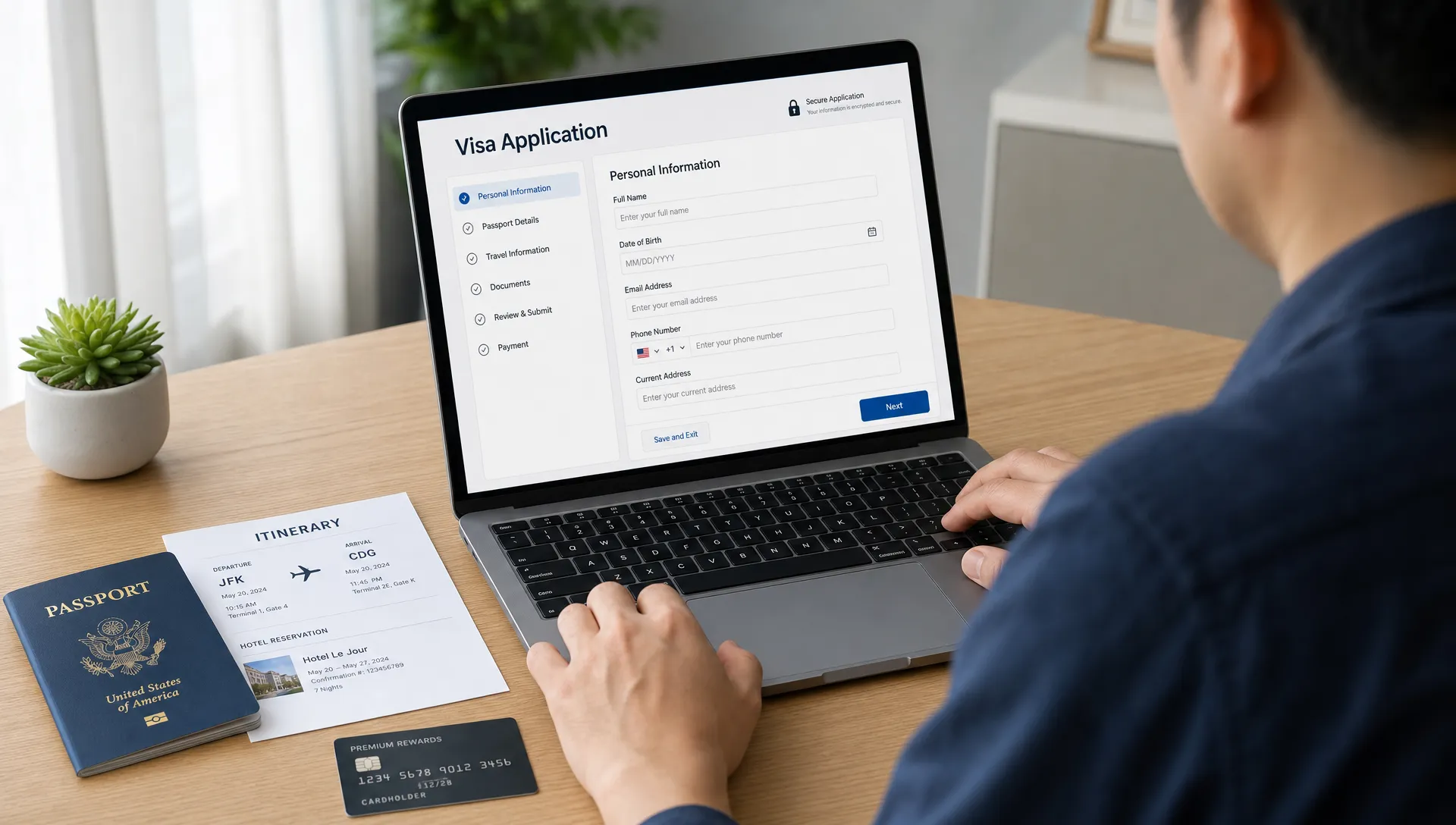
A real visa or travel authorization application may ask for sensitive details, including passport information, travel dates, employment details, previous travel, or security-related questions. That does not automatically make it suspicious. The key is whether the questions match the destination’s requirements and are collected in a secure, professional way.
Red flags include forms that ask for irrelevant banking information, passwords, social media logins when not required by the destination, or payment before explaining the application type. Also be cautious if the form is extremely short for a visa category that normally requires supporting documents.
Travelers should keep copies of every submitted application, confirmation number, receipt, and email. Travel businesses should encourage customers to use consistent email addresses and to save application references, since these are often needed for tracking or corrections.
Look for real contact, company, and policy information
A legitimate eVisa website should not be anonymous. It should provide enough information for a traveler to understand who is receiving their data and money.
At minimum, look for:
- A company name or government department name that can be independently verified
- A physical address or official office information where appropriate
- A working support channel, such as email, phone, chat, or contact form
- A privacy policy explaining how personal and passport data is used
- Terms of service that explain responsibilities, limitations, and refunds
- A clear refund or cancellation policy before payment
This is especially important because visa applications involve highly sensitive personal data. Passport scans, birth dates, addresses, and travel plans can be misused for identity theft if submitted to a fraudulent site.
If you want a broader look at risk patterns, SimpleVisa’s guide to electronic visa scams and fraud prevention explains common scam tactics and how travelers can protect themselves.
Verify tracking and post-payment communication
A safe online visa process does not end at payment. After submission, you should receive a confirmation email, receipt, application reference, and clear instructions for checking the status of the application.
Be cautious if the website takes payment but gives no reference number, sends emails from a free consumer email address, or provides vague updates like “processing soon” without any traceable application detail. For some destinations, you may be able to verify the eVisa directly through an official government portal after approval.
For travel companies, this post-payment experience matters as much as the application itself. Customers often contact the airline, OTA, or agency when they are anxious about entry requirements. If your visa flow is unclear, your support team may inherit the confusion.
Do not rely on search ads alone
Search ads can be useful, but they are not proof of legitimacy. Scammers and low-quality providers can advertise against destination visa keywords and appear above official sources. Some lookalike sites use names that sound official while including small disclaimers in the footer.
When a traveler asks, “Is this eVisa website legit?” the safest answer is not based on ranking position. It is based on source verification, domain checks, fee transparency, security, and provider accountability.
This is also where travel businesses can reduce risk for customers. By embedding trusted visa guidance into the booking journey, companies can help travelers avoid random search results at the most stressful moment of trip planning. SimpleVisa supports travel businesses with visa processing automation, API integration, white-label visa application options, custom data services, and guided customer applications, helping them make border requirement guidance easier to access.
For B2B teams, the same diligence applies to partner selection more broadly. Whether evaluating visa technology or a partner for B2B new customer acquisition, the practical standard is similar: verify the company, understand the process, and avoid vague promises that are not backed by clear accountability.
A practical legitimacy checklist
Before you submit a passport number or payment, pause and run through this simple checklist. You do not need to be a cybersecurity expert. You just need to avoid rushing.
| Check | Good sign | Warning sign |
|---|---|---|
| Website source | Linked from an official authority or clearly identified provider | Found only through ads with no independent verification |
| Domain | Matches official government or known provider domain | Uses confusing words like “official” without proof |
| Security | HTTPS, consistent checkout, professional form handling | Redirects to unrelated payment pages or broken forms |
| Pricing | Government fees and service fees are explained | Hidden fees appear at checkout |
| Claims | Realistic processing times and no approval guarantee | “100% approved” or “instant guaranteed visa” |
| Policies | Clear privacy, terms, refunds, and support | No company details or vague policies |
| Tracking | Confirmation number and status updates | Payment taken with no reference |
If two or more warning signs appear, stop and verify through an official government source before continuing.
Special advice for travel businesses
Travelers often encounter visa requirements late in the booking journey, especially when crossing multiple borders or booking complex itineraries. If they are left to search on their own, they may choose the first convincing website they see. That creates risk for the traveler and friction for the business that sold the trip.
Travel businesses can improve the experience by giving customers a trusted path to visa information and application support. This does not mean every travel brand needs to become an immigration expert. It means the booking flow should make the next step clear, timely, and safe.
A good visa support experience should tell customers whether they may need a visa or travel authorization, show the difference between government and service fees, guide them through the application, and provide post-submission communication. If your business is comparing providers, SimpleVisa’s 12-point checklist for choosing an online visa company can help structure the evaluation.
What to do if you already used a suspicious site
If you submitted information to a website you now suspect is fake, act quickly. Save screenshots, receipts, emails, and the domain name. Contact your bank or card provider if you made a payment, especially if the charge looks different from what you expected.
If you uploaded a passport scan or shared sensitive identity details, check your government’s guidance on passport fraud or identity theft. You may need to report the incident, monitor accounts, or ask whether your passport should be replaced.
Do not assume that receiving a PDF means the visa is valid. Verify the approval through an official government portal if one exists, or contact the destination’s immigration authority, embassy, airline, or a trusted visa support provider before traveling.
Frequently Asked Questions
How can I tell if an e visa website is official? Check whether the website is linked from the destination country’s immigration authority, embassy, foreign affairs ministry, or official government pages. Do not rely only on logos, flags, or search ads.
Is a private eVisa service always a scam? No. Legitimate private services can help with guidance, document checks, submission support, and customer communication. The key is transparency about fees, provider identity, data handling, and the fact that final approval rests with the government.
Does HTTPS mean an eVisa website is safe? HTTPS is necessary, but it is not proof that the website is legitimate. It only shows that the connection is encrypted. You still need to verify the domain, company details, pricing, policies, and claims.
What is the biggest red flag on a visa website? Guaranteed approval is one of the strongest red flags. Be very cautious with any site promising “100% approval,” hiding fees, or pressuring you to pay immediately.
Should travel businesses provide visa links to customers? Yes, when done carefully. Giving customers a trusted visa path can reduce confusion, lower support pressure, and help travelers avoid risky search results or fake portals.
Make online visa guidance safer for your customers
Spotting a legit eVisa website comes down to verification, transparency, and accountability. Travelers should know who is handling the application, what they are paying for, how their data is protected, and how they can track the result.
For travel businesses, safer visa guidance is also a better customer experience. SimpleVisa helps travel companies integrate visa support into their customer journey through automation, API options, white-label application flows, data services, and guided eVisa management. If your customers need clearer border requirement support, SimpleVisa can help make the process simpler and safer.