Is evisa.xuatnhapcanh.gov.vn Legit? Key Checks First
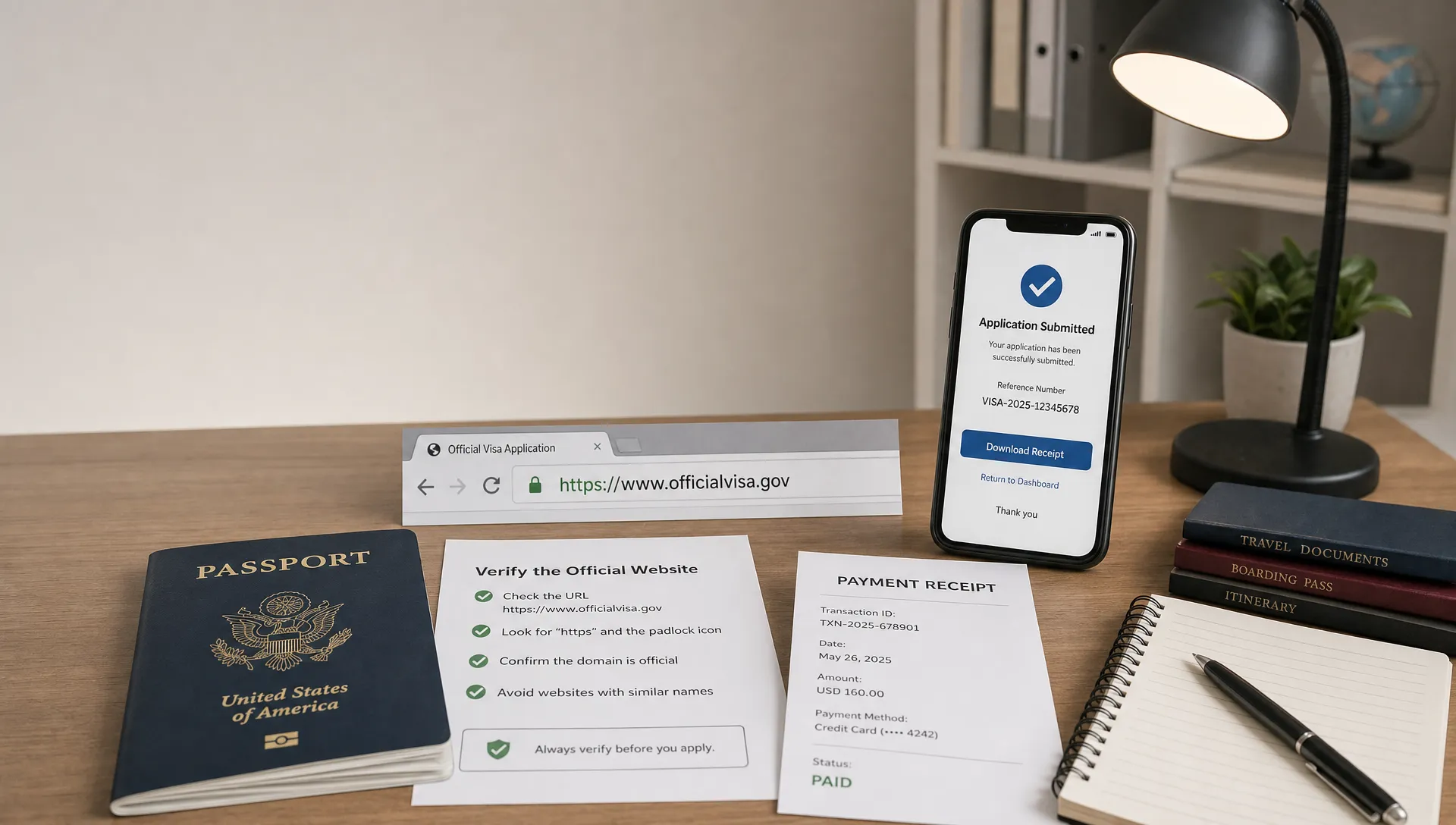
Before you enter passport details or pay an eVisa fee, the short answer is: yes, evisa.xuatnhapcanh.gov.vn is generally recognized as a legitimate Vietnam Immigration Department eVisa portal, but only if the address is typed exactly and the page passes basic security checks.
That last part matters. Visa scams often rely on tiny domain changes, search ads, copied logos, and rushed payment pages. A real-looking page can still send your personal data to the wrong place if the domain is not exactly what you intended.
Use the checks below before applying yourself, helping a customer, or adding a visa link to a booking journey.
Quick verdict: legitimate, but verify the exact domain
The domain xuatnhapcanh.gov.vn is associated with Vietnam immigration. The phrase xuat nhap canh refers to entry and exit, or immigration, in Vietnamese. The ending .gov.vn is the Vietnamese government namespace, which is a strong legitimacy signal.
The eVisa subdomain, evisa.xuatnhapcanh.gov.vn, has been used for Vietnam electronic visa applications. However, travelers may also encounter newer or parallel official Vietnam eVisa pages depending on language, route, or government updates. That is why the safest approach is not to rely on memory or a search result alone. Cross-check the page from the Vietnam Immigration Department or an official embassy or consulate source before you submit sensitive information.
If you arrived through a paid ad, a social media post, a messaging app, or an email link, pause. The site may still be correct, but you should manually inspect the address and confirm the page from an official source.
Why the URL looks unfamiliar
Many travelers expect official visa websites to have simple English names. In reality, government domains often use local-language terms, legacy systems, and country-specific naming rules. That can make legitimate pages look unusual at first glance.
Country-code endings are not suspicious by themselves. For example, a coastal school in Chile may reasonably use a Chilean school’s .cl site, while a Vietnam government visa service should resolve under the Vietnamese government namespace, not a random commercial clone. The key is whether the country-code domain matches the organization and purpose.
For Vietnam eVisa applications, the important signal is the government root domain: xuatnhapcanh.gov.vn. Anything placed before it, such as evisa, is a subdomain. Anything placed after .vn before the first slash is a warning sign unless it is part of a completely different official domain you have verified separately.
The domain check that catches most copycats
Scam pages often look convincing because they include the official words somewhere in the address. The trick is to identify the real domain, not just familiar text.
| Address pattern | How to read it | Risk level |
|---|---|---|
evisa.xuatnhapcanh.gov.vn |
The site is under the Vietnamese government domain xuatnhapcanh.gov.vn |
Low, if HTTPS and source checks pass |
evisa.xuatnhapcanh.gov.vn/web/... |
The part after the slash is a page path within the same domain | Low, if the domain before the slash is exact |
evisa.xuatnhapcanh.gov.vn.example.com |
The real domain is example.com, not gov.vn |
High |
evisa-xuatnhapcanh-gov-vn.com |
The words are copied into a commercial domain | High |
xuatnhapcanh-gov.vn |
A hyphen changes the domain, so it is not the same government address | High |
A simple rule helps: look immediately to the left of the first single slash after https://. That is the host you are visiting. For this Vietnam eVisa route, the host should end exactly in xuatnhapcanh.gov.vn, with no extra domain added after .vn.
For a wider checklist you can use across countries, SimpleVisa has a practical guide on how to spot a legit e Visa website.
Key checks before entering passport details
Check that HTTPS is active, but do not stop there
The page should load with HTTPS, and your browser should not show certificate warnings. A padlock indicates that the connection is encrypted, which helps protect information in transit.
But HTTPS does not prove a site is official. Scammers can get certificates for their own domains too. Treat HTTPS as a minimum requirement, then confirm the domain, the source of the link, and the payment behavior.
Start from an official source, not a search ad
Search engines can show both official pages and private visa services. Some private services are legitimate, but ads can also be used by copycats. If the goal is to apply directly through the government portal, do not assume the first result is the right one.
Safer routes include official immigration pages, embassy pages, airline travel document tools, or a trusted visa partner that clearly discloses its role. If an agency claims to be official but the domain is not a government domain, that is a reason to investigate further.
Compare fees and service charges
Vietnam eVisa government fees have commonly been listed at around USD 25 for single-entry eVisas and USD 50 for multiple-entry eVisas, but fees can change. Always check the fee shown on the official page before paying.
A private provider may charge a service fee for guidance, review, customer support, or handling. That is not automatically a scam. The problem is when a site hides the fee, implies it is the government fee, or makes the total unclear until after your payment details are entered.
A trustworthy visa flow should make the following clear before payment:
- The government fee, if applicable
- Any separate service fee
- Whether fees are refundable
- The expected processing timeline
- The entity receiving your payment
- How you can track or retrieve the application
If you want more detail on fee transparency, SimpleVisa also explains how to get an online visa safely while avoiding scams and hidden fees.
Check whether the requested information makes sense
A Vietnam eVisa application will typically involve passport information, identity details, a portrait photo, a passport bio page image, trip dates, entry and exit points, and contact or accommodation information. Requirements can change, so follow the official form instructions carefully.
Be suspicious if a site asks for information unrelated to a visa application. A visa site should not need your online banking password, card PIN, remote access to your computer, cryptocurrency transfer, or unrelated identity documents unless a specific legal requirement clearly explains why.
Use the official status check route
After submitting an application, you should receive a reference or application code. Save it, along with screenshots or PDFs of the confirmation page and payment receipt.
When checking status, return through the same official domain or a source linked from the official immigration site. Avoid logging into a different status page sent through a suspicious email, especially if it asks you to pay again or re-upload all documents without a clear reason.
Red flags that mean you should stop
Some warning signs are strong enough that you should close the page and restart from an official source.
- The browser redirects from
gov.vnto a different commercial domain before payment. - The domain includes official-looking words but does not actually end in
gov.vn. - The page uses pressure tactics such as limited slots, countdown timers, or guaranteed approval.
- The site asks you to send passport scans through WhatsApp, Telegram, or a free email address.
- The total price is far above the government fee, but no service fee is disclosed.
- The site claims to be the official government portal while listing a private company as the operator.
- The payment method is unusual for a government service, such as crypto, wire transfer to an individual, or gift cards.
- The site has no privacy policy, no terms, no contact information, or no explanation of data handling.
One red flag does not always prove fraud, but several together are enough to walk away.
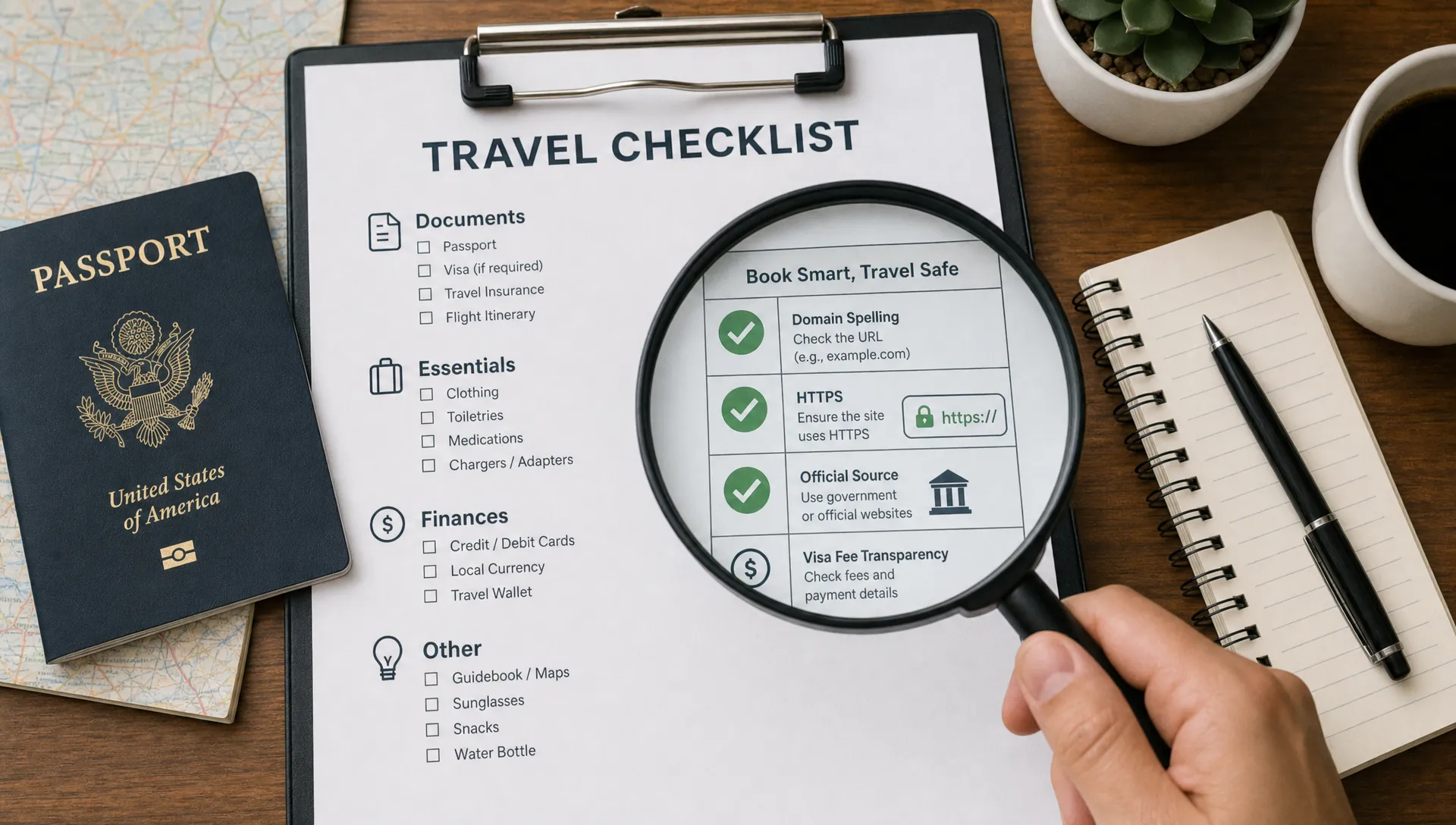
What if you are using a visa agency or travel seller?
Not every non-government visa website is fraudulent. Many travelers choose an agency because they want document review, clearer instructions, support, or help with a complex itinerary. Travel businesses may also use visa partners to guide customers through requirements inside a booking flow.
The difference is transparency. A legitimate service should not pretend to be the government. It should explain that it is a third-party provider, show its service fee, describe what it does for the traveler, and provide terms before payment.
Be careful with any provider that guarantees approval. Governments decide whether to issue visas. A service can help reduce mistakes, but it cannot honestly promise that immigration authorities will approve every application.
For travel businesses: turn this into a safer customer journey
If you operate a travel agency, airline, OTA, tour company, or booking platform, the question is bigger than whether one Vietnam eVisa URL is legitimate. You also need a repeatable way to direct customers to the right visa path without creating confusion or risk.
A safer visa flow usually includes three layers: trusted data, clear customer guidance, and secure application handling. When those layers are missing, customers may search on their own, click a copycat site, overpay, or arrive at the border with the wrong document.
| Control for travel teams | Why it matters |
|---|---|
| Maintain an approved source list for official visa portals | Reduces the chance of staff or customers using copycat domains |
| Show visa guidance during booking, not after purchase only | Gives travelers time to apply correctly |
| Separate government fees from service fees | Builds trust and lowers refund disputes |
| Monitor destination rule changes | Visa eligibility, fees, and processing times can change quickly |
| Protect personal data during application support | Passport and identity data require careful handling |
| Provide a clear tracking route | Helps customers avoid fake status-check pages |
This is especially important for destinations where government portals have local-language URLs, multiple official pages, or periodic platform updates. Customers may not know which domain is right, so your flow should remove as much guesswork as possible.
What to do if you already applied
If you submitted through the exact evisa.xuatnhapcanh.gov.vn domain, received a confirmation code, and the page behaved like an official government application, your next step is usually to track the application through the official portal and wait for the result.
Check every detail when the eVisa is issued. Make sure your name, passport number, date of birth, nationality, validity dates, entry type, and entry or exit points match your travel plans and passport. A small mismatch can still cause problems at check-in or border control.
If you suspect you used a fake or misleading website, act quickly. Contact your card issuer, review the transaction, monitor your accounts, and consider whether your passport authority or local cybercrime reporting channel should be notified. If your trip is soon, verify your visa status through an official Vietnam source before traveling.
Do not assume that a payment receipt from a private site means a valid eVisa exists. The document that matters is the visa record issued or confirmed through the relevant government system.
Frequently Asked Questions
Is evisa.xuatnhapcanh.gov.vn a real Vietnam eVisa site? Yes, it is generally recognized as an official Vietnam Immigration Department eVisa portal when the domain is typed exactly as evisa.xuatnhapcanh.gov.vn and the page passes HTTPS, source, and payment checks.
Is .gov.vn enough to prove a visa page is safe? It is a strong signal because it is a government namespace, but you should still confirm the full domain, the HTTPS certificate, the page source, and the payment process.
Can a private company help me apply for a Vietnam eVisa? Yes, private visa services can be legitimate if they clearly disclose that they are not the government, show their service fees, explain their role, and do not guarantee approval.
Why does an official eVisa website sometimes look outdated? Government portals often prioritize function, security, and compliance over modern design. A dated design does not prove a site is fake, just as a polished design does not prove a site is official.
What should I do if the page redirects to another domain? Stop and inspect the destination domain. If it no longer ends in a verified official government domain, do not enter passport or payment details until you have confirmed the route from an official source.
Make visa checks simpler for your customers
For individual travelers, the safest habit is to verify the exact domain before every eVisa application. For travel businesses, the better solution is to make that verification part of the customer journey.
SimpleVisa helps travel businesses guide customers through border requirements, automate visa processing, integrate visa flows through an API, or offer a white-label application experience. If your customers are booking international trips, a safer visa flow can reduce confusion, support ancillary revenue, and help travelers avoid costly mistakes before departure.