Turkish Online Visa Application: Steps That Matter
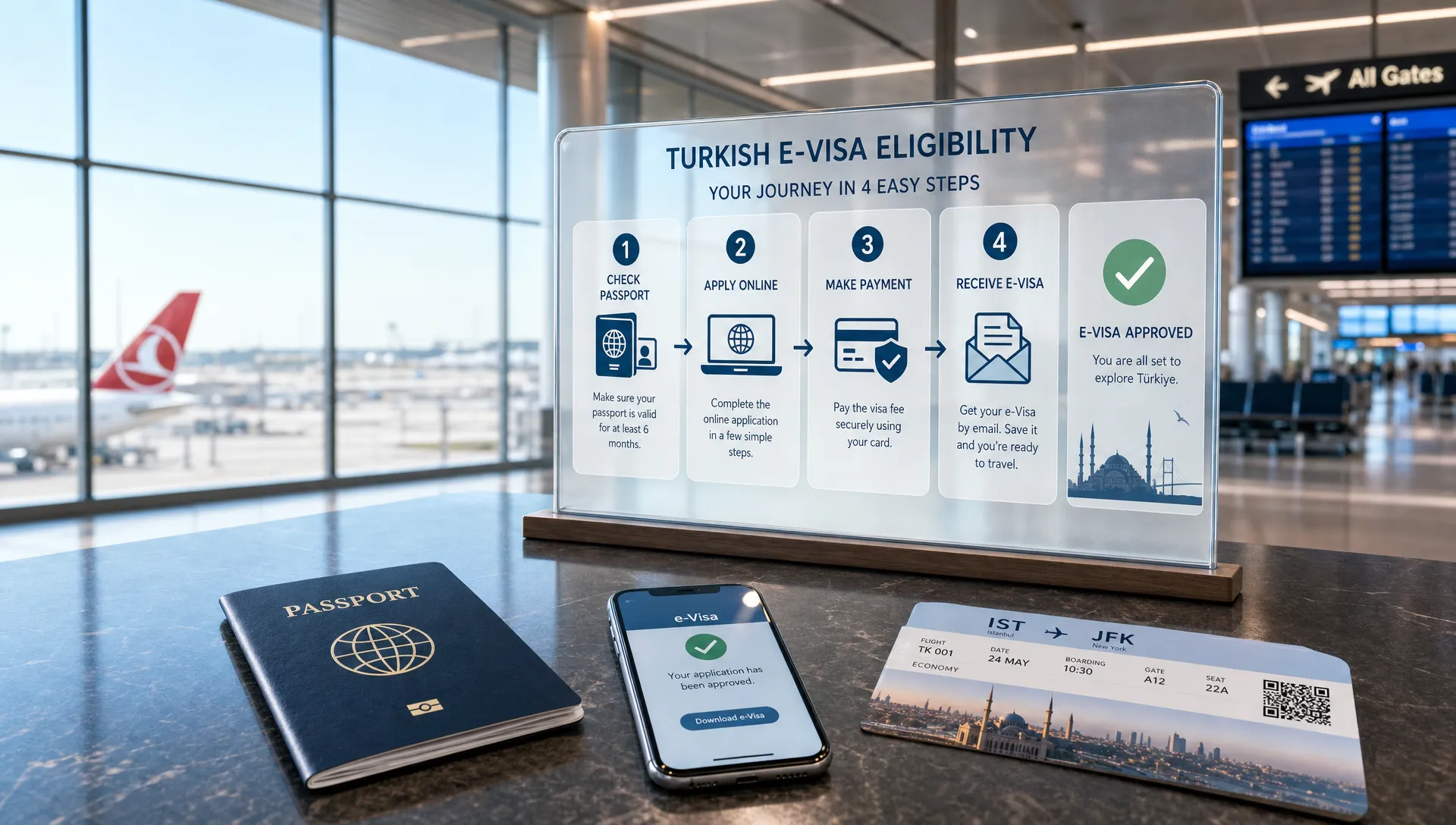
A Turkish online visa application can feel deceptively quick. You choose your nationality, enter passport details, pay, and receive a document by email. For many eligible travelers, that is the whole journey. The steps that matter, however, are the ones that happen before and after the form: confirming eligibility, matching passport data exactly, choosing the right travel purpose, and making sure the approved visa is usable at the border.
This matters for individual travelers, but it matters even more for airlines, OTAs, tour operators, travel management companies, and agencies that support customers at scale. A small visa misunderstanding can become a missed departure, a support ticket, a refund request, or a poor travel experience. The goal is not just to “submit an application.” The goal is to help the traveler enter Türkiye with the right authorization, at the right time, under the right conditions.
What the Turkish online visa application covers
The Turkish online visa application usually refers to Türkiye’s electronic visa, commonly called the Turkey e-Visa or Turkish e-Visa. It is an online entry authorization available to eligible passport holders for specific short-stay travel purposes, most commonly tourism and certain business travel.
It is not the right route for every traveler. Depending on nationality, passport type, residence status, travel purpose, and planned stay length, a traveler may need a different visa category or an application through a Turkish mission. Some travelers are visa-exempt for short visits, while others may need to meet additional conditions before they can use the e-Visa route.
That is why the first meaningful step is not typing a name into a form. It is confirming whether the traveler is actually eligible for the online process.
Step 1: Check eligibility before asking for payment
Eligibility is the foundation of a successful Turkish online visa application. If the traveler is not eligible for an e-Visa, the rest of the process is irrelevant, even if a payment page appears elsewhere online.
The eligibility check should look at:
- Nationality and passport type
- Intended purpose of travel
- Planned arrival date and length of stay
- Whether the traveler holds required supporting documents, if applicable
- Whether the passport will remain valid for the required period
- Whether the traveler needs single or multiple entry permission
For travel businesses, this check should happen as early as possible in the customer journey. Ideally, a traveler sees visa guidance before finalizing a booking, not after receiving a confirmation email. If the visa requirement only appears after checkout, the customer may discover too late that they need a different process or more time.
If you want a deeper safety-focused overview, SimpleVisa has a guide on how to use the Turkey eVisa website safely and avoid common online application risks.
Step 2: Confirm the traveler’s passport details exactly
Most Turkish e-Visa issues are not dramatic. They are practical. A misspelled surname, an incorrect passport number, a reversed date, or an application made with an old passport can make an approval difficult or impossible to use.
The passport is the identity source of truth. Every field in the application should match it exactly, including name order, date of birth, nationality, passport number, and expiry date. Travelers with multiple passports should apply using the same passport they will present at check-in and at the Turkish border.
This is especially important for group bookings. Families, incentive travel groups, conference delegations, and tour groups often submit multiple applications at once. One incorrect passport number in a group can create an individual boarding or entry issue even if everyone else is approved.
Step 3: Prepare the right information before opening the form
A smooth application depends on having the required information ready before the traveler starts. This reduces abandoned forms, repeated submissions, and support requests.
| Item to prepare | Why it matters | Common issue to avoid |
|---|---|---|
| Valid passport | The e-Visa is tied to this document | Applying with an expired, renewed, or different passport |
| Exact personal details | Border and airline checks compare against the passport | Typing a nickname, shortened name, or wrong date format |
| Travel dates | Validity and entry planning depend on timing | Choosing the wrong arrival date |
| Email address | The approved visa and updates are usually sent electronically | Using an inaccessible or misspelled email |
| Payment method | Most online applications require card payment | Card declined, currency confusion, or duplicate attempts |
| Supporting documents, if required | Some travelers may need additional eligibility proof | Assuming all nationalities follow the same rules |
For a broader document preparation framework, SimpleVisa also offers a practical online visa application checklist that can help travelers prepare before submission.
Step 4: Choose a trusted application route
Travelers should be careful about where they enter passport details and payment information. The safest route is to use an official government channel or a trusted visa service with clear terms, transparent pricing, secure handling of data, and a real support process.
Lookalike domains and unofficial sites can create confusion. Some may provide legitimate assistance, while others may overcharge, obscure the process, or fail to explain eligibility properly. A trusted route should make it clear what service is being provided, what government fee or service fee applies, and what happens if the traveler is not eligible.
For travel brands, the trusted route is also a customer experience question. Sending travelers away from the booking environment can create uncertainty. Integrating visa guidance into the booking flow, through an API, white-label app, or data service, can help customers understand requirements without leaving the journey they already trust.
Step 5: Complete the form with border checks in mind
A visa application is not just an administrative form. It creates a document that may be checked by airlines, border systems, and immigration officers. The form should be completed as if someone will compare every field to the passport and itinerary, because they may.
Names should be entered exactly as they appear in the machine-readable travel document. Passport numbers should be checked character by character. Arrival dates should reflect the actual travel plan, not a rough guess. If the form asks about travel purpose, travelers should choose the accurate purpose rather than the category that seems easiest.
Travelers should also be cautious with browser autofill. Autofill can insert old addresses, outdated passport details, or the wrong traveler’s information on shared computers. This is a common risk when one person is applying for several family members or colleagues.

Step 6: Review before payment, not after approval
The review screen is one of the most important parts of the Turkish online visa application. It is the last practical point where many mistakes can be caught without creating a downstream problem.
Do not treat the payment step as the final task. Treat the review step as the final quality check. If an application is submitted with incorrect passport details, the traveler may need to submit a new application, pay again, or use another process depending on the error and the rules in force.
| Field to review | What to compare it against | Why it matters |
|---|---|---|
| Full name | Passport identity page | Name mismatches can cause boarding or border issues |
| Passport number | Passport identity page | The e-Visa is linked to the passport number |
| Nationality | Passport nationality | Eligibility depends on nationality and document type |
| Date of birth | Passport identity page | Date format errors are easy to miss |
| Passport expiry | Passport identity page | Validity rules may affect entry eligibility |
| Arrival date | Ticket or expected itinerary | Timing affects when the visa can be used |
| Email address | Traveler’s active inbox | Approval must be accessible before travel |
For travel companies, this is where guided application flows can make a measurable difference. Clear validation prompts, field formatting, and traveler-specific checks help reduce preventable errors before payment.
Step 7: Understand timing and fees clearly
Many Turkish online visa applications are processed quickly, but “quick” should not be treated as “guaranteed at the airport.” Systems can be busy, payment can fail, a traveler may need extra checks, or the wrong application route may cause delays. Applying early gives travelers time to correct mistakes and avoids panic at check-in.
Fees can vary depending on nationality, visa type, service route, and any assistance provided by a third party. Travelers should always understand the total cost before paying. If a travel business offers visa support, the difference between government charges and service fees should be clear to avoid confusion.
The best customer experience is proactive. Instead of saying, “Apply for your visa,” travel sellers can show likely timelines, required documents, and next steps in context. SimpleVisa’s guide to online travel visa application timelines and fees explains how travelers can plan around processing and total cost more effectively.
Step 8: Save the approved visa in more than one place
Once approved, the e-Visa should be downloaded and saved immediately. Travelers should not rely only on an email search at the airport. A sensible approach is to keep a digital copy on the phone, save it in cloud storage if available, and carry a printed copy when possible.
The passport used in the application should be the same passport used for travel. If the traveler renews the passport after approval, changes nationality document, or discovers a data error, the existing visa may no longer match the travel document.
Travelers should also remember that having a visa does not remove all entry conditions. Border authorities may still ask about return travel, accommodation, funds, travel purpose, or supporting documents. The e-Visa is an entry authorization, not a guarantee that every border question disappears.
The overlooked step: matching visa guidance to the trip type
The same destination can involve very different visa needs. A solo tourist, a business visitor, a cruise passenger, a conference attendee, and a group traveler may all be going to Türkiye, but they may not have the same documentation requirements or support needs.
This is where travel businesses can add value beyond simply linking to an application page. A booking flow can identify the destination, nationality, travel dates, and traveler profile, then present relevant guidance before the customer is under time pressure.
For example, when a company sends employees to an international offsite, conference, or business event featuring a professional such as keynote speaker and illusionist Dave van Gulik, visa guidance should be built into the travel planning process early, alongside flights, hotels, and event logistics. The traveler should not discover an entry requirement after the agenda is finalized.
This kind of timing is important because visa support is not just a compliance task. It is part of travel confidence.
What travel businesses should automate
For travel sellers, the Turkish online visa application is one use case within a much larger challenge: helping customers understand border requirements for every trip. Manual support does not scale well when routes, nationalities, and rules vary.
Automation can help with the parts of the process that are repetitive, error-prone, and high impact. This includes checking visa requirements, guiding travelers through the right application path, validating data fields, and connecting visa services to the booking journey.
SimpleVisa supports travel businesses with visa processing automation, API integration for travel sites, white-label visa application options, custom data services, guided customer applications, and premium eVisa management. For businesses that want to reduce implementation effort, no-code options can make visa support easier to launch, while API-based setups can fit more complex booking flows.
The business upside is not only fewer customer problems. Visa services can also become a relevant ancillary revenue stream when they are presented at the right time and delivered with clarity.
Quick pre-submit checklist
Before submitting a Turkish online visa application, travelers should pause and confirm the basics:
- The traveler is eligible for the online visa route.
- The passport details match the application exactly.
- The selected travel purpose reflects the real trip.
- The arrival date and stay length make sense for the itinerary.
- The email address is correct and accessible.
- Any supporting documents are available, if required.
- The total fee is clear before payment.
- The approved visa will be saved and carried for travel.
This checklist may seem simple, but it prevents many of the mistakes that create last-minute stress.
Frequently Asked Questions
Can everyone use the Turkish online visa application? No. Eligibility depends on nationality, passport type, travel purpose, and other conditions. Some travelers may be visa-exempt, some may qualify for an e-Visa, and others may need a different visa process.
How early should travelers apply for a Turkish e-Visa? Travelers should apply well before departure rather than waiting until check-in or the day of travel. Even when processing is fast, early application gives time to fix errors or use another route if needed.
What happens if the passport number is wrong on the application? A mismatch between the e-Visa and the passport can cause problems during airline or border checks. The traveler may need to submit a new application or seek official guidance depending on the situation.
Is a printed copy of the Turkish e-Visa necessary? Travelers should keep a digital copy and, when possible, carry a printed copy. Having more than one accessible copy reduces risk if email, mobile data, or battery power is unavailable.
Can travel companies include Turkish visa support in their booking flow? Yes. Travel businesses can integrate visa requirement checks and guided application support into booking flows through tools such as APIs, white-label apps, data services, or no-code implementation options.
Make Turkish visa support simpler for travelers
A successful Turkish online visa application is about more than completing a form. It is about guiding the traveler through the correct requirement, collecting accurate data, preventing avoidable mistakes, and making the approved document easy to access before departure.
For travel businesses, that guidance can become part of the customer journey rather than a separate afterthought. SimpleVisa helps travel companies streamline visa applications, guide customers through border requirements, and add visa services to booking flows through integration, white-label, and data-service options.
If your customers travel to Türkiye or other international destinations, visit SimpleVisa to explore how simpler visa support can improve the travel experience and create new ancillary revenue opportunities.