Border Travel Delays: Cut Risk With Real-Time Data
Airports, seaports and land borders have become the travel industry’s most unpredictable chokepoints. A single documentation error or unanticipated queue can ripple into missed connections, denied boardings, compensation costs, and unhappy customers. The good news, this risk is now measurable and manageable if you wire real-time data into your booking and post‑booking flows.
Below is a practical playbook for travel brands and operators to cut border travel delays with real-time data, along with the specific feeds, workflows, and KPIs to track in 2025.
Why border delays are rising in 2025
Several structural shifts are pushing clearance times and documentation risk higher:
- Policy and tech changes, first‑time biometric capture under the EU’s Entry and Exit System means longer initial processing for many third‑country nationals. See the European Commission’s overview of the Entry and Exit System.
- New pre‑travel authorizations, phased rollouts of ETIAS in Europe and the UK ETA expansion increase the number of travelers who must apply in advance, and who may be refused boarding if they do not.
- Volatile operational conditions, seasonal peaks, staffing constraints, strikes, and weather disrupt flows in ways that are hard to predict without live signals.
- Documentation errors, small mistakes like name mismatches or expired passports cause last‑minute scrambles, queue rework and costly rebooking.
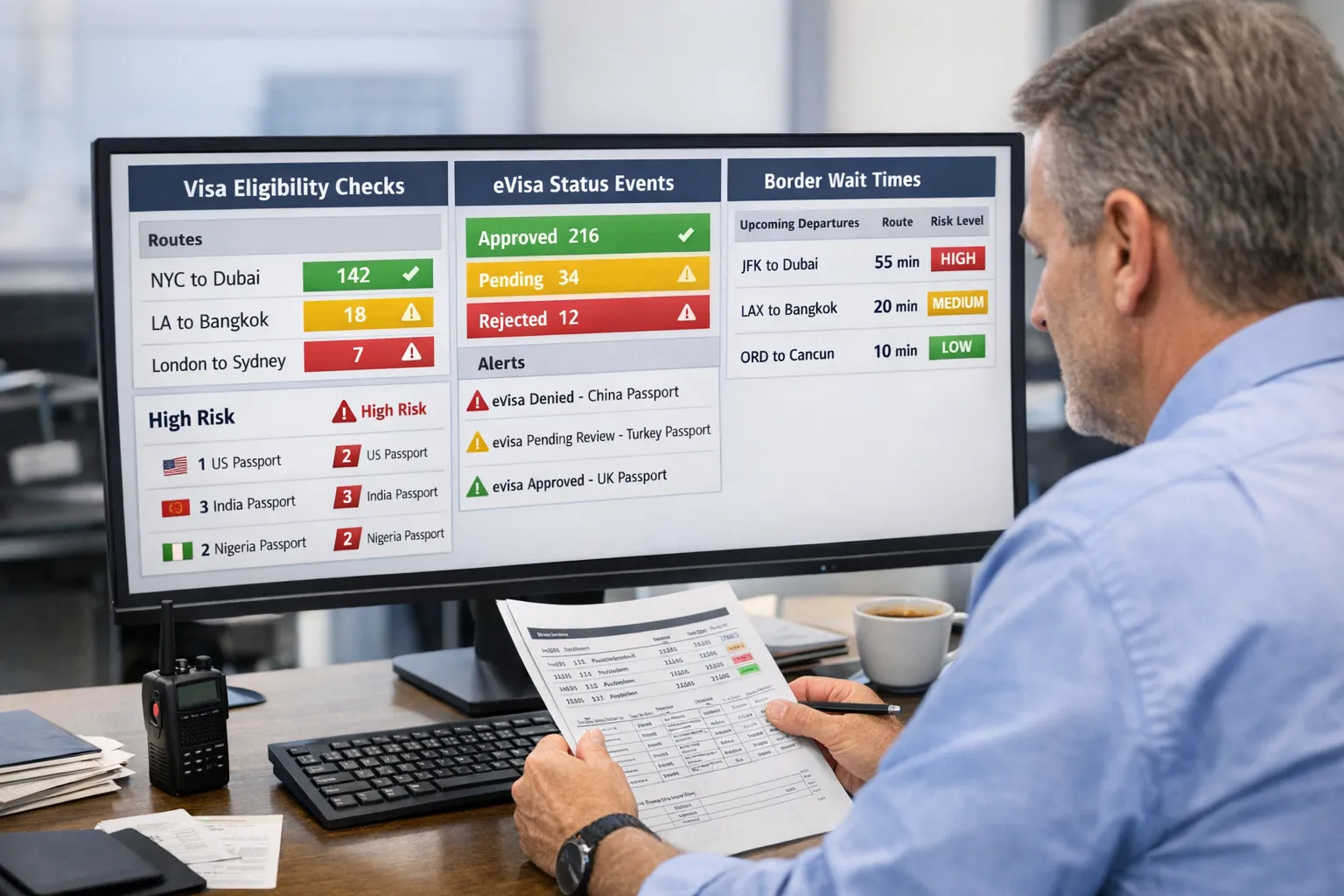
Public data already shows how variable border processing can be. For example, U.S. Customs and Border Protection publishes live airport immigration queue metrics through CBP Airport Wait Times. The Canada Border Services Agency provides near real‑time land crossing delays via CBSA border wait times. When you combine these feeds with visa eligibility and status telemetry, you gain a powerful early warning system.
The case for real-time over static rules
Static PDFs, single updates in a knowledge base, or a hand‑maintained spreadsheet cannot keep pace with daily rule changes or traveler‑specific statuses. Real-time signals beat static guidance because they:
- Personalize risk, tie rules to the traveler’s passport, route, purpose, and timing.
- Detect failure early, trigger immediate actions when an application is stuck, refused, or missing a document.
- Adapt to the day, account for live immigration queues, terminal changes, or strike notices that alter recommended show‑up times.
- Close the loop, move data from booking to check‑in to departure control so frontline teams see the same source of truth.
Your border risk data stack
A modern approach blends policy intelligence, individual application telemetry, and operational feeds. Here is a practical map of the core inputs and how to use them.
| Real-time data | Trusted public examples | Risk mitigated | Where to surface |
|---|---|---|---|
| Visa eligibility and document rules by passport, route, and dates | European Commission EES page, government portals per destination | Booking abandonment from uncertainty, misboardings from outdated rules | Pre‑search eligibility check, checkout banners, help center |
| Application status and decision events for eVisas or ETAs | Partner or platform APIs, government portals where exposed | Denied boarding from missing or refused authorizations | Post‑booking emails and push, check‑in gates, agent dashboard |
| Identity and document validity checks, passport expiry and name consistency | Passport MRZ parsing standards, airline DCS inputs | Secondary inspections, name mismatch delays, SSR DOCS errors | Form autofill at checkout, document upload step, DCS integrations |
| Border wait times at ports of entry | CBP Airport Wait Times, CBSA land border wait times | Late arrival to gate, missed connections from unexpected queues | Day‑of‑travel notifications, airport guides, connection buffers |
| Policy and operations alerts, strikes, terminal changes, seasonal surges | Official government advisories and airport notices | Staffing and flow shocks that lengthen queues | Pre‑departure emails, app banners, agent playbooks |
Note, many countries operate carrier liability regimes that penalize misboardings when documents are missing or invalid. The UK Home Office provides guidance on these civil penalties for carriers, see UK Home Office carrier liability guidance. Preventing a single incident often covers months of investment in automation.
A five‑step blueprint to cut border delay risk
Use this sequence to wire live signals into the traveler journey without re‑architecting your stack.
1) Pre‑search and pre‑checkout
- Surface eligibility instantly, show visa or travel authorization requirements based on origin, destination, nationality, and dates. Clarity here preserves conversions that would otherwise be lost to uncertainty.
- Add a one‑tap CTA to start applications right inside the booking flow. For a technical deep dive, see how a combined flight and visa flow works in Future of Travel APIs: From Flights to Visas in a Single Call.
2) Post‑booking day zero
- Trigger an application checklist, collect compliant scans and photos, and prefill forms from PNR data to reduce errors and time to decision.
- Start status tracking from the moment payment is authorized. Subscribe to decision webhooks so your system receives approved, refused, or document‑requested events without manual polling. Practical copy and timelines are available in Building a Seamless Post‑Booking Visa Journey.
3) T minus 7 to T minus 1
- Proactively chase unresolved cases, segment customers by approval probability and days to departure, then escalate to priority handling for at‑risk bookings.
- Adjust communications by live border conditions. If border queues are trending high at the arrival airport, recommend an earlier arrival at the departure airport and optimized connection buffers.
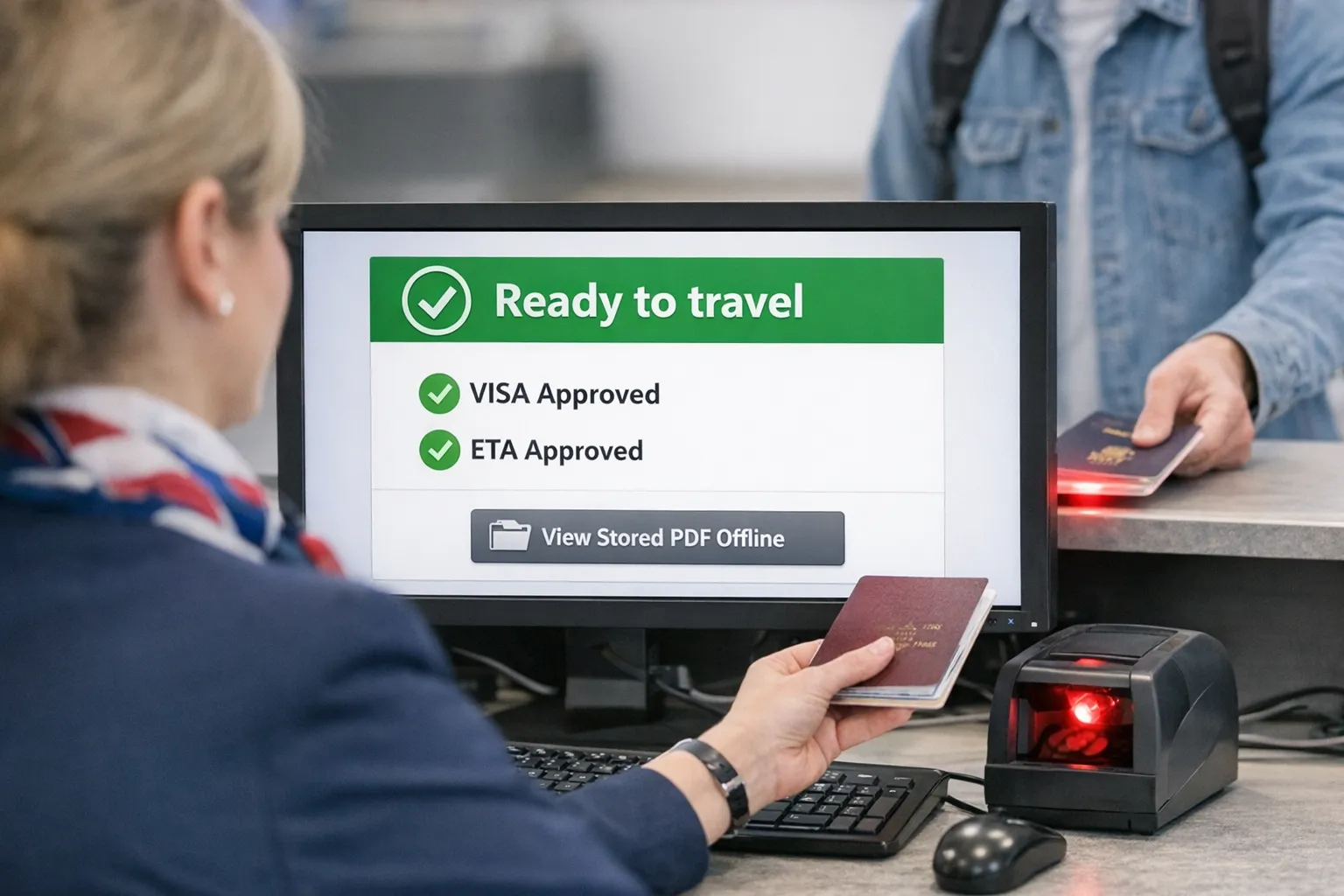
- Offer self‑service proof, allow travelers to download authorization PDFs or QR codes and store offline on mobile in case of connectivity issues.
4) Day of travel
- Run a last‑mile readiness check at online check‑in, confirm that names match, passports meet validity rules, and required authorizations are approved and unexpired.
- Put status in front of agents, ensure your DCS or agent interface displays document status in plain English. Use clear go or no‑go badges to reduce edge‑case calls.
- Prepare a plan B, if a case is refused or pending, present re‑routing or rebooking options immediately, along with a clear refund policy for add‑ons.
5) Post‑arrival and aftercare
- Close the loop for compliance, store receipts and immutable audit logs of checks performed, which supports dispute resolution and audits.
- Turn success into revenue, invite satisfied travelers to pre‑authorize future trips and store their compliant document pack. For a data‑driven view on attach rates by region, see Which Regions Generate the Highest eVisa Upsell Rates.
What good looks like, metrics to track
Teams that operationalize real-time border data tend to outperform on five measurable fronts. Make these your north‑star KPIs and review weekly.
- Denied boarding rate, track document or authorization related denials per 10,000 passengers.
- Document related no‑show rate, measure how many passengers do not travel due to missing authorizations or expired documents.
- Application time to decision, average time from post‑booking trigger to approval, segmented by destination.
- eVisa or ETA attach rate, percentage of eligible bookings that complete required authorizations through your flow.
- Support load, tickets per thousand bookings that relate to visas, border forms, or document clarifications.
For step‑by‑step KPI definitions and dashboard advice, see 5 KPIs to Track After Deploying a Visa Management Platform.
Security, privacy, and governance
Border and identity data demands tight controls. Apply the following principles across your stack:
- Collect only what you need, minimize PII and tokenize sensitive fields wherever possible.
- Use strong authentication and role based access control for staff tools, and enable MFA for travelers.
- Encrypt in transit and at rest, and maintain immutable audit logs of eligibility checks and status decisions.
- Align with regional regulations, GDPR in Europe and equivalent regimes elsewhere. If you embed a third‑party provider, review independent certifications and incident response policies. A helpful checklist is outlined in Top 8 Security Features to Demand in Any Electronic Visa Solution.
Where SimpleVisa fits
SimpleVisa helps travel businesses operationalize the data and workflows described in this guide, without heavy engineering.
- API integration for eligibility and status, surface visa requirements at search and checkout, submit applications inside your flow, and subscribe to decision webhooks to power proactive communications. Explore the end‑to‑end concept in Future of Travel APIs: From Flights to Visas in a Single Call.
- White‑label app and no‑code options, launch a branded portal in days and start capturing ancillary revenue while reducing support tickets.
- Premium eVisa management and guided applications, travelers complete compliant applications faster, which improves approval odds. For a behind‑the‑scenes look, read Inside Look: SimpleVisa’s 99% Approval Rate Explained.
- Custom data services, enrich internal dashboards with eligibility outcomes, time to decision, and route or passport risk insights so operations can plan better rosters and buffers.
If you want to see how airlines turn status data into reduced no‑shows and smoother day‑of‑travel operations, start with this playbook, How Airlines Can Use eVisa Data to Reduce No‑Show Rates.
Implementation tips that pay off fast
- Start with a narrow corridor, pick two high‑volume routes with known authorization requirements and high seasonality. Instrument end to end, then expand.
- Make status visible, add a live status component to your post‑booking page and app, and reflect the same state in your agent tools.
- Write human copy, use plain English at every step. Say Approved, Pending, or Action needed with a single next step.
- Add offline fallbacks, store proof of authorization locally on device and teach agents where to find it when connectivity is poor.
- Set thresholds and alerts, if time to decision exceeds a set number of hours inside T minus 72 for a destination, auto escalate.
The bottom line
Border travel delays are not random. Most stem from predictable rule changes, solvable documentation errors, or foreseeable operational surges. When you replace static guidance with real-time eligibility, live application status, and border wait signals, you cut risk, protect revenue, and deliver a smoother journey.
If you want a faster path to measurable impact, book a short discovery call to see SimpleVisa’s API, white‑label app, and no‑code options in action. We will model your routes, identify the highest‑impact touchpoints, and outline a go‑live plan that fits your stack and timeline. Start here, SimpleVisa, travel made simple.