Ethiopian Embassy e Visa: Apply the Right Way
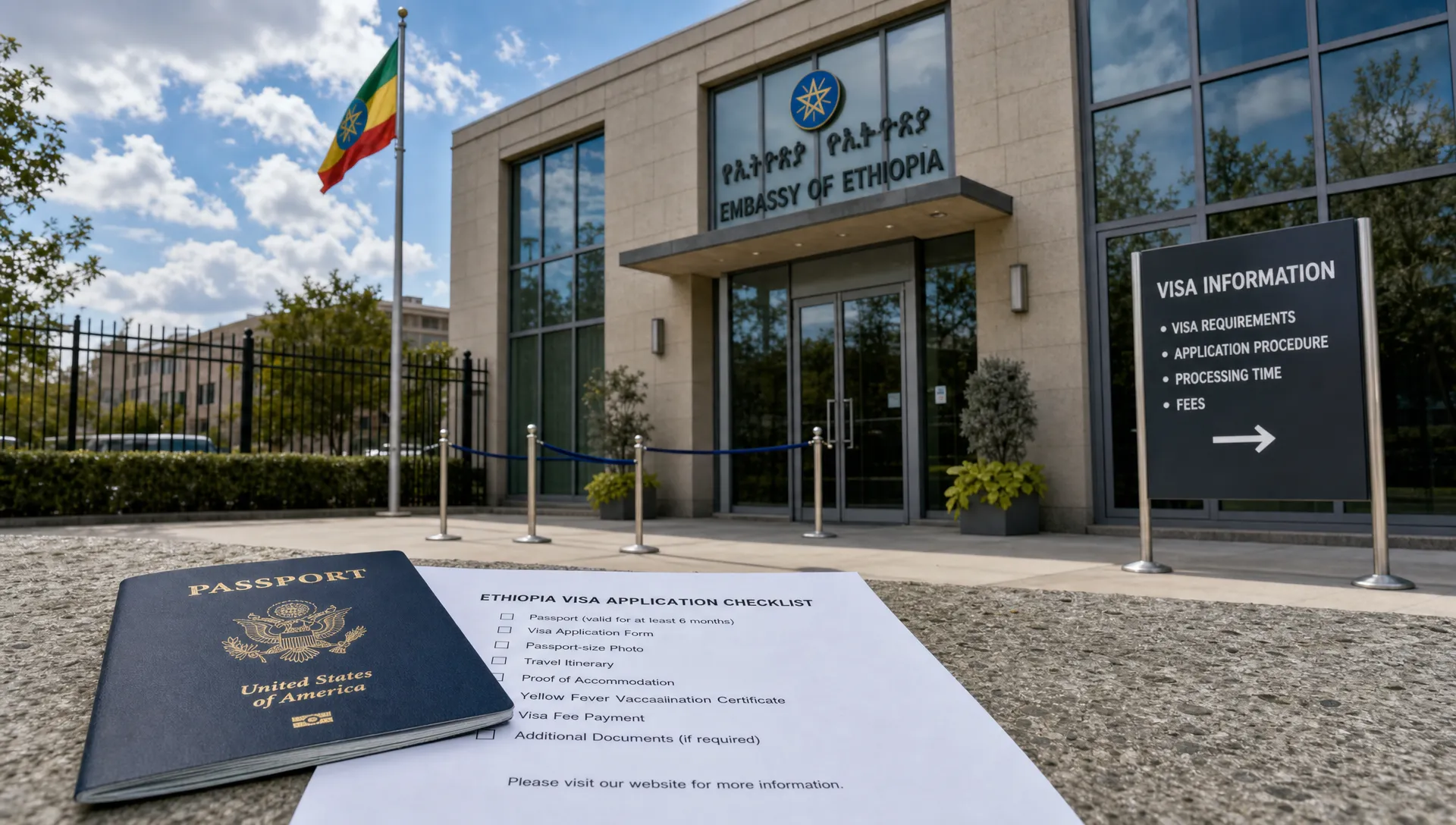
If you searched for an “Ethiopian Embassy e Visa,” you are probably trying to answer one practical question: how do I get permission to enter Ethiopia without choosing the wrong application route?
The short answer is that Ethiopia’s online visa process is usually handled through the official electronic visa system, not through a separate embassy-branded form. Ethiopian embassies and consulates still matter, especially for visa categories not available online, land-border entry questions, unusual passport situations, and consular support. But for many eligible travelers, the fastest path is the eVisa route.
The key is knowing when the eVisa is appropriate, what details must match your passport and itinerary, and when an embassy or consulate should be involved before you pay a fee.
What “Ethiopian Embassy e Visa” actually means
The phrase can be confusing because it combines two different visa channels.
An eVisa is an online authorization. You complete a digital form, upload required documents, pay online, and receive an approval electronically if accepted. For Ethiopia, travelers should start by checking the official Ethiopian eVisa portal and reviewing the latest eligibility, visa types, fees, processing notes, and entry restrictions before applying.
An embassy or consulate visa is handled through a diplomatic mission. This may require contacting the relevant Ethiopian embassy, submitting documents directly, or following a consular process. This route is more relevant when your purpose of travel is not covered online, your nationality or passport type needs special handling, or your entry plan does not match eVisa conditions.
So, if you are looking for an Ethiopian Embassy e Visa, think of the embassy as your fallback or clarification channel, while the eVisa platform is usually the online application channel for eligible trips.
Should you apply online or contact an Ethiopian embassy?
Before you start an application, confirm that your trip fits the online visa route. Ethiopia’s visa rules can change, and airline boarding decisions are often based on current government and carrier data, not on what a traveler read months earlier.
| Travel situation | Likely best route | Why it matters |
|---|---|---|
| Tourism and arrival through an approved airport | eVisa, if eligible | This is the most common online use case for many travelers. |
| Business, conference, media, NGO, volunteer, study, or work-related travel | Check official visa category rules or contact an embassy | The wrong purpose of travel can lead to refusal or entry problems. |
| Land-border entry or arrival outside the approved eVisa entry point | Contact an embassy or confirm directly with authorities | Ethiopia’s eVisa has historically been linked to airport arrival, so do not assume it works everywhere. |
| Diplomatic, official, service, refugee, or emergency travel document | Contact an embassy | These passports and documents may require special handling. |
| Complex itinerary with uncertain travel dates | Confirm before applying | Visa validity and entry dates need to align with your actual plans. |
| Travel seller managing multiple customers | Use verified visa data and guided workflows | This reduces customer confusion and support burden. |
The safest rule is simple: if your trip does not clearly match the online application category, do not guess. Contact the Ethiopian embassy or consulate serving your country of residence, or use a trusted visa support channel that verifies the route before submission.
Documents and details to prepare before applying
Most eVisa delays happen before the applicant even reaches the payment page. The form is only as accurate as the information you enter, and small inconsistencies can create avoidable problems.
Prepare these basics before starting:
- A passport valid for the required period, commonly at least six months from intended entry, subject to current rules.
- A clear scan or photo of the passport bio page.
- A recent passport-style photo if requested by the form.
- Confirmed or realistic arrival details, including airport and arrival date.
- Accommodation information, host details, or travel contact information if requested.
- A payment card accepted by the application system.
- An email address you can access during travel.
Do not rely on autofill without checking every field. Names, passport numbers, dates of birth, and passport expiry dates should match the passport exactly. If your passport includes multiple given names or a long surname, enter them in the same order shown in the machine-readable and visual passport sections unless the official form instructs otherwise.
If you are new to online visa workflows, SimpleVisa’s get-started guide to eVisa applications explains the general process of checking eligibility, preparing documents, submitting the form, and tracking approval.
How to apply the right way
The application process is not complicated, but it should be done carefully. Treat it like a border document, not like a casual travel booking form.
- Check the official route first: Confirm that your nationality, passport type, travel purpose, and arrival point are eligible for the Ethiopian eVisa.
- Choose the correct visa type and duration: Do not select a longer or different visa category unless it reflects your real purpose and stay.
- Enter passport data exactly: Match spelling, document number, nationality, issue date, and expiry date to the passport you will carry.
- Upload readable documents: Avoid glare, cropped edges, blurry images, shadows, and screenshots of scanned documents.
- Review before paying: Many errors become difficult or impossible to fix after submission, and visa fees are often non-refundable.
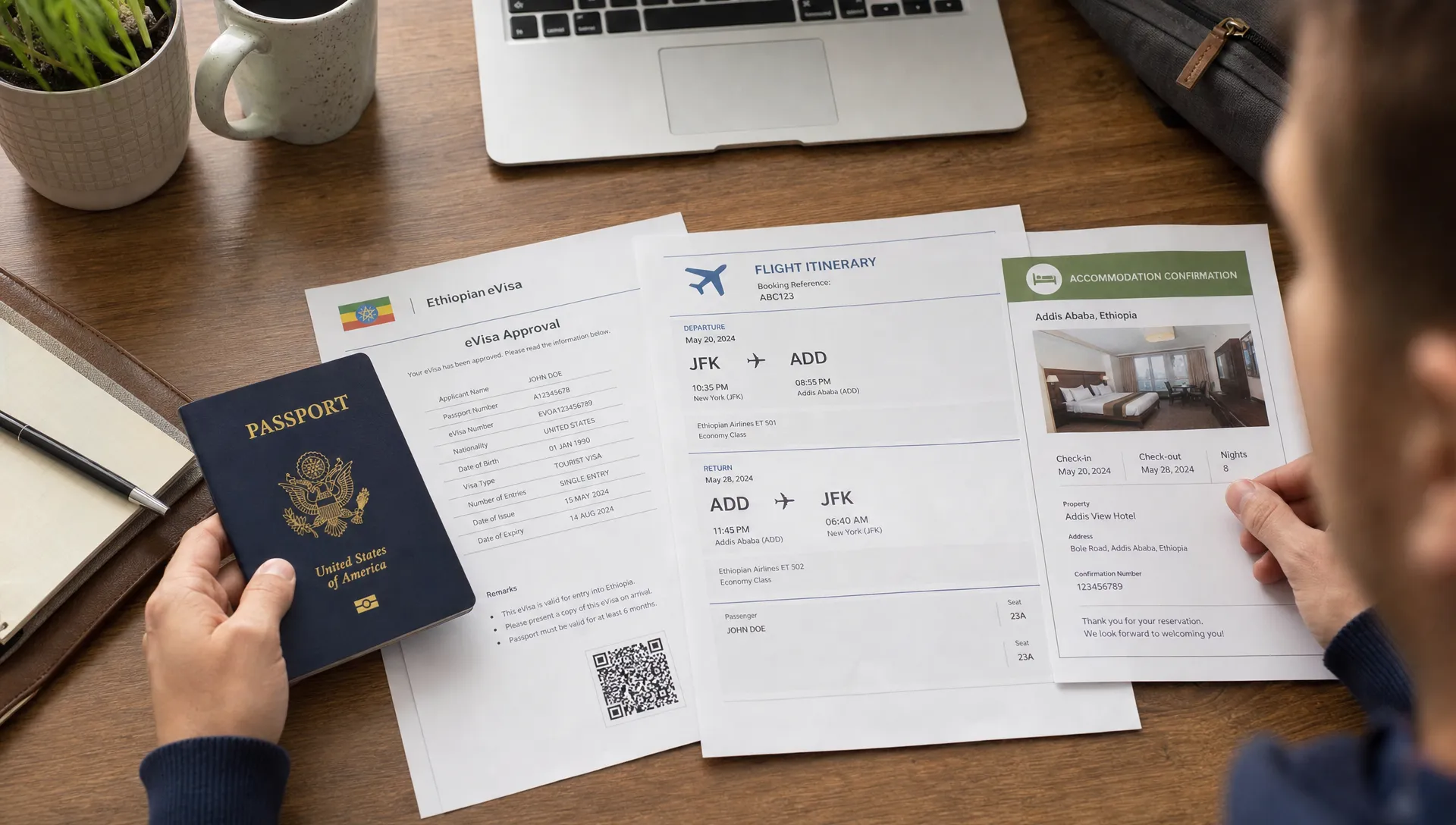
- Save the confirmation and approval: Keep digital and printed copies with your passport, airline booking, accommodation details, and onward travel documents.
A common mistake is applying with an old passport and then traveling with a new one. Your eVisa is usually tied to the passport used in the application. If your passport changes after approval, verify what to do before traveling.
When should you apply?
Do not leave an Ethiopian eVisa application until the night before departure. Online systems can be delayed by payment issues, document quality problems, peak travel periods, public holidays, technical maintenance, or manual review.
At the same time, do not apply so early that your visa dates no longer align with your itinerary. The right timing depends on the visa validity rules shown during the application process, the trip type, and your flexibility. If your plans are fixed, applying with a buffer before departure is usually wiser than waiting until the last minute.
For a broader planning framework, review SimpleVisa’s guide on when to apply for an electronic visa, especially if you are comparing multiple destinations or coordinating visas for a group trip.
Mistakes that can delay or derail your Ethiopia eVisa
The most damaging eVisa mistakes are usually ordinary data-entry errors. A single wrong digit in a passport number can cause airline check-in problems or entry questions on arrival.
Watch especially for these issues:
- Choosing the wrong purpose of travel because it seems faster.
- Entering the arrival date incorrectly or using a placeholder date.
- Uploading a passport image that cuts off the document number or photo.
- Assuming the eVisa works for a land border or any airport without checking.
- Applying through an unofficial website without understanding service fees or responsibility.
- Using a different passport at travel than the one used in the application.
- Forgetting that visa approval does not replace airline, health, customs, or onward-travel requirements.
If you want a deeper checklist, SimpleVisa has a practical guide to common electronic visa mistakes that applies to Ethiopia and many other online visa systems.
What to know if you are applying from the UAE or GCC
Many travelers search for Ethiopian visa information while based in the UAE, Saudi Arabia, Qatar, Kuwait, Bahrain, or Oman. If that is you, remember that your residence country and your passport nationality are not the same thing for visa eligibility.
For example, a UAE residence visa may help explain where you live, but the Ethiopian eVisa form will usually focus first on the passport you hold. Enter your nationality and passport information exactly as shown in your travel document. Only include residence permit information if the form requests it.
If your Ethiopia trip is tied to a wider relocation, property handover, or project schedule in the UAE, coordinate visa timing with the rest of your commitments. A Dubai resident who is also managing home or office work with providers such as Dubai renovation specialists should avoid booking immovable travel dates until the visa route, approval window, and passport validity are confirmed.
This is especially important for short regional trips. Missing one document can turn a quick journey into a costly rebooking problem.
Arrival, approval, and border control: what the eVisa does not guarantee
An approved eVisa is permission to travel under stated conditions, but it is not an unconditional guarantee of entry. Border officers can still ask questions and review your documents when you arrive.
Carry evidence that supports the trip you described in your application. This may include hotel bookings, host contacts, return or onward tickets, business invitation letters if relevant, and proof of funds if requested. If you are traveling for tourism, your answers should match a tourism purpose. If the real purpose is business or work, use the correct route before departure.
Also check health and transit requirements separately. Vaccination rules can depend on where you are arriving from or transiting through, not only your passport nationality. Airlines may also apply their own document checks before boarding.
Guidance for travel businesses selling Ethiopia trips
For travel agencies, airlines, tour operators, OTAs, and travel management companies, visa confusion creates friction at exactly the wrong moment: after the customer is interested but before the booking feels complete.
Ethiopia is a good example. A traveler may search “Ethiopian Embassy e Visa,” click several unofficial sources, misunderstand whether the embassy or eVisa route applies, and then ask your support team for help. If your booking flow does not give clear guidance, the customer may abandon the trip or make a costly mistake.
That is where structured visa support can become both a service improvement and an ancillary revenue opportunity. SimpleVisa helps travel businesses guide customers through border requirements with options such as API integration, white-label visa application flows, data services, and guided visa application support. The goal is not to replace official immigration rules, but to make the customer journey clearer, more accurate, and easier to complete.
For Ethiopia-focused products, useful prompts inside a booking journey may include nationality checks, passport validity reminders, arrival point warnings, visa category guidance, and reminders to apply before departure with enough processing buffer.
FAQ
Is the Ethiopian Embassy e Visa the same as the official Ethiopia eVisa? Not exactly. The eVisa is an online application route, while an Ethiopian embassy or consulate handles consular questions and visa cases that may not fit the online process. Eligible travelers usually apply through the official eVisa channel, not an embassy-branded online form.
Can I use an Ethiopian eVisa at any border crossing? Do not assume so. Ethiopia’s eVisa has historically been associated with arrival through Addis Ababa Bole International Airport. If you plan to enter by land or through another point, confirm the current rule with official sources or an embassy before applying.
How long does Ethiopia eVisa approval take? Processing times vary and can be affected by document quality, payment issues, holidays, demand, or manual checks. Apply with a reasonable buffer and avoid making non-refundable plans that depend on same-day approval.
What happens if I make a mistake on my application? It depends on the error and whether the application has already been submitted or approved. Some mistakes may require a new application. Passport number, name, nationality, and travel date errors should be treated as serious and corrected through official guidance before travel.
Do children need their own Ethiopia eVisa? In most international visa systems, each traveler, including a child, needs their own travel authorization linked to their passport. Check Ethiopia’s current rules before applying for minors, and carry supporting family or consent documents if relevant.
Should I print my eVisa approval? Yes, it is wise to carry both a printed copy and a digital copy. Phones can lose battery, email can be hard to access on arrival, and airline staff may ask to see the approval before boarding.
Make Ethiopia visa steps easier for your travelers
Applying the right way comes down to one principle: match the visa route to the traveler’s real passport, purpose, entry point, and timing. If the online eVisa route fits, complete it carefully. If it does not, contact the relevant Ethiopian embassy or consulate before paying fees or booking non-refundable travel.
For travel businesses, making this guidance visible inside the booking journey can reduce support tickets, prevent last-minute travel disruption, and create a smoother path from destination interest to confirmed departure. SimpleVisa helps travel companies turn complex visa requirements into guided, integrated customer experiences that are easier to understand and easier to complete.