How Long to Keep Travel Visa Documents After Your Trip
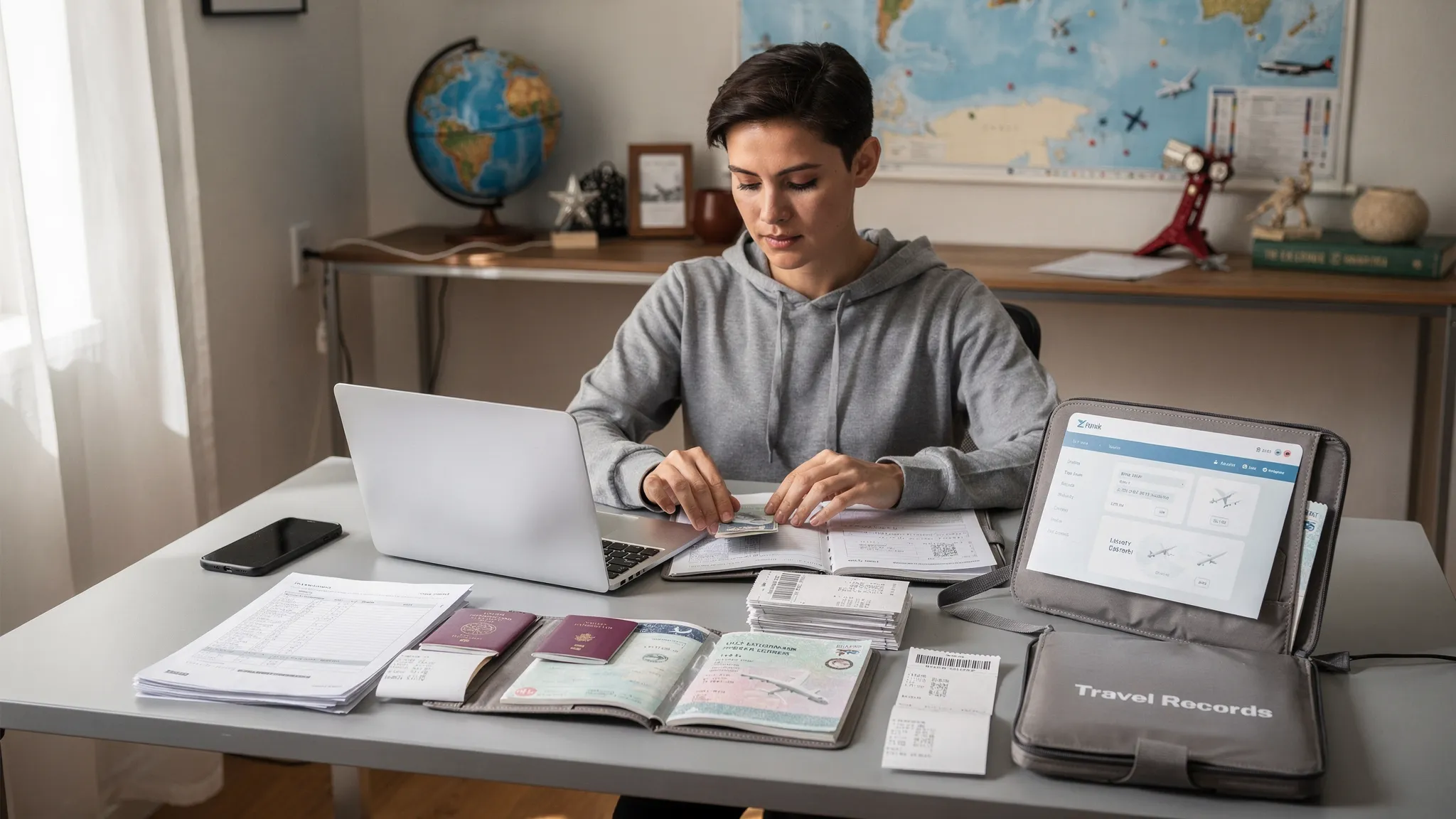
Your trip may be over, but your visa paperwork still has work to do. Border records, eVisa approvals, receipts, and supporting documents can help prove that you entered and left legally, support a future visa application, resolve an insurance claim, or satisfy an employer or tax audit.
The short answer: for most leisure trips, keep your approved travel visa documents for at least 12 months after you return. If your eVisa, ETA, ESTA, or other electronic visa remains valid for future travel, keep it until it expires, plus another 12 months. For business, work, study, immigration, or tax-related travel, keep records much longer, often 3 to 7 years, depending on the purpose and applicable rules.
This is practical guidance, not legal advice. Requirements can vary by country, visa category, employer policy, and tax situation, so always check official instructions for your destination or speak with an immigration professional when the stakes are high.
Quick retention guide for travel visa documents
Use this table as a practical starting point for deciding what to keep, what to archive, and what to delete securely after a trip.
| Document type | Suggested minimum retention after your trip | Keep longer if… |
|---|---|---|
| Approved eVisa, ETA, ESTA, or electronic travel authorization | Until expiry, plus 12 months | It is multi-entry, linked to a still-valid passport, or needed for future applications |
| Visa application confirmation and payment receipt | 12 months | You may need reimbursement, proof of payment, or a record for a reapplication |
| Passport page, visa sticker, and entry or exit stamps | Keep expired passports indefinitely | Future visa forms ask for travel history or previous visas |
| Entry and exit records, such as U.S. I-94 | 12 to 24 months | You visited the U.S., extended status, changed status, or had a border issue |
| Flight tickets, boarding passes, hotel bookings, and itinerary | 6 to 12 months | You have an insurance claim, refund dispute, business expense, or tax record need |
| Invitation letters, conference letters, school documents, or employer letters | 12 months | The trip involved work, study, medical treatment, or a future immigration pathway |
| Bank statements, pay slips, or proof of funds used for the visa | 3 to 6 months if no longer needed | They are tied to a pending claim, audit, appeal, or future immigration file |
| Visa refusal, cancellation, deportation, or overstay notices | Indefinitely | Nearly always, since many countries ask about past refusals or immigration issues |
Why keep visa documents after returning home?
It is tempting to delete your eVisa email as soon as you land back home, especially if the trip went smoothly. But travel visa documents often matter after the journey because they create a record of compliance.
First, they help prove that you followed entry and exit rules. If a border database is incomplete, an airline record is missing, or a future application asks for exact travel dates, your own documents can fill the gap. This is especially important for countries that track maximum stay rules, such as 90 days within a 180-day period, or for travelers who make frequent short trips.
Second, previous travel history can influence future visa applications. Many visa forms ask where you have traveled, whether you have ever been refused a visa, and whether you complied with past immigration rules. Keeping a clean archive makes those answers easier and more accurate.
Third, visa records may be needed for non-immigration reasons. Travel insurance claims, airline refunds, employer reimbursements, credit card disputes, and tax deductions can all require supporting documents. If a trip was for a conference, client meeting, study program, medical appointment, or family event, the paper trail can be useful long after the return flight.
If you are still in the pre-trip stage, it is worth building this habit early. Simple steps like saving the approval PDF, storing the application receipt, and keeping a secure copy of your passport page can prevent stress later. For preparation guidance, see SimpleVisa’s online visa application checklist.
How long to keep documents by travel situation
Short tourist trips
For a standard vacation with a single-entry tourist visa or eVisa, keep the core documents for at least 12 months after you return. This includes the approved visa, the application confirmation, payment receipt, travel itinerary, and proof of entry and exit if available.
A year is usually enough time for most routine issues to surface, such as insurance claims, airline disputes, or questions about whether you overstayed. If nothing is pending after that period, you can usually delete extra copies of sensitive supporting documents, such as bank statements, while keeping a simple record of the visa approval and travel dates.
Multi-entry eVisas, ETAs, and travel authorizations
If your authorization remains valid after your trip, do not delete it just because you have already used it once. Many electronic travel documents are valid for multiple entries until a set expiry date or until the passport linked to them expires.
A practical rule is to keep the authorization until it expires, plus 12 months. Also keep a copy of the passport used for the application, because many eVisas and travel authorizations are electronically linked to a specific passport number. If you renew your passport before the authorization expires, check whether you need a new visa, a transfer, or to travel with both passports. SimpleVisa has a dedicated guide on transferring an electronic visa to a new passport.
U.S. travel and I-94 records
If you traveled to the United States, your entry and exit record can be particularly important. Many noncitizen travelers can access their electronic I-94 and recent travel history through the official U.S. Customs and Border Protection I-94 website.
After a U.S. trip, save a copy of your I-94 record and confirm that your travel dates look correct. Keep it for at least 12 to 24 months, and longer if you extended your stay, changed status, applied for another U.S. visa, or had any entry or exit issue. If you were in the U.S. on a work, student, investor, or long-term visa category, keep related immigration records much longer.
Business travel
For business trips, visa documents are often part of a broader expense and compliance file. Keep visa approvals, receipts, invitation letters, conference confirmations, boarding passes, and accommodation records for at least 3 years, and consider 7 years if your company policy, accounting team, or tax advisor recommends it.
The IRS explains that business records should generally be kept for the relevant period of limitations, and in many common cases that period is at least three years. You can review the IRS guidance on how long to keep records, but businesses should also follow their own accounting and legal policies.
For travel managers, this is not just an administrative detail. Clear document retention rules reduce support questions, help with audits, and make it easier to prove that employees had the correct authorization for a trip.
Work, study, medical, and long-stay visas
If the trip involved work, study, medical care, family reunification, residence, or a possible future immigration pathway, treat the documents as long-term records. Keep them for the entire period of status and for several years afterward. In some cases, keeping them indefinitely is the safest option.
This includes visa approvals, extensions, school enrollment letters, employment authorization documents, sponsor letters, medical appointment evidence, address registration documents, and any communications with immigration authorities. These records can become relevant for renewals, permanent residence, background checks, tax questions, or future applications in another country.
Visa refusals, cancellations, or overstays
Keep any visa refusal, cancellation, removal, deportation, or overstay-related document indefinitely. Many countries ask applicants whether they have ever been denied a visa or had an immigration problem. Even if the issue was minor or resolved, having the original notice helps you answer accurately.
Do not rely on memory for these events. A wrong answer on a future application can be more damaging than the original refusal itself.
What travel visa documents should you save?
You do not need to keep every duplicate screenshot forever. Focus on the documents that prove what you applied for, what was approved, and how you used it.
A clean post-trip visa folder should include:
- Approved visa, eVisa, ETA, ESTA, or travel authorization PDF or email
- Application reference number and application summary
- Payment receipt and confirmation email
- Passport ID page used for the application
- Visa sticker page, if you received a physical visa
- Entry and exit stamps or electronic entry records, when available
- Flight itinerary, boarding passes, and accommodation proof
- Invitation, school, employer, conference, or medical letters if relevant
- Any messages from the issuing authority, embassy, airline, or visa support provider
If you are unsure whether to keep a printed copy during the trip itself, read SimpleVisa’s guide on whether you need to print an electronic visa. After the trip, a secure digital archive is usually more practical than a stack of paper.
How to store visa documents securely
Visa documents contain sensitive personal information: passport numbers, dates of birth, addresses, travel patterns, financial details, and sometimes medical or employment information. Keeping them too casually can create identity theft or privacy risks.
A simple secure storage system works well for most travelers. Create one encrypted digital folder per trip, use a clear file name such as 2026-Italy-eVisa, and store only the final versions of important documents. Use a reputable cloud storage account with strong password protection and multi-factor authentication, and keep an offline backup for critical documents if you travel frequently.
Avoid leaving passport scans and bank statements scattered across your downloads folder, phone gallery, email inbox, and messaging apps. If you sent documents to yourself during the trip, clean up duplicates after you build your archive. If you printed copies for border control, shred them when they are no longer needed rather than throwing them in the trash.
For highly sensitive documents, such as bank statements, pay slips, tax documents, medical certificates, or minor consent letters, use a shorter retention period unless there is a clear reason to keep them. In many routine tourist cases, you can delete these extra supporting files 3 to 6 months after travel, once the visa has been used, no claim is pending, and no future application depends on them.
When is it safe to delete visa documents?
Before deleting anything, run through a quick post-trip checklist.
- Has the visa or travel authorization expired?
- Has the permitted stay period fully passed without an overstay concern?
- Are all insurance claims, refunds, and chargebacks closed?
- Has your employer reimbursed the trip and accepted the expense file?
- Could you need the record for taxes, future immigration, or a visa renewal?
- Do you still have the expired passport or another long-term record of the trip?
If the answer to all relevant questions is yes, you can usually delete duplicate or sensitive supporting documents. Still, consider keeping a lightweight travel history record with the destination, travel dates, visa type, approval number, and passport used. This takes little space and can be useful for future applications.
Special advice for families and group travelers
Families should keep separate records for each traveler, including children. Even when a parent submits applications together, each person may have a separate authorization, validity period, passport number, and entry record.
For minors, keep consent letters, custody documents, and birth certificates only as long as needed unless they are part of a recurring travel arrangement. These documents are sensitive, so store them carefully and delete unnecessary copies from shared devices.
Group travelers, tour leaders, and corporate travel coordinators should create a consistent naming system and retention policy. That policy should explain what is kept, who can access it, and when it is deleted. This matters because travel document automation is not only about getting the visa approved. It is also about handling traveler data responsibly before, during, and after the trip. For a broader overview, read SimpleVisa’s guide to travel document automation.
Frequently Asked Questions
How long should I keep an eVisa after my trip? Keep a used eVisa for at least 12 months after you return. If it is still valid for future entries, keep it until it expires, plus another 12 months.
Should I keep a printed copy of my visa after traveling? Usually, you do not need to keep paper copies long-term if you have a secure digital copy. Shred printed copies when they are no longer needed, especially if they include passport or financial information.
Should I keep expired passports with old visas? Yes. Keep expired passports indefinitely if they contain visa stickers, entry stamps, or evidence of travel history. Future visa applications may ask for previous passport numbers or past travel dates.
Can I delete bank statements used for a visa application? For routine tourist travel, you can often delete sensitive financial documents 3 to 6 months after the trip if there is no pending claim, dispute, audit, or future immigration need. Keep them longer for business, study, work, or long-stay visas.
How long should I keep visa documents for business travel? Keep business travel visa records for at least 3 years, and up to 7 years if required by your employer, tax advisor, or company policy. Include receipts, approvals, itineraries, and supporting business-purpose documents.
What if my visa was denied? Keep refusal letters and related documents indefinitely. Many future visa applications ask about past refusals, and the original notice helps you explain the situation accurately.
Make visa document handling easier for travelers
Keeping visa documents after a trip does not have to be complicated. The key is to save the right records, protect sensitive data, and delete unnecessary copies once their purpose has passed.
For travel businesses, this kind of guidance can also improve the customer experience. SimpleVisa helps travel companies streamline visa application flows, guide customers through border requirements, and integrate online visa processing through API, white-label, and no-code options.
If your customers need clearer visa guidance before and after travel, visit SimpleVisa to learn how integrated border crossing solutions can simplify the journey.