How to Choose a Reliable Visit Visa Service
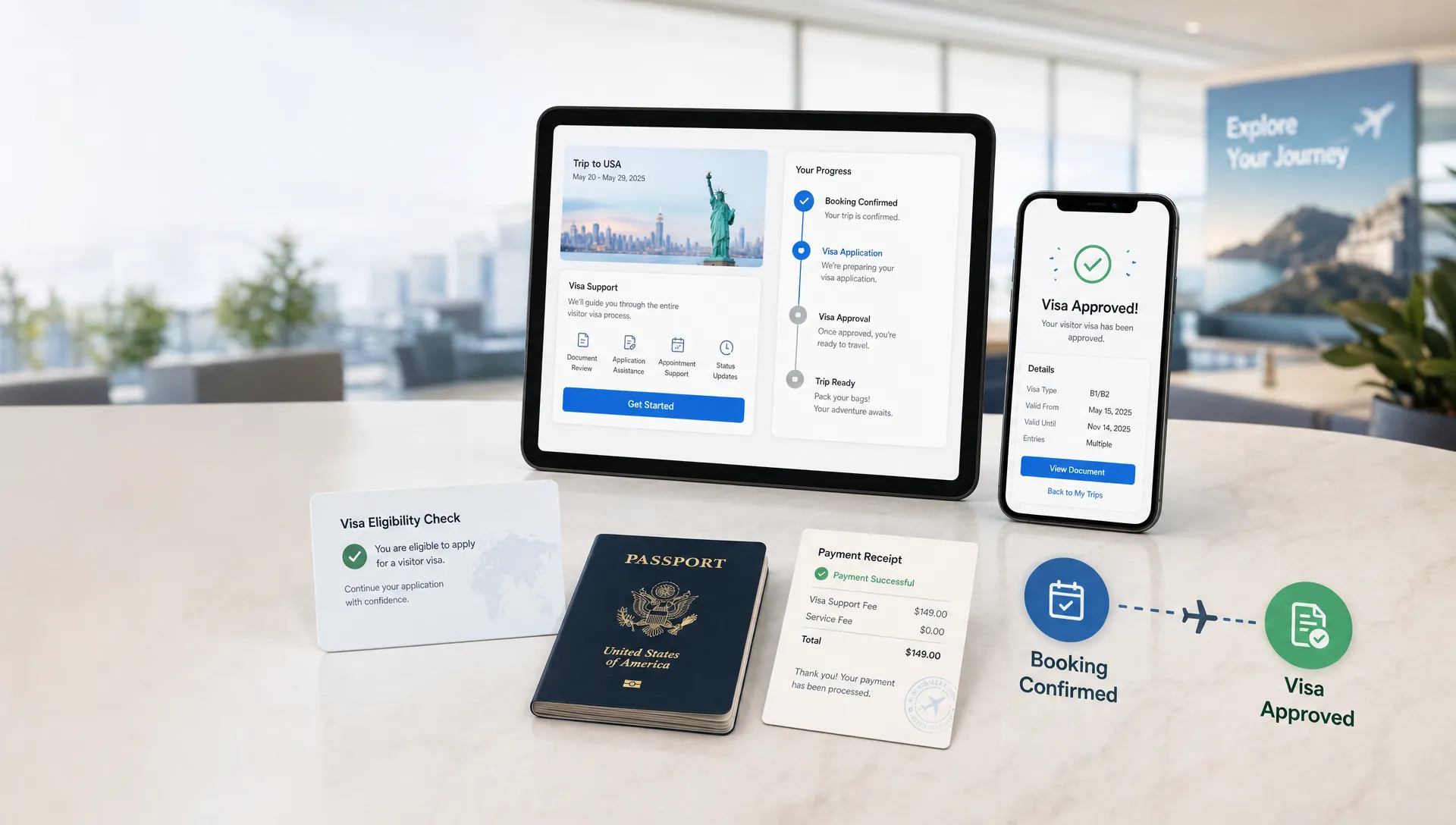
A reliable visit visa service should do more than collect forms and submit paperwork. It should reduce uncertainty for travelers, protect sensitive personal data, explain requirements clearly, and help prevent avoidable mistakes that can delay or derail a trip.
For travel businesses, the stakes are even higher. A weak visa experience can create support tickets, missed departures, refund disputes, and frustrated customers who blame the booking brand, even when the visa rules came from a government authority. The right partner, by contrast, can turn a stressful requirement into a guided, revenue-positive service.
Here is how to choose a visit visa service you can trust, whether you are evaluating options for your own trip or selecting a partner for a travel website, airline, tour operator, OTA, or agency.
Start by defining what kind of visit visa support you need
The term visit visa can cover several travel scenarios: tourism, family visits, short business trips, conferences, medical visits, and other temporary stays. Requirements vary by nationality, destination, length of stay, travel history, and purpose of travel.
Before comparing providers, clarify the use case. A traveler applying for a simple eVisa for a short vacation may only need a guided online application. A tour operator selling multi-country itineraries may need real-time eligibility checks across many origin and destination pairs. A travel platform may need an API or white-label flow that can appear inside the booking journey.
This first step matters because not every provider is built for the same job. Some are consumer-facing agencies. Some specialize in immigration advice. Some provide data only. Others automate the full application journey. If you are not sure what a professional process should look like, this guide on what a reputable visa application company should provide is a useful benchmark.
The core signs of a reliable visit visa service
A trustworthy provider should make the visa process easier without making it look artificially simple. Visa decisions are made by governments, not private companies. Any service that hides that fact, guarantees approvals, or pushes travelers to apply without checking eligibility carefully should raise concern.
Use the following criteria to compare providers.
1. Requirement accuracy and update discipline
Visa rules change often. Governments update eligibility, fees, biometric rules, health documentation, validity periods, and entry conditions with little notice. A reliable provider should have a clear process for maintaining current visa requirements and should distinguish between official government fees, service fees, and optional extras.
For travel businesses, this is one of the most important evaluation areas. Inaccurate visa information can lead to denied boarding, itinerary disruption, and high customer support costs. Ask how often visa data is reviewed, what sources are used, and how urgent changes are handled.
2. Clear scope of service
A good visit visa service tells users exactly what it does and does not do. Does it only provide information? Does it review documents? Does it submit applications? Does it handle government portal payments? Does it provide human support if an application is returned for correction?
The provider should also explain when a traveler may need an embassy appointment, immigration lawyer, or official consular guidance. Reliability includes knowing the limits of a service.
3. Transparent pricing
Visa pricing can be confusing because travelers may see government fees, processing fees, courier fees, appointment fees, priority fees, currency conversion fees, and optional service charges. A reliable provider should show the total expected cost before payment whenever possible.
Be cautious if a site advertises a very low starting price but reveals required fees late in the process. Transparent pricing builds trust, reduces abandonment, and helps travel businesses avoid complaints after checkout.
| What to check | Why it matters | Good provider behavior |
|---|---|---|
| Government fee clarity | Travelers need to know what goes to the authority | Separates government and service fees |
| Service fee clarity | Prevents surprise charges | Shows fees before payment |
| Refund policy | Visa outcomes and timing can vary | Explains what is refundable and what is not |
| Optional upgrades | Avoids pressure selling | Labels add-ons clearly |
| Currency handling | Reduces billing confusion | Displays currency and conversion details |
4. Realistic processing timelines
A reliable visit visa service should provide realistic processing estimates, not promises. Government processing times can change based on seasonality, public holidays, application volume, security checks, or missing information.
Look for providers that explain the difference between average processing time, earliest possible approval, and recommended application lead time. For travel businesses, conservative guidance is often better than overly optimistic messaging because it protects the customer experience.
5. Strong privacy and security practices
Visa applications involve highly sensitive information, including passport details, addresses, travel plans, financial documents, employer information, and sometimes family or medical details. A reliable provider should treat data security as a core feature, not a footnote.
At minimum, evaluate whether the provider explains its privacy policy, uses secure application flows, limits unnecessary data collection, and has clear retention practices. For enterprise or travel-tech partnerships, also ask about contractual data processing terms, access controls, and compliance processes.
6. Guided forms that reduce mistakes
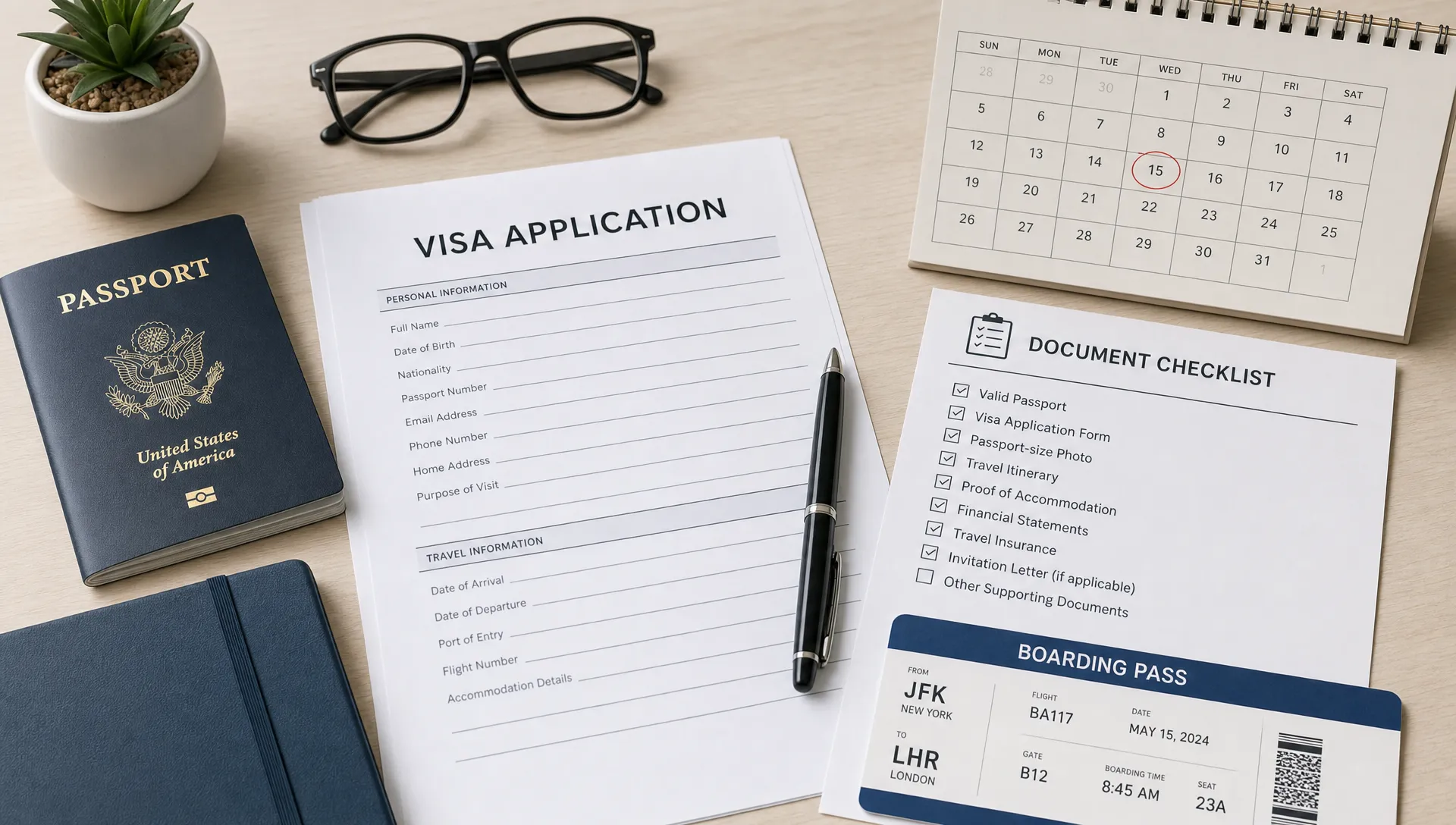
Many visa delays happen because of small errors: inconsistent names, wrong passport numbers, unclear travel dates, missing hotel details, incorrect photo format, or documents uploaded in the wrong category. A reliable service should guide travelers step by step and catch common mistakes before submission.
For online flows, look for conditional questions, document prompts, eligibility checks, field validation, and clear explanations in plain language. For travel businesses, this is where a modern visa service can reduce both support workload and customer anxiety.
7. Human support when it matters
Automation is valuable, but travelers still need help when something is unclear. A reliable provider should offer accessible support, especially for application corrections, status questions, document issues, and urgent travel dates.
Support quality is not only about speed. It is also about accuracy, tone, and accountability. Travelers may be stressed, confused, or worried about missing a trip. Good support should be calm, specific, and clear about what the service can control.
8. Honest communication about approval risk
No private visit visa service can guarantee approval. Government authorities decide whether to grant a visa based on eligibility, documentation, security checks, travel history, and other factors.
Reliable providers use careful language. They may help improve application completeness, reduce avoidable errors, and guide applicants through the correct process, but they should not promise a result. If a provider guarantees approval, especially for complex destinations or applicants with prior refusals, treat that as a red flag.
9. Fit for special travel contexts
Visit visa applications often involve real-life circumstances that go beyond a standard vacation. People travel to see family, attend events, receive treatment, help relatives, or arrange temporary support at home before leaving. A reliable service should help the traveler understand which details are relevant to the visa application without collecting unrelated personal information.
For example, a traveler visiting Finland to support an older relative might separately coordinate local assistance through providers such as Omegayksi home care services in Espoo and Turku, while the visa service focuses only on the documentation and entry requirements connected to the trip. That separation is important: good visa support should be thorough, but it should not overreach.
Red flags that should make you pause
Some unreliable providers look polished at first glance. They may run ads, use official-looking language, or create urgency around a deadline. The safest approach is to look beyond design and judge the process.
Watch for these warning signs:
- Claims of guaranteed approval or guaranteed entry.
- Fees that are hidden until the final payment step.
- No clear company information, privacy policy, or support contact.
- Pressure tactics such as fake countdowns or exaggerated urgency.
- Application forms that ask for unnecessary sensitive data.
- No explanation of whether the provider is official, private, or acting as an intermediary.
- Vague refund terms or no written refund policy.
If you are worried about fraud, hidden charges, or imitation government websites, review these practical tips on applying for an online visa safely. Scam prevention is especially important for high-volume travel brands because one bad provider can affect thousands of customers.
What travel businesses should evaluate beyond the application itself
For a travel business, choosing a reliable visit visa service is not only about whether one traveler gets one visa. It is about whether visa support improves the entire booking and pre-departure experience.
A strong partner should help answer questions such as:
- Can travelers see visa requirements before they book?
- Can the service be integrated into the booking flow?
- Is there a no-code option for teams that do not want a heavy technical project?
- Can the provider support multiple destinations and traveler nationalities?
- Does the flow feel consistent with the travel brand?
- Can the service generate ancillary revenue without harming trust?
- How are failed applications, refunds, and escalations handled?
This is where consumer visa services and travel-tech visa partners can differ. A consumer site may be fine for occasional individual applications. A travel business usually needs scalable data, automation, customer guidance, and a commercial model that fits its booking journey.
SimpleVisa, for example, is built to help travel businesses simplify visa administration for their customers through options such as API integration, white-label application flows, custom data services, and guided visa applications. The goal is not to replace government decision-making. It is to make the requirements clearer, reduce friction, and help travel brands offer visa support as a useful ancillary service.
Questions to ask before choosing a provider
A reliable provider should be able to answer practical questions directly. If the answers are vague, inconsistent, or overly sales-focused, keep looking.
Ask these before signing up or partnering:
- How do you source and update visa requirement data?
- Which destinations and traveler nationalities do you support?
- What exactly is included in your service fee?
- What happens if the government requests additional documents?
- How do you protect passport and payment data?
- Can you support urgent travel, and what are the limits?
- Do you offer traveler support, business support, or both?
- What refund rules apply if a traveler cancels or is refused?
- For integrations, what implementation options are available?
- How do you handle rule changes after a traveler has booked?
The best provider will not always be the cheapest. It will be the one that reduces risk, communicates clearly, and fits the traveler journey you need to support.
How to compare providers in a simple scoring model
If you are evaluating multiple visit visa services, a scoring model can make the decision less subjective. Rate each provider from 1 to 5 across the categories below, then compare the total and discuss any critical weaknesses.
| Evaluation area | What a score of 5 looks like |
|---|---|
| Accuracy | Uses reliable sources and has a clear update process |
| Transparency | Shows fees, timelines, scope, and refund terms clearly |
| Security | Explains privacy practices and protects sensitive data |
| User experience | Guides travelers and reduces common form errors |
| Support | Offers responsive, knowledgeable help when needed |
| Scalability | Works for your volume, destinations, and customer types |
| Integration | Fits your booking flow, app, website, or operations team |
| Commercial fit | Supports revenue goals without damaging customer trust |
For individual travelers, security, transparency, and support may be the highest priorities. For travel businesses, accuracy, integration, scalability, and customer experience usually deserve extra weight.
The best visit visa service makes travel feel simpler
A visa requirement can be one of the most stressful parts of international travel. The right provider turns that stress into a guided process: clear eligibility, accurate requirements, transparent pricing, secure data handling, and timely support.
For travel businesses, a reliable visit visa service can also create a better customer journey. Instead of sending travelers away to search for requirements on their own, you can give them structured help at the moment they need it. That can reduce uncertainty, increase trust, and create a useful ancillary revenue stream.
The key is to choose a provider that respects both sides of the process: the traveler needs simplicity, while the visa authority still controls the decision. Any service that balances those realities honestly is far more likely to be a dependable long-term partner.
Frequently Asked Questions
What is a visit visa service? A visit visa service helps travelers understand requirements and complete applications for temporary travel, such as tourism, family visits, short business trips, or events. Depending on the provider, it may offer guidance, document checks, application submission, tracking, or integration into a travel booking flow.
Can a visit visa service guarantee approval? No. Visa approval is decided by the destination government or immigration authority. A reliable service can help reduce mistakes and improve application completeness, but it should never guarantee approval.
How early should travelers apply for a visit visa? Travelers should apply as early as the destination rules allow, especially during peak travel periods or when appointments are required. A good provider should explain recommended lead times and warn travelers when their departure date is risky.
What should a travel business look for in a visa partner? Travel businesses should look for accurate requirements, strong data protection, integration options, guided customer flows, transparent pricing, and dependable support. The provider should fit the booking journey rather than forcing customers into a disconnected process.
Is the cheapest visit visa service the best choice? Not usually. Low upfront prices can hide service fees, weak support, or poor application guidance. The better choice is a provider that is transparent, secure, accurate, and clear about what is included.
Make visit visa support easier for your customers
If your travel business wants to simplify border requirement administration, SimpleVisa can help you guide customers through visa needs with flexible options including API integration, white-label flows, data services, and no-code implementation. Instead of leaving travelers to navigate requirements alone, you can offer a clearer, more reliable visa experience inside your customer journey.