Indonesian eVisa Guide: Fees, Timing, and Entry Rules
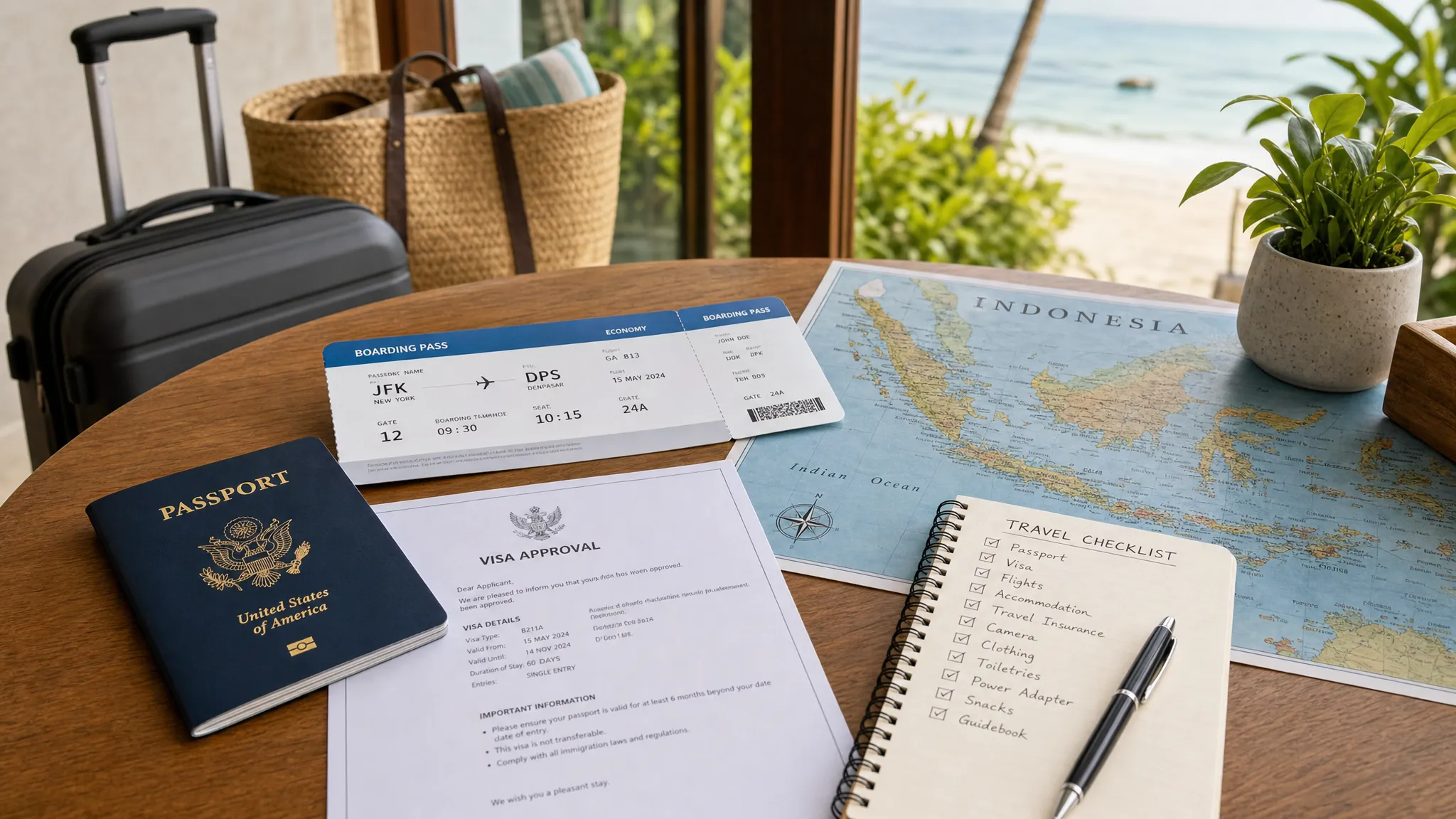
Indonesia is one of the most popular destinations in Asia for leisure travelers, digital nomads, business visitors, and long-stay explorers. The Indonesian eVisa system can make entry smoother, but it is not a single visa with one universal rule. The right option depends on the traveler’s nationality, trip purpose, length of stay, and whether they may need an extension.
For most short trips, travelers are comparing three possibilities: visa exemption, an electronic Visa on Arrival, and a pre-arranged visitor eVisa. Each has different fees, timing, and entry rules. The safest starting point is always the official Indonesian Directorate General of Immigration eVisa portal, because eligibility lists and visa categories can change.
This guide breaks down the Indonesian eVisa options travelers most often encounter, how much they typically cost, when to apply, and what border rules matter before boarding a flight to Bali, Jakarta, Lombok, or anywhere else in Indonesia.
What “Indonesian eVisa” usually means
Indonesia uses online systems for several types of travel authorization. In everyday travel planning, “Indonesian eVisa” often refers to one of two things.
The first is the electronic Visa on Arrival, often called e-VOA. It is a digital version of the Visa on Arrival that eligible travelers can arrange before departure instead of completing the process at the arrival airport. It is commonly used for tourism and other short, permitted visit purposes.
The second is a visitor eVisa, usually a pre-approved online visa for travelers who need a longer stay, are not eligible for e-VOA, or have a purpose that does not fit the standard Visa on Arrival route. Indonesia’s visa index includes different letter and number codes, and the code shown on the approval should match the actual reason for travel.
If you are new to digital travel authorizations, SimpleVisa’s broader guide to electronic visa requirements explains how eVisas differ from traditional sticker visas and why requirements vary so much by country.
Main Indonesian eVisa options for visitors
The table below summarizes the most common routes for travelers. It is not a substitute for the official portal, but it helps clarify which option usually fits which trip.
| Option | Typical use | Common stay allowance | Typical fee | Key limitation |
|---|---|---|---|---|
| Visa exemption | Short visits by eligible nationalities, often regional travelers | Up to 30 days | No visa fee | Usually not extendable and limited to specific purposes |
| e-VOA | Tourism and other permitted short visits for eligible passports | 30 days, often extendable once for another 30 days | IDR 500,000 | Only available to eligible nationalities and at approved entry points |
| Single-entry visitor eVisa | Longer tourism or visit purposes, depending on visa category | Often up to 60 days | Commonly higher than e-VOA, often from around IDR 1,500,000 for many visitor categories | Rules vary by visa code, sponsor requirements may apply |
| Multiple-entry visitor eVisa | Repeated visits during a validity period | Often up to 60 days per entry | Varies by validity period and category | More documentation and stricter purpose matching may apply |
At the time of writing, the e-VOA fee is widely published as IDR 500,000. Fees for longer visitor eVisas depend on the visa type, validity, and purpose. The payment page on the official portal should be treated as the final source before purchase, especially because government fees, card charges, and service fees can change.
A useful rule is simple: if the traveler only needs a short tourism stay and is eligible, the e-VOA is often the simplest paid route. If the traveler wants more than 30 days from the start, needs a specific non-tourism purpose, or is not eligible for e-VOA, they should review the correct visitor eVisa category before booking non-refundable travel.
Indonesian eVisa fees: what travelers should budget for
The visa fee itself is only one part of the cost of entering Indonesia. Travelers should separate official visa charges from optional service fees, extension costs, and destination-specific requirements.
For the e-VOA, the core government fee is generally IDR 500,000. If the traveler extends the stay for another 30 days, they should expect an additional extension fee. An online extension may be available for travelers who obtained the e-VOA through the official online system, but the process should be started before the original stay expires.
For a single-entry visitor eVisa, the cost is typically higher. Many visitor visa categories have historically been priced around IDR 1,500,000, but this should not be treated as a fixed quote for every traveler. The exact amount depends on the visa category displayed during the application.
For multiple-entry visas, fees vary more widely because the visa can cover repeated entries over a longer validity period. This route is usually more relevant for frequent business visitors, repeat leisure travelers, or travelers with family and personal reasons to visit Indonesia multiple times.
Travelers going to Bali should also remember that Bali’s provincial tourist levy is separate from the Indonesian visa fee. The official Love Bali portal is the appropriate place to check current rules, payment options, and exemptions for that levy.
How long Indonesian eVisa processing takes
Processing time depends on the visa type and the quality of the application. An e-VOA can be issued quickly after a successful online submission and payment, but travelers should not rely on last-minute approval. Payment errors, document upload issues, name mismatches, or system delays can turn a simple application into a stressful airport problem.
For short-stay visitors, applying at least 72 hours before departure is a sensible minimum. Applying a week before travel is even better if the traveler’s plans are fixed, their passport will not change, and they are confident the selected visa category is correct.
For longer visitor eVisas, travelers should allow more time. A practical planning window is one to two weeks before departure, with extra buffer around Indonesian public holidays, peak travel seasons, and periods when consular or immigration workloads may be higher. If the trip involves a cruise, multi-country itinerary, remote work, business meetings, or a family visit, earlier preparation is safer.
The approval document may also have an entry validity period. That means the traveler must enter Indonesia within a defined window after issuance, then the permitted stay is counted from arrival. Applying extremely early can create its own problem if the visa expires before the traveler uses it.
How to apply for an Indonesian eVisa online
The online process is straightforward in theory, but accuracy matters. A small mistake in passport details can lead to airline check-in issues or questions at immigration.
- Confirm eligibility and purpose: Check whether the traveler qualifies for visa exemption, e-VOA, or a visitor eVisa, and make sure the purpose matches the planned activities in Indonesia.
- Prepare the passport and trip details: The passport should usually be valid for at least six months from arrival, and the traveler should have onward or return travel evidence.
- Create or access the online account: Use the official Indonesian eVisa portal or a trusted travel provider, then select the correct visa category.
- Upload documents carefully: Passport scans, photos, and supporting documents should be clear, complete, and consistent with the traveler’s itinerary.
- Review before payment: Check passport number, full name, date of birth, nationality, arrival date, and email address before submitting.
- Save the approval: Keep both a digital and offline copy of the approved eVisa or e-VOA, even if the airline or immigration officer can verify it electronically.
For travelers who want a broader process checklist, the SimpleVisa online visa application guide covers the typical steps, documents, payment issues, and follow-up habits that reduce avoidable delays.
Entry rules travelers must understand before flying
An approved Indonesian eVisa does not remove all border requirements. Airlines can still deny boarding if documents appear incomplete, and Indonesian immigration officers make the final admission decision on arrival.
The most important rule is passport validity. Travelers should generally have a passport valid for at least six months from the date of arrival. The passport used for the application must be the same passport used at check-in and at the Indonesian border. If a traveler renews their passport after approval, they may need a new authorization.
Travelers should also carry proof of onward or return travel. This matters because short-stay visas are meant for temporary visits. A one-way ticket without a credible onward plan can create problems at check-in or immigration.
The trip purpose must match the visa. Tourism authorization does not allow local employment in Indonesia. Business meeting permissions are not the same as permission to work for an Indonesian employer. Digital nomads, remote workers, and long-stay visitors should be especially careful because the rules depend on the visa category, source of income, and activities performed while in the country.
Entry points matter too. e-VOA and eVisa facilities are accepted at designated airports, seaports, and land checkpoints. Major international airports such as Jakarta and Bali are commonly used by eVisa travelers, but the official portal should be checked for the current list if the itinerary includes a smaller airport, ferry terminal, or land border.
Finally, do not treat the permitted stay as flexible. If a traveler receives 30 days, they should assume the arrival date counts toward the stay unless immigration documents clearly say otherwise. Overstaying can lead to daily fines, immigration complications, deportation risk, and future travel problems.
Extending an Indonesian eVisa stay
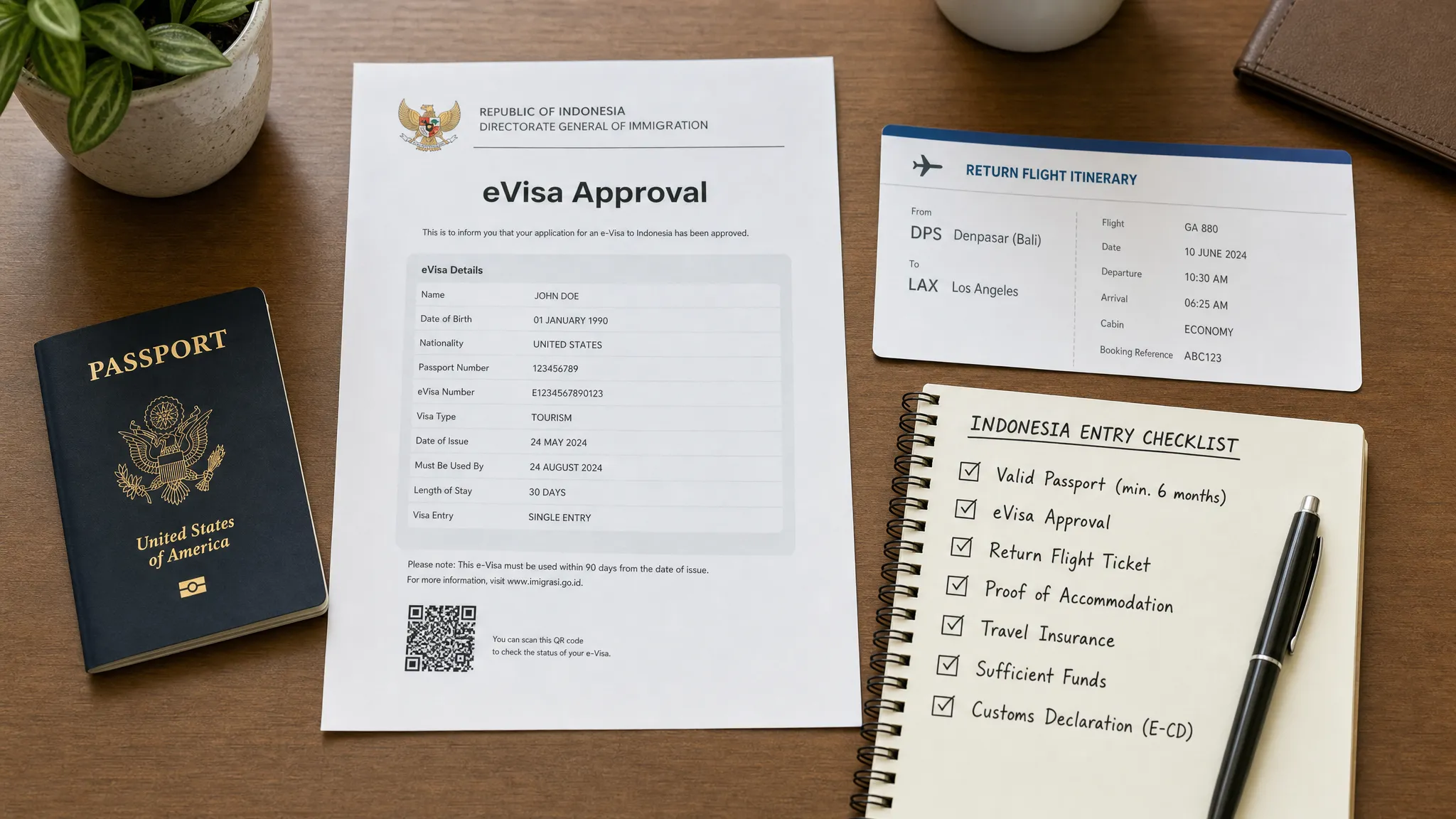
The e-VOA is commonly extendable once, taking the total stay from 30 days to 60 days for eligible travelers. The key is to start before the original stay expires. Waiting until the final day creates unnecessary risk, especially if the traveler has payment issues, internet problems, or needs help from an immigration office.
Longer visitor eVisas may have different extension rules depending on the category. Some can be extended, while others have stricter limits or require specific supporting documents. Travelers should read the conditions attached to their visa approval rather than assuming every Indonesian eVisa can be extended the same way.
If an extension is likely, the traveler should plan for it before arrival. That means choosing the right visa type from the beginning, keeping accommodation and onward travel flexible, and saving copies of all application documents. SimpleVisa also has a dedicated guide on how to extend your stay with an e-Visa that explains the general timing and documentation principles that apply in many countries.
Common mistakes that cause delays or border problems
Many Indonesian eVisa issues are preventable. The most common problems come from choosing the wrong visa category, applying with inconsistent passport details, or assuming that approval is guaranteed because a friend had an easy experience.
| Mistake | Why it matters | How to avoid it |
|---|---|---|
| Applying under the wrong purpose | Immigration can question activities that do not match the visa | Match the visa code to the real trip purpose before payment |
| Waiting until departure day | Payment or portal delays can disrupt boarding | Apply several days before travel, longer for visitor eVisas |
| Using the wrong passport number | Airlines and immigration compare documents | Copy passport details exactly and review before submission |
| Assuming Bali has different visa rules | Bali is part of Indonesia, but may have separate local levies | Handle national visa rules and Bali-specific requirements separately |
| Forgetting extension deadlines | Overstay penalties can be expensive and stressful | Start extension steps well before the current stay expires |
| Ignoring onward travel evidence | Temporary visas usually require proof of departure | Keep return or onward tickets accessible at check-in and arrival |
The biggest practical lesson is that an Indonesian eVisa should be treated like a travel document, not just an online form. The approval, passport, flight details, purpose of stay, and entry point all need to tell the same story.
What travel businesses should know
For airlines, OTAs, tour operators, cruise sellers, and travel agencies, Indonesia is a high-demand destination where visa guidance can directly affect the customer experience. A traveler who discovers a visa issue after booking is more likely to contact support, delay payment, cancel a trip, or blame the booking platform for unclear information.
Good visa guidance can also create a better ancillary revenue opportunity. Travelers often want help when the rules are destination-specific, time-sensitive, and tied to passport nationality. Indonesia is a strong example because the difference between visa exemption, e-VOA, visitor eVisa, extension eligibility, and Bali-specific requirements is not always obvious to customers.
SimpleVisa helps travel businesses simplify this layer of border administration by supporting guided visa applications, API integration, white-label experiences, custom data services, and no-code implementation options. The value is not just selling a visa service. It is helping travelers understand requirements at the right point in the booking flow, before uncertainty turns into friction.
Frequently Asked Questions
Is the Indonesian eVisa the same as Visa on Arrival? Not always. The e-VOA is the electronic version of the Visa on Arrival for eligible travelers, while other Indonesian eVisas are pre-arranged visitor visas with different stay lengths, fees, and conditions.
How much does the Indonesian eVisa cost? The e-VOA is generally IDR 500,000. Longer visitor eVisas usually cost more, and the exact fee depends on the visa category shown on the official application portal.
How early should I apply for an Indonesian eVisa? For an e-VOA, apply at least 72 hours before departure if possible. For longer visitor eVisas, allow one to two weeks or more, especially during peak travel periods or holidays.
Can I extend an Indonesian e-VOA? In many cases, yes. The e-VOA is commonly extendable once for another 30 days, but the extension should be started before the original stay expires and the traveler should confirm the current process on the official portal.
Do I need a separate Indonesian eVisa for Bali? Bali follows Indonesia’s national visa rules. However, Bali may also have local tourism requirements or levies that are separate from the visa, so travelers should check both immigration rules and Bali-specific guidance.
Can I work in Indonesia on a tourist eVisa or e-VOA? A tourism authorization does not permit local employment. Travelers planning to work, provide services, or stay long-term should check the appropriate Indonesian visa category before travel.
What happens if my Indonesian eVisa has a mistake? A mistake in passport number, name, nationality, or date of birth can cause problems at airline check-in or immigration. The traveler may need to reapply, and fees may not be refundable depending on the situation.
Make Indonesian eVisa guidance easier to deliver
Indonesian entry rules are manageable when travelers get the right guidance early. They become stressful when visa type, timing, fees, and entry conditions are discovered after booking.
If your travel business sells Indonesia trips, SimpleVisa can help you surface visa requirements and guide customers through the application process through integrations, white-label flows, data services, or no-code options. That means fewer surprises for travelers and a smoother path from booking to border crossing.