Kenya eVisa Requirements and Application Steps
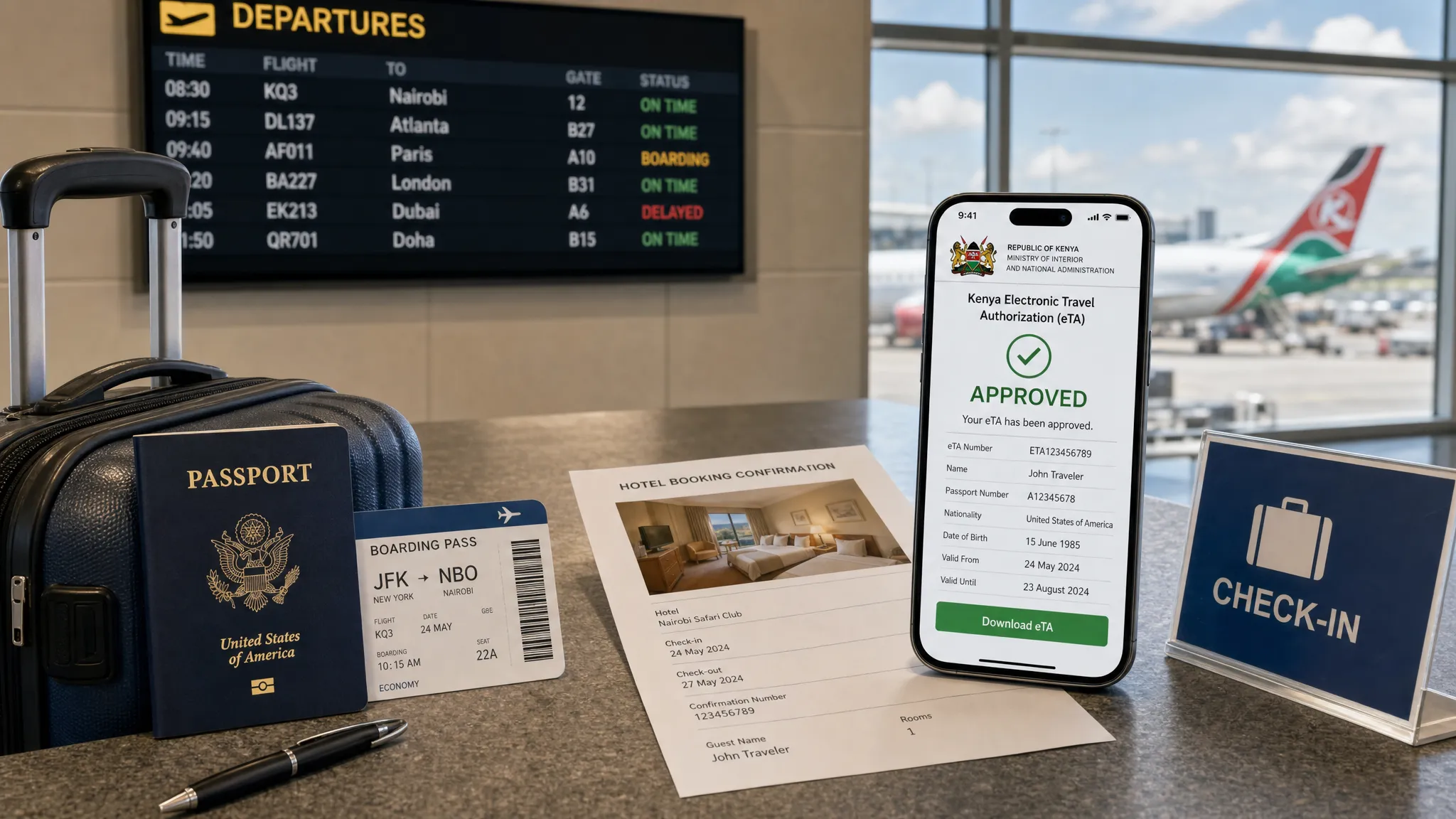
If you are planning a trip to Kenya and searching for Kenya eVisa requirements, the first thing to know is that the terminology has changed. Kenya’s previous eVisa system has largely been replaced by the Electronic Travel Authorization, commonly called the Kenya eTA. Many travelers, airlines, and travel websites still use “Kenya eVisa” as shorthand, but the current online entry process is usually the eTA.
That difference matters. A traveler may not need a traditional visa label, yet they may still need online authorization before boarding a flight or arriving at the border. This guide explains the current requirements, the documents to prepare, and the application steps to follow so you can reduce the risk of delays.
For the most accurate decision on your own trip, always verify details on the official Kenya eTA portal before applying. Requirements can change based on nationality, route, purpose of travel, and government policy.
Kenya eVisa vs. Kenya eTA: what changed?
Kenya moved away from its older eVisa model and introduced an online travel authorization system for many international visitors. In practical terms, travelers still complete a digital application before travel, upload documents, pay online, and receive an approval electronically. That is why many people continue to search for “Kenya eVisa.”
The key distinction is that the eTA is a pre-travel authorization, not a reusable paper visa placed in your passport. It is generally linked to your passport and trip details. Airlines, ferry operators, and border officials may ask for proof of approval before allowing you to continue your journey.
If you want a delay-focused overview of the current process, SimpleVisa also has a dedicated guide to the current eVisaKenya application process. This article focuses specifically on requirements and step-by-step preparation.
Who needs a Kenya eTA?
Most foreign travelers visiting Kenya need to complete the online authorization process before travel unless they fall under an exemption. This can include tourists, short-term business travelers, conference attendees, family visitors, and travelers entering Kenya before continuing elsewhere.
Common exempt categories may include Kenyan citizens, certain residents or permit holders, and citizens of East African Community partner states. Exemptions are policy-dependent, so do not rely on assumptions or old travel advice. Check the official portal using your passport nationality and travel purpose.
Children and infants may also require their own authorization unless an exemption applies. Families should avoid submitting only for adults and assuming minors are covered. Each traveler’s passport details must match the authorization used for travel.
An eTA also does not replace other permission types. If you plan to work, study, reside, volunteer long term, or carry out activities beyond a short visitor stay, you may need a different immigration route.
Kenya eVisa requirements: documents to prepare
The exact requirements can vary by nationality and trip purpose, but most travelers should prepare the following before starting the online form. Having everything ready reduces mistakes, failed uploads, and abandoned applications.
| Requirement | What to prepare | Why it matters |
|---|---|---|
| Valid passport | Passport valid for at least six months from arrival, with an available blank page | Your authorization is linked to the passport number you submit |
| Passport photo or selfie | A clear recent image that meets the portal’s photo rules | Blurry or cropped images can delay review |
| Travel itinerary | Flight details, arrival date, departure date, or onward travel evidence | Kenya may need to confirm your planned route and length of stay |
| Accommodation details | Hotel booking, host address, or invitation details | The application may ask where you will stay in Kenya |
| Purpose of travel documents | Tourism booking, business invitation, conference details, or family invitation if relevant | Supporting documents help confirm your stated reason for travel |
| Payment card | Debit or credit card accepted by the application portal | Fees are paid online during submission |
| Email address | A reliable email you can access while traveling | Approval and status updates are usually sent electronically |
| Health or vaccination documents | Yellow fever certificate if arriving from or transiting through certain risk areas | Health entry requirements may apply separately from the eTA |
Passport validity is one of the most important checks. If your passport is close to expiring, renew it before applying. If you apply with one passport and then travel with another, your authorization may not match your travel document.
Travelers should also make sure names are entered exactly as they appear in the passport. A missing middle name, transposed passport digit, or incorrect date of birth can create problems at check-in or arrival.
If you are new to digital entry permits, it helps to understand the broader logic behind electronic visa requirements, since many countries ask for similar identity, travel, and eligibility information.
Kenya eVisa application steps
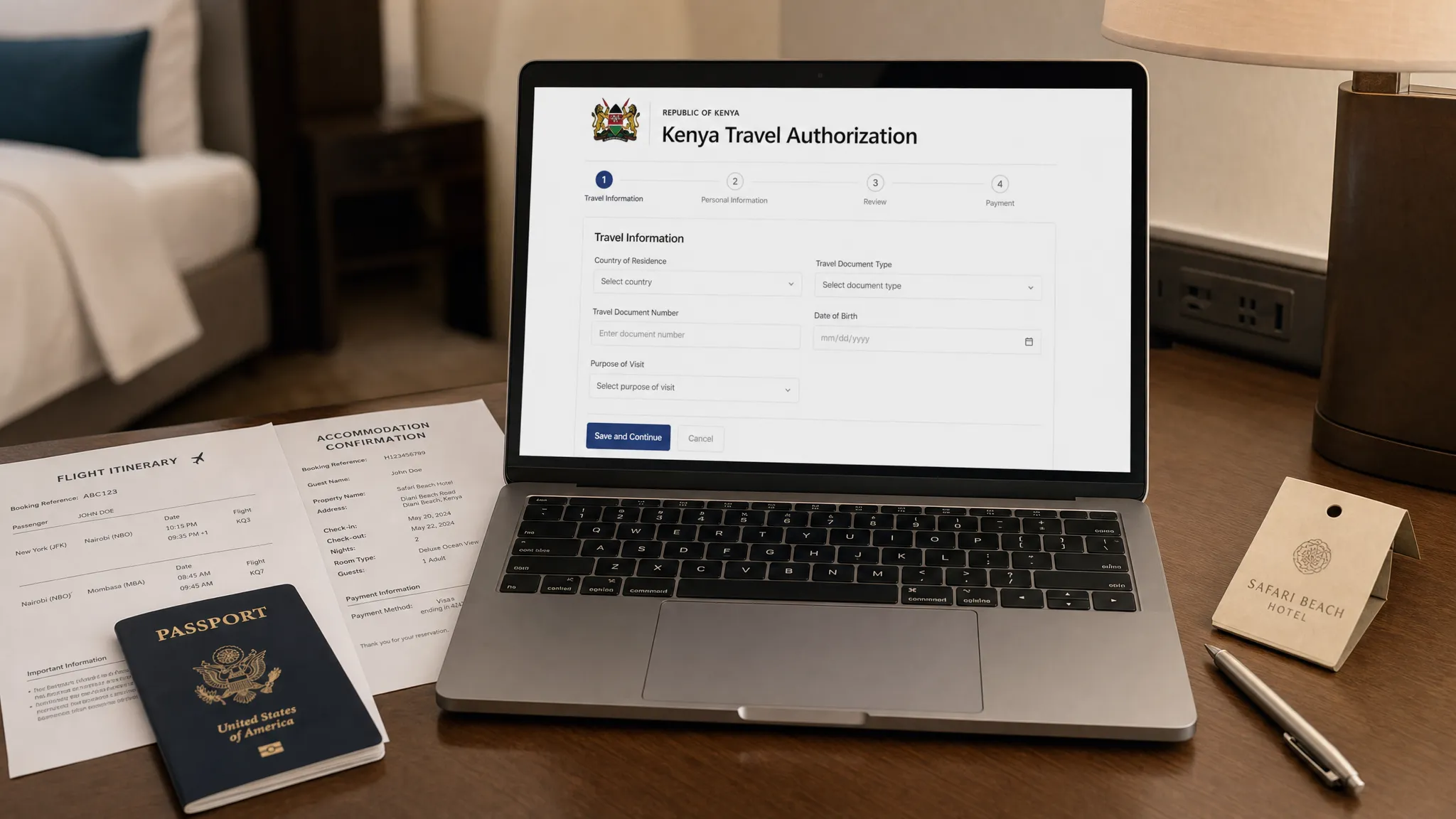
The application is completed online. The process is straightforward, but accuracy matters more than speed.
- Check whether you need authorization: Use the official portal to confirm your nationality, exemption status, and travel purpose before you begin.
- Prepare your documents: Gather your passport, photo, itinerary, accommodation details, payment card, and any purpose-specific documents.
- Enter personal information: Add your full name, date of birth, nationality, passport number, passport issue date, and passport expiry date exactly as shown in your passport.
- Add trip details: Provide your expected arrival date, departure plans, accommodation or host information, and reason for travel.
- Upload supporting files: Attach clear images or PDFs where requested. Make sure documents are readable and not cut off.
- Review before payment: Check every field carefully, especially passport number, names, dates, and email address.
- Pay the fee and submit: Complete online payment through the portal or approved service channel.
- Wait for approval: Monitor your email and any tracking page provided. Do not assume approval until you receive confirmation.
- Save your authorization: Keep a digital copy and, if possible, print a copy for check-in and arrival.
For a broader look at online visa workflows, including payment and tracking tips, see SimpleVisa’s online visa application guide.
How long does approval take?
Processing times can vary. Travelers should apply as soon as travel details are confirmed and avoid waiting until the day before departure. Even when approvals are often fast, applications can be delayed by missing documents, payment issues, name mismatches, manual review, or high travel demand.
A good rule is to apply several days before travel at minimum, and earlier if you are traveling during a peak season, attending a fixed-date event, or applying for a group. If your route involves multiple borders, check the requirements for each destination and transit point, not just Kenya.
Fees can also change. Government fees are paid online, and if you use a third-party assistance provider, the total cost may include a separate service fee. Always review the final amount before submitting payment.
What happens after approval?
Once approved, your authorization is usually sent electronically or made available through the application portal. Save the approval on your phone and keep a printed backup. Travelers can be asked to show proof at airline check-in, during boarding, or on arrival in Kenya.
Approval does not guarantee entry. Like any border process, the final decision belongs to immigration officials at the port of entry. You should travel with the same passport used in the application, proof of onward or return travel, accommodation details, and documents supporting your travel purpose.
If your passport changes, your travel dates change significantly, or you made a mistake in the application, check the official instructions before traveling. In some cases, you may need to submit a new application rather than trying to use an approval with incorrect information.
Common mistakes that cause delays
Many Kenya eVisa or eTA delays are avoidable. The most common problems come from small data errors rather than complex eligibility issues.
| Mistake | Why it causes problems | How to avoid it |
|---|---|---|
| Typing the passport number incorrectly | The approval may not match the traveler’s passport | Compare every digit before submitting |
| Uploading a blurry passport scan | Reviewers may be unable to verify identity | Use a clear, well-lit image with all edges visible |
| Applying too late | Manual review can take longer than expected | Apply once your travel details are stable |
| Using inconsistent travel details | Hotel, flight, and arrival details may not align | Match dates and addresses across documents |
| Choosing the wrong travel purpose | The system may request different supporting documents | Select the purpose that best reflects your trip |
| Ignoring health requirements | Some travelers may need vaccination proof | Check health rules for your origin and transit route |
Group travel needs extra care. Tour operators, families, and business delegations should review every traveler individually. One incorrect passport expiry date can delay a whole group if discovered at check-in.
It is also wise to keep your email accessible during travel. If the portal requests additional information, a fast response can help prevent missed flights or itinerary changes.
Tips for travel businesses handling Kenya trips
For travel agencies, tour operators, airlines, online travel platforms, and corporate travel teams, Kenya entry authorization is more than a traveler checklist. It affects conversion, customer support, trip readiness, and ancillary revenue.
Customers often discover visa or eTA requirements after booking, when anxiety is higher and time is shorter. A better experience is to surface the right requirement at the right point in the booking flow, based on passport nationality, destination, transit points, and travel dates.
SimpleVisa helps travel businesses simplify border-crossing administration through solutions such as API integration, white-label visa application flows, data services, and no-code implementation options. This can help teams guide customers through requirements while adding a relevant ancillary service to the travel journey.
If your business sells Kenya travel, building eTA guidance into the customer experience can reduce confusion and help travelers act before deadlines become urgent.
Frequently Asked Questions
Is the Kenya eVisa still available? Kenya’s older eVisa process has largely been replaced by the Kenya eTA. Many travelers still call it the Kenya eVisa, but you should follow the current instructions on the official eTA portal.
Can I get a Kenya eVisa or eTA on arrival? Travelers should complete the online authorization before travel. Airlines and border officials may ask for proof before boarding or entry, so do not rely on getting it on arrival.
How early should I apply for the Kenya eTA? Apply once your trip details are confirmed and ideally several days before departure. Apply earlier during peak travel periods or if you need business, event, or group travel documents reviewed.
Do children need a Kenya eTA? Children and infants may need their own authorization unless an exemption applies. Check each traveler’s requirement separately using their passport nationality.
What if I make a mistake on my application? Follow the official portal’s instructions. If the mistake affects passport details, identity, or trip information, you may need to correct it or submit a new application before traveling.
Does approval guarantee entry into Kenya? No. Approval allows you to travel for border inspection, but immigration officials make the final entry decision.
Make Kenya entry requirements easier for your customers
Kenya travel should feel exciting, not confusing. If your travel business wants to help customers understand and complete visa or eTA requirements inside the booking journey, SimpleVisa can support the process with automated guidance, integration options, and white-label application experiences.
By making border requirements clear before departure, you can reduce customer friction, improve trip readiness, and create a smoother travel experience from booking to arrival.