MOI eVisa Guide: Who Can Apply and What to Check
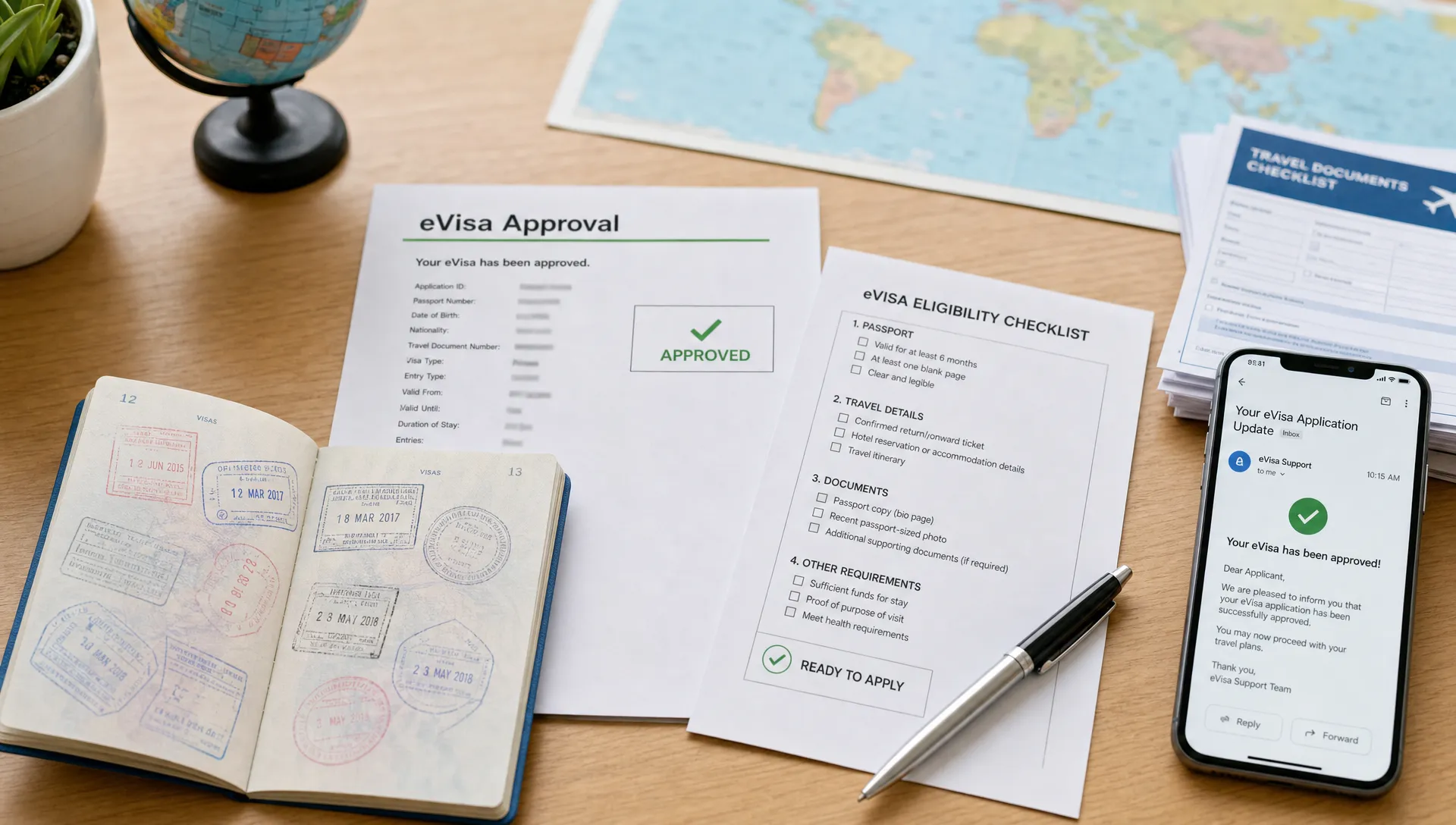
An MOI eVisa can make border formalities much easier, but only if the traveler is using the right visa route, meets the eligibility rules, and submits consistent information. The challenge is that “MOI” simply means Ministry of Interior, so the exact portal, visa categories, and eligibility rules depend on the destination country.
In many travel searches, “MOI eVisa” refers to an electronic visa issued through a government Ministry of Interior portal, often for short-term tourism, business visits, or entry by eligible residents of nearby countries. This guide explains who can typically apply, what to verify before submission, and where travelers and travel businesses should be especially careful.
What an MOI eVisa usually means
An MOI eVisa is a digital travel authorization or visa processed through a Ministry of Interior system. Instead of visiting an embassy or consulate, an eligible traveler completes an online form, uploads documents, pays the applicable fee, and receives an electronic approval if the application is accepted.
That approval is usually linked to the passport used in the application. In many cases, the traveler must carry a printed or digital copy when checking in for a flight and when arriving at the border. The final decision to admit the traveler can still rest with immigration authorities at arrival, even if the eVisa has been approved.
The most important point is simple: an MOI eVisa is not a universal document. Each country sets its own rules. Before applying, confirm the official government portal, the correct visa category, the traveler’s eligibility, and the permitted purpose of travel. If you are still at the “do I even need a visa?” stage, start with a quick review of visa eligibility checks before moving into the application itself.
Who can apply for an MOI eVisa?
Eligibility depends on the destination, but most MOI eVisa systems are designed for a limited set of traveler profiles. The categories below are the ones travelers should check first.
Eligible passport holders visiting for short stays
Many MOI eVisa programs are open to passport holders from specific countries. These lists can change, so travelers should never rely only on screenshots, old blog posts, or travel forum answers. The nationality printed on the passport, not the traveler’s place of residence, is usually the first eligibility filter.
Short-stay applicants are often traveling for tourism, family visits, events, conferences, or limited business meetings. If the trip involves paid work, local employment, long-term study, residency, or family sponsorship, a standard tourist-style eVisa may not be appropriate.
Residents of eligible neighboring countries
Some MOI eVisa portals also include a route for residents of specific regions, such as Gulf Cooperation Council countries in certain Middle East visa systems. In these cases, eligibility may depend on both nationality and residency status.
A resident-based application may require a valid residence permit, a minimum remaining validity period, proof of profession, and sometimes documents for accompanying dependents. The traveler should check whether the residence permit must be valid for the entire stay or for a specific number of months beyond arrival.
Business visitors with limited activities
A short-term business visitor may be able to apply if the intended activities match the visa rules. Typical permitted activities can include attending meetings, participating in a conference, visiting a client, or discussing contracts.
However, business travel does not automatically mean the traveler can work locally. If the visitor will be paid by a local entity, provide services on-site, take up employment, or perform technical work, a different visa type may be required.
Families, minors, and dependents
Children and accompanying dependents may need separate eVisa approvals, even when traveling with a parent or sponsor. Parents should check whether every traveler needs an individual application, whether minors require a guardian’s passport details, and whether birth certificates or consent letters are needed.
Names and passport numbers must be handled carefully for family groups. A small mismatch between a child’s passport and the application can create check-in or arrival problems, even if the rest of the family is approved.
Travelers with education-related plans
If the trip is connected to school visits, relocation planning, university meetings, or family education decisions, travelers should be clear about whether they are visiting temporarily or entering for actual study. For example, families comparing international education options, including bilingual schools such as Colegio Pioneros in Chicureo, should keep school admission paperwork separate from immigration permission. A school appointment or enrollment document does not replace the right visa category.
Who should not rely on a standard MOI eVisa?
A standard MOI eVisa is often not the right route for travelers who plan to work, study long term, settle with family, take up residency, or remain beyond the permitted stay. It may also be unsuitable for travelers with prior deportations, unresolved immigration violations, damaged passports, or criminal history disclosure requirements.
The table below summarizes common applicant profiles and the checks that matter most.
| Applicant profile | MOI eVisa suitability | What to check first |
|---|---|---|
| Tourist from an eligible nationality | Often suitable | Passport nationality, stay length, accommodation, return travel |
| Short-term business visitor | Sometimes suitable | Whether planned activities are allowed under the eVisa category |
| Resident of an eligible neighboring country | Sometimes suitable | Residence permit validity, profession rules, dependent rules |
| Minor traveling with family | Often possible but separate | Individual passport, guardian details, consent documents |
| Long-term student | Usually not suitable | Student visa or residence permit requirements |
| Worker or contractor | Usually not suitable | Work authorization, sponsor rules, local labor requirements |
| Traveler with previous immigration issues | Needs extra caution | Disclosure rules and whether prior violations affect eligibility |
What to check before applying
The safest eVisa applications are usually the most boring ones: the name matches the passport exactly, the travel purpose is clear, the documents are legible, and the selected visa category matches the trip. Before pressing submit, review the following areas carefully.
1. The official MOI portal
Search results can include unofficial agents, outdated pages, and look-alike websites. Some private services are legitimate, but travelers should always know whether they are applying directly through a government portal or through an intermediary.
Check the domain, page security, fee disclosure, refund policy, and support information before entering passport details. If applying through a travel provider, make sure the provider uses current destination rules and asks only for information needed for the visa process.
2. Passport validity and condition
Most eVisa systems require a passport that remains valid beyond the planned arrival date. The exact validity period varies by destination. Six months is a common benchmark, but travelers must verify the rule for the specific MOI eVisa.
The passport should also be undamaged. Torn pages, water damage, peeling laminate, or unreadable machine-readable zones can lead to airline or border issues, even if an online form accepted the document.
3. Name order, spelling, and passport number
Data consistency is one of the biggest eVisa success factors. Enter the traveler’s full name exactly as it appears in the passport. Be careful with middle names, double surnames, hyphens, apostrophes, and transliteration differences.
Passport numbers are another common source of errors. The letter “O” and number “0” can be confused, as can “I” and “1.” A single incorrect character can make an approved eVisa unusable.
4. Purpose of travel
The selected visa category must match the reason for travel. A traveler attending a conference may need to choose business rather than tourism. A traveler visiting relatives may need to confirm whether family visit rules differ from leisure tourism.
If the purpose is mixed, such as sightseeing plus client meetings, choose the category that best reflects the regulated activity and check whether supporting documents are required.
5. Entry type and length of stay
Some MOI eVisas are single-entry, while others may allow multiple entries. Some are valid for a window of time but allow only a shorter stay after arrival. Travelers often confuse visa validity with permitted stay.
For example, an eVisa might be valid for entry during a certain period, but the traveler may still be allowed to remain only for a limited number of days once admitted. Overstaying can lead to fines, future visa refusals, or departure delays.
Documents and information to prepare
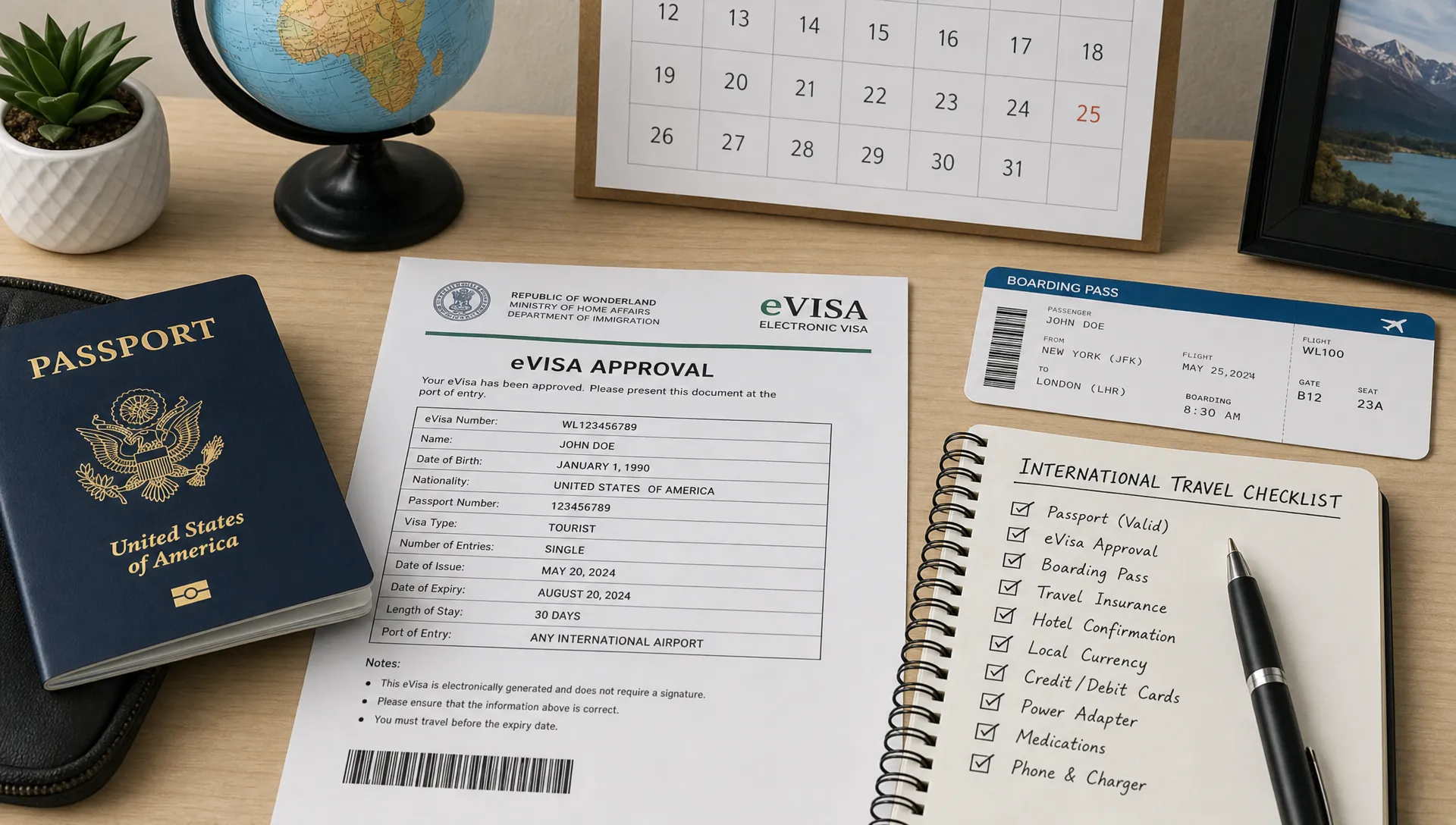
Document requirements vary, but most MOI eVisa applications ask for a core set of details: passport information, personal data, travel dates, accommodation or host information, and a valid email address. Some systems also require a passport scan, digital photo, residence permit, invitation letter, or proof of return travel.
For a deeper preparation list, use SimpleVisa’s guide to essential documents for an electronic visa application before starting the form.
Document quality matters. Uploads should be clear, uncropped, and easy to read. Photos should follow the destination’s size, background, and recency rules. If a scan is blurry, dark, or missing an edge of the passport page, the application may be delayed or rejected.
Here is a practical pre-submission checklist.
| Checkpoint | Why it matters | Common mistake |
|---|---|---|
| Passport validity | Confirms the passport meets entry rules | Applying with a passport that expires too soon |
| Exact name match | Links the eVisa to the traveler correctly | Omitting middle names or reversing surname order |
| Correct nationality | Determines eligibility | Selecting residence country instead of passport country |
| Travel purpose | Matches the correct visa category | Using tourism for work-related travel |
| Clear uploads | Helps officers verify identity quickly | Cropped passport scan or low-resolution photo |
| Valid email address | Receives approval and updates | Typing an old or misspelled email |
| Payment card readiness | Prevents incomplete submission | Payment failure after form completion |
| Arrival documents | Supports airline and border checks | Assuming approval email alone is enough |
Special situations that need extra attention
Dual citizens should decide which passport they will use before applying. The eVisa should match the passport used for booking, airline check-in, and arrival. Switching passports mid-journey can create confusion unless the destination has specific rules for dual nationals.
Travelers with a new passport should not assume an eVisa linked to an old passport remains valid. If the passport number changes after approval, the traveler may need a new application or correction, depending on the destination’s rules.
Residents applying through a regional resident route should check whether their job title, permit type, or sponsor status affects eligibility. If the system requires proof of profession, the uploaded document should match the information entered in the form.
Travelers with previous visa refusals or overstays should answer disclosure questions honestly. Inaccurate answers can cause bigger problems than the original issue, especially if the destination checks prior immigration records.
What happens after submission?
After submitting an MOI eVisa application, the traveler should monitor the email address used in the form and save any reference number. Some approvals arrive quickly, while others require manual review. Processing times can vary based on nationality, document quality, travel season, and the complexity of the case.
Once approved, review the eVisa immediately. Check the name, passport number, nationality, date of birth, visa validity, permitted stay, and entry type. If anything is wrong, contact the appropriate support channel before travel. Do not wait until airline check-in.
Travelers should carry the same passport used in the application, a copy of the eVisa approval, proof of accommodation or host details, return or onward travel information, and any supporting documents relevant to the trip. Airline staff may ask for these before boarding.
How travel businesses can reduce MOI eVisa friction
For airlines, online travel agencies, tour operators, and travel management companies, visa confusion often appears after the booking is complete. Customers search for “MOI eVisa,” discover multiple portals or unclear rules, then contact support for help.
A better approach is to surface visa guidance earlier in the booking flow. When travelers understand whether they may need an eVisa, what documents are required, and which checks to complete, they are less likely to abandon the trip or make costly mistakes.
SimpleVisa helps travel businesses simplify border crossing administration with visa processing automation, API integration for travel sites, white-label visa application options, custom data services, guided customer applications, premium eVisa management, and no-code implementation options. If your business wants to make eVisa guidance easier to deliver at scale, SimpleVisa can help streamline the process while creating opportunities for ancillary revenue.
Frequently Asked Questions
What does MOI eVisa mean? MOI eVisa usually means an electronic visa or travel authorization issued through a Ministry of Interior system. The exact meaning, rules, and portal depend on the destination country.
Can anyone apply for an MOI eVisa? No. Eligibility usually depends on nationality, passport validity, travel purpose, length of stay, and sometimes residence status in another country. Always check the official requirements for the destination before applying.
Is an MOI eVisa the same as visa-free entry? No. Visa-free entry means eligible travelers can enter without applying for a visa in advance. An MOI eVisa requires an online application and approval before travel.
Can I work with an MOI eVisa? Usually not, unless the visa category specifically allows the activity. A short-term eVisa may allow meetings or tourism, but paid work, local employment, or long-term assignments typically require a different authorization.
What should I do if my eVisa has a mistake? Review the approval as soon as it arrives. If the name, passport number, date of birth, nationality, or validity details are wrong, contact the official support channel or your visa service provider before traveling.
Do children need their own MOI eVisa? In many cases, yes. Each traveler, including a child, may need a separate approval linked to their own passport. Check the destination’s rules for minors, guardian details, and consent documents.
Make the MOI eVisa process easier to manage
An MOI eVisa can be straightforward when the traveler is eligible, the purpose of travel is clear, and the application details match the passport exactly. Most problems come from rushing the form, choosing the wrong category, relying on outdated eligibility information, or misunderstanding the difference between visa validity and permitted stay.
For travelers, the best approach is to verify eligibility first, prepare clean documents, and check every field before submission. For travel businesses, the opportunity is to make those checks part of a smoother customer journey, before visa uncertainty becomes a support issue or a reason not to book.