Partner Visa Application: Documents, Timelines, Risks
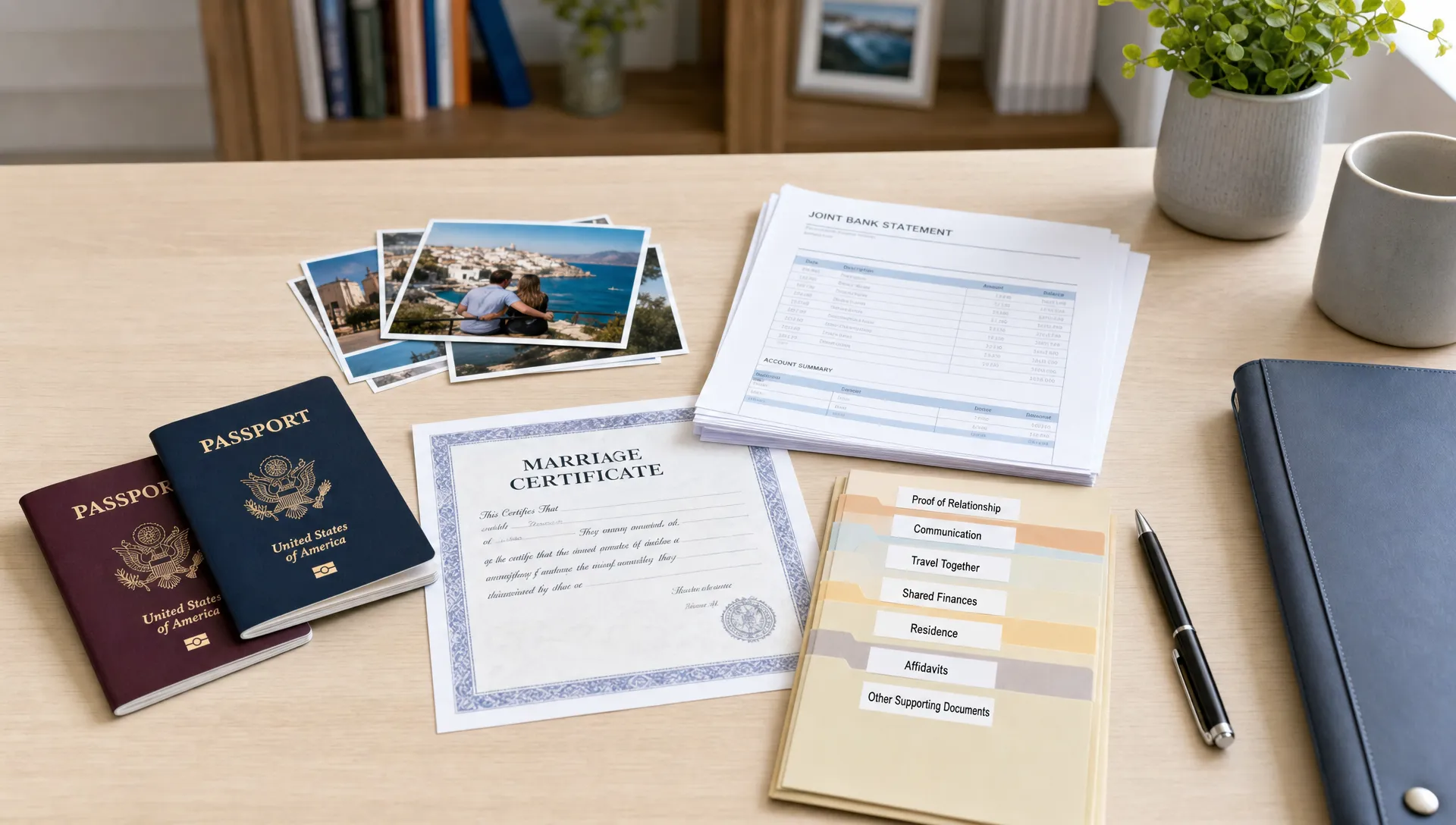
Partner visas are among the most evidence-heavy immigration applications a traveler can submit. Unlike a short-stay tourist visa, a partner visa application asks the government to assess both legal eligibility and the genuineness of a relationship. That means documents, timing, and consistency matter as much as the form itself.
The exact rules depend on the destination country. A spouse visa, civil partner visa, de facto partner visa, fiancé visa, or proposed marriage visa can all fall under the broader “partner visa” umbrella, but each route has different eligibility tests and evidence standards.
This guide explains the documents most applicants should expect, how timelines usually unfold, and the risks that can delay or weaken a case. It is general information, not legal advice. For complex histories, previous refusals, overstays, criminal records, or urgent travel plans, speak with a qualified immigration professional.
What a partner visa application usually covers
A partner visa is typically designed for someone who wants to live, join, accompany, or eventually settle with a spouse or long-term partner in another country. Some routes are temporary at first and lead to permanent residence later. Others are part of a family-based immigration pathway from the start.
Common partner visa categories include:
- Spouse or married partner visas for legally married couples.
- Civil partner or registered partner visas where the destination recognizes civil partnerships.
- Unmarried or de facto partner visas for couples who can prove a durable relationship without marriage.
- Fiancé, fiancée, or proposed marriage visas for couples who intend to marry after arrival.
- Dependent family additions where children are included in the same or linked application.
Country terminology varies. For example, the United States handles spouses through family-based immigration routes described by USCIS family-based immigration guidance. The United Kingdom has a family visa route for partners and spouses. Australia publishes dedicated information for partner visas, while Canada has a route for sponsoring a spouse, partner, or child.
Those official pages show why a generic checklist is useful, but never enough on its own. A strong partner visa application must match the exact route, country, applicant location, and sponsor status.
First eligibility checks before gathering documents
Before collecting evidence, confirm that the applicant and sponsor meet the route’s basic requirements. This prevents wasted time and helps identify issues that need legal advice before submission.
The most important eligibility questions usually include whether the relationship type qualifies, whether the sponsor has the right immigration status or citizenship, whether the couple meets financial or accommodation rules, and whether the applicant must apply from inside or outside the country.
| Eligibility area | What to confirm | Why it matters |
|---|---|---|
| Relationship type | Married, civil partner, de facto, unmarried partner, fiancé, or proposed spouse | The evidence standard and allowed visa route may differ |
| Sponsor status | Citizen, permanent resident, settled person, eligible visa holder, or other qualifying status | Many partner routes depend on the sponsor’s legal position |
| Application location | Whether the applicant can apply from abroad or inside the destination country | Applying from the wrong place can lead to rejection or invalid filing |
| Financial rules | Income, savings, employment, support undertakings, or sponsor obligations | Financial shortfalls are a common cause of refusal or requests for evidence |
| Relationship history | Length of relationship, cohabitation, communication, visits, shared life, and future plans | Officers assess whether the relationship is genuine and continuing |
| Prior immigration history | Refusals, overstays, removals, misrepresentation, or visa condition breaches | Past issues can create delays, extra scrutiny, or inadmissibility concerns |
If any of these areas are uncertain, pause before filing. A partner visa is not just a formality. Many authorities review relationship evidence closely because the visa can create a pathway to residence, work rights, public services, or future citizenship.
Partner visa documents: what most applicants need
Partner visa documentation can feel overwhelming because it combines personal identity records, relationship evidence, sponsor documents, finances, travel history, and sometimes health or police checks. The goal is not to submit the largest file possible. The goal is to submit the right evidence in a clear, consistent, and verifiable way.
For a broader preparation framework, SimpleVisa’s visa application checklist for documents, photos, and timing is a useful starting point. Partner visa applicants will usually need everything in a standard visa file, plus deeper proof of the relationship and sponsor eligibility.
Identity and civil status documents
Most partner visa applications start with core identity documents. These typically include a valid passport for the applicant, proof of identity for the sponsor, birth certificates, name change records, and civil status documents such as marriage certificates, divorce decrees, annulment records, or death certificates for previous spouses.
The risk here is often small but costly. A name mismatch, expired passport, missing divorce order, or untranslated certificate can stop the application from progressing. If names differ across documents, prepare a clear explanation and supporting records.
Relationship evidence
Relationship evidence is the heart of most partner visa applications. Authorities generally want to see that the relationship is genuine, continuing, and not entered into primarily for immigration purposes.
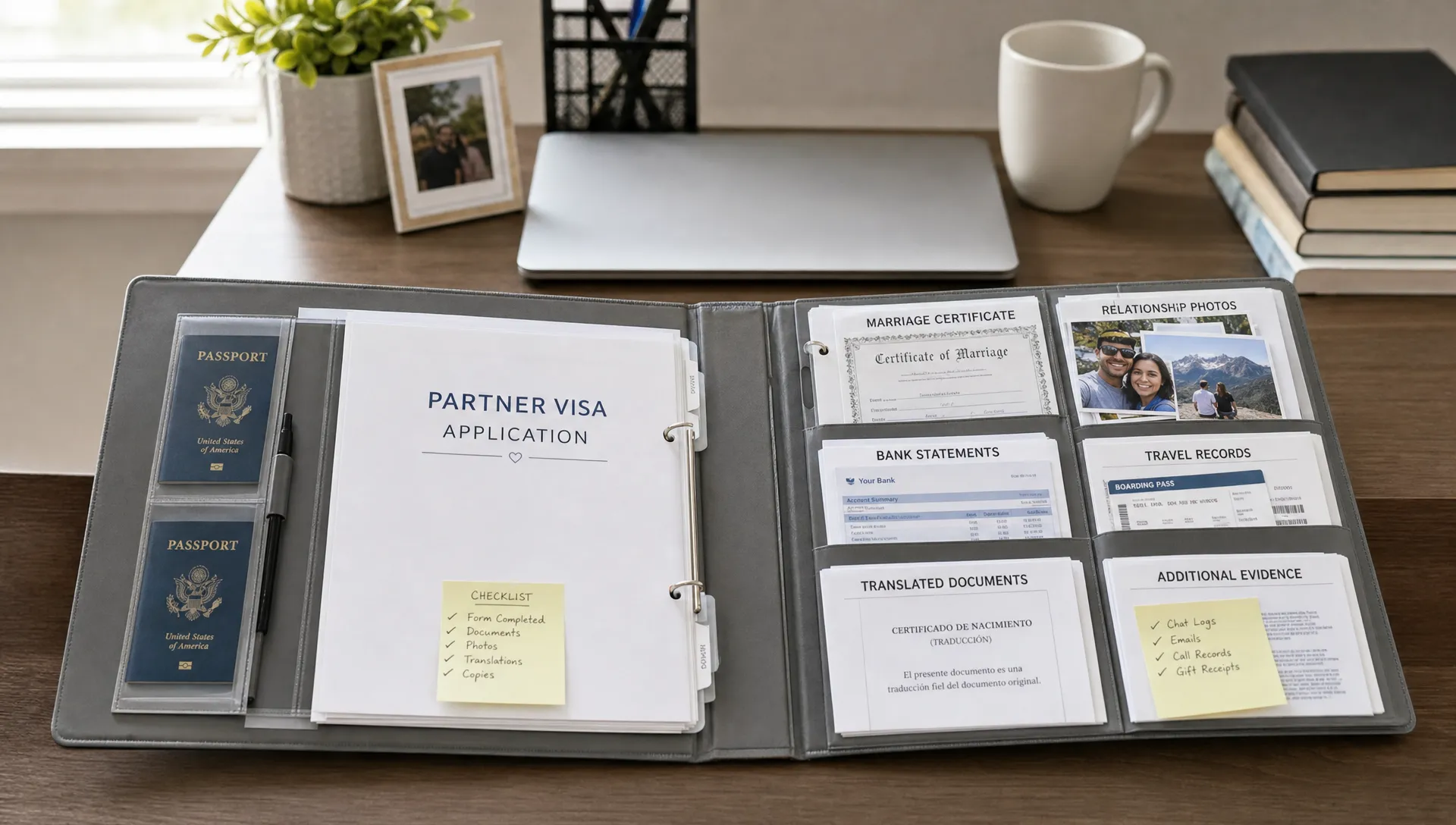
Useful evidence may include joint leases or property records, shared bills, joint bank statements, insurance beneficiaries, travel records, photos over time, messages, call logs, wedding records, family event invitations, children’s birth certificates, and statements from friends or relatives.
For unmarried or de facto partners, cohabitation evidence can be especially important. If the couple has lived apart, the application should explain why and provide alternative proof of commitment, such as frequent visits, financial support, shared planning, or cultural and family recognition of the relationship.
Sponsor financial and accommodation evidence
Many partner visa routes require proof that the sponsor can support the applicant or meet a financial threshold. Depending on the country, acceptable evidence might include payslips, tax returns, bank statements, employer letters, business accounts, savings records, property documents, tenancy agreements, or accommodation inspection reports.
Financial evidence must usually cover a specific period and meet strict formatting rules. Submitting a bank statement that is too old, missing pages, or inconsistent with declared income can trigger a request for more evidence.
Character, health, and biometric requirements
Partner visa applicants may need police certificates, medical examinations, vaccination records, biometrics, or security checks. These requirements are country-specific and can change based on where the applicant has lived, the length of intended stay, and the applicant’s age.
Do not complete medical checks or police certificates too early unless the official instructions say to do so. Some documents expire, and submitting them at the wrong stage can create extra cost or delay.
Translations, scans, and digital formatting
By 2026, many partner visa systems include online forms, document uploads, and biometric appointment scheduling. Digital convenience does not remove the need for precision. Scans must be legible, complete, correctly oriented, and uploaded in the requested format.
Translations should usually be certified or completed by an accepted translator. If a document contains stamps, handwritten notes, or seals in another language, those elements may also need translation.
| Document category | Common examples | Main purpose |
|---|---|---|
| Identity | Passports, birth certificates, national IDs, name change records | Proves who the applicant and sponsor are |
| Civil status | Marriage certificate, divorce decree, civil partnership record | Confirms legal relationship status |
| Relationship proof | Joint lease, photos, travel records, messages, shared bills | Shows a genuine and continuing relationship |
| Sponsor evidence | Citizenship, residence card, visa status, tax records, employment letter | Shows the sponsor is eligible and can support the application |
| Financial proof | Payslips, bank statements, tax returns, savings evidence | Helps satisfy income or support requirements |
| Character and health | Police certificates, medical exams, biometrics | Supports admissibility and security checks |
| Explanatory evidence | Cover letter, relationship timeline, statements from family or friends | Clarifies gaps, unusual facts, or non-standard circumstances |
Timelines: how long a partner visa application can take
Partner visa timelines vary widely by country, category, caseload, completeness, security checks, and whether the case is straightforward. Some fiancé or temporary partner routes may move faster than permanent residence pathways, but there is no universal timeline.
A realistic timeline has several stages. Preparation can take weeks if documents need to be ordered, translated, or corrected. Online submission may be quick once the file is ready, but biometric appointments, medical checks, police certificates, and sponsor evidence can add time. After submission, the longest phase is usually government review.
| Stage | Typical planning consideration | Common delay risk |
|---|---|---|
| Route selection | Confirm the correct partner category before paying fees | Choosing the wrong route or applying from the wrong location |
| Document preparation | Allow time for certificates, translations, photos, scans, and sponsor records | Missing civil status records or expired documents |
| Form completion | Ensure dates, addresses, travel history, and relationship details match evidence | Inconsistent answers across forms and documents |
| Biometrics and checks | Book appointments and follow country-specific instructions | Appointment backlogs or late police certificates |
| Government review | Monitor official portals and respond quickly to requests | Additional evidence requests, security checks, or interview scheduling |
| Decision and travel | Check entry deadlines, visa validity, and conditions | Booking travel before the visa is issued or misunderstanding conditions |
The safest approach is to check current processing estimates on the official government website immediately before applying. Processing times published by immigration authorities can change during the year and may not reflect complex cases.
Risks that can delay or derail a partner visa application
Partner visa risks usually fall into two groups: technical mistakes and substantive concerns. Technical mistakes include missing documents, poor scans, incorrect fees, or outdated forms. Substantive concerns are more serious and relate to whether the couple qualifies, whether the relationship is genuine, or whether the applicant is admissible.
Weak or unbalanced relationship evidence
A few photos and a marriage certificate may not be enough, especially where the couple has limited time together, a short relationship history, long periods apart, or little shared financial life. Officers often look for evidence across time, not just from one event.
Strong files usually show a relationship timeline: how the couple met, how the relationship developed, when families became involved, where the couple lived, how they stayed in contact, and what plans they have after approval.
Inconsistent dates and explanations
Inconsistency is one of the easiest ways to create doubt. If the form says the couple met in March, the statement says April, and travel records show a first visit in June, the officer may question the accuracy of the file.
Not every inconsistency is fatal, but unexplained contradictions can lead to delays, interviews, or refusal. Review all dates, addresses, employment periods, prior marriages, travel history, and immigration history before submission.
Financial evidence that does not meet the rules
Financial requirements can be strict. Problems often arise when applicants submit incomplete bank statements, rely on income that is not accepted, mix savings and employment evidence incorrectly, or fail to document self-employment properly.
If the sponsor recently changed jobs, owns a business, has variable income, or relies on savings, check the official rules carefully. This is an area where professional advice may be worthwhile.
Prior refusals, overstays, or immigration breaches
Previous visa refusals do not automatically mean a partner visa will fail, but they must usually be declared. Concealing a refusal, overstay, removal, or breach of visa conditions can be more damaging than the issue itself.
If there is any negative immigration history, gather the decision letters, explain what happened, and consider legal advice before applying. Misrepresentation findings can have long-term consequences.
Document fraud or unverifiable evidence
Never alter documents, create fake relationship records, or submit statements that are not true. Immigration authorities can verify records with employers, banks, schools, civil registries, and other agencies. Fraud concerns can lead to refusal, bans, or future inadmissibility.
If genuine documents are hard to obtain because of conflict, lost records, or administrative barriers, explain the issue and provide alternative evidence where allowed.
Travel plans that conflict with the visa process
Partner visa applicants sometimes book flights too early or assume they can freely travel while an application is pending. Travel rules depend on the country and route. In some systems, leaving the country during processing can affect an in-country application. In others, applicants must wait abroad until a decision is made.
Before booking travel, confirm whether travel affects the application, whether the applicant needs a separate visitor visa, and whether entering as a visitor while intending to settle creates problems.
How to reduce risk before submission
The best way to reduce partner visa risk is to build the application around the official eligibility test, not around a generic folder of documents. Start with the government checklist, then add evidence that answers the likely questions an officer will have about your relationship, finances, and immigration history.
A practical pre-submission review should include the following:
- Check that the selected route matches the relationship type and application location.
- Compare every name, date, address, and passport number across forms and evidence.
- Make sure financial documents cover the exact period required by the rules.
- Translate all non-English or non-official-language documents according to the destination’s requirements.
- Include a concise relationship timeline when the history is complex or evidence is spread across many years.
- Keep complete copies of every form, upload, payment receipt, appointment notice, and government message.
It also helps to apply the same discipline used for shorter travel visas: verify official requirements, avoid assumptions, and keep documents aligned with the stated purpose of travel. SimpleVisa’s guide to visa guidelines for smoother approval covers several practical habits that also apply to partner cases, including document consistency and careful preparation.
If the case is complex, do not rely only on internet examples from other applicants. A couple with the same destination country may have a completely different result because of sponsor status, income type, nationality, prior immigration history, or where they apply from.
What travel businesses should understand about partner visa needs
For travel agencies, relocation platforms, airlines, online travel brands, and corporate mobility teams, partner visa questions often appear at the edge of a booking or relocation journey. A customer may be planning a wedding abroad, joining a spouse, relocating with a partner, or arranging long-stay travel connected to family life.
These cases require careful expectation setting. A partner visa application is usually not the same as an eVisa, ETA, or short-stay visitor authorization. It may involve immigration status, settlement rights, interviews, medical checks, and legal eligibility rules that go beyond ordinary travel documentation.
Travel businesses should avoid giving legal advice unless qualified to do so. However, they can still create a better customer experience by identifying visa needs early, directing travelers to official information, helping them understand document preparation steps, and making border requirement checks part of the booking flow.
If your business is evaluating external support, SimpleVisa’s guide to picking the right travel visa services partner explains what to look for in coverage, integrations, customer experience, and operational reliability.
Frequently Asked Questions
What is the most important document in a partner visa application? There is rarely one single most important document. A marriage certificate or partnership record may prove legal status, but authorities usually also want evidence that the relationship is genuine and continuing. Relationship history, shared responsibilities, financial documents, and sponsor eligibility all matter.
How long does a partner visa application take? Timelines vary by country, visa category, caseload, biometrics, security checks, and file complexity. Applicants should check current official processing estimates for the exact route and avoid booking non-refundable travel until the visa is issued.
Can I apply for a partner visa without living together? Sometimes, depending on the country and route. Married couples, fiancé applicants, or partners separated by work, study, immigration rules, or family obligations may still qualify in some systems, but they usually need strong alternative evidence and a clear explanation.
Do partner visa applicants usually need an interview? Some applicants are interviewed, while others are decided on documents alone. Interviews are more likely when the authority has questions about the relationship, inconsistent evidence, prior immigration history, or eligibility.
What happens if a partner visa is refused? Options depend on the country and refusal reason. The applicant may be able to appeal, request review, reapply, or address missing evidence in a new application. Read the refusal notice carefully and consider professional advice before deciding what to do next.
Should travel companies handle partner visa applications directly? It depends on the company’s role, jurisdiction, and expertise. Partner visas can involve legal advice, so many travel businesses focus on helping customers identify requirements, prepare general documentation, or connect with appropriate providers rather than advising on eligibility.
Make visa administration simpler for your customers
Partner visa applications are detailed, emotional, and often time-sensitive. The strongest files are built early, checked carefully, and aligned with the exact rules of the destination country.
For travel businesses that want to simplify border crossing administration, SimpleVisa offers visa processing automation, API integration for travel sites, white-label visa application options, guided customer applications, premium eVisa management, and custom data services. Whether your customers need basic travel authorization support or clearer guidance inside a booking flow, the right visa infrastructure can reduce friction and create a better travel experience.