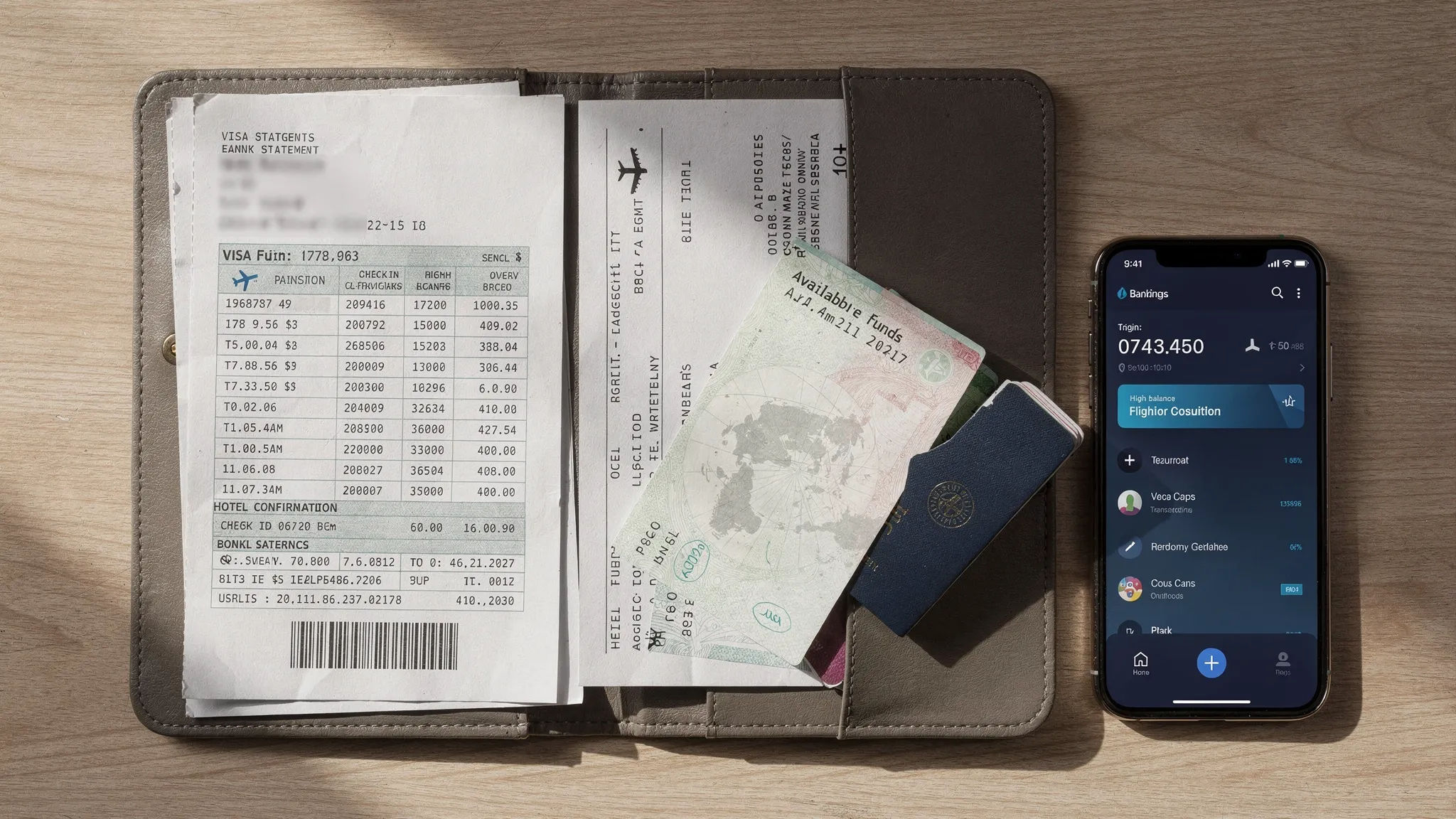
Proof of Funds for Visas: How Much Is Enough?
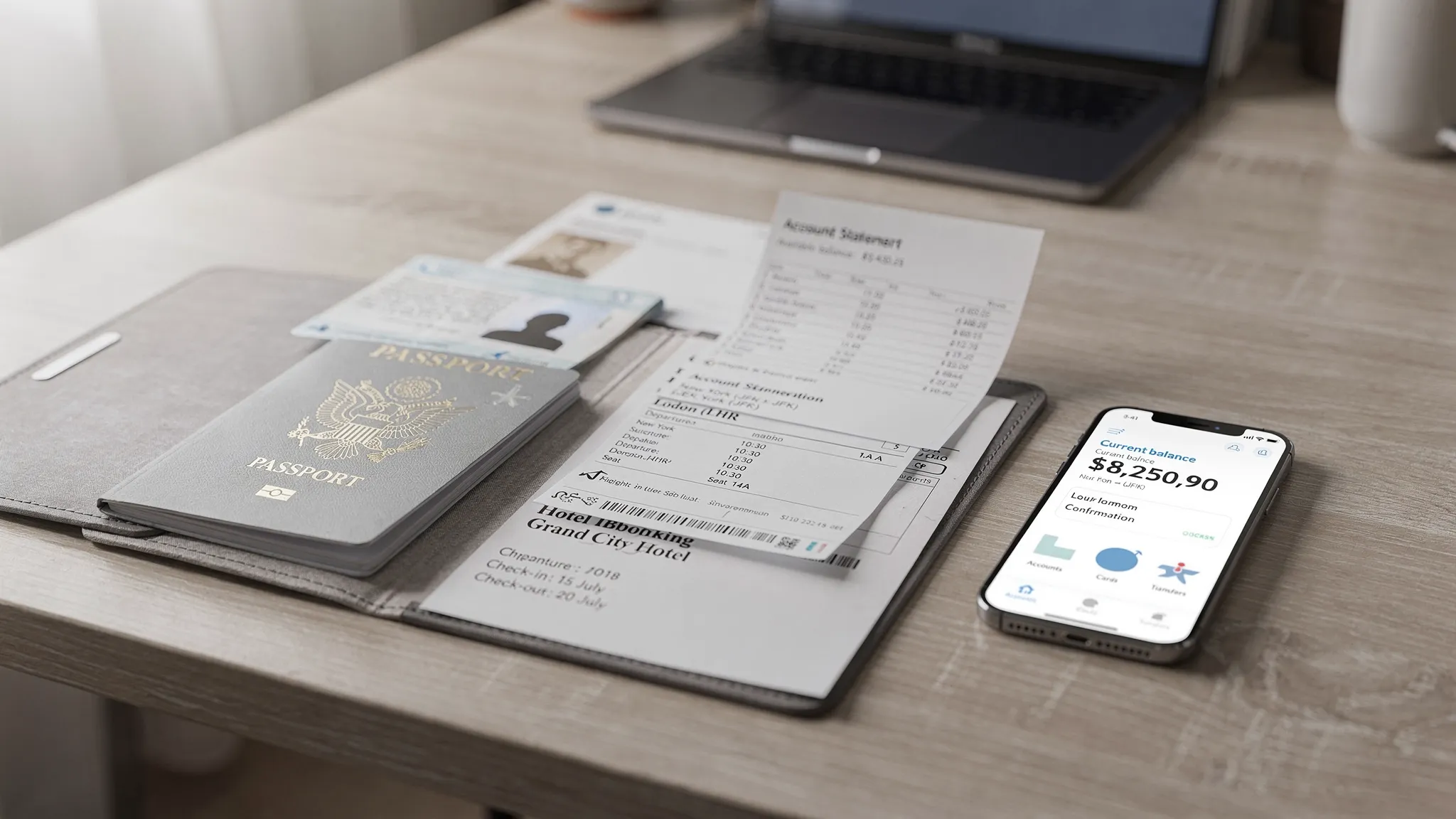
Proof of funds is one of the most misunderstood visa requirements because it rarely comes with a single, universal number. Some countries publish clear minimums, others use “reference amounts,” and many assess your finances holistically based on your travel plan, profile, and risk factors.
The goal of this guide is to make the requirement predictable: what “enough” usually means, how to calculate a credible amount for your trip, which documents are accepted, and what triggers refusals.
What “proof of funds” actually proves (and why it matters)
Immigration authorities ask for proof of funds to confirm three things:
- You can pay for your trip (accommodation, food, local transport, activities).
- You will not need unauthorized work or public assistance during your stay.
- Your travel story is coherent (the funds match your itinerary, length of stay, and travel style).
Even when you have an approved visa or eVisa, you can still be asked for evidence at check-in or at the border. Airlines may also deny boarding if they think you cannot meet entry conditions, because carriers can be fined for transporting inadmissible passengers.
How much is enough? Use a practical calculation (not guesswork)
A reliable way to estimate “enough” is to treat it like a trip budget that an officer can understand quickly.
The simple formula visa officers expect to see
Total available funds (daily cost number of days) + prepaid items + buffer
Where:
- Daily cost is your realistic spend per day (lodging + food + local transport + incidentals).
- Prepaid items are things you already paid for (hotels, tour package, conference registration).
- Buffer is extra money that covers surprises (medical costs, rebooking, exchange-rate shifts).
A conservative buffer is often 15% to 30% of your estimated trip cost, higher if your itinerary is complex or you have a thin financial history.
Example: a 10-day tourist trip
Say you are visiting a major city for 10 days.
- Lodging: $120/night 10 = $1,200
- Food and daily expenses: $50/day 10 = $500
- Local transport and extras: $20/day 10 = $200
- Buffer (20%): $380
Estimated “credible funds” target: $2,280
If your lodging is prepaid and clearly documented, your “required available funds” may be lower, but many applicants still choose to show more than the bare minimum to reduce discretion.
Example: visiting family or staying with a host
When accommodation is free, applicants often underestimate the rest of the budget. You should still account for:
- Daily expenses (food, local transport)
- Return travel or onward ticket
- Buffer
In host scenarios, you typically strengthen your case by pairing your own funds with a host’s supporting documents (invitation letter, proof of address, and sometimes the host’s financial proof, depending on the country).
Why there is no universal number (and where “official minimums” come from)
Different destinations use different approaches:
- Published minimum funds: some countries set explicit amounts per day, per month, or per stay.
- Reference amounts: common in regions where rules vary by member state.
- Discretionary assessment: officers evaluate your circumstances, itinerary, and financial history.
For the Schengen Area, for example, the requirement is framed as having “sufficient means of subsistence,” but the reference amounts differ by country. The European Commission maintains an overview of these national reference amounts on its “means of subsistence” page, which is useful for planning and setting expectations.
The most accepted proof of funds documents (and what each one signals)
Officers generally prefer verifiable, liquid, and stable money. A large net worth is less persuasive if you cannot access it during the trip.
| Document type | Usually accepted for | What it signals | Common pitfalls |
|---|---|---|---|
| Bank statements (personal checking/savings) | Tourist, family visit, business | Liquidity and financial stability | Low balances, overdrafts, unexplained cash deposits |
| Pay stubs and employment letter | Tourist, business, some student cases | Ongoing income and ties to home country | Inconsistent dates, vague job details |
| Tax returns | Longer-stay visas, self-employed | Longer-term earning history | Not matching bank inflows |
| Proof of prepaid accommodation/itinerary | Most short-stay visas | Reduced trip cost and credible plan | Non-refundable bookings that look “forced” |
| Credit card statements/limits | Supplemental evidence | Access to emergency funds | Rarely sufficient on their own |
| Sponsor letter + sponsor bank statements | Students, family visits | Someone else will support you | Missing relationship proof or unclear commitments |
| Investment accounts | Supplemental evidence | Additional reserves | Harder to verify quickly, not always liquid |
Tip: Many authorities expect bank statements covering the last 3 to 6 months. The exact window depends on the destination and visa type.
What makes proof of funds look credible (to a human reviewer)
Proof of funds is not only about the ending balance. Reviewers also look for patterns that align with your story.
Consistency beats a high balance
A steady income, regular deposits, and normal spending patterns often read as lower risk than a sudden influx of money right before applying.
Red flags that commonly trigger scrutiny
- A last-minute large deposit with no explanation
- Borrowed funds that appear temporarily and then disappear
- Multiple accounts with unclear ownership
- Statements that do not match your declared job or income
- Currency conversions or crypto withdrawals that are hard to trace
If you do have a one-time deposit (sale of a car, bonus, family support), the fix is simple: document the source (sale contract, employer bonus letter, gift letter) so the reviewer does not have to guess.
Different visa types, different expectations
The headline question “How much is enough?” changes depending on why you are traveling.
| Visa category | How funds are often assessed | What you should prioritize |
|---|---|---|
| Tourist / short-stay | Daily subsistence plus lodging | Bank statements + clear itinerary + hotel bookings |
| Business visit | Similar to tourist, sometimes company-paid | Employer letter, who pays what, business invite if applicable |
| Student / long-stay study | Tuition coverage and monthly living costs | Official financial evidence, sponsor structure if used |
| Digital nomad / remote work permits | Income level and sustainability over months | Proof of stable income, contracts, bank history |
| Transit | Minimal, but still possible at discretion | Onward ticket and ability to cover short stop |
Because requirements vary widely and are updated frequently, it is smart to confirm the latest rules on the destination’s official immigration site before you finalize your file.
How to match funds to your itinerary (so it “makes sense”)
Applicants get rejected not only for insufficient funds, but for incoherent budgeting.
Use a budget that reflects your travel style
- Backpacking with hostels and buses: lower daily estimate, but still add buffer.
- Mid-range leisure trip: higher lodging and activity costs.
- Premium itinerary: your statements should support it (or show prepaid bookings).
If someone else is paying, make it explicit
If your partner, employer, or family member is funding the trip, your documentation should clearly answer:
- Who pays for flights?
- Who pays for accommodation?
- Who pays daily expenses?
- What is the relationship between sponsor and traveler?
For couples planning a destination ceremony or elopement, this comes up often because travel plans include multiple prepaid vendors and a tighter timeline. If you are building a Spain or Mediterranean elopement itinerary, resources like Stories by DJ can help you plan a realistic schedule and booking trail that aligns with what consulates expect to see.
How to present your proof of funds (so it is easy to approve)
Visa teams review large volumes of applications, so clarity matters.
Best practices that reduce back-and-forth
- Submit clean PDF statements (not cropped screenshots), showing your name, account number (partially masked is fine if allowed), and transactions.
- Keep dates aligned across documents (employment letter date, trip dates, statement period).
- Add a one-page cover note if your finances need explanation (for example, self-employed income, recent job change, sponsor support). Keep it factual.
Avoid “optimizing” with risky tactics
Trying to inflate balances temporarily can backfire. Some authorities explicitly look for irregular patterns, and inconsistencies can trigger requests for additional evidence or refusal.
Proof of funds at the border: what to carry
Even when your application is approved, carry a lightweight set of evidence in case you are questioned during travel:
- Recent bank statement (digital copy plus a backup)
- Proof of accommodation (booking confirmation or host address)
- Return or onward ticket
- Travel insurance details if your destination expects it
You do not need to travel with large amounts of cash. In fact, carrying excessive cash can create separate customs reporting obligations.
Common reasons “sufficient funds” still leads to refusal
If you have money but still get a negative decision, it is usually because the reviewer did not believe the funds were available, stable, or relevant.
Typical failure points include:
- Funds are in someone else’s account without a sponsor letter.
- Funds are locked in assets that are not readily accessible.
- Your stated trip cost looks unrealistic for the destination and duration.
- Your financial history does not support the declared employment or income.
In many cases, the fix is not “show more money,” it is “show clearer money.”
For travel brands: why proof of funds is a conversion issue (not just a visa issue)
For travel agencies, airlines, and OTAs, proof-of-funds friction often shows up as:
- Abandoned application forms
- Support tickets asking “how much do I need?”
- Last-minute document scrambling that jeopardizes departures
A guided visa application flow that explains proof-of-funds expectations, highlights what documents are acceptable, and flags obvious gaps early can reduce drop-offs and protect traveler satisfaction.
If you support customers through eVisa and online visa processing, SimpleVisa’s approach is designed to fit into booking flows (via API), operate through a white-label application experience, or power custom data services, so travelers see requirements before they become a trip-stopping surprise. A good next step is to pair this article with SimpleVisa’s own resource, Checklist: Everything You Need Before Submitting an Online Visa Application, to ensure financial proof is assembled alongside the rest of the required file.