Russian eVisa Rules in 2026: Who Can Apply and How
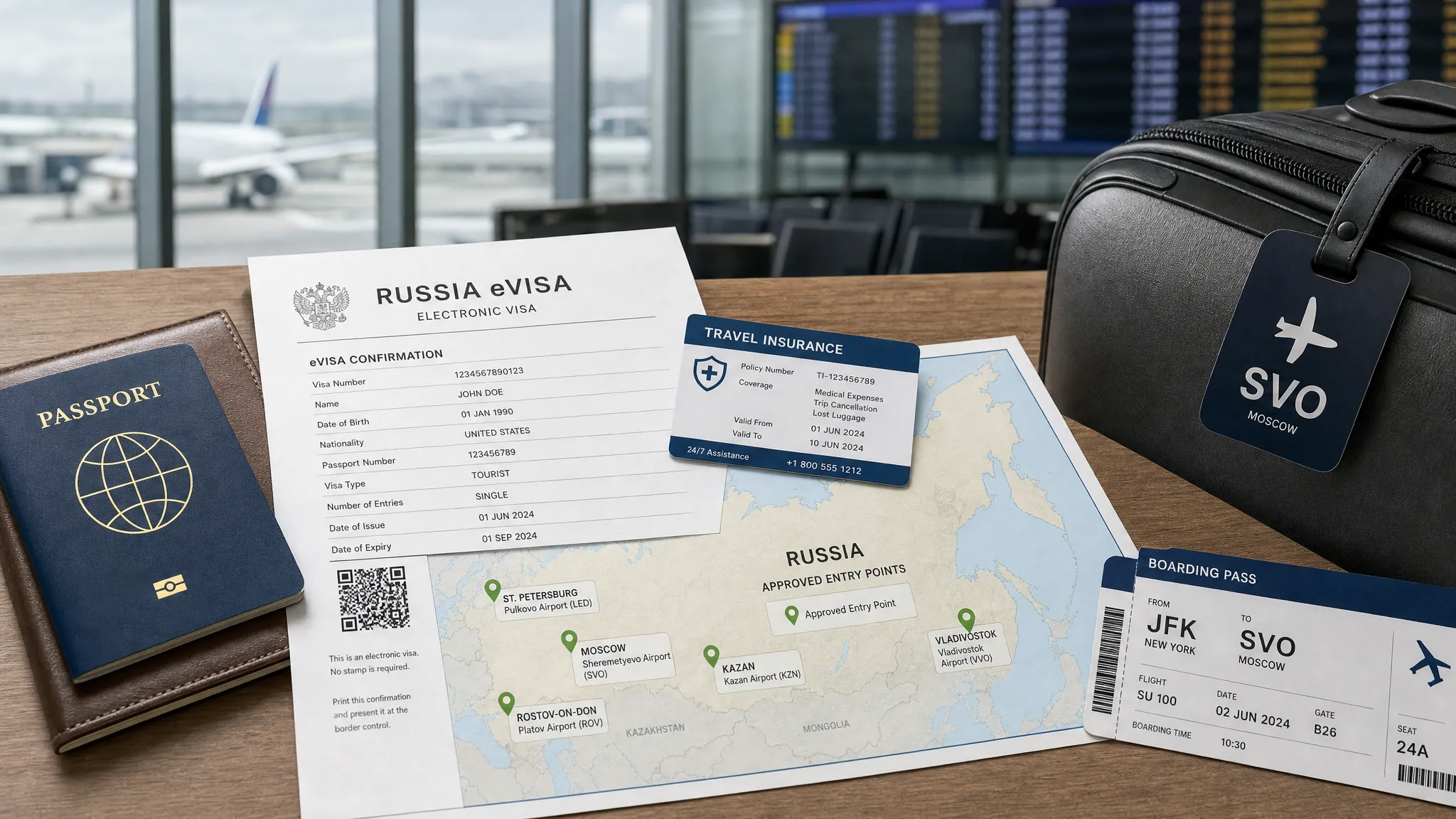
Russia’s unified electronic visa can make short trips easier, but it is not a casual travel authorization. In 2026, the Russian eVisa still comes with strict eligibility rules, a short permitted stay, defined entry purposes, and approved border checkpoints. A small mismatch in passport details or travel dates can lead to delays or refusal at the border.
For travelers, the key question is simple: does your passport qualify, and will your trip fit the eVisa rules? For travel businesses, the bigger challenge is making that answer visible early enough in the booking journey so customers do not discover a visa issue after they have paid for flights or accommodation.
This guide breaks down who can apply for a Russian eVisa in 2026, how the application works, and the practical checks that matter before departure.
Russian eVisa rules in 2026 at a glance
Russia uses a unified eVisa system for eligible foreign nationals visiting for short stays. It replaced the older, more limited regional eVisa model, so travelers are no longer applying only for a specific Russian region under the previous scheme.
The official source of truth is Russia’s electronic visa portal, because eligibility lists, border checkpoints, and fees can change. Still, the core 2026 rules are clear enough for pre-trip planning.
| Rule | What it means in 2026 |
|---|---|
| Visa type | Unified Russian eVisa |
| Entries | Single entry only |
| Validity period | Usually valid for 60 days from the date of issue |
| Maximum stay | Up to 16 days in Russia |
| Application window | No earlier than 40 days and no later than 4 calendar days before entry |
| Processing time | Usually up to 4 calendar days |
| Invitation required | No invitation, hotel voucher, or tourist confirmation is normally required for the eVisa |
| Main purposes | Tourism, business, private visits, and participation in cultural, scientific, economic, sporting, or similar events |
| Border rule | Entry and exit must be through approved checkpoints |
| Passport rule | Passport must meet validity and identity requirements, and details must match the application exactly |
A Russian eVisa is convenient, but it is not flexible in the way some travelers expect. It does not allow long-term stays, work, residence, study programs, or multiple entries. If a trip does not fit the short-stay eVisa framework, the traveler needs a different visa route.
Who can apply for a Russian eVisa?
A traveler can apply only if their passport nationality appears on Russia’s official eVisa eligibility list at the time of application. Residence in an eligible country is not enough. For example, a person living in Germany but holding a non-eligible passport cannot use Germany’s eligibility to apply.
In practical terms, a traveler may be eligible if all of the following are true:
- Their passport nationality is listed in the official Russian eVisa system.
- Their trip purpose fits one of the permitted short-stay categories.
- They will enter and exit Russia through approved checkpoints.
- Their passport is valid for the required period and has accurate, machine-readable details.
- They can provide the required application information, photo, and travel details.
- They carry medical insurance valid in Russia for the full stay, unless an exemption applies.
The eligibility list includes many European and Asian passport holders, as well as selected countries in the Middle East, Africa, the Caribbean, and Oceania. In 2026, travelers should always verify their nationality through the official application portal before making final plans.
| Region | Examples of passports commonly associated with Russian eVisa eligibility |
|---|---|
| Europe | Austria, Belgium, France, Germany, Italy, Netherlands, Spain, Sweden, Switzerland, Serbia, Turkey, and several others |
| Asia and Middle East | China, India, Indonesia, Iran, Japan, Malaysia, Philippines, Singapore, Vietnam, Bahrain, Kuwait, Oman, and Saudi Arabia |
| Americas and Caribbean | Mexico, Barbados, Saint Lucia, Trinidad and Tobago |
| Africa | Kenya, Eswatini, Zimbabwe |
| Oceania | Papua New Guinea, Tonga |
This table is a planning aid, not a substitute for the official nationality selector. Russia has expanded the list before, including additions in recent years, and future changes can affect both eligibility and customer advice.
Who cannot use the Russian eVisa?
Travelers cannot use the Russian eVisa if their passport nationality is not on the official list. In 2026, many major outbound markets, including the United States, the United Kingdom, Canada, and Australia, have generally not been part of the unified eVisa eligibility list. Those travelers usually need to consider a standard visa or another applicable entry route.
A traveler also cannot use the eVisa if the purpose of travel falls outside the permitted categories. Work assignments, paid employment, long-term study, immigration, and residence are not covered by the short-stay eVisa.
Dual nationals need to be especially careful. If a traveler applies with an eligible passport, they should travel with that same passport and ensure all booking, application, and border documents align. Mismatched nationality or passport data can create problems at check-in or immigration.
What trip purposes are allowed?
The Russian eVisa is designed for short, defined visits. It is commonly used for tourism, business meetings, private visits, and participation in approved types of events. That can include cultural, scientific, economic, socio-political, and sports-related events, depending on the specific trip.
The important point is that the eVisa does not convert into a work permit. Attending meetings, conferences, or negotiations is different from taking up employment in Russia. If a traveler will perform paid work, provide services on-site, or remain for an extended assignment, they should not assume the eVisa is sufficient.
For travel sellers, this distinction matters. A leisure traveler booking a city break to Moscow or Saint Petersburg may be a straightforward eVisa candidate if their nationality qualifies. A consultant, performer, journalist, student, or technician may need a more careful assessment.
How long can you stay in Russia with an eVisa?
The maximum stay is up to 16 days. The eVisa itself is usually valid for 60 days from the date it is issued, which means the traveler must enter Russia during that validity window.
Do not confuse validity with permitted stay. A 60-day validity period does not mean the traveler can remain in Russia for 60 days. The stay limit is much shorter.
Travelers should also count days conservatively. Arrival and departure dates can create confusion, especially for overnight flights and late-night border crossings. If an itinerary is close to the 16-day limit, build in a buffer or consider whether another visa type is safer.
When should you apply?
The standard application window is no earlier than 40 days and no later than 4 calendar days before the intended date of entry. Because processing is typically up to 4 calendar days, applying at the last possible moment leaves very little room for correction if a photo is rejected, a passport detail is wrong, or payment fails.
A practical approach is to apply once the itinerary is stable, but not so early that the 60-day validity window becomes a problem. For many travelers, that means applying two to four weeks before departure.
If you manage visa guidance across multiple destinations, our broader guide to electronic visa requirements explains the common documents and checks travelers should expect across eVisa systems.
How to apply for a Russian eVisa in 2026
The application is completed online through the official Russian eVisa portal or authorized digital process. Travelers should avoid unofficial lookalike websites that may charge extra fees, provide outdated information, or mishandle personal data.
Confirm eligibility before selling or booking the trip
Start with the passport nationality, not the traveler’s residence, departure airport, or language. If the nationality is not eligible, the Russian eVisa is not the right path.
Travel businesses should ideally surface this check before checkout. A customer who learns about ineligibility after payment is more likely to cancel, request support, or blame the booking experience.
Check the passport
The passport details entered in the application must match the physical passport exactly. This includes name order, passport number, date of birth, nationality, sex, and expiry date.
The passport should also meet Russia’s validity rules. Travelers should check the official requirement at the time of application, but a common rule is that the passport must be valid for at least six months from the application date. If the passport is close to expiry, renewal should come before the eVisa application.
Prepare the digital photo and application information
Applicants usually need a recent digital photo that meets the portal’s format requirements. The application may also ask for trip details, accommodation information, employment details, contact information, and prior travel or identity information.
Accuracy matters more than speed. A typo can result in refusal, and an approved eVisa with incorrect passport data may still be unusable at the border.
Submit within the correct time window
The application should be submitted within the official window, usually from 40 days to 4 calendar days before entry. The eVisa is issued electronically, so travelers should save the confirmation and carry a printed or offline copy in case airline staff or border officers request it.
Carry supporting documents when traveling
Even with an approved eVisa, travelers should carry the passport used in the application, the eVisa confirmation, travel medical insurance valid in Russia, accommodation details, return or onward travel details, and any documents supporting the stated purpose of travel.
An eVisa approval does not guarantee entry. Border authorities make the final decision, as they do in most countries.
Approved entry points: why your route matters
A Russian eVisa can only be used through designated border checkpoints. These may include specific airports, seaports, railway checkpoints, road checkpoints, and pedestrian crossings. The list is not the same as “any Russian border.”
Major international airports are often included, but travelers should not assume that every route qualifies. This is especially important for complex itineraries involving regional airports, land borders, cruises, or rail travel.
Before ticketing, confirm that the first point of entry into Russia is an approved eVisa checkpoint. If the traveler tries to enter through a non-approved checkpoint, the eVisa may not be accepted even if it is otherwise valid.
Once admitted, the unified eVisa is generally not limited to one city in the way older regional eVisas were. However, Russia has restricted zones and special-access areas where additional permission may be required. Travelers with unusual itineraries should verify local access rules separately.
Fees, refunds, and payment considerations
Russian eVisa fees can change, and the amount shown on the official portal at the time of application is the amount that matters. The total may include a consular fee and a payment or service charge. Some applicants, such as young children, may be exempt from certain official fees, depending on the current rules.
Fees are typically not refunded if the application is refused or if the traveler makes a mistake. That makes pre-submission checks valuable, especially for families and group bookings.
Travelers should also consider practical payment issues. International card acceptance, sanctions, banking restrictions, and local payment networks can affect travel in Russia. Visa approval solves the border permission question, but it does not automatically solve flight availability, insurance validity, accommodation payment, or access to funds inside the country.
Common Russian eVisa mistakes to avoid
Most eVisa problems are preventable. The challenge is that travelers often discover them too late, at airport check-in or at the border.
| Mistake | Why it matters | How to avoid it |
|---|---|---|
| Applying with the wrong nationality assumption | Residence does not determine eligibility | Check passport nationality in the official portal |
| Waiting until 4 days before travel | There is little time to fix errors | Apply once plans are stable and within the 40-day window |
| Entering passport details incorrectly | The eVisa may not match the traveler’s document | Compare every field against the passport before submission |
| Booking a non-approved entry route | The eVisa may not be accepted at that checkpoint | Verify the border checkpoint before ticketing |
| Treating 60-day validity as 60 days of stay | The stay limit is much shorter | Plan around the 16-day maximum stay |
| Assuming business means work | The eVisa does not authorize employment | Use the correct visa type for work or long assignments |
| Forgetting insurance | Medical insurance is commonly required for the stay | Carry proof of valid coverage for Russia |
For travel businesses, these are not just traveler mistakes. They are customer experience risks. The earlier your booking flow checks nationality, purpose, timing, and entry route, the fewer support tickets and avoidable disruptions you create.
What travel businesses should do in 2026
Russian eVisa rules are a good example of why border documentation should not be treated as an afterthought. The traveler may see “eVisa” and expect a quick form, but the booking platform still needs to account for nationality, date windows, trip purpose, and route constraints.
For online travel agencies, airlines, tour operators, and corporate travel platforms, the most useful approach is to integrate visa guidance into the customer journey. That might mean showing visa prompts when a traveler selects Russia, checking the passport nationality before checkout, or offering a guided eVisa application after booking.
This is where SimpleVisa fits naturally. SimpleVisa helps travel businesses simplify border-crossing administration through guided visa applications, API integration, white-label options, custom data services, and premium eVisa management. Instead of sending customers away to research complex requirements on their own, travel brands can offer clearer guidance and create ancillary revenue from visa support.
If your platform sells international travel, you can explore how SimpleVisa streamlines visa applications for travel businesses and helps customers move from eligibility check to completed application with less friction.
Frequently Asked Questions
Is the Russian eVisa available in 2026? Yes, Russia’s unified eVisa system is available for eligible passport holders, subject to official rules, approved purposes, and designated entry checkpoints.
How long does a Russian eVisa take to process? Processing is usually up to 4 calendar days. Travelers should not wait until the last possible day, because errors, payment issues, or photo problems can delay the application.
Can U.S., UK, Canadian, or Australian citizens apply for a Russian eVisa? These nationalities have generally not been included in Russia’s unified eVisa eligibility list. Travelers should check the official portal, but they usually need another visa route if their nationality is not listed.
How long can I stay in Russia with an eVisa? The maximum stay is up to 16 days. The eVisa may be valid for 60 days from issue, but that validity period is not the same as the permitted length of stay.
Do children need their own Russian eVisa? Yes. Each traveler, including minors, needs their own visa or valid entry authorization. Parents or guardians should complete a separate application for each child where required.
Can I extend a Russian eVisa? Extensions are generally not available for ordinary travel reasons. Limited exceptions may apply in serious circumstances, such as emergency medical treatment or force majeure, but travelers should plan to leave within the permitted stay.
Do I need travel insurance for a Russian eVisa? Travelers are generally expected to have medical insurance valid in Russia for the full period of stay, unless an official exemption applies. Carry proof of coverage when traveling.
Make Russian eVisa guidance easier for your customers
The Russian eVisa can simplify short trips, but only when eligibility, timing, documents, and entry routes are checked correctly. For travel businesses, getting those checks into the booking flow can reduce confusion and improve the customer experience.
SimpleVisa helps travel brands guide customers through visa requirements, automate application support, and add visa services through API, white-label, no-code, or data-service options. If Russia is part of your destination mix in 2026, now is the time to make eVisa guidance clearer before travelers reach the border.