Schengen Visa vs ETIAS: Which One Do You Need?
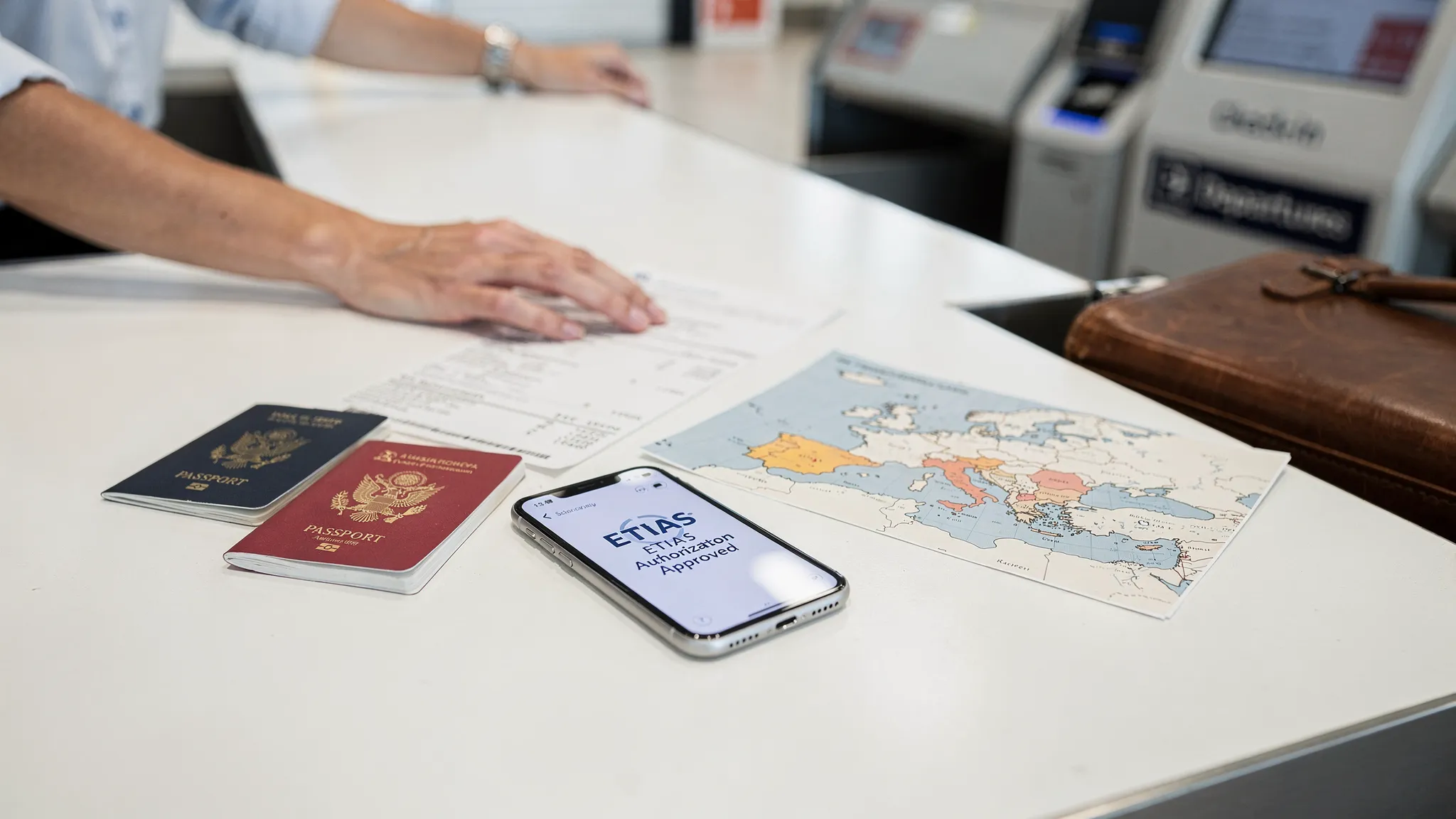
Most travelers heading to Europe in 2026 will fall into one of two buckets:
- You need a Schengen Visa because your nationality is not visa-exempt.
- You are visa-exempt but will need ETIAS (European Travel Information and Authorisation System) once it goes live.
The confusion is understandable, both relate to entry into the Schengen Area, both are checked before you travel, and both can affect whether you are allowed to board. This guide breaks down Schengen Visa vs ETIAS in plain language, with practical scenarios so you can choose the right path quickly.
First, clarify the terms (Schengen, Schengen Visa, ETIAS)
Schengen Area refers to a group of European countries that share a common external border policy and generally allow border-free movement between them. It is not the same thing as the EU, and not every EU country is in Schengen.
Schengen Visa usually means a short-stay visa (often called a Type C visa) that lets eligible travelers visit the Schengen Area for up to 90 days in any 180-day period, for purposes like tourism, family visits, business trips, or short training.
ETIAS is not a visa. It is a pre-travel authorization designed for travelers who currently enter Schengen visa-free. Conceptually, it is similar to the U.S. ESTA or the UK ETA.
If you remember one thing: ETIAS is for visa-exempt travelers, a Schengen Visa is for travelers who are not visa-exempt.
Schengen Visa vs ETIAS (side-by-side comparison)
| Category | Schengen Visa | ETIAS |
|---|---|---|
| What it is | A visa (entry permission issued by a Schengen country) | A travel authorization (pre-screening) |
| Who it’s for | Travelers who are not visa-exempt for Schengen | Travelers who are visa-exempt for Schengen |
| Typical use cases | Tourism, business trips, visiting family, short courses | Tourism, business trips, transit (short stays) |
| Where it applies | Schengen Area countries | Schengen Area countries |
| Stay limit (common rule) | Up to 90 days in any 180-day period (short-stay visa) | Up to 90 days in any 180-day period |
| How it’s applied for | More documentation, often consular process (varies) | Online authorization process (designed to be fast) |
| Does it guarantee entry? | No, final decision is at the border | No, final decision is at the border |
For official background, see the European Union’s pages on ETIAS and Schengen visas.
Which one do you need? A fast way to decide
The fastest decision method is:
-
Check your passport nationality (not your residence).
-
Ask: Do citizens of my country currently need a visa to visit the Schengen Area for a short trip?
- If yes, you likely need a Schengen Visa.
- If no, you likely need ETIAS once it becomes mandatory.
- Then confirm the details based on:
- Your trip purpose (tourism, business, study, work)
- Your length of stay
- Your planned destinations (Schengen vs non-Schengen countries)
If you want a structured refresher on entry document types (visa-free vs eTA vs eVisa vs consular visa), see SimpleVisa’s Travel Visa Basics.
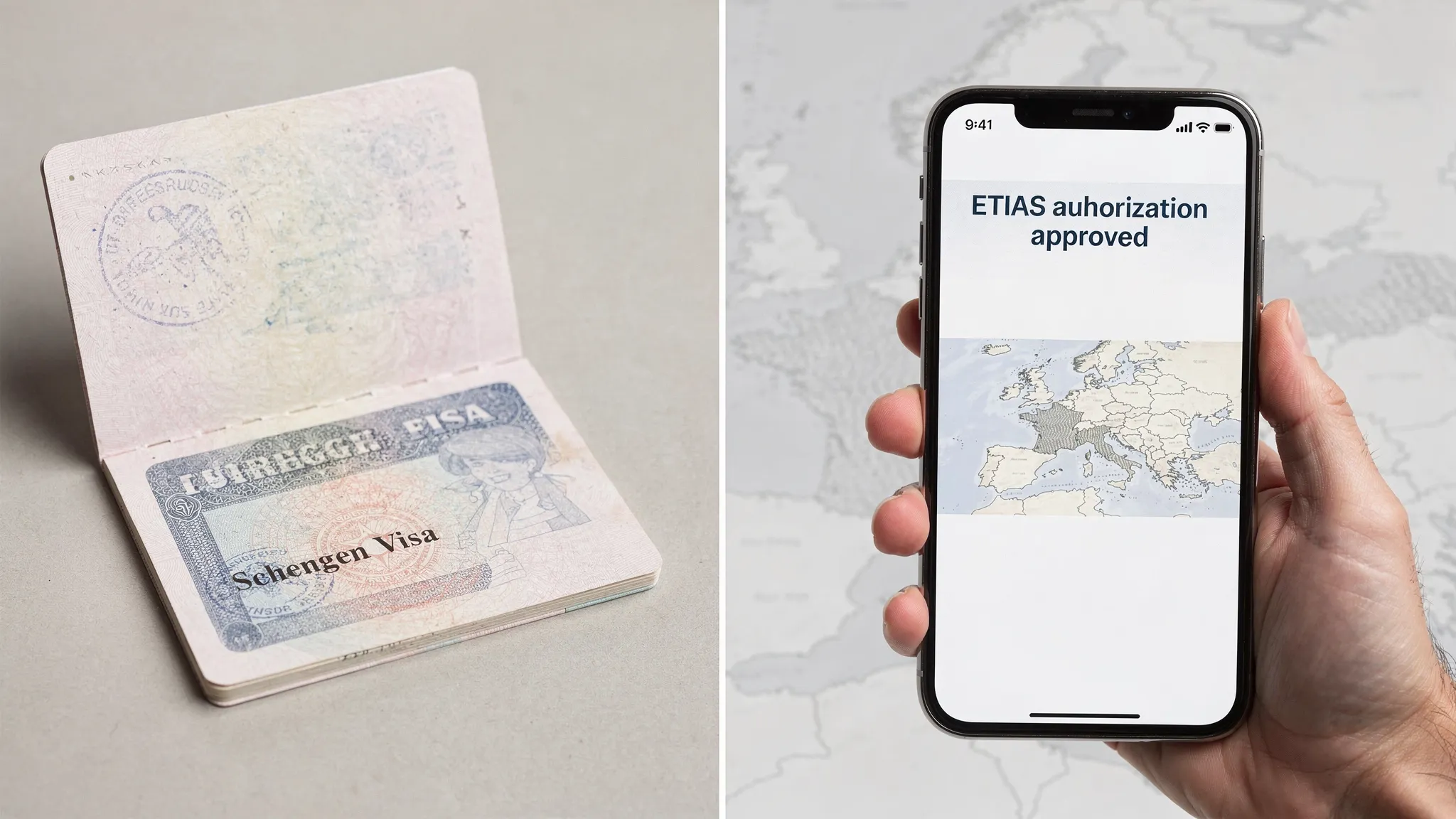
Who needs ETIAS (and who doesn’t)
You typically fall into the ETIAS bucket if:
- You are a citizen of a visa-exempt country for short stays in Schengen (for example, U.S., Canada, UK, Australia, Japan and many others).
- Your trip is a short stay (commonly up to 90 days in a 180-day window).
- Your purpose is consistent with visa-free travel (tourism, business visits, family visits, transit).
You typically do not need ETIAS if:
- You are an EU/EEA/Swiss citizen.
- You hold a residence permit or long-stay visa issued by a Schengen country.
- You need a Schengen Visa (because you are not visa-exempt), in which case ETIAS is not the right document.
Important: ETIAS is being implemented alongside Europe’s broader “smart borders” modernization (including the Entry/Exit System, EES). Launch timing has shifted in the past, so rely on official updates close to departure.
Who needs a Schengen Visa
You generally need a Schengen Visa for short stays if you are a citizen of a country that is not on the Schengen visa-free list.
Common situations where a Schengen Visa is required:
- You are traveling for tourism or business, but your nationality requires a visa.
- You are visiting family and your nationality requires a visa.
- You plan to transit through certain Schengen airports and your nationality triggers an airport transit visa requirement (rules are very nationality and airport specific).
Also note a frequent mix-up:
- Schengen short-stay visa (often Type C) is for short visits.
- National long-stay visas (often Type D) are for longer stays like work, study, or family reunification in a specific country.
If your trip is longer than 90 days, or for work or study, you should expect a national visa or permit process, not ETIAS.
Common traveler scenarios (to avoid the wrong application)
Scenario A: U.S. citizen going to France and Italy for 2 weeks
- Today: visa-free entry rules apply for short stays.
- When ETIAS becomes mandatory: you will likely need ETIAS, not a Schengen Visa.
Scenario B: Indian citizen going to Spain for 10 days
- India is not visa-exempt for Schengen short stays.
- You likely need a Schengen Visa.
Scenario C: You are visa-exempt but staying 4 months in Germany
- Duration exceeds the short-stay rule.
- You likely need a national long-stay visa or residence permit, not ETIAS.
Scenario D: Dual citizen with two passports
- The document you need depends on which passport you will use to enter.
- If one passport is visa-exempt and the other is not, choosing the wrong passport at booking or check-in can create a last-minute documentation problem.
(If this is you, SimpleVisa also covers tactical considerations in its guide for dual citizens navigating eVisa rules.)
ETIAS vs Schengen Visa: what changes at the airport
Even though ETIAS is “just an authorization,” it still matters operationally.
Airlines and travel sellers typically check:
- Passport validity and identity match
- Visa or travel authorization presence (visa, ETIAS, other)
- Stay-limit compliance (especially the 90/180 calculation)
If you show up at check-in without the correct document, the real-world outcome is often denied boarding, not a friendly reminder.
This is one reason travel brands are investing in border crossing solutions and travel document automation, to surface requirements early and reduce disruptions. SimpleVisa has a helpful overview here: What Is Travel Document Automation?
Timing and planning tips (especially for 2026 travel)
Because ETIAS rollouts have been rescheduled before, the best planning approach is:
- Confirm your document category at booking (visa-free vs visa-required).
- Apply early for anything that requires a visa appointment, document collection, or longer processing.
- For ETIAS, plan to apply well before departure, especially if your itinerary is complex or you have past immigration issues (even if many applications are expected to be automated).
For ongoing updates and practical ETIAS preparation steps, SimpleVisa’s ETIAS hub content can help, for example: ETIAS FAQs and the ETIAS application process.
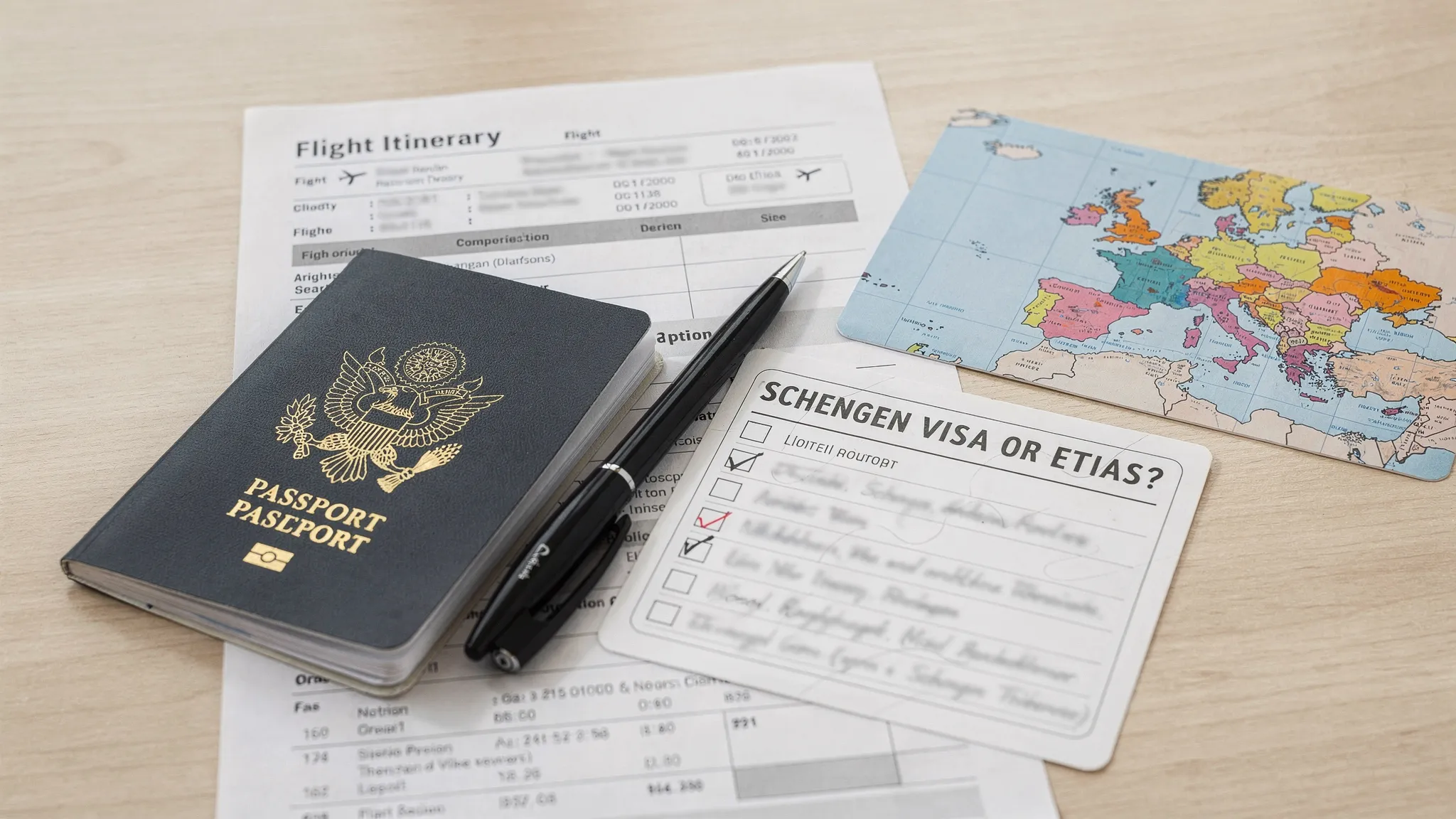
For travel companies: why “Schengen Visa vs ETIAS” is an ancillary revenue opportunity
If you are an OTA, airline, cruise line, or tour operator, the Schengen and ETIAS split creates a predictable commercial and operational pattern:
- A portion of customers will require a visa application journey (higher friction, higher support needs).
- A portion will require ETIAS (lower friction, but still critical to trip completion).
When requirements are presented clearly in the booking flow or post-booking journey, travel brands can:
- Reduce avoidable support tickets from “Do I need a visa or ETIAS?”
- Reduce denied boardings tied to missing documentation
- Create new ancillary revenue by offering guided applications as an add-on
SimpleVisa supports travel businesses with API integration, white-label visa application flows, and no-code implementation options, designed to fit directly into booking and servicing experiences.
If you are building requirement checks at scale, it also helps to maintain a single source of truth for rule updates. SimpleVisa’s Visa Requirements by Country is a useful reference for how quickly rules evolve.
Frequently Asked Questions
Is ETIAS a Schengen visa? ETIAS is not a visa. It is a pre-travel authorization for travelers who can visit the Schengen Area without a visa.
If I have ETIAS, can I live or work in Europe? No. ETIAS is meant for short stays and does not replace work permits, student visas, or residence permits.
If I have a Schengen Visa, do I also need ETIAS? In general, no. ETIAS is designed for visa-exempt travelers. If you need and obtain a Schengen Visa, ETIAS is not the document you rely on.
Do ETIAS or a Schengen Visa guarantee entry? No. Border officials make the final admission decision. You can still be refused entry if you do not meet entry conditions.
What if I’m visiting both Schengen and non-Schengen countries on the same trip? You may need different documents depending on each country’s rules. Plan your itinerary carefully and verify requirements for every border you will cross.
When will ETIAS become mandatory? ETIAS implementation has been subject to timeline changes. Check the latest official EU updates close to your travel dates, and plan early to avoid last-minute surprises.
Make the right choice early (and avoid last-minute check-in surprises)
Whether you need a Schengen Visa or ETIAS, the key is to identify the correct document type as early as possible, ideally before tickets are issued or a group itinerary is finalized.
If you are a travel business looking to reduce visa-related friction and monetize document services, SimpleVisa can help you embed visa and authorization flows through an API, a white-label app, or a no-code implementation. Learn more at SimpleVisa or explore how partners streamline the journey with online visa processing.