Sherpa eVisa vs Direct Apply: Which Is Better?
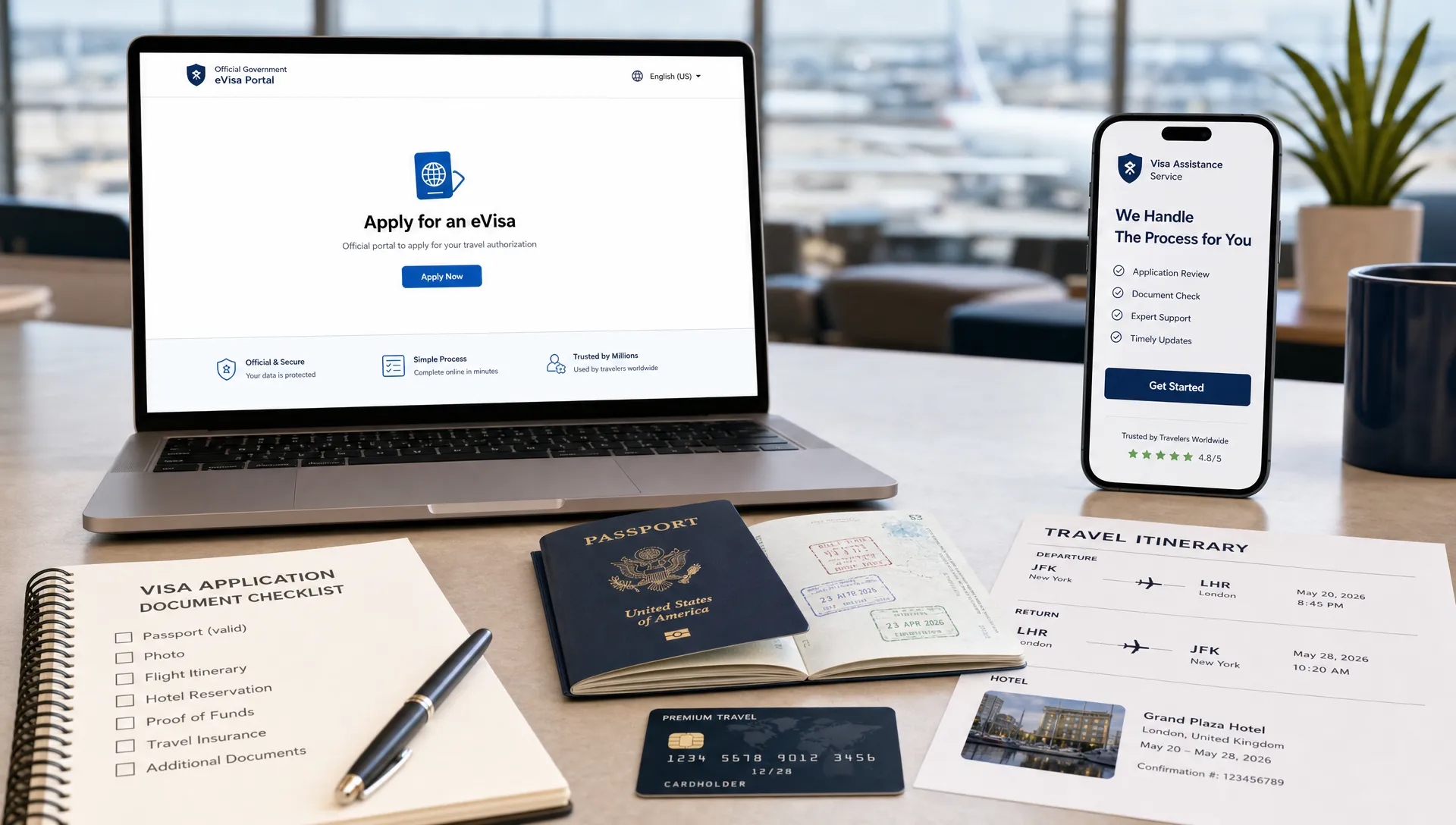
If you need an electronic visa, you usually have two paths: use a guided service such as Sherpa eVisa, or apply directly through the destination government's official portal. Both can work. The better choice depends on how simple your trip is, how much support you want, and whether you are applying as an individual traveler or designing the visa experience for customers.
The short version is simple: direct apply is usually best for confident travelers who want the lowest possible service cost, while Sherpa eVisa or another assisted visa service is often better when convenience, guidance, and lower friction matter more than saving on fees. For travel businesses, the calculation is different again because a poor visa experience can create abandoned bookings, support tickets, and unhappy customers.
Below is a practical comparison of Sherpa eVisa vs direct apply across cost, speed, reliability, support, user experience, and business impact.
What Does Sherpa eVisa Mean?
Sherpa eVisa generally refers to using Sherpa, a third-party travel documentation and eVisa service, to help travelers understand entry requirements and complete eligible visa applications online. Instead of navigating a government website alone, the traveler uses a guided flow that may include eligibility checks, form assistance, document prompts, payment, and status updates.
A service like this does not replace the immigration authority. The destination government or its appointed authority still makes the final decision on whether an eVisa is approved. The value of the service is in simplifying the process and reducing avoidable mistakes before submission.
If you are comparing providers more broadly, SimpleVisa has a separate guide on what matters when comparing online visa services, including speed, approval support, integration quality, and customer experience.
What Does Direct Apply Mean?
Direct apply means the traveler goes to the official visa or immigration website of the destination country and completes the eVisa application without a third-party service. This is often the lowest-cost route because the traveler pays the government fee and avoids extra service charges.
However, direct application also means the traveler is responsible for every step: finding the correct official portal, confirming eligibility, uploading documents in the right format, entering passport details accurately, paying through the available methods, and monitoring the result.
That can be straightforward for some destinations. It can also be confusing when the official website has limited language support, unclear document requirements, strict photo rules, or slow customer service.
Sherpa eVisa vs Direct Apply: Quick Comparison
| Factor | Sherpa eVisa or assisted service | Direct apply through government portal |
|---|---|---|
| Upfront cost | Usually includes government fee plus service fee | Usually government fee only |
| Ease of use | Guided journey with clearer prompts | Depends heavily on the government website |
| Support | Typically more accessible than official portals | Often limited, slow, or destination-specific |
| Speed | Can reduce delays caused by errors, but cannot override government processing | May be fastest if the traveler completes everything correctly |
| Error prevention | Form guidance and document checks can help | Traveler must self-check every detail |
| Official control | Application still depends on government decision | Traveler interacts directly with issuing authority |
| Best for | Travelers who want convenience, travel brands, complex customer journeys | Experienced travelers, simple trips, budget-sensitive applicants |
Cost: Direct Apply Usually Wins on Fees
If price is the only decision factor, direct apply usually has the advantage. You pay the official government visa fee and avoid an additional service fee. For travelers on a tight budget, especially for simple applications, that can be enough reason to apply directly.
But the lowest fee is not always the lowest total cost. Mistakes can create extra expenses, including rejected applications, missed flights, rebooking fees, or last-minute support. This is where assisted services can justify their cost for travelers who are unsure about requirements or who do not want to manage the process alone.
The safest way to compare cost is to look at the full picture:
- Government visa fee
- Service fee, if using a provider
- Payment processing or currency conversion fees
- Cost of correcting mistakes
- Cost of delays, missed travel, or customer support time
For travel businesses, the cost comparison should also include operational impact. If customers leave your booking flow to research visas themselves, some may not come back. Others may contact your support team with urgent questions that could have been answered inside a guided visa experience.
Speed: It Depends on Error Rate, Not Just Processing Time
Many travelers assume direct apply must be faster because the application goes straight to the government. Sometimes that is true. If the official portal is easy to use, the traveler has all documents ready, and the destination offers quick eVisa processing, direct apply can be efficient.
However, processing speed is not only about submission time. It is also about whether the application is complete and accurate. A small mismatch in passport number, travel date, photo format, or supporting document can slow things down or lead to refusal.
Sherpa eVisa or a similar guided service can help reduce preventable errors before submission. That does not mean it can guarantee approval or force a government to process faster. It means the traveler may be less likely to lose time due to avoidable mistakes.
Timing also matters. Peak travel seasons, holidays, and destination-specific rules can affect processing windows. If you are unsure when to start, this guide on when to apply for an electronic visa explains why applying early is often the safest option.
Reliability and Approval Risk: Who Controls the Outcome?
No visa service can promise approval in every case. Immigration authorities decide based on nationality, passport validity, travel purpose, security checks, documentation, and destination rules.
The real difference is how each path manages risk before the application reaches the authority. Direct apply gives you direct access to the official system, but it also puts the full burden of accuracy on you. An assisted service adds a layer of guidance, which can be useful if the destination has strict document rules or if the traveler is unfamiliar with visa language.
To reduce approval risk with either option, travelers should check requirements through official or trusted sources. The IATA Travel Centre is one widely used reference point for international travel document requirements, though travelers should still confirm final details with the destination authority.
The most common avoidable problems include passport details that do not match exactly, wrong visa category, unclear travel purpose, low-quality scans, invalid travel dates, and applying with the wrong passport when the traveler has dual citizenship.
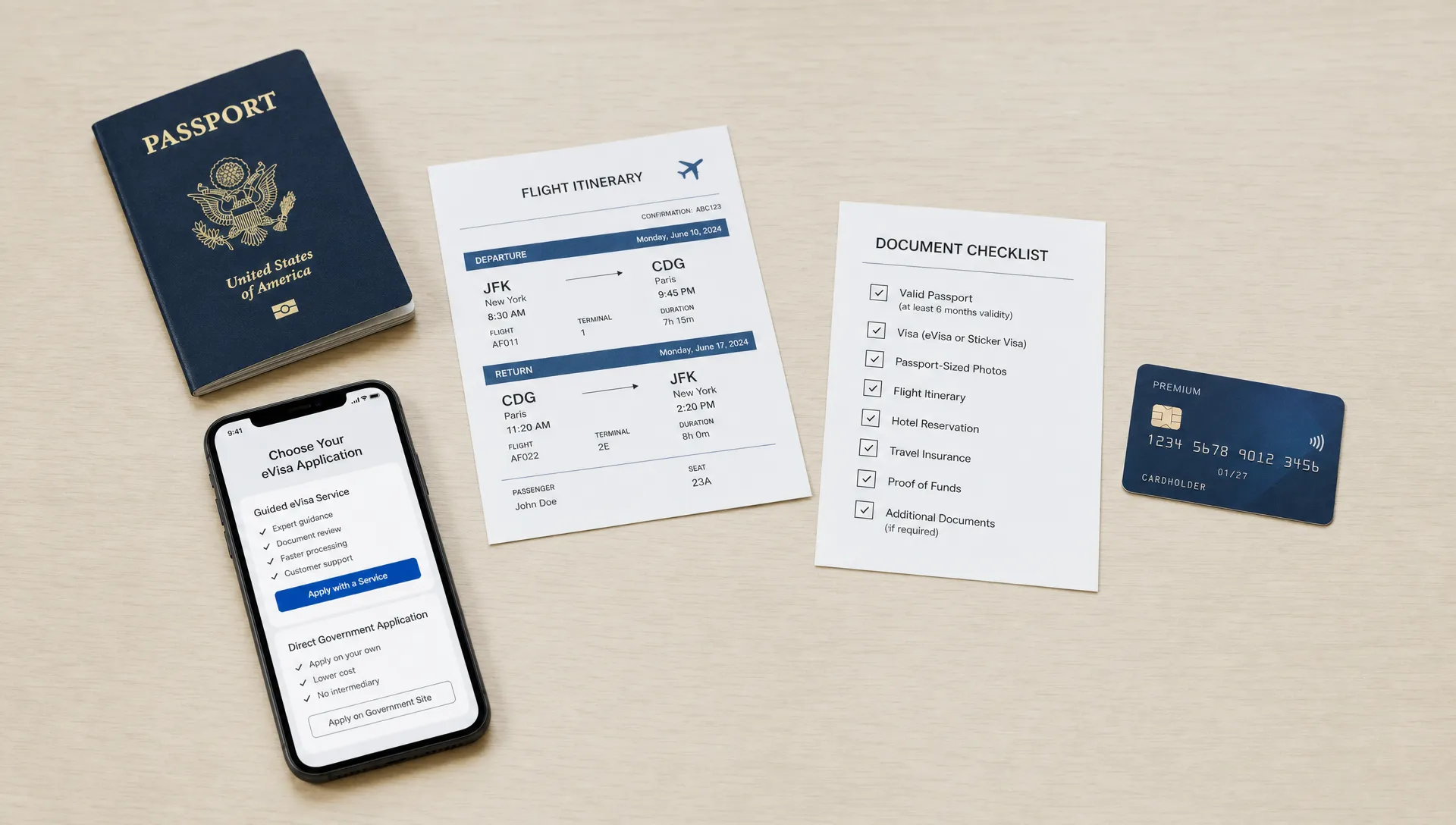
User Experience: Assisted Services Reduce Friction
The direct apply experience varies dramatically from country to country. Some government eVisa portals are modern, mobile-friendly, and clear. Others are difficult to navigate, have strict upload requirements, or provide limited explanations for errors.
Sherpa eVisa and other assisted services compete largely on user experience. Their goal is to make the visa step feel less like a separate bureaucratic process and more like part of the travel journey. That matters for leisure travelers, business travelers, and especially travel brands that want to keep customers confident after purchase.
For a traveler, a better experience means fewer confusing forms. For a travel business, it can mean fewer drop-offs and fewer support tickets. A visa requirement that appears late in the customer journey can create anxiety. A guided flow helps answer the natural question: Can I actually take this trip?
This is also why embedded visa services often perform better than redirecting customers away from the booking environment. SimpleVisa covers that conversion issue in more detail in its guide to embedded visa services vs redirects.
Data Privacy and Trust: Check the Route Carefully
Whether you use Sherpa eVisa, another provider, or direct apply, you will be sharing sensitive information. That may include passport details, birth date, travel plans, address, payment information, and sometimes employment or accommodation details.
Direct apply reduces the number of parties handling your data, which some travelers prefer. The tradeoff is that you must be certain you are on the official government website. Search results can include ads or lookalike websites that charge high fees while mimicking official portals.
With any third-party service, review who processes the application, what fees are charged, what support is included, and how personal data is handled. A legitimate service should be transparent about its role and should not imply that it can control government approval.
Good trust checks include confirming the domain, reading the fee breakdown, checking refund terms, reviewing privacy policies, and making sure the visa category matches your travel purpose.
For Individual Travelers: Which Option Is Better?
For individual travelers, the best choice comes down to confidence and complexity.
Direct apply is usually better if your destination has a clear official portal, you have applied for visas before, your trip is straightforward, you are comfortable reading immigration instructions, and you want to minimize fees.
Sherpa eVisa or another guided service is usually better if you want help understanding requirements, you are applying close to departure, you are worried about making mistakes, the official portal is confusing, or you value support more than the lowest possible cost.
If your trip is high-stakes, such as a honeymoon, business conference, cruise, or multi-country itinerary, paying for a smoother process may be worth it. If the application is simple and you have plenty of time, direct apply may be perfectly adequate.
For Travel Businesses: Direct Apply Is Rarely the Best Customer Experience
For airlines, online travel agencies, tour operators, cruise sellers, and travel management companies, the question is not only whether the traveler can apply directly. The question is whether sending them away creates friction, confusion, or lost revenue.
Directing customers to government portals can feel neutral, but it often creates a break in the journey. Customers may leave your site, encounter confusing instructions, delay the task, contact your support team, or lose confidence in the booking they just made.
A guided eVisa solution can turn visa handling into part of the travel product. It can also create ancillary revenue when implemented responsibly. This is where platforms like SimpleVisa are relevant: SimpleVisa helps travel businesses streamline visa applications through automation, API integration, white-label app options, custom data services, guided customer applications, and no-code implementation options.
The business case is strongest when visas are common across your routes, customers frequently ask entry requirement questions, or your support team spends time handling documentation issues. In that context, the better solution is often not direct apply versus Sherpa eVisa specifically, but whether your business should offer a managed visa experience at all.
Decision Guide: Choose Based on the Situation
| Situation | Better fit | Why |
|---|---|---|
| Simple leisure trip with clear official portal | Direct apply | Lowest service cost and fewer intermediaries |
| Traveler is unsure about requirements | Assisted eVisa service | Guidance can reduce confusion and mistakes |
| Application is urgent | Assisted eVisa service, when eligible | Better preparation can prevent avoidable delays |
| Traveler is experienced and budget-focused | Direct apply | The traveler can handle forms independently |
| Travel brand wants to keep users in flow | Embedded or white-label visa service | Better customer experience and potential ancillary revenue |
| Complex itinerary or multiple nationalities | Assisted service or expert review | More variables increase the risk of choosing the wrong path |
Practical Tips Before You Choose
Before choosing Sherpa eVisa or direct apply, take a few minutes to validate the basics. This can prevent most avoidable visa problems.
- Confirm that an eVisa is available for your nationality, destination, travel purpose, and length of stay.
- Check that your passport is valid for the required period beyond arrival.
- Compare the total fee, not just the government fee.
- Read support and refund terms before paying.
- Apply early enough to allow for delays or corrections.
- Keep copies of confirmations, receipts, and approved travel documents.
For direct applications, the most important step is making sure you are using the official government portal. For assisted services, the most important step is understanding what the provider does and does not control.
Final Verdict: Which Is Better?
There is no universal winner. Direct apply is better for travelers who want the cheapest route and feel comfortable managing official forms themselves. Sherpa eVisa or a similar assisted service is better for travelers who want a smoother, more guided process and are willing to pay for convenience and support.
For travel businesses, direct apply is often less attractive because it pushes customers outside the booking journey. A managed visa experience can improve confidence, reduce friction, and create a more complete travel product.
The best approach is to match the visa path to the risk of the trip. The more complex, urgent, or customer-facing the journey is, the more valuable a guided eVisa experience becomes.
Frequently Asked Questions
Is Sherpa eVisa the same as applying directly with the government? No. Sherpa eVisa is an assisted third-party route, while direct apply means using the official government visa portal yourself. In both cases, the destination authority makes the final approval decision.
Is direct apply cheaper than Sherpa eVisa? Usually, yes. Direct apply typically avoids third-party service fees. However, assisted services may save time and reduce avoidable mistakes, which can matter more than the fee for some travelers.
Can Sherpa eVisa guarantee approval? No legitimate visa service can guarantee approval in every case. Approval depends on the destination authority and the applicant's eligibility, documents, and travel purpose.
Which option is faster? Direct apply can be fastest when the traveler completes everything correctly and the official portal works well. An assisted service can be faster in practice if it helps prevent errors that would otherwise delay processing.
What should travel businesses choose instead of sending customers to apply directly? Travel businesses should consider an integrated or white-label visa solution when visa requirements affect conversion, support workload, or customer confidence. Keeping the visa journey connected to the booking flow is often better than sending customers away.
Make Visa Handling Simpler for Your Customers
If you are a travel business comparing Sherpa eVisa, direct application, or other visa service models, the real goal is not just processing forms. It is helping customers travel with confidence while reducing friction in your booking flow.
SimpleVisa helps travel businesses streamline visa applications with automation, API integration, white-label options, custom data services, guided customer applications, and premium eVisa management. If your customers regularly need entry documentation, a better visa experience can make the entire trip feel simpler from the start.