SimpleVisa API Use Cases for Modern Travel Sellers
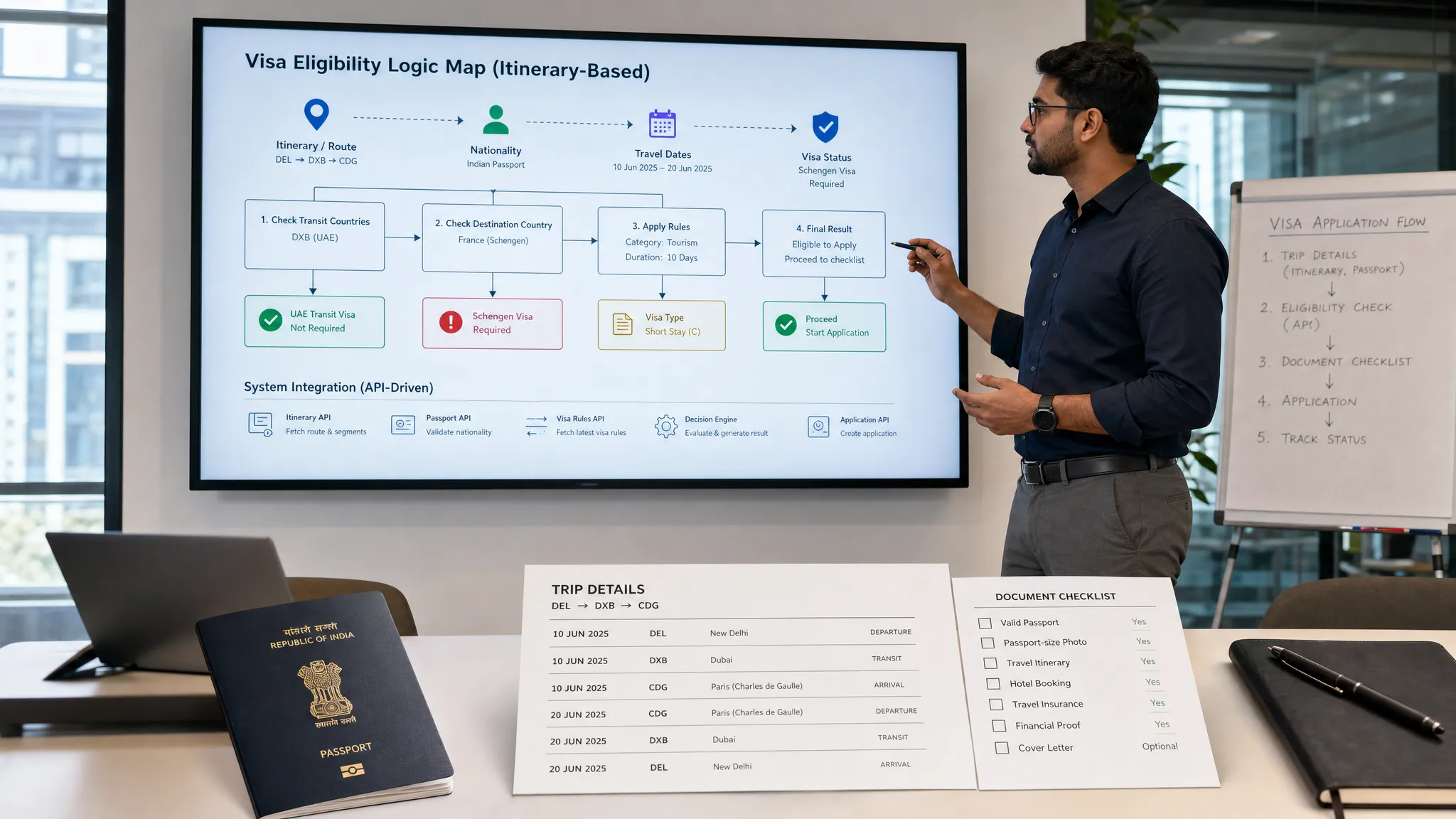
Visa requirements used to sit outside the booking experience. A traveler found a flight, paid for a hotel, then discovered later that an eVisa, ETA, transit visa, or supporting document was required. For modern travel sellers, that gap is no longer acceptable.
Airlines, OTAs, cruise lines, tour operators, travel management companies, and superapps now operate in a world where border rules can directly affect conversion, support volume, customer satisfaction, and ancillary revenue. The SimpleVisa API helps bring visa intelligence and guided visa application workflows into the places where customers already plan, book, and manage travel.
This article explores practical SimpleVisa API use cases for travel sellers, from pre-booking eligibility checks to post-booking eVisa management and airport recovery flows.
Why visa APIs matter for travel sellers now
Travel has become more digital, but border crossing requirements have also become more fragmented. Many countries now use electronic authorizations, pre-travel screening, online visa processing, biometric checks, or destination-specific document rules.
Systems such as the UK Electronic Travel Authorization and the EU’s ETIAS travel authorization show the direction of travel: eligibility is increasingly checked before departure, not only at the border.
For travel sellers, this creates two competing pressures. Customers expect a smooth digital journey, but the seller needs to handle complex rules across passport nationality, destination, transit point, trip dates, travel purpose, and document validity. A travel API for visas helps bridge that gap by making border requirements actionable inside the customer journey.
Instead of sending travelers away to search government websites on their own, SimpleVisa enables travel businesses to surface relevant requirements, guide customers through applications, and create a new value-added service inside their own flow.
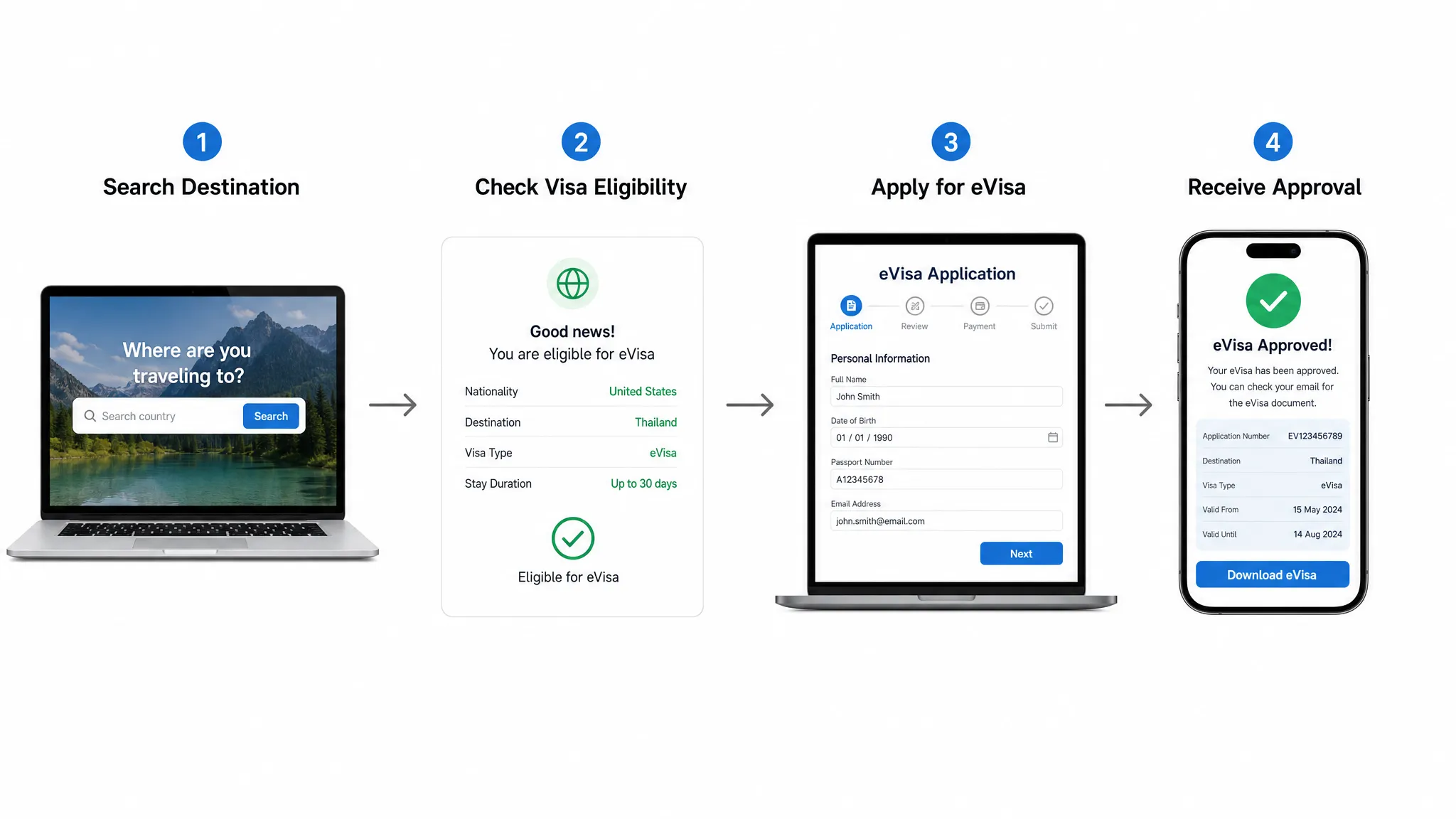
SimpleVisa API use case matrix
The SimpleVisa API can support different commercial and operational goals depending on where it is integrated. Some sellers want to protect conversion at checkout. Others want to reduce denied boarding, support calls, or manual document checks. Many want all of the above.
| Use case | Where it fits | Main business value | Best suited for |
|---|---|---|---|
| Visa eligibility check | Search, itinerary page, checkout | Prevents surprises before payment | OTAs, airlines, metasearch, TMCs |
| eVisa upsell | Checkout or post-booking | Creates ancillary revenue | OTAs, airlines, tour operators |
| Guided visa application | Branded application flow | Improves completion and accuracy | Travel agencies, superapps, marketplaces |
| Post-booking reminders | Email, SMS, app, trip dashboard | Reduces late applications and support tickets | OTAs, TMCs, tour operators |
| Status tracking | Customer portal, agent console | Reduces “where is my visa?” inquiries | Support-heavy travel brands |
| Multi-stop requirement checks | Cruise, tours, complex itineraries | Handles multiple borders in one journey | Cruise lines, group travel, DMCs |
| Custom visa data service | Internal tools, content, support | Powers rule-aware products without full processing | Enterprise travel platforms |
Use case 1: Pre-booking visa eligibility checks
The most valuable visa interaction often happens before the customer pays. If a traveler cannot enter a destination, needs a visa that takes longer than the departure window, or requires a transit authorization for a layover, that information should appear early.
With an API integration, a travel seller can check requirements using trip details such as nationality, destination, travel dates, transit points, and trip purpose. The output can then be shown as a simple message in the booking flow, such as “eVisa required,” “visa-free for this itinerary,” or “additional documents may be needed.”
This use case is especially relevant for:
- Flight search pages with international routes
- Package holiday checkout flows
- Corporate booking tools
- Multi-city itinerary builders
- Bus, rail, and ferry platforms that cross borders
The goal is not to overwhelm the traveler with legal detail. The goal is to identify action required and provide a clear next step. For a deeper technical view, SimpleVisa’s guide to real-time visa eligibility checks explains how requirement logic can fit into a modern travel stack.
Use case 2: eVisa upsells during checkout
Visa requirements are often seen as compliance friction, but they can also become a customer-friendly ancillary revenue opportunity. When a traveler is already buying a flight, hotel, tour, or insurance policy, offering a guided eVisa service at the right moment can save them time and create a new revenue stream for the seller.
A strong checkout use case includes three elements: relevance, transparency, and timing. The traveler should only see the offer if the requirement is likely to apply to their itinerary. Pricing and service scope should be shown clearly. The offer should appear before payment confirmation or immediately after booking, while the trip is still top of mind.
This can work particularly well for destinations where electronic visas are common, processing is time-sensitive, or travelers may not know the rule exists. Instead of treating visa support as an afterthought, travel sellers can position it as part of a complete trip readiness bundle.
SimpleVisa’s API can help travel businesses embed visa application options into the booking flow, while SimpleVisa’s broader platform supports premium eVisa management and guided customer applications. For commercial teams, this turns online visa processing into a measurable add-on rather than an unmanaged customer problem.
For more on the revenue side, see SimpleVisa’s guide to ancillary revenue through compliance services.
Use case 3: Post-booking visa automation
Not every customer will complete a visa application at checkout. Some need to confirm dates, gather documents, speak to family members, or wait for passport renewal. That makes the post-booking window a critical use case for the SimpleVisa API.
A post-booking visa journey can automatically remind travelers what they still need to do, link them to a guided application flow, and help support teams track progress. For example, a travel seller can trigger reminders based on departure date, requirement type, or application status.
A practical post-booking journey might look like this:
| Timing | API-enabled action | Customer experience |
|---|---|---|
| Immediately after booking | Check visa requirement for itinerary | Traveler sees a trip-readiness task |
| 30 days before departure | Send application reminder if needed | Traveler gets a clear next step |
| After application starts | Track status in customer account | Traveler sees progress without contacting support |
| After approval | Deliver or confirm visa document | Traveler knows they are ready to travel |
| Close to departure | Flag incomplete cases | Support teams can prioritize at-risk bookings |
This use case is valuable because visa friction often becomes urgent late in the journey. Proactive automation reduces the chance that customers discover requirements too close to travel.
Use case 4: Visa status tracking for customer support teams
A common source of call center volume is simple status anxiety: “Has my visa been submitted?” “Was it approved?” “Do I need to print it?” “Can I still travel?”
When visa workflows are disconnected from customer service tools, agents have to search across emails, portals, spreadsheets, or third-party systems. This slows down responses and creates inconsistent answers.
By integrating visa status information into an agent console or customer portal, travel sellers can reduce repetitive support requests and improve confidence. The customer can see whether an application is not started, in progress, submitted, approved, refused, or requires action. Agents can use the same status to provide faster support.
This is not just a service improvement. It also protects revenue. Travelers who feel uncertain about documentation may cancel, rebook, buy from another provider, or flood support lines close to departure. A connected visa management platform helps keep the customer journey under control.
Use case 5: Airline check-in and denied boarding prevention
For airlines and carriers, visa requirements have a direct operational impact. If a passenger arrives without the right travel authorization, the result can be denied boarding, re-accommodation costs, customer complaints, gate delays, and regulatory exposure.
A SimpleVisa API integration can help identify documentation risks earlier in the journey. Instead of waiting until check-in or the airport counter, airlines can surface visa requirements at booking, again in pre-departure emails, and finally at online check-in.
The use case becomes even more powerful when visa status is used as an operational signal. A traveler with an incomplete eVisa application can receive a targeted reminder. A traveler with an approved authorization can move through digital check-in with more confidence. An agent can quickly identify whether a traveler still needs help.
This does not replace carrier compliance processes. It supports them by making visa readiness visible earlier and by giving travelers a guided path to resolve issues before they become airport problems.
Use case 6: Cruise, tour, and multi-country itinerary support
Cruise lines and tour operators face a different challenge: one booking can include several countries, ports, border crossings, or shore excursions. A traveler may be eligible for one destination, need an eVisa for another, and require a special document for a land crossing or port call.
Manual checks become difficult at scale, especially when passengers hold many different passports. A visa API can help map requirements to the actual itinerary rather than treating each destination in isolation.
This use case is especially useful for:
- Shore-visa checks for cruise passengers
- Multi-country escorted tours
- Cross-border rail or coach packages
- Adventure travel itineraries with land borders
- Group trips with mixed nationalities
For these sellers, the value is both operational and commercial. The same requirement check that prevents confusion can also trigger the right application flow or visa bundle. Tour operators can package visa support into fixed-price products, while cruise lines can guide passengers before embarkation.
Use case 7: Corporate travel and TMC compliance workflows
Travel Management Companies need to manage speed, policy compliance, traveler duty of care, and documentation accuracy. Business travelers often book close to departure, change plans frequently, or hold multiple passports. Manual visa support can quickly become a bottleneck.
With SimpleVisa API use cases for corporate travel, TMCs can embed visa checks into booking tools, trigger application tasks, and help travel managers see which travelers are ready and which are at risk. This can be especially useful for frequent routes, executive travel, relocation, events, and client-facing business trips.
A TMC may also use visa data to support internal policies. For example, if a destination requires longer processing, the booking tool can warn the traveler before final approval. If an application is incomplete, the travel manager can receive a notification before the trip becomes urgent.
Privacy and data minimization are essential in this use case. Passport and visa data should be collected only when needed, handled securely, and retained according to a defined policy. SimpleVisa’s API and data services are designed for travel businesses that need to guide customers through border requirements while reducing manual administrative work.
Use case 8: White-label and hybrid API journeys
Some travel sellers want full control over the user interface. Others want a faster path to market with a branded application experience. Many start with a white-label or no-code implementation, then move toward deeper API integration as volume grows.
SimpleVisa supports multiple ways to bring visa services to customers, including API integration, a white-label visa application app, custom data services, and no-code implementation options. This flexibility matters because teams have different engineering resources, timelines, and commercial goals.
A practical hybrid model might use API calls for eligibility inside checkout, then hand the traveler to a branded SimpleVisa application flow for the detailed visa application. This keeps the booking experience lightweight while still giving the traveler a guided process for document upload, form completion, and eVisa management.
If you are deciding between integration models, SimpleVisa’s comparison of API vs. white-label app is a useful next read.
What to consider before integrating a visa API
A successful integration is not just a technical project. It is a product, compliance, support, and revenue project. Before launch, travel sellers should align on where visa requirements appear, how the offer is priced, what happens when requirements are unclear, and how customer data is protected.
The best implementations usually answer these questions early:
- Which booking stages will show visa requirements?
- Which countries, routes, or customer segments are in the first launch?
- Will visa services be optional, bundled, or mandatory where legally required?
- What customer support team handles questions and escalations?
- How will status updates appear to customers and agents?
- Which KPIs define success in the first 30, 60, and 90 days?
For developers, it is also worth testing failure modes. If a requirement check is unavailable, the checkout should not break. If a traveler changes dates, the requirement should be refreshed. If the application is incomplete, the customer should receive a timely prompt rather than a generic reminder.
SimpleVisa’s existing developer resources, including the guide on how eVisa APIs work, can help teams understand the typical flow from requirement detection to application submission and confirmation.
KPIs to track after launching SimpleVisa API use cases
Once the API is live, the goal is continuous optimization. Visa workflows affect conversion, support costs, operational risk, and ancillary revenue, so performance should be measured across all four areas.
| KPI | What it tells you | Why it matters |
|---|---|---|
| Visa requirement exposure rate | How often customers see visa guidance | Shows market opportunity and route relevance |
| eVisa attach rate | Share of eligible customers who buy or start the service | Measures ancillary revenue potential |
| Application completion rate | Share of started applications that are submitted | Reveals UX and document friction |
| Approval rate | Share of applications approved | Indicates application quality and eligibility fit |
| Support contact rate | How often customers ask for help | Shows whether automation is reducing workload |
| Time to completion | How long customers take to finish the process | Helps optimize reminders and form design |
| At-risk departure count | Travelers close to departure without required documents | Supports operational intervention |
These metrics can guide product decisions. If many travelers see a requirement but few start an application, the offer may need clearer messaging. If many start but do not complete, the issue may be document upload, form length, or pricing clarity. If support volume stays high, status notifications may need to be more visible.
Frequently Asked Questions
What can travel sellers do with the SimpleVisa API? Travel sellers can use the SimpleVisa API to surface visa requirements, guide customers into eVisa application flows, support post-booking reminders, track application status, and integrate visa-related data into booking or support workflows.
Is the SimpleVisa API only for OTAs? No. The use cases apply to OTAs, airlines, cruise lines, tour operators, TMCs, superapps, insurance sellers, and other travel businesses that need to help customers manage border crossing requirements.
How does a visa API create ancillary revenue? A visa API can identify when a traveler needs an eVisa or travel authorization, then offer a guided application service at checkout or post-booking. This turns compliance support into a value-added service that customers can purchase.
Do travel sellers need a full API build to use SimpleVisa? Not always. SimpleVisa offers API integration, white-label application options, custom data services, and no-code implementation options. The right model depends on your timeline, engineering capacity, and desired control over the customer experience.
Can visa API use cases reduce support volume? Yes. When travelers can see requirements, application tasks, and status updates inside the booking or post-booking experience, they are less likely to contact support for basic visa questions.
How should travel sellers handle passport and visa data? Passport and visa data should be treated as sensitive information. Travel sellers should use clear consent, collect only necessary data, secure transfers, define retention rules, and choose partners that support privacy-conscious implementation.
Build visa readiness into the travel journey
Modern travel sellers cannot afford to treat visas as someone else’s problem. Border requirements now affect checkout conversion, traveler confidence, support operations, and ancillary revenue.
SimpleVisa helps travel businesses integrate visa processing automation, guided customer applications, API-based eligibility checks, white-label visa journeys, and custom data services into the customer experience. With solutions available across 400+ sites and flexible implementation models, SimpleVisa gives travel sellers a practical way to simplify border crossing administration while creating a better trip-readiness journey.
If you are ready to explore SimpleVisa API use cases for your booking flow, post-booking experience, or support operation, request a demo with SimpleVisa and see how embedded visa services can fit your travel business.