Travel Visa Documents Checklist for Smooth Border Entry
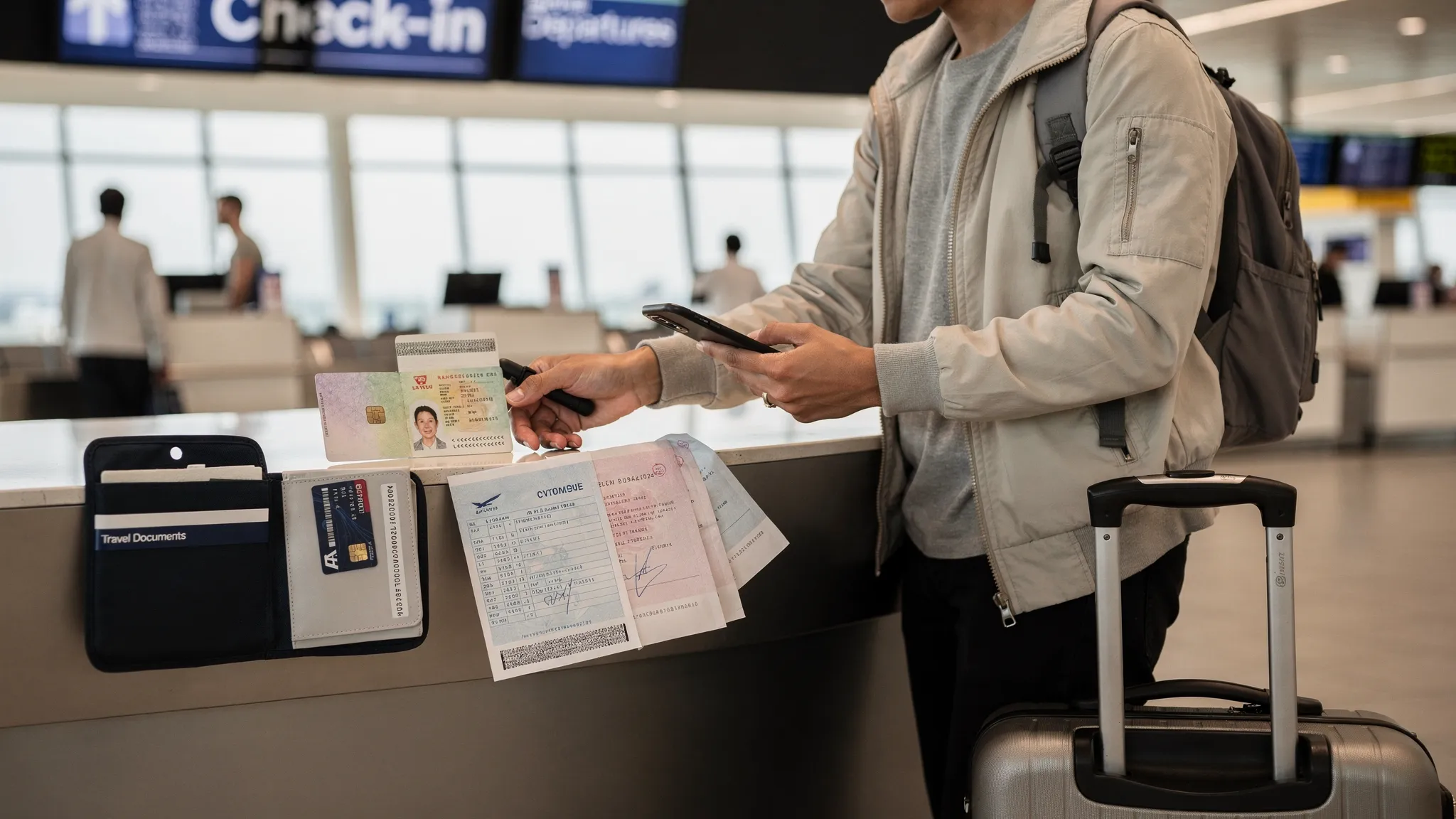
Border entry problems rarely happen because a traveler “forgot their passport.” They happen because a supporting document is missing, a name doesn’t match, an eVisa can’t be pulled up offline, or the traveler can’t explain their trip clearly.
This travel visa documents checklist is built for real-world border control, airline check-in desks, and immigration counters, not just for submitting an online visa form. Use it to reduce the chance of denied boarding, long secondary screening, or being refused entry.
The short version: your border-entry document bundle
If you want a fast “grab-and-go” checklist, start here and then read the sections that apply to your trip.
- Passport (valid, undamaged, enough blank pages)
- Visa or travel authorization (sticker visa, eVisa PDF, ETA/ESTA/UK ETA approval)
- Proof of onward travel (return ticket or onward booking)
- Proof of accommodation (hotel booking, address, or host details)
- Proof of sufficient funds (bank card plus evidence if needed)
- Travel insurance (especially where required)
- Purpose-of-trip evidence (invitation letter, conference booking, tour details)
- Backup copies (offline phone copy plus printed copy when sensible)
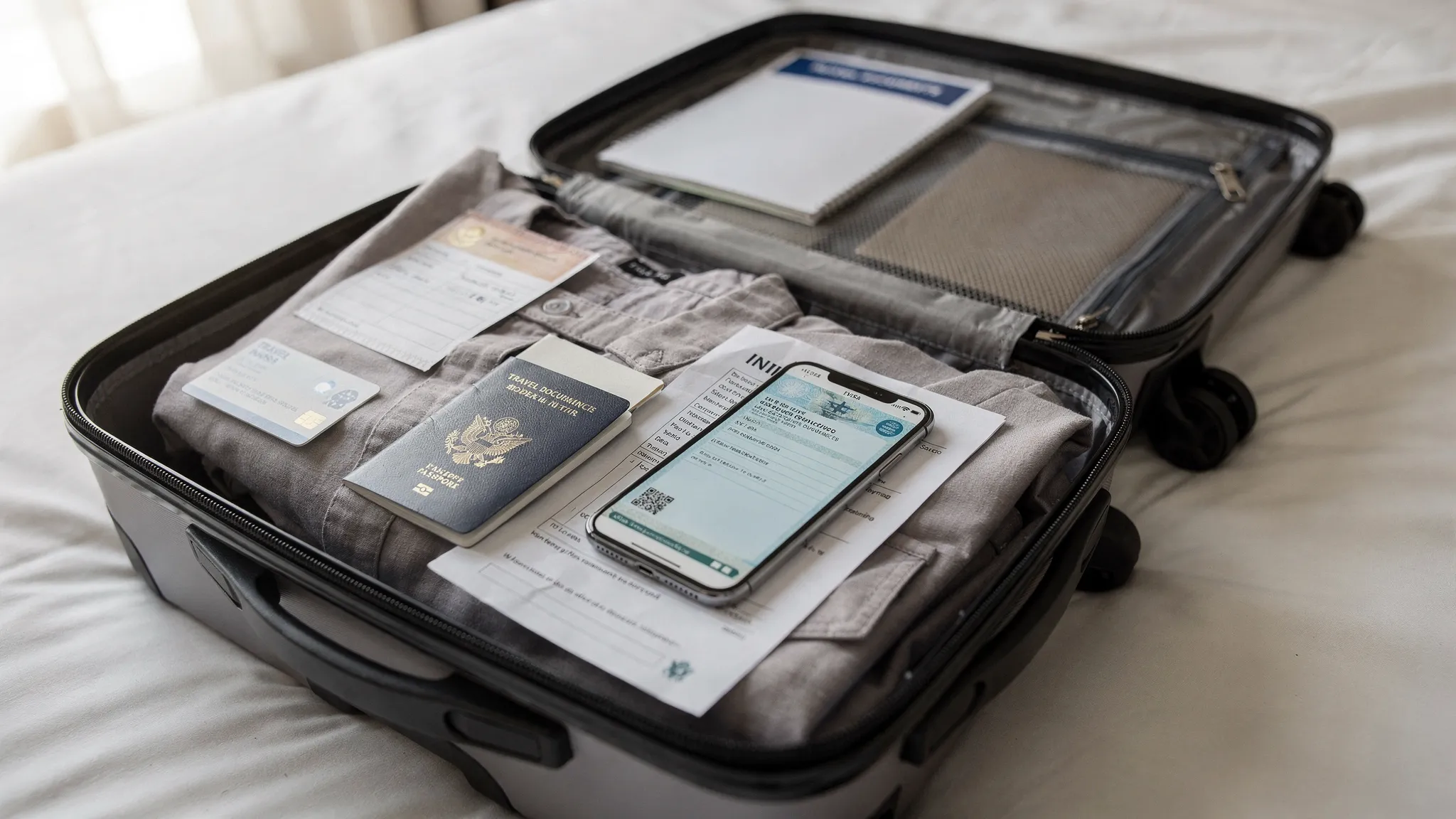
What counts as “travel visa documents” in 2026?
“Visa documents” can mean more than a visa sticker in your passport.
- Traditional visa: A visa vignette/sticker or stamp issued by a consulate or embassy.
- Electronic visa (eVisa): A digital approval you typically receive as a PDF or via an online portal, linked to your passport.
- Electronic travel authorization (ETA/eTA/ESTA/UK ETA and similar): A pre-travel authorization required for many visa-exempt travelers.
The most important practical point is this: airlines often enforce entry rules before you ever reach immigration, because carriers can face penalties for transporting passengers who lack required documents. So your “border-entry documents” must satisfy both airline check-in and the immigration officer.
For background on how eVisas work and how travelers typically present them, see SimpleVisa’s guide on how an electronic visa works and the practical discussion on whether you need to print an electronic visa.
Core travel visa documents (almost always required)
1) Passport: validity, condition, and consistency
Your passport is the anchor document for everything else.
- Validity: Many destinations require a buffer beyond your travel dates (often months). Don’t rely on assumptions, verify the destination rule on an official immigration source.
- Condition: Water damage, torn pages, or a loose cover can trigger extra scrutiny or rejection.
- Blank pages: Even with eVisas, some countries still stamp entry/exit, and land borders can be stamp-heavy.
- Data consistency: Your name, passport number, and date of birth must match your ticket and your visa authorization.
If you suspect mismatches, fix them before travel. This is one of the most common, preventable reasons for airport issues.
2) Your visa, eVisa, or travel authorization approval
Carry what you can actually present at the counter:
- Sticker visa: Passport with the visa page accessible.
- eVisa: Save the PDF and confirmation email, and screenshot the key approval page.
- Authorization (ESTA/ETA/eTA): Save confirmation details (application number, approval status). Some systems are fully electronic, but frontline staff may still ask for proof.
Tip: if your authorization is “linked electronically,” still keep a copy. Technology and connectivity fail most often in the exact places you need them.
3) Proof of onward travel (return or onward ticket)
Even when a traveler has the right visa, border officers may ask for proof that you will leave within the permitted stay.
Commonly accepted proofs include:
- A confirmed return flight
- An onward ticket to a third country
- In some cases, a cruise itinerary or overland booking
If your travel is flexible, consider booking refundable onward travel or ensuring you can clearly show your plan.
4) Proof of accommodation (or a clear address)
Many arrival cards and immigration interviews start with: “Where are you staying?”
Have one of the following ready:
- Hotel booking confirmation
- Short-term rental confirmation
- Host invitation letter plus the host’s address and contact info
5) Proof of funds and ability to support yourself
Not every traveler will be asked, but it is common enough that you should be prepared.
Examples:
- Recent bank statement (PDF)
- Credit cards and a reasonable limit
- Proof of employment income (if relevant)
- Sponsor letter (if someone else is paying)
6) Travel insurance (when required, still useful when not)
Some destinations and visa types explicitly require travel medical insurance. Even where it is not required, insurance can make questioning easier if you can demonstrate you are prepared for medical costs.
If you are traveling to Europe under Schengen rules, consult the European Commission overview of Schengen visa requirements (official source) for insurance expectations tied to certain visas.
Supporting documents immigration may request (depending on your trip)
Purpose-of-trip evidence (tourism, business, study, family)
Bring documents that support the story your visa and ticket already tell.
- Tourism: tour booking, event tickets, itinerary overview
- Business: meeting schedule, conference registration, invitation letter from the host company
- Visiting family/friends: invitation letter, host ID/residency proof (if available)
- Study: school acceptance letter, enrollment proof
If your documents suggest one purpose (for example, “business”) but you answer questions like a tourist, you increase the chance of delays.
Evidence of ties to your home country (when scrutiny is higher)
Travelers with longer stays, frequent travel patterns, or higher-risk routes may be asked for “ties.” Examples:
- Employment letter stating role, salary (optional), and approved leave dates
- Proof of enrollment (students)
- Lease/mortgage documentation
- Family responsibilities documentation (as appropriate)
Minors traveling: the extra paperwork many families miss
When traveling with children, border and airline staff may request additional documentation to prevent abduction and custody disputes.
Commonly requested items include:
- Child’s passport
- Birth certificate (copy)
- Consent letter from the non-traveling parent(s) or legal guardian(s)
- Custody documents (if applicable)
Because requirements vary widely, verify rules with the destination government and the airline.
Health documents and medication
- Vaccination certificates (when required)
- Prescription documentation for controlled medications
- A doctor’s note for injectable medications or medical devices
Health entry rules can change quickly. For U.S. travelers, it is often helpful to check the U.S. Department of State travel advisory resources as a starting point.
If you are transiting
Transit is not always “visa-free.” Some itineraries require a transit visa based on nationality, airport, and whether you pass through immigration.
Carry:
- Confirmed onward ticket
- Any required transit authorization
- Proof you meet entry rules for your final destination
Keep it usable: digital and physical organization that works at a counter
A document you “have somewhere in your email” is not a document you have.
Use a two-layer system:
- Offline digital folder on your phone (PDFs saved locally, not only in cloud storage)
- Small printed set of the most critical items (passport ID page copy, eVisa approval page, itinerary, accommodation)
Also consider:
- Naming files clearly (for example,
EVISA_COUNTRY_SURNAME_2026-07.pdf) - Keeping documents in one place for each traveler in a group
- Avoiding public Wi‑Fi when opening sensitive files
If you want a deeper safety-focused approach to online visa handling, SimpleVisa also covers best practices in Travel Visa Online: How to Apply Safely.
A practical table: what to show, who asks, and what format works
| Document | Who might ask for it | Best format to carry | Common failure point |
|---|---|---|---|
| Passport | Airline, border control | Physical passport, plus a photo of the ID page | Damage, not enough validity, mismatched details |
| Visa/eVisa/authorization approval | Airline, immigration | PDF saved offline, confirmation email, sometimes print | Can’t access email, wrong passport number |
| Onward/return ticket | Airline, immigration | PDF or airline app itinerary, screenshot backup | Flexible travel with no proof |
| Accommodation/address | Immigration | Booking confirmation PDF, host details in notes | No address, only a vague plan |
| Proof of funds | Immigration | Bank statement PDF, cards, sponsor letter if needed | Unclear funding source |
| Insurance (if required) | Immigration, sometimes visa checks | Policy certificate PDF | Incorrect coverage dates, missing policy number |
| Invitation/business purpose proof | Immigration | Invitation letter PDF, registration confirmation | Purpose doesn’t match visa class |
| Minor consent/birth docs | Airline, immigration | Printed copies plus scanned PDFs | Missing notarization where expected |
Day-of-travel workflow: when you will need documents
Think in three checkpoints:
1) Airline check-in and bag drop
This is where many travelers are denied boarding. Staff check passport and entry permission because the airline is responsible for transporting you legally.
Have ready:
- Passport
- Visa/eVisa/authorization proof
- Onward ticket
2) Boarding gate
Gate agents may re-check documents, especially on routes with strict entry enforcement.
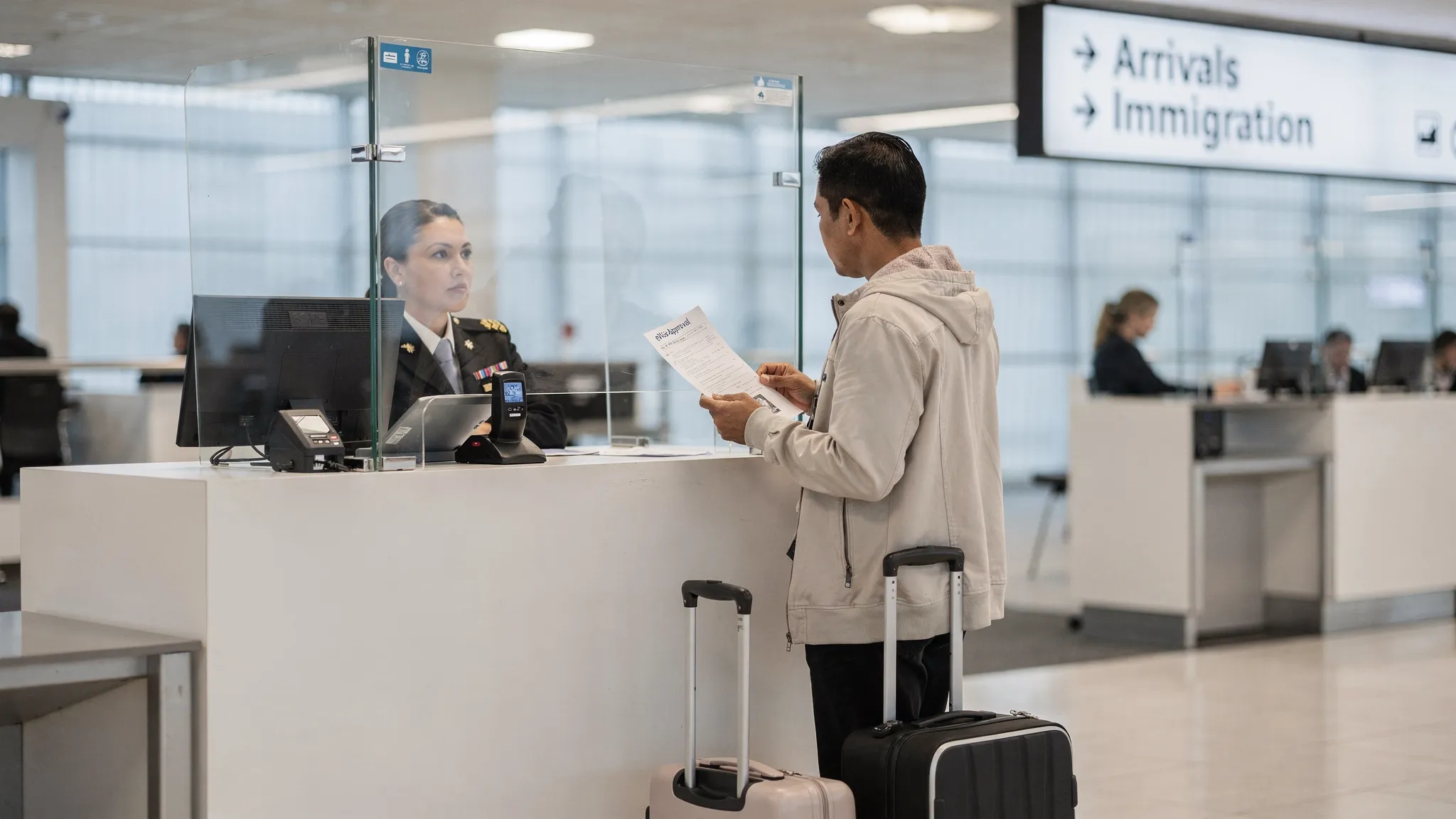
3) Arrival immigration
Immigration usually focuses on:
- Identity (passport)
- Permission to enter (visa/authorization)
- Credibility (your answers match your documents)
- Compliance likelihood (onward travel, funds, accommodation)
Common reasons travelers get delayed (even with the right visa)
Name or passport number mismatches
A single character difference between your passport and your application can cause airline system errors or border confusion. Fix issues early rather than hoping it works out at the airport.
The visa type doesn’t match the real purpose of travel
Examples:
- Entering on a tourist authorization but stating you plan to “work”
- Attending paid activities that violate visitor rules
You cannot prove the basics quickly
If it takes 15 minutes to find your hotel address, your experience at the counter will not be smooth.
Your documentation depends on internet access
Some airports, land borders, and ferry terminals have unreliable connectivity. Offline access matters.
For travel brands: how to reduce border-entry friction for customers
If you are an airline, OTA, tour operator, or TMC, missing travel visa documents are not just a traveler problem. They create:
- Denied boarding incidents
- Higher support volume
- Last-minute cancellations and chargebacks
- Lost ancillary revenue opportunities
SimpleVisa is built to streamline visa application journeys for travel businesses through solutions that can be embedded in booking flows via API, offered through a white-label visa application app, or accessed as custom data services. The goal is to guide customers through border requirements earlier, with less friction.
You can explore the broader concept in SimpleVisa’s overview of travel document automation.
Frequently Asked Questions
Do I need to print my eVisa for border entry? Often it is not strictly required, but printing the key approval page is a smart backup. Some carriers and border posts still ask for a paper copy, and phones run out of battery.
What documents do airlines check before boarding an international flight? Typically your passport and proof of entry permission (visa/eVisa/authorization). They may also check onward travel depending on the destination and your passport.
Is an approved eVisa or ETA a guarantee of entry? No. Approval usually means you are authorized to travel and request entry. Final admission is decided by border officials based on identity, eligibility, and credibility at arrival.
What is the most overlooked travel visa document? Proof you can leave and support yourself, onward ticket, accommodation address, and having your visa approval accessible offline.
What should families carry when traveling with minors? In addition to passports and visas, carry a consent letter from non-traveling parent(s), and a copy of the child’s birth certificate. Requirements vary, so verify with the airline and destination government.
Where should I verify the latest entry requirements? Start with the destination government’s immigration site, then confirm with your airline. Requirements can change, and airline enforcement at check-in is often strict.
Make border entry easier for your travelers (and your team)
For travelers, the best strategy is simple: make your document bundle complete, consistent, and easy to present in under 60 seconds.
For travel businesses, the bigger win is preventing documentation problems before the day of travel. If you want to guide customers through visa requirements and applications inside your booking or post-booking journey, SimpleVisa offers visa processing automation through API integration, a white-label app, and data services.
Learn more at SimpleVisa.