Trip Visa vs Tourist Visa: What’s the Difference?

A lot of travelers search for a “trip visa” right after booking, only to realize that most governments do not actually issue a document with that exact name. Meanwhile, “tourist visa” is a real, formal category in many countries, with clear rules about what you can do, how long you can stay, and whether you can enter once or multiple times.
If you are planning travel (or helping customers plan it), getting this distinction right matters. Picking the wrong category can lead to delays, extra fees, or denied boarding at check-in.
The short answer: “trip visa” is usually informal, “tourist visa” is usually official
In most cases:
- Trip visa is an informal, catch-all phrase used in search, on forums, or by some travel sellers to mean “a visa for this trip.” It often points to a short-stay visitor visa, an eVisa, or even an eTA/ETA type authorization, depending on destination and nationality.
- Tourist visa is a formal visa type (or sub-type of a visitor visa) specifically for leisure travel, such as sightseeing, vacations, or visiting friends and family.
Because “trip visa” is not standardized, you should always translate it into the government’s real terminology for that destination (tourist visa, visitor visa, short-stay visa, eVisa, ETA/eTA, transit visa, and so on).
Trip Visa vs Tourist Visa: key differences that affect approval and entry
The confusion usually comes from mixing up three separate concepts:
- Purpose (tourism vs business vs transit)
- Format (sticker in passport vs electronic authorization)
- Trip design (single entry vs multiple entry, short stay vs long stay)
Here is how “trip visa” and “tourist visa” commonly differ in real-world usage.
| Category | “Trip visa” (common usage) | Tourist visa (official category) |
|---|---|---|
| Meaning | Informal term meaning “the entry document I need for my trip” | A specific visa type for leisure travel |
| Who defines it | Travelers, travel agencies, unofficial websites | The destination’s immigration authority |
| Purpose | Varies, could include tourism, visiting family, sometimes business depending on context | Tourism, leisure, visiting friends/family (as defined by the country) |
| Entry rules | Could be single-entry or multiple-entry (depends on the actual product) | Often available as single or multiple-entry, depends on country |
| Issuance format | Could be eVisa, eTA/ETA, or a traditional visa | Could be eVisa or traditional visa, depending on destination |
| Risk if misunderstood | Higher (you might apply for the wrong category) | Lower (it maps to a defined purpose) |
Practical takeaway: If a traveler asks “Do I need a trip visa?”, the correct next question is “For which country, which passport, and what are you doing there?”
What is a tourist visa (and what it typically allows)
A tourist visa is generally designed for short-term, non-work travel. While rules vary by country, tourist visas commonly allow:
- Leisure and sightseeing
- Visiting friends and family
- Short, non-credit recreational courses (in some countries)
- Unpaid meetings or events in limited cases (country-specific)
Tourist visas commonly do not allow:
- Paid work (including “hands-on” work for a local entity)
- Long-term study
- Moving or residence
For official definitions, always defer to the destination’s immigration site. For example, the U.S. Department of State outlines visitor categories like B-2 for tourism on its visitor visa overview.
What people usually mean by “trip visa”
“Trip visa” usually means one of these, depending on where you are traveling:
1) A short-stay visitor visa (tourist or general visitor)
Many destinations group tourism under a broader visitor category. In that case, a traveler may call it a “trip visa” even though the official label is “visitor visa” or “short-stay visa.”
Example: The Schengen Area issues a short-stay visa (Type C) for visits up to the allowed limit (subject to rules like the 90/180 day framework). The EU provides official guidance on visa policy on the European Commission site.
2) An eVisa (electronic visa)
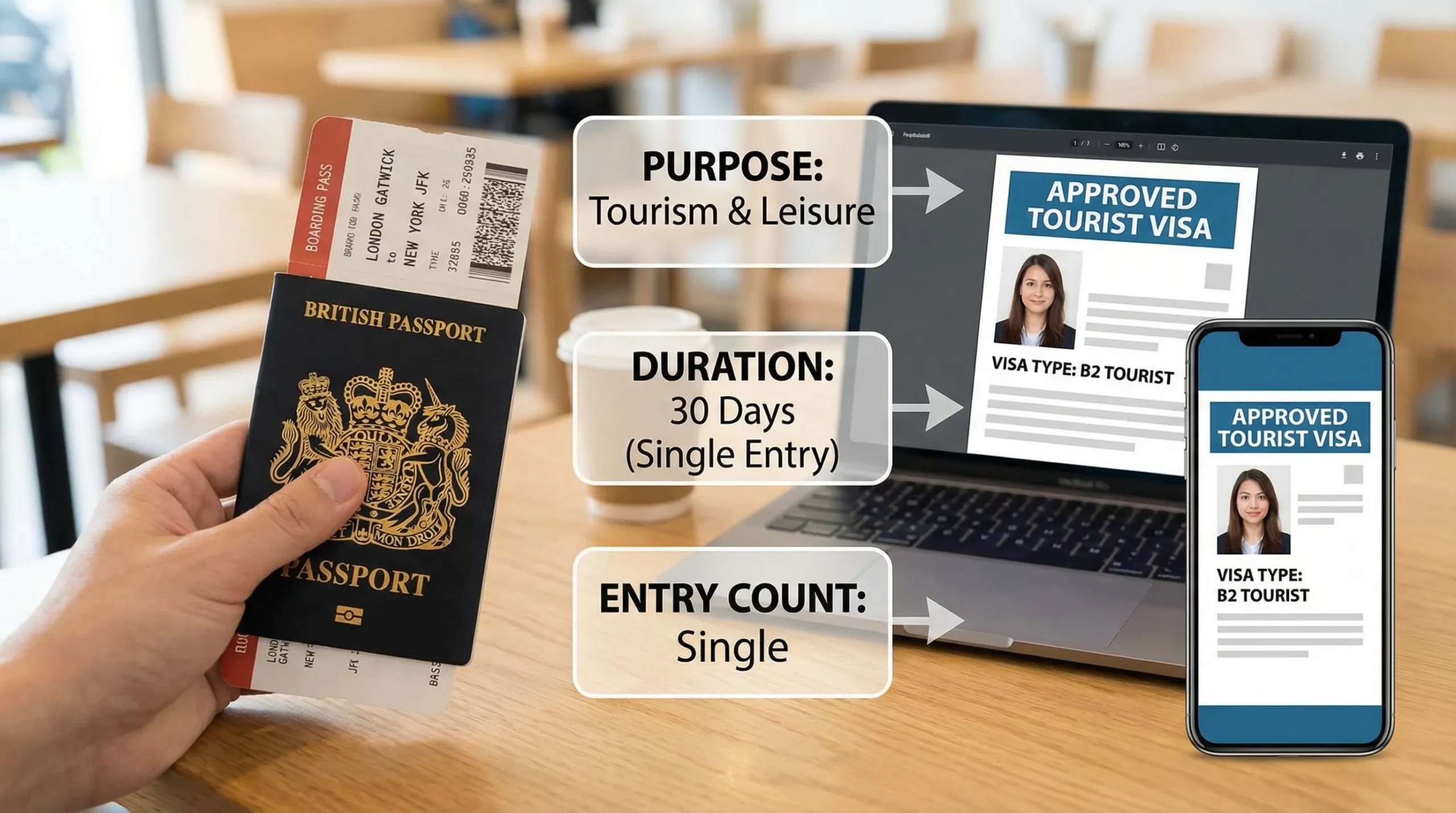
If the destination offers a digital application with an approval notice (often emailed as a PDF), travelers frequently refer to it as a “trip visa.”
If you are new to digital visas, SimpleVisa’s guide on tourist visa basics can help clarify how tourist visas, eVisas, and processing timelines typically work.
3) An eTA/ETA style travel authorization
Some countries require an electronic travel authorization rather than a visa for certain nationalities. Travelers may still search “trip visa” because they know they need “something” before boarding.
This difference matters because an authorization is not always a visa, and the eligibility rules can be very different.
The biggest “wrong visa” problem: tourism vs business
One of the most expensive misunderstandings is assuming “trip” automatically means “tourism.” Many trips are a mix:
- An industry conference plus a weekend of sightseeing
- A sales visit plus a client dinner
- A site visit plus tourism days at the end
Immigration frameworks do not treat those the same way everywhere.
A good example is technical industries where short business travel is common. Civil engineering and infrastructure firms often move staff for inspections, site meetings, or project kickoffs, and visa classification can quickly become a compliance issue. If your business is also hiring for these project-driven roles, aligning travel readiness with talent planning can be part of the operational puzzle (and some firms work with specialist partners such as civil engineering recruitment services to reduce downtime).
Rule of thumb: If someone is doing hands-on work, delivering a service locally, or being paid by a local entity, a tourist visa is usually the wrong tool. But the exact definition of “work” varies by country, so always check official guidance.
How to choose the right visa or authorization for your trip
Instead of focusing on the label a traveler uses (“trip visa”), make the decision based on five concrete checks.
Check 1: Destination and transit points
Some itineraries require documents even for transit, while others do not. A “trip visa” search may miss transit rules entirely.
Check 2: Nationality and passport type
Eligibility changes dramatically by passport, and sometimes by residency status. The same destination may be visa-free for one traveler and visa-required for another.
Check 3: Purpose and activities (be painfully specific)
Ask what the traveler will actually do:
- Tourism only?
- Meeting clients?
- Training?
- Installing equipment?
A single word like “business” is not enough.
Check 4: Length of stay and entry count
Two trips to the same destination next month might require a multiple-entry visa, not a single-entry solution. The traveler calling it a “trip visa” may not realize entry count matters.
Check 5: Timing and processing window
Even eVisas can take time, and consular visas can require appointments. Build a buffer.
For timing guidance, SimpleVisa’s travel visa basics is a useful pre-booking checklist, especially for multi-country trips.
Common misconceptions (and how to avoid them)
“A trip visa is faster than a tourist visa”
Not necessarily. Speed depends on the real document type behind the term. Some tourist visas are issued electronically in a few days, others require in-person biometrics and longer review.
“If I have an eVisa, I’m guaranteed entry”
In most countries, a visa or eVisa is permission to seek entry, not a guarantee. Border officers can still deny entry if requirements are not met.
“Tourist visa means I can do any short-term activity”
Tourist visas are usually narrow. If the trip includes paid work or activities outside the permitted scope, travelers can face refusal at the border or future travel issues.
“Trip visa and tourist visa are always different things”
Often they are the same in practice, because the traveler means “tourist visa” but uses different words. The issue is not the phrase, it is failing to map the phrase to the government’s category.
For travel companies: how to handle “trip visa” searches in your booking flow
If you are an airline, OTA, tour operator, cruise line, or TMC, “trip visa” is a signal of intent, and also a signal of confusion. The goal is to remove ambiguity early.
Use language that mirrors how customers search, then translate to official terms
A high-converting pattern is:
- Customer-facing: “Check if you need a visa for your trip”
- System-facing: map to “tourist visa,” “business visa,” “eVisa,” “ETA/eTA,” “transit visa,” based on rules
Ask fewer questions, but make them higher-quality
You typically need only:
- Passport nationality
- Destination(s) and dates
- Purpose (with examples)
Keep rules current and consistent across channels
Visa and authorization policies change. If your website, confirmation email, and support scripts are inconsistent, customers lose trust and abandon.
Where SimpleVisa fits
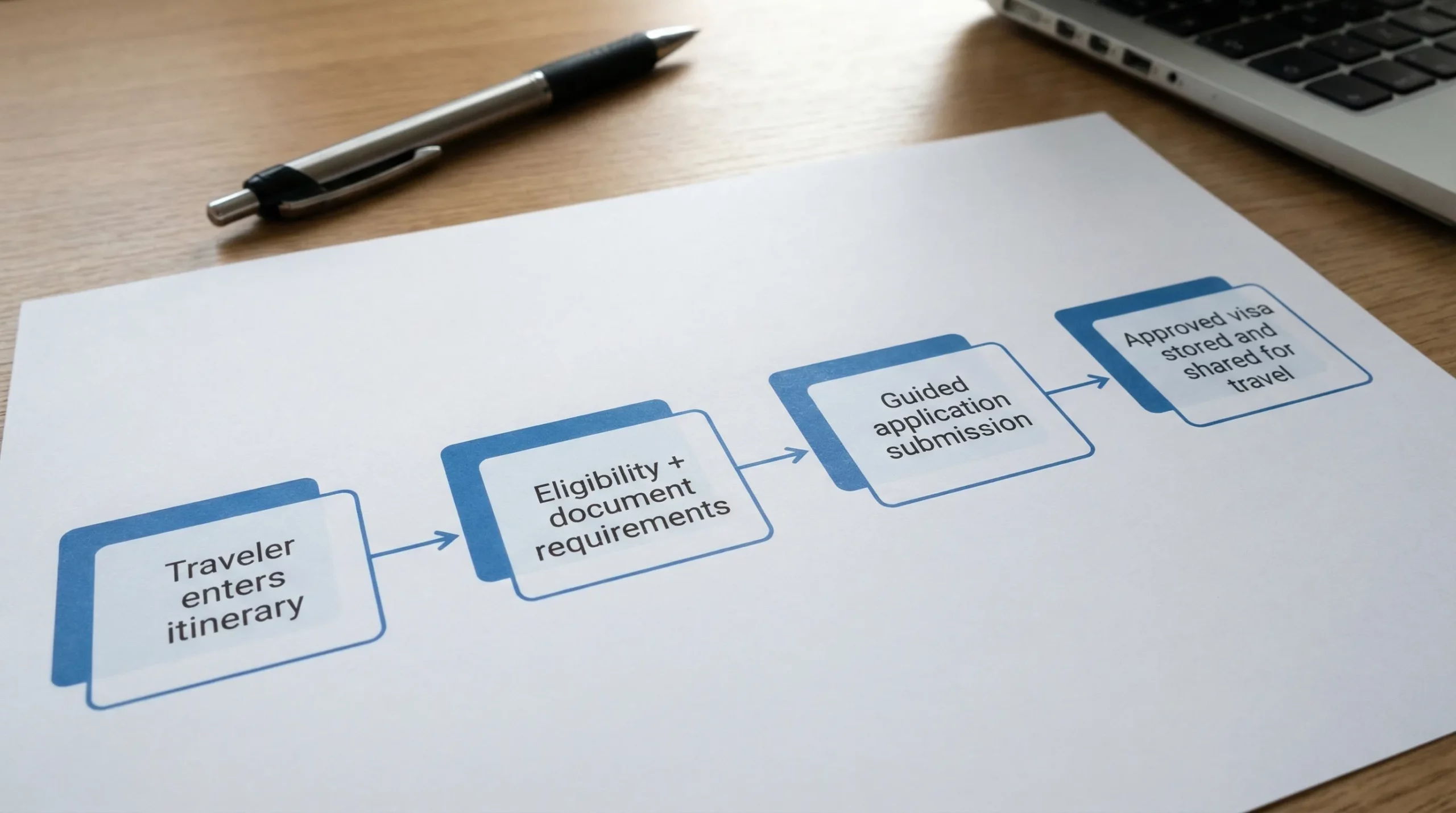
SimpleVisa is designed to help travel businesses streamline this exact moment by automating visa processing and guiding customers through border requirements. Depending on your setup, it can be integrated into the booking flow via API, offered through a white-label visa application app, or delivered as a data service for eligibility and requirements.
The main point is not to “sell a visa,” it is to prevent travel disruption while creating a smoother, revenue-positive customer experience.
Frequently Asked Questions
Is a trip visa the same as a tourist visa? Often yes in everyday conversation, but “trip visa” is not a standardized government category. A tourist visa is a defined visa type, so always check the official label for your destination.
Why do people call it a trip visa? Because they are searching for “whatever document I need for this trip.” Depending on the destination, that could be a tourist visa, eVisa, visitor visa, or a travel authorization like an eTA/ETA.
Can I use a tourist visa for a business trip? Sometimes limited business activities are allowed under visitor rules, but many countries require a separate business visa for certain activities. If the trip involves hands-on work or local payment, a tourist visa is commonly inappropriate.
Is an eVisa a tourist visa? It can be. “eVisa” describes the format (electronic issuance). “Tourist visa” describes the purpose (tourism). Many countries offer tourist eVisas.
What is the safest way to confirm the correct category? Use the destination’s official immigration guidance and match your exact purpose, length of stay, and entry count. If you sell travel, using a centralized rules and application workflow reduces errors.
Make “trip visa” confusion disappear for your travelers
If your customers are searching “trip visa,” they are asking for clarity at the most critical moment: before they fly. SimpleVisa helps travel businesses guide travelers to the correct visa or authorization, complete the application with fewer errors, and manage eVisas at scale.
Explore SimpleVisa’s solutions at simplevisa.com to see how API integration, white-label flows, and visa processing automation can fit into your travel experience.