Visa for You: Find the Right Type for Your Purpose

Planning a trip is easy until one detail stops everything at check-in: the wrong visa (or the wrong type of permission) for what you actually plan to do.
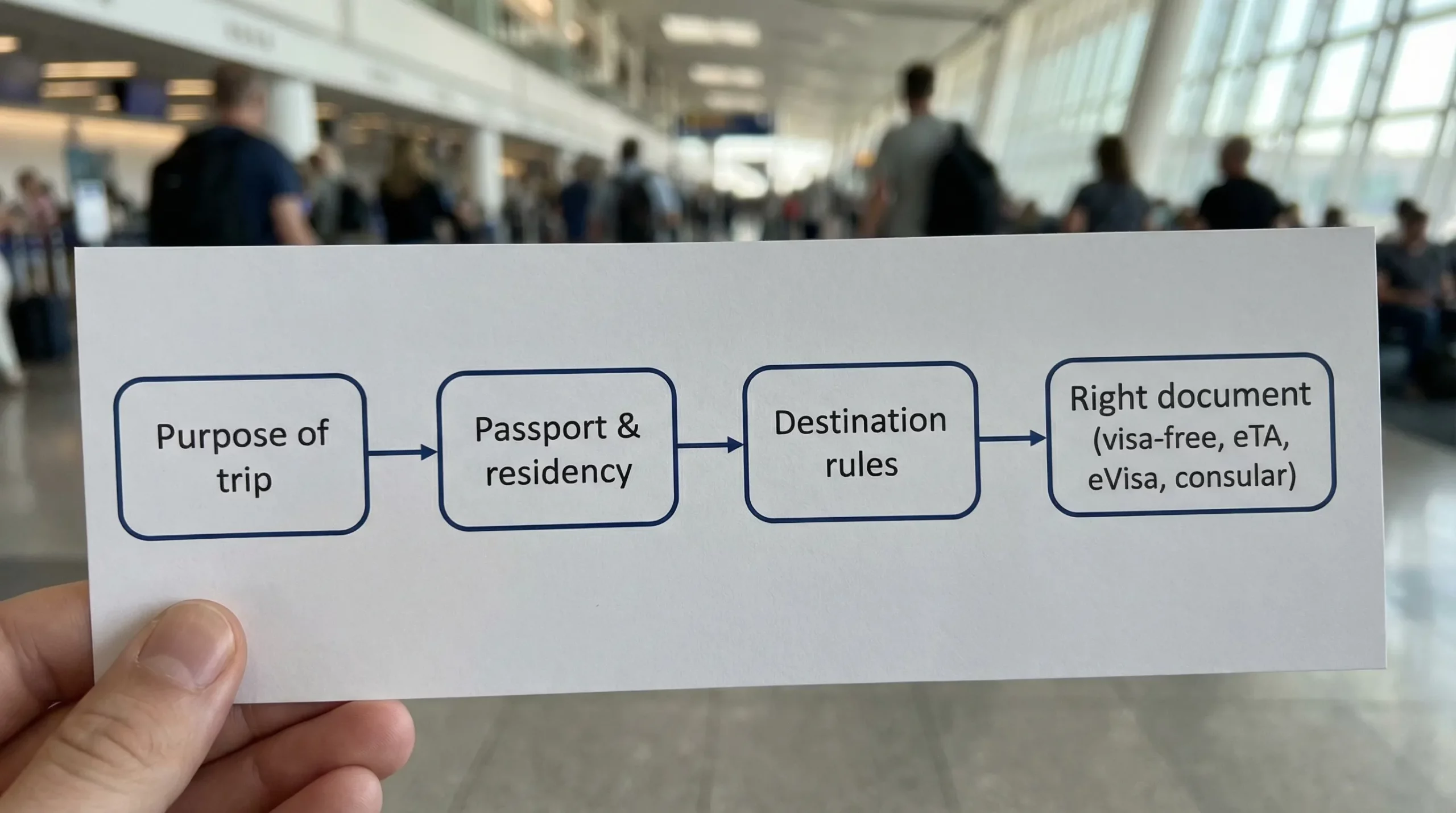
If you searched for “Visa for You”, your real question is usually this: Which travel document matches my purpose, my passport, and my destination, so I can enter legally and without delays? This guide breaks down the most common visa and travel authorization types by purpose of travel, and shows how to confirm the right option before you pay for flights.
First, “visa” can mean several different things
In everyday conversation, “visa” often becomes a catch-all term for any permission to enter a country. In practice, there are a few distinct categories:
- Visa-free entry: no visa or pre-authorization required (you still must meet entry rules).
- Electronic Travel Authorization (eTA/ESTA/ETA): a pre-travel screening for visa-exempt travelers.
- Electronic visa (eVisa): a visa application completed online and issued digitally.
- Visa on arrival (VoA): permission granted after you land (requirements still apply).
- Consular/embassy visa: a traditional visa issued by an embassy/consulate (often for longer stays or complex purposes).
- Residence permit / long-stay permission: for study, work, family reunification, or relocation.
If you want a deeper explanation of how digital documents differ, see SimpleVisa’s overview of eVisa vs. regular visa and eVisa vs. eTA.
The 3 factors that decide the “right visa for you”
Most visa mistakes come from assuming the destination alone determines the visa type. In reality, immigration rules typically depend on three inputs:
1) Your purpose of travel
Tourism, business meetings, paid work, study, transit, journalism, volunteering, and medical travel can each trigger different rules.
2) Your length of stay and number of entries
A weekend trip, a 60-day stay, and a 12-month relocation rarely use the same permission. Single-entry vs. multiple-entry rules also change what you need.
3) Your passport (and sometimes your residence status)
Two travelers on the same flight can need different documents because nationality affects eligibility for visa-free, eTA, or eVisa programs.
Quick decision table: match your purpose to a typical document type
The table below is a starting point, not a substitute for official rules. Countries define activities differently, and “business” is especially tricky.
| Your purpose | Most common permission (varies by country/passport) | Typical examples of allowed activities | Often required extras |
|---|---|---|---|
| Tourism / leisure | Visa-free, eTA/ESTA/ETA, or tourist eVisa | Vacation, visiting friends, short courses (sometimes) | Proof of onward travel, accommodation, funds |
| Business (short-term) | Visa-free business, eTA, business eVisa, or business visa | Meetings, conferences, contract negotiations (not paid local work) | Invitation letter, employer letter |
| Transit | Transit visa, transit eVisa, or visa-free transit | Passing through to another country | Confirmed onward ticket, valid visa for next stop |
| Study | Student visa or student residence permit | Degree programs, long courses | Acceptance letter, proof of funds, health insurance |
| Paid work | Work visa / permit | Employment, paid assignments | Contract, employer sponsorship, qualifications |
| Remote work / digital nomad | Digital nomad visa or long-stay visa | Working for a foreign employer while residing locally | Income proof, insurance, background checks |
| Family / partner visit | Visitor visa, family visit visa, or residency route | Visiting family, sometimes dependents | Proof of relationship, host details |
| Medical travel | Medical visa or medical eVisa | Treatment and recovery window | Hospital letter, funds, companion rules |
For a broader country-by-country overview, SimpleVisa also maintains a practical Visa Requirements by Country quick reference.
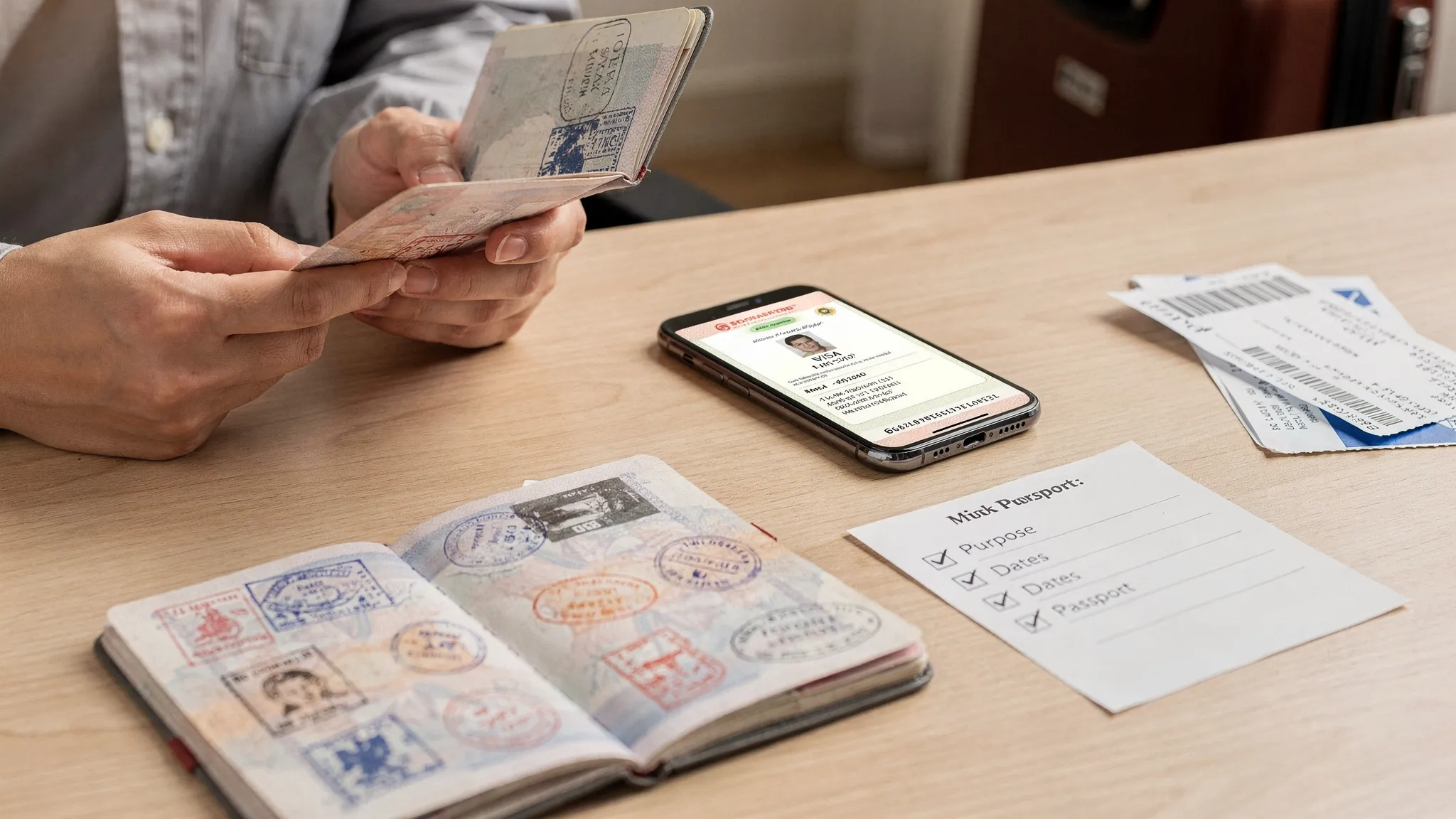
Visa-free entry: when “no visa” still has rules
Visa-free entry is the simplest path, but it is not “no requirements.” Border officers may still ask for:
- Return/onward ticket
- Proof of accommodation (hotel booking or host address)
- Proof of funds
- Travel insurance (required in some destinations)
- A purpose that matches visitor rules (tourism is not the same as working)
Also remember: visa-free stays are often capped (for example, the common “90 days within 180 days” rule in some regions).
eTA/ESTA/ETA: fast for short visits, but not a visa
Electronic travel authorizations are typically used when a country allows visa-exempt entry but still wants pre-screening.
Common characteristics:
- Applied for online before travel
- Linked electronically to your passport
- Designed for short stays (tourism, business visits, transit)
- Not valid for long-term study or paid employment in most cases
Examples include the U.S. ESTA (official info via U.S. Customs and Border Protection) and the upcoming EU ETIAS (official program info via the European Union).
eVisa: a visa issued digitally (often purpose-specific)
An eVisa is still a visa, just delivered in digital form. Many countries offer multiple eVisa categories such as tourist, business, student, or medical.
If you are new to the process, SimpleVisa’s Online Visa Application Guide and pre-submission checklist cover the typical workflow and document prep.
Common eVisa pitfalls to avoid
- Selecting the wrong purpose (for example, choosing “tourism” when you plan to attend paid performances).
- Passport validity issues (many destinations require 6+ months validity).
- Mismatch across documents (name order, passport number, dates, employer details).
- Last-minute submissions during peak travel periods.
Visa on arrival: convenient, but not always low-risk
Visa on arrival can look easy, but it comes with two practical risks:
- You may still be denied boarding if the airline cannot confirm eligibility.
- Requirements can change and queues can be long.
If your trip is time-sensitive (weddings, cruises, conferences), a pre-issued eVisa or consular visa is often safer.
Consular (embassy) visas: when complexity or duration increases
You are more likely to need a traditional consular visa when:
- Your stay is longer than typical tourist limits
- Your purpose requires additional screening (study, work, journalism, relocation)
- Your nationality is not eligible for eVisa/eTA pathways
Consular visas can include biometrics and interviews, and timelines can vary widely. Build buffer time into your itinerary.
“Visa for you” by purpose: how to choose the right category
Below are the most common travel purposes, what they usually map to, and the questions to ask yourself.
Tourism and visiting friends or family
This is the most common use case and is often served by visa-free entry, eTA, or a tourist eVisa.
Ask:
- Are you doing any activity that looks like work (paid gigs, content production for a local client, onsite services)?
- Does your itinerary include multiple trips back and forth (multi-entry needed)?
- Do you have the required supporting documents ready if asked at the border?
Related reading: Tourist Visa Basics.
Business travel (meetings, events, conferences)
Business travel is one of the easiest categories to misunderstand. Many countries allow short business visits without a work permit, but they still restrict what you can do.
Often used documents: visa-free business entry, eTA, business eVisa, or a business visa.
Be careful with:
- Paid work locally (even short assignments can require a work visa)
- Hands-on services (installations, on-site consulting, performances)
If your trip is business-related and you are unsure, treat it as a compliance question, not a guess.
Transit
Transit rules depend on:
- Whether you leave the airport
- Your nationality
- Your next destination (and whether you hold the required visa for it)
Often used documents: transit visa, sometimes visa-free transit, or an eTA if transiting through a country that uses one.
Study (short course vs. degree program)
A weekend language workshop is not treated the same as a university program.
- Short courses may be allowed under visitor rules in some destinations.
- Degree programs almost always require a student visa or residence permit.
Expect to provide proof of acceptance, financial capacity, and insurance, and to meet strict deadlines.
Paid work
If you will be employed locally, paid by a local entity, or doing work that benefits a local market, you usually need a work visa/permit.
This category often involves employer sponsorship and longer processing times. It is rarely an eTA-only scenario.
Remote work and digital nomad travel
“Working from a laptop” is not always covered by a tourist status, even if your employer is abroad. Many destinations have introduced digital nomad visas or similar long-stay permissions, each with unique requirements.
Typical requirements include proof of income, background checks, and insurance.
Medical travel
Medical visas (or medical eVisas) are common in destinations that host medical tourism. You may need documentation from the treating facility and proof of funds, and companion rules may apply.
How to confirm the correct visa type (without relying on assumptions)
To find the right visa for you, use a validation approach that ties rules to your exact situation:
Use official sources for the final check
When possible, confirm requirements on:
- The destination’s immigration ministry or consulate website
- Official eVisa/eTA portals
If you are applying online, also protect yourself against fraud. SimpleVisa’s guide on how to apply for a travel visa online safely outlines common scam patterns and verification steps.
Confirm definitions of “business” and “work”
If your trip includes hands-on activities, payments, performances, or extended onsite time, verify whether it crosses into work authorization.
Validate your itinerary against the permission rules
Even with the right visa type, travelers run into issues due to:
- Arriving before the visa validity start date
- Staying beyond the permitted duration
- Using a single-entry visa for a multi-country loop that re-enters the destination
For travel brands: turning visa confusion into a better customer experience
If you run an OTA, airline, tour operator, cruise line, or TMC, “Visa for You” questions show up at the worst time: right before checkout or right before departure.
A strong visa layer in your customer journey can:
- Reduce booking abandonment caused by uncertainty
- Cut support tickets tied to entry rules
- Create a new ancillary revenue stream when customers choose paid assistance
SimpleVisa helps travel businesses streamline visa applications and border requirements with solutions that can be embedded in booking flows or delivered via a white-label app or data service. If you want to see how this fits your stack, start with Travel Visa Basics: What to Know Before You Book and explore SimpleVisa at simplevisa.com.
Frequently Asked Questions
Is an eTA the same as a visa? No. An eTA (or ESTA/ETA in some countries) is typically a pre-travel authorization for visa-exempt visitors, not a full visa.
How do I know which visa is right for my purpose? Start with your purpose (tourism, business, work, study), then confirm eligibility based on your passport and destination rules on official sources.
Can I work on a tourist visa if I am paid by a foreign company? Sometimes it is tolerated, sometimes it is explicitly restricted, and definitions vary by country. If you plan to work remotely, check whether a digital nomad or long-stay permission is required.
Do I need a visa if I am only transiting? Possibly. Transit visa rules depend on nationality, whether you leave the airport, and your onward destination documentation.
Does the right visa guarantee entry? No. Visas and travel authorizations generally allow you to travel to a port of entry, but border officers still make the final admission decision.
What is the safest way to apply online? Use official government portals or trusted providers, verify the domain, avoid unsolicited links, and keep digital copies of confirmations and approvals.
Ready to make “Visa for You” a seamless step (for you or your customers)?
If you are a travel business, SimpleVisa can help you guide travelers to the correct document type and streamline the application process with automation, API integration, or a white-label experience. Learn more at SimpleVisa and explore integration options that match your booking flow and timeline.