Visa Help for Urgent Travel: What Can Still Be Done
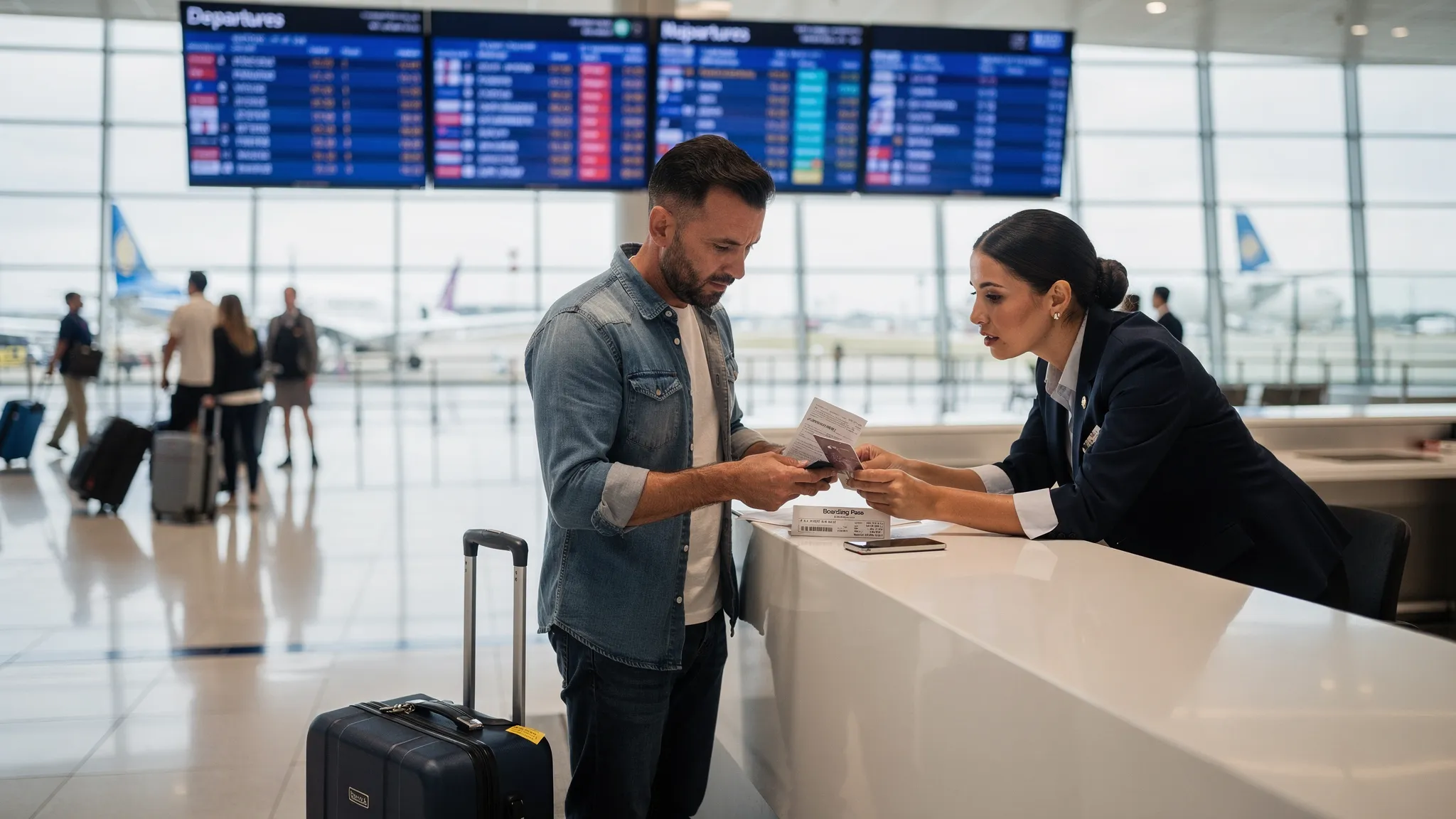
Urgent travel can turn a visa question into a boarding risk in minutes. A last-minute client trip, family emergency, medical appointment, funeral, tournament, cruise, or sudden route change may leave travelers asking the same thing: “Is there still time to get the right visa?”
The honest answer is: sometimes. What can still be done depends on the traveler’s passport, destination, transit countries, purpose of travel, departure time, and whether the destination offers an electronic visa, eTA, visa on arrival, priority processing, or emergency consular appointment.
The key is to stop guessing and triage the situation quickly. In urgent travel, the goal is not simply to “get a visa fast.” The goal is to identify the fastest lawful travel document pathway that can be verified before airline check-in.

Start with a 10-minute visa triage
Before filling out forms or paying fees, collect the facts that determine what options are still available. Visa rules are highly specific, and the same destination may have different requirements for two travelers on the same booking.
At minimum, confirm:
- Passport nationality and passport expiry date
- Destination country and every transit country
- Travel purpose, such as tourism, business, study, medical, family emergency, or work
- Length of stay and number of entries needed
- Exact departure time, including check-in deadline
- Existing visas, residence permits, or dual citizenship options
- Any prior refusals, overstays, criminal issues, or immigration complications
This matters because “urgent visa help” could mean different things. One traveler may qualify for an eVisa processed online. Another may only need an electronic travel authorization. A third may need a consular visa with biometrics and an interview, which may be impossible before tomorrow’s flight.
If you are still deciding whether a visa is required at all, start with a requirements check before booking or changing flights. SimpleVisa’s guide to travel visa basics explains the main document categories and what to verify early.
What can still be done based on your departure window
The less time you have, the fewer safe options remain. Use the table below as a practical triage framework.
| Time before departure | What may still be possible | Main risk to watch |
|---|---|---|
| 7+ days | Standard eVisa or eTA, priority processing if offered, document correction before submission | Assuming “online” always means instant |
| 72 hours to 7 days | Fast eVisa or eTA, emergency appointment request, urgent document review, itinerary adjustment | Manual review or missing documents delaying approval |
| 24 to 72 hours | Instant or near-instant authorization where available, airline requirement check, embassy emergency request, refundable rebooking | Submitting the wrong visa type under pressure |
| Less than 24 hours | Visa-free alternative destination, official visa-on-arrival option if eligible, same-day rebooking, transit change | Relying on rumors or unofficial sites |
| At airport check-in | Verify document status, contact airline support, change route or travel date if no valid document exists | Being denied boarding if visa is pending or missing |
A pending application is usually not enough to board if the destination requires an approved authorization before travel. Airlines are often responsible for checking travel documents before boarding and may refuse carriage if requirements are not met.
Fastest valid visa pathways to check first
When travel is urgent, the priority is to identify which official pathway can produce a usable approval before check-in. These are the most common options.
Electronic visa or eVisa
An eVisa is often the best urgent option when available because the application is submitted online and the approval is typically linked digitally to the passport or issued as a downloadable confirmation. Processing times vary widely. Some eVisas are approved quickly, while others may require manual review or additional documents.
If the destination offers several eVisa categories, choose carefully. A tourist eVisa may not cover business meetings, paid work, study, media activity, volunteering, or medical treatment. Selecting the wrong purpose can lead to refusal or problems at the border.
For a refresher on online application preparation, see SimpleVisa’s online visa application checklist.
Electronic travel authorization
An eTA, ETA, or ESTA-style authorization may be faster than a visa, but only eligible travelers can use it. These systems are usually for short visits by visa-exempt nationals and are often linked to a specific passport.
For example, the U.S. Customs and Border Protection ESTA FAQ advises travelers to apply at least 72 hours before travel. The UK government says travelers applying for a UK ETA will usually receive a decision within 3 working days, although some decisions may take longer, according to official UK ETA guidance.
The lesson is simple: even “fast” electronic systems can require a buffer. If departure is imminent, apply only after confirming eligibility and passport accuracy.
Visa on arrival
A visa on arrival can be useful for urgent travel, but it is not a backup plan unless the traveler is clearly eligible. Requirements may include passport validity, return ticket, hotel booking, cash or card payment, photo, invitation letter, or proof of funds.
Always verify visa-on-arrival eligibility through official government sources or a trusted travel document system. Do not assume availability because another traveler used it in the past. Rules can change by nationality, border point, airline route, or purpose of travel.
Emergency consular appointment
If an electronic option is not available, an emergency appointment may be possible through a consulate or embassy. This is more common for situations such as urgent medical treatment, funeral travel, critical business needs, students with imminent program start dates, or humanitarian emergencies.
However, emergency appointments are discretionary. You may need documentary proof of urgency, such as a medical letter, death certificate, employer letter, court notice, or school start date evidence. Appointment availability also varies by country and consulate. For U.S. visas, travelers can check official visa appointment wait times and follow the relevant embassy process for expedited requests.
Fix common blockers before submitting anything
In urgent travel, speed is not just about paying for priority processing. It is also about preventing avoidable rejection, manual review, or document requests.
| Blocker | Why it causes delays | Fast fix |
|---|---|---|
| Passport name mismatch | Visa systems compare names against passport and ticket data | Copy the name exactly from the passport machine-readable zone when possible |
| Passport expires too soon | Many destinations require 3 to 6 months of validity beyond travel dates | Renew passport first if required, or choose a route where current passport is accepted |
| Poor scan or photo | Blurry images can trigger manual review or refusal | Use a clear color scan and a compliant digital photo |
| Wrong travel purpose | Tourist, business, work, study, and transit rules differ | Match the visa category to the real purpose of travel |
| Inconsistent itinerary | Dates, hotels, and flights that do not align raise questions | Keep travel dates consistent across all documents |
| Payment failure | Unpaid applications may not enter processing | Use a payment card accepted for international online transactions |
| Missing invitation or proof | Business, family, medical, and event travel often need supporting evidence | Request a signed letter immediately and upload it in the required format |
Name issues are especially common when travelers are under pressure. If your passport, ticket, and eVisa do not match, read SimpleVisa’s guide on handling name mismatches on tickets, passports, and eVisas before making changes.
How to expedite a visa application without making things worse
Expedited processing can help, but only if it is available for the correct visa type and traveler profile. Not every government offers priority service, and paying a third party does not automatically change the government’s decision timeline.
When urgency is real, focus on these practical actions.
Apply through the correct official or trusted channel. Scam sites often target urgent travelers with promises of guaranteed same-day approval. If a website hides government fees, has unclear ownership, uses pressure tactics, or guarantees approval, step back. SimpleVisa’s guide to trusted ways to apply and track a visa online explains how to spot safer application channels.
Use priority processing only if the government or authorized provider offers it. Check whether priority means faster review, faster appointment scheduling, faster passport return, or simply premium customer support. These are not the same.
Avoid duplicate applications unless official instructions say otherwise. Submitting multiple applications for the same traveler can create confusion, duplicate payments, or additional review.
Respond quickly to document requests. In urgent cases, check email, spam folders, SMS, and the application portal frequently. A delayed response to a small request can cost more time than the original processing queue.
Do not lie or omit information. Urgency does not justify inaccurate answers. Misrepresentation can cause refusal, future travel restrictions, or border problems.
For more speed-focused tactics, SimpleVisa also has a dedicated guide on how to expedite an electronic visa application.
Build a backup travel plan while the visa is pending
Urgent visa help should always include a contingency plan. Even a well-prepared application can be delayed by manual review, system outages, national holidays, missing biometrics, or security screening.
A realistic backup plan may include:
- Moving the flight to a later date with the same destination
- Choosing a visa-free destination if the trip purpose allows flexibility
- Changing transit countries if a transit visa is the issue
- Rebooking onto a route that avoids a country with stricter document requirements
- Splitting a group trip if only one traveler is delayed
- Using refundable accommodation or flexible tickets until approval arrives
For business travel, the backup might be sending a colleague with the right travel document, joining the first meeting remotely, or rescheduling only the international segment. For families, it may mean delaying one passenger while others travel, but only if minor travel consent and entry rules are satisfied.
The important point is to make these decisions before check-in. Waiting until the airport often reduces options and increases costs.
What you should do after approval arrives
Do not assume the urgent visa problem is solved the moment you receive an approval email. Review the authorization immediately.
Check that the passport number, full name, date of birth, nationality, validity dates, number of entries, destination, and visa category are correct. Also check any conditions, such as maximum stay, permitted activities, arrival airports, health requirements, or required printed copies.
Save the approval in multiple places. Keep a PDF on your phone, a cloud backup, and a printed copy if the destination, airline, or local conditions make that prudent. Some eVisas are digitally linked to the passport, but a printed confirmation can still help if airline staff, border systems, or internet access create friction.
If the visa is approved after you changed flights, confirm that the new travel dates still fall within the authorization validity period.
When urgent visa help may not be enough
Some situations cannot be solved quickly, even with expert support. It is better to know this early than to waste hours on unrealistic options.
Urgent travel may be impossible or highly risky if:
- The passport is expired or does not meet destination validity rules
- The required visa type needs biometrics, an interview, or original document submission
- The traveler has a prior refusal, overstay, deportation, or complex immigration history
- The destination does not offer an eVisa, eTA, visa on arrival, or priority pathway for that nationality
- The trip purpose is work, study, migration, journalism, or long-term stay, and a full visa is required
- The visa is still pending and the airline requires approval before boarding
- There is a serious mismatch between passport, ticket, and visa details
No visa service, platform, airline, or travel agency can guarantee government approval or final entry. Immigration authorities decide whether to issue a visa, and border officers decide whether the traveler is admitted.
How travel businesses can reduce urgent visa crises
For airlines, OTAs, tour operators, cruise lines, TMCs, and travel agencies, urgent visa issues are not just traveler problems. They create support spikes, booking abandonment, denied boarding risk, chargebacks, unhappy customers, and missed ancillary revenue.
The best time to solve urgent visa stress is before it becomes urgent. That means surfacing entry requirements at booking, guiding travelers through the correct application pathway, and reminding them after purchase if action is still needed.
| Business problem | Better visa workflow |
|---|---|
| Customers discover visa requirements too late | Show personalized visa needs during booking or immediately post-booking |
| Support teams manually research rules | Use travel document automation and structured visa data |
| Travelers abandon complex forms | Offer guided visa applications with clearer steps |
| Visa services sit outside the booking journey | Integrate through an API, white-label app, or no-code implementation |
| Missed service revenue | Offer visa processing as a relevant ancillary product |
| Last-minute changes create confusion | Keep visa guidance tied to passport, itinerary, and travel dates |
SimpleVisa helps travel businesses streamline visa application workflows through visa processing automation, API integration, white-label visa application options, custom data services, guided customer applications, premium eVisa management, and no-code implementation options. For a deeper look at platform selection, see SimpleVisa’s guide to choosing a visa processing service.
FAQ
Can I get a visa on the same day for urgent travel? Sometimes, but it depends entirely on the destination, passport nationality, visa type, and available processing options. Some electronic travel authorizations can be approved quickly, while other visas require days, weeks, biometrics, or an appointment.
Does expedited processing guarantee visa approval? No. Expedited processing may speed up review, appointment access, or document return, but the government still decides whether the application meets requirements.
Can I board a flight if my visa application is pending? Usually not if the destination requires an approved visa or travel authorization before travel. Airlines often check documentation before boarding and may refuse passengers without valid proof.
Should I submit multiple urgent visa applications to improve my chances? Generally, no. Duplicate applications can cause confusion, extra fees, or review delays. Follow the official instructions for the specific visa system.
What if I booked flights before checking visa requirements? Check whether the ticket can be changed, whether the destination offers a fast electronic option, and whether your route includes transit countries with extra requirements. If approval cannot arrive in time, rebooking may be safer than risking denied boarding.
Can a visa service fix an expired passport? No. If the passport does not meet validity rules, you may need an emergency passport renewal before applying for the visa. Passport renewal rules and emergency options depend on the issuing country.
Is a visa on arrival a safe last-minute option? Only if official rules confirm that you are eligible for your nationality, purpose of travel, entry point, and length of stay. Do not rely on outdated forum posts or another traveler’s experience.
How can travel companies help customers with urgent visa needs? Travel companies can reduce last-minute problems by embedding visa checks and guided applications into booking or post-booking flows. SimpleVisa supports API, white-label, data, and no-code options for travel businesses that want to offer smoother border crossing solutions.
Turn urgent visa questions into a smoother travel experience
Urgent travel does not have to mean chaotic visa support. The fastest path is a structured one: verify requirements, choose the correct lawful document, prepare clean supporting files, monitor status, and keep a backup plan ready.
For travel businesses, these moments are also an opportunity to protect bookings, improve customer confidence, and offer a useful ancillary service at exactly the right time. SimpleVisa helps travel brands integrate guided visa applications and border requirement workflows into the customer journey, whether through API integration, a white-label app, custom data services, or no-code implementation.
If your customers often ask for visa help close to departure, connect with SimpleVisa to explore a simpler, more scalable way to support urgent and routine travel document needs.