Visa Requirements for Cruises: Avoid Port-of-Call Surprises
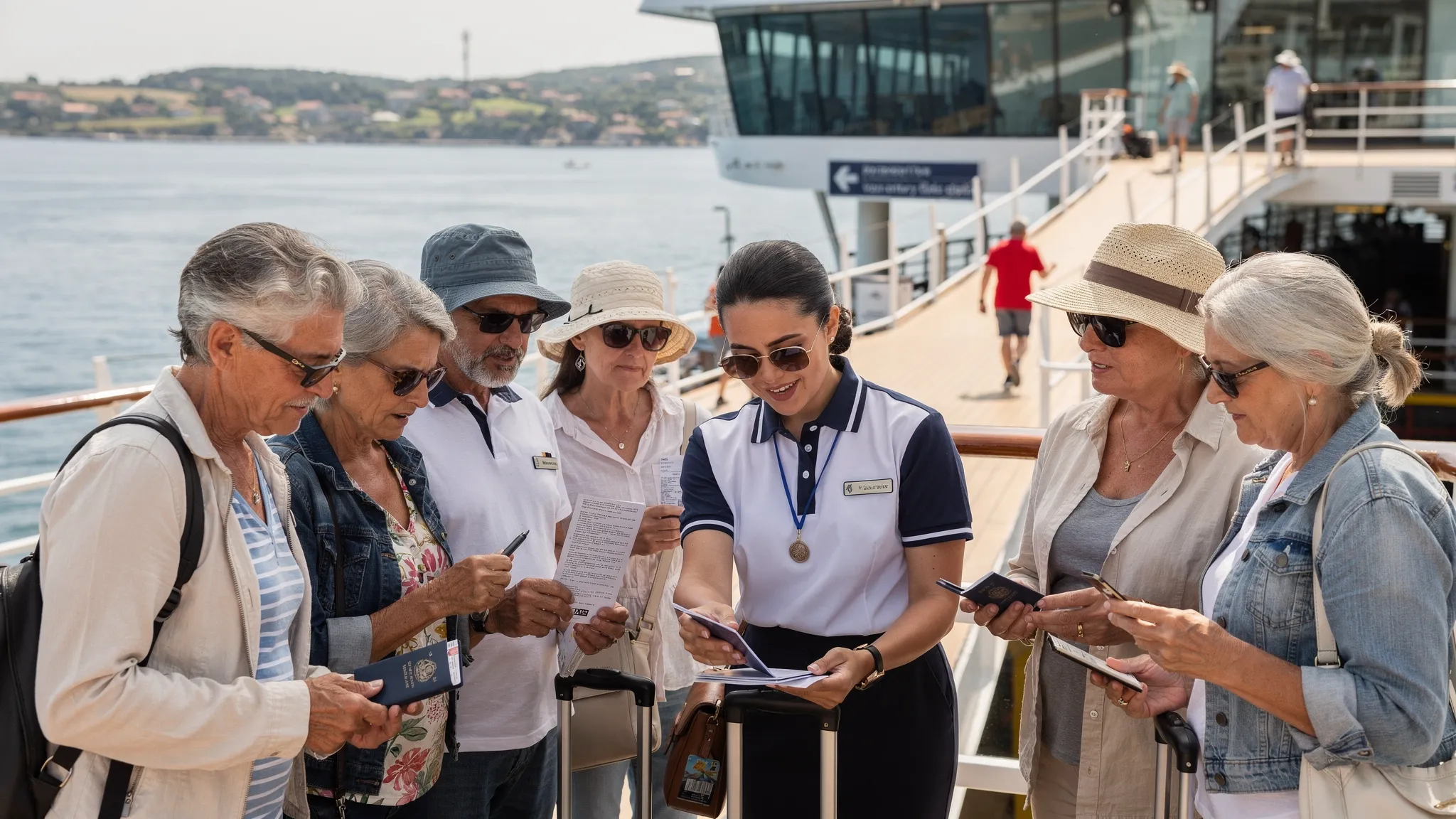
Cruises look simple on paper: you board once, unpack once, and wake up in a new destination every day. The administrative reality is the opposite. A single itinerary can involve multiple immigration jurisdictions, different entry rules for arrivals by sea, and visa requirements that change depending on whether you step off the ship.
That’s why “port-of-call surprises” happen, and why they are so painful: you might be denied boarding at embarkation, refused entry at a port, or forced to stay onboard while everyone else explores.
Why cruise visa requirements are uniquely tricky
Unlike a point-to-point flight, a cruise is a chain of border crossings. Visa rules can apply at any link in that chain.
You are visiting multiple countries, not just “the cruise destination”
Most travelers check the visa for the country they’re most excited about, then assume the rest are “transit.” Immigration authorities often do not treat a port-of-call as “just a stop,” especially when passengers can disembark.
“Arrival by sea” can be treated differently than “arrival by air”
Some destinations have special rules for cruise passengers (for example, limited shore access, specific port permissions, or specific electronic visa pathways). Others apply the same visitor rules regardless of how you arrive. You cannot assume your airport rules map perfectly to seaport rules.
The cruise line may check documents, but the legal responsibility is still yours
Cruise lines and airlines have strong incentives to prevent passengers traveling without correct documents (carrier sanctions, denied boarding handling, operational disruption). Still, they are not your immigration advisor, and they may not validate edge cases (dual citizenship, recent passport renewal, residency-based exemptions).
Itineraries change
Weather, mechanical issues, geopolitical events, and port congestion can trigger last-minute reroutes. If the ship substitutes a port with stricter requirements, you can suddenly be missing a visa.

The 6 checks to run for every cruise itinerary (before you pay in full)
Think of this as your “port-of-call visa audit.” It takes a few minutes per port and prevents most surprises.
1) Confirm your passport readiness first
Visa eligibility often depends on passport validity, passport type, and blank pages (for paper visas), even when the visa itself is electronic.
At minimum, verify:
- Your passport is valid for the required period beyond travel (requirements vary widely).
- Your passport details match your booking exactly (names, order, characters).
- If you recently renewed your passport, whether any existing eVisa or travel authorization is linked to the old passport.
2) Identify what “status” you are traveling under
Two people on the same ship can have different requirements.
You should check rules based on:
- Nationality (passport citizenship)
- Residency or visa status in your home country (some exemptions depend on residency)
- Dual citizenship (which passport you will use for the cruise)
3) Treat every port-of-call as a potential entry
For each stop, decide which of the following applies:
- You will disembark and clear immigration (common)
- You may disembark but remain in a limited “port area”
- You will not disembark (staying onboard)
Even if you plan to stay onboard, you still need to know whether the destination requires passengers to hold a visa regardless of disembarkation. Some do.
4) Check whether you need multiple entries (or a specific entry sequence)
Cruises can create “hidden” multiple-entry scenarios, for example:
- The itinerary starts in Country A, visits Country B, then returns to Country A
- The itinerary crosses between regions with different entry regimes
In those cases, you may need a multiple-entry authorization, or a visa that remains valid through the entire trip.
5) Validate shore excursion assumptions
A shore excursion can change your immigration profile.
Examples:
- An excursion that crosses a land border (even briefly)
- An overnight stop where local rules differ from same-day cruise calls
- A tour that requires domestic flights within the country
6) Don’t forget embarkation and re-entry rules
Many cruise disruptions happen before you ever see the ship.
Confirm:
- Entry requirements for the embarkation country (if you are flying in)
- Transit rules for any flight connections to reach the port
- Re-entry requirements for your home country (and any “closed-loop” conditions if applicable)
Common cruise visa surprise scenarios (and how to avoid them)
The goal is not to memorize country rules (they change), but to recognize patterns that frequently cause mistakes.
“But it’s only a few hours in port”
Length of stay is not the only factor. Many countries base requirements on nationality and purpose (tourism), not hours.
How to avoid it: assume you need to check entry rules for every stop where disembarkation is possible.
Mixed-region itineraries
A popular itinerary might combine ports that fall under different immigration frameworks.
How to avoid it: map the itinerary by country and region and check each one separately, rather than assuming the region is uniform.
New electronic authorizations (ETAs) added to formerly visa-free travel
More destinations are adopting electronic travel authorizations similar to the U.S. ESTA. These are not visas, but they can still be mandatory for boarding.
How to avoid it: check official government sources for current requirements and apply early when an authorization is required.
Helpful official references:
- U.S. ESTA information from U.S. Customs and Border Protection
- EU ETIAS updates via the official EU ETIAS site
- UK entry permission and ETA guidance via the UK government
Repositioning cruises and one-way disembarkation
A cruise that starts in one country and ends in another can create extra checks, especially if you fly home from the final port.
How to avoid it: treat it like two trips combined (cruise entry rules plus the flight home itinerary and transits).
Itinerary changes and “replacement ports”
When a ship substitutes a port, it can introduce a new visa requirement with little notice.
How to avoid it: choose a buffer strategy.
- If you are risk-averse, prioritize itineraries where your passport has broad visa-free access.
- If you are traveling to regions with frequent reroutes, consider securing flexible electronic visas where appropriate.
A practical “port-of-call visa plan” you can follow
Here is a simple timeline that works for most cruise travelers.
90 to 60 days before sailing
- List every country on the itinerary, including embarkation and disembarkation.
- Check whether each stop is visa-free, requires an electronic visa (eVisa), requires an electronic travel authorization (ETA), or needs a consular visa.
- Identify long-lead items (appointments, document legalization, mailed passports).
A reliable way to cross-check is to use a rules database tool such as IATA Timatic (often used by airlines) plus the official government site for the destination.
60 to 30 days before sailing
- Start any consular visas.
- Apply for eVisas where processing times can fluctuate in peak season.
- Confirm your shore excursion plans do not introduce additional border crossings.
14 days before sailing
- Download and back up approvals (PDFs, confirmation emails, reference numbers).
- Re-check any ports that have had recent policy changes.
- Verify your passport information in the cruise booking matches your document exactly.
72 hours before sailing
- Keep digital copies available offline (phone and printed backup).
- Ensure you can access the email account used for applications.
- If traveling as a family, confirm minors have the required documents (and any consent paperwork where applicable).
What to do if you discover a visa requirement late
Last-minute does not always mean “trip over,” but your options narrow fast.
If an eVisa or ETA is available
- Apply immediately through the official channel or a trusted provider.
- Double-check that your travel dates and passport number are correct.
- Save proof of submission and any status page.
If a consular visa is required
You may have to choose between:
- Changing to an itinerary without that port
- Staying onboard during that port call (only if the country allows it)
- Rebooking to a later sailing
If the cruise line changes the itinerary
Ask the cruise line what documentation they will require for boarding after the change, and whether they are offering alternatives (refunds, port substitutions, onboard credit). Document requirements can be enforced at embarkation even if a port is later skipped.
For cruise lines and travel sellers: prevent surprises at scale
If you sell cruises (cruise line, OTA, travel agency), port-of-call visa confusion creates measurable business damage: support spikes, missed sailings, chargebacks, and dissatisfied customers.
The fix is to operationalize visa checks as part of the customer journey, not as a PDF link in the confirmation email.
What “good” looks like in 2026
- Personalized requirements surfaced by passport nationality and itinerary (including ports-of-call)
- Guided online visa processing embedded into booking or post-booking
- Proactive alerts when rules change or when documentation is missing
- Clear ownership between your support team and the visa provider for escalations
This is where travel document automation helps. SimpleVisa supports travel businesses with visa processing automation via API integration, a white-label visa application app, and custom data services. Done well, it improves compliance outcomes and creates ancillary revenue without adding friction.
If you want a cruise-specific view, see: How cruise lines can simplify shore-visa requirements with API data.
Quick reference table: where cruise travelers often get tripped up
| Situation | What to confirm | Typical surprise |
|---|---|---|
| Multiple ports-of-call | Entry rules for each country | A single “short stop” still requires authorization |
| Returning to the starting country | Multiple-entry needs | Single-entry approval is not enough |
| Overnight in port | Whether rules differ from day visit | Extra checks or stricter enforcement |
| Shore excursion with land border | Border rules for the neighboring country | Tour crosses a border unexpectedly |
| Passport recently renewed | Whether eVisas are passport-linked | Authorization tied to old passport |
| Reroute to replacement port | Rules for the new stop | No time left to get a consular visa |
Frequently Asked Questions
Do I need a visa for a cruise port-of-call if I don’t leave the ship? Sometimes. Some destinations require passengers to hold the correct authorization even if they remain onboard, while others only enforce it on disembarkation. Check each port’s rules.
Will the cruise line handle visas for me? Usually, no. Cruise lines may provide guidance and may deny boarding if you lack required documents, but you are typically responsible for securing visas and ensuring eligibility.
Are visa rules different when arriving by sea? They can be. Some countries have specific cruise passenger processes, while others apply the same visitor rules as airport arrivals. Always verify requirements for seaport entry.
What’s the difference between an eVisa and an ETA (like ESTA-style authorizations)? An eVisa is a visa issued electronically. An ETA is generally a pre-travel authorization for visa-exempt travelers. Both can be mandatory for boarding.
What documents should I carry on cruise day even if my visa is electronic? Keep your passport, a downloaded copy of approvals (plus a printed backup if possible), confirmation numbers, and any supporting documents referenced in the approval (such as onward travel details).
Make cruise border crossings predictable (for you and your customers)
Cruise travel is supposed to remove complexity, not add it. The best way to avoid port-of-call surprises is to treat visas as a per-stop requirement, validate multi-entry scenarios, and build a timeline that fits your itinerary.
If you’re a cruise line, OTA, or travel agency and want to make this process seamless for customers, SimpleVisa helps you embed visa checks and guided applications into the booking or post-booking journey through an API, white-label app, or no-code implementation.
Explore SimpleVisa’s border crossing solutions at simplevisa.com or request a demo to see how automated visa management can reduce disruptions and grow ancillary revenue.