Visa Services Center: What It Is and When You Need One
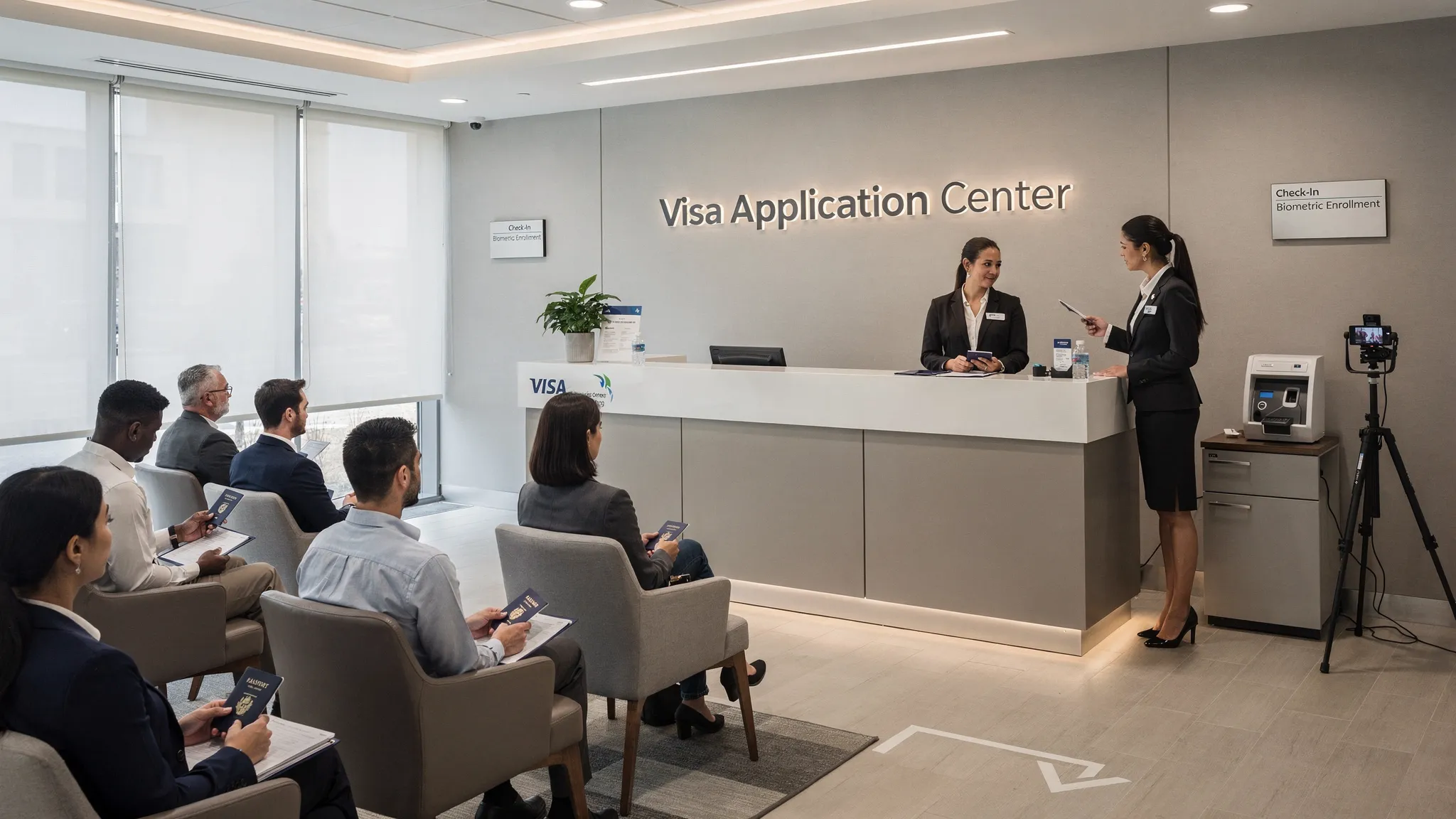
If you have ever been told to “go to the visa services center,” it can sound like you are about to visit a government office. In many countries, a visa services center is not a consulate or embassy at all. It is a physical location (often run by an outsourced partner) where you complete specific in-person steps for a visa or travel authorization, like biometrics, document drop-off, or passport pickup.
Understanding what these centers do, and when you actually need to visit one, can save you from booking the wrong appointment, showing up with the wrong documents, or paying unnecessary “middleman” fees.
What is a visa services center?
A visa services center is a customer-facing facility that supports the visa process on behalf of a government authority. Depending on the country and program, it may be called:
- Visa Application Center (VAC)
- Visa Application Centre
- Application Support Center (ASC) (common wording in the U.S. context for biometrics)
- Outsourced visa services center (run by a contracted provider)
The key idea is simple: it is usually the place where administrative, identity, and logistics steps happen, while the final decision (approval or refusal) is still made by the immigration authority.
What a visa services center typically does
While services vary by country and visa type, most centers handle some mix of:
- Biometrics collection (fingerprints and photo)
- Document intake (checking that required documents are present, not deciding if you qualify)
- Application submission support (printing barcodes, helping with uploads in some programs)
- Passport logistics (secure drop-off and return, pickup, courier coordination)
- Interview scheduling support (the interview itself is often at a consulate, but not always)
A helpful mental model: a visa services center processes your package and identity steps, not your immigration eligibility.
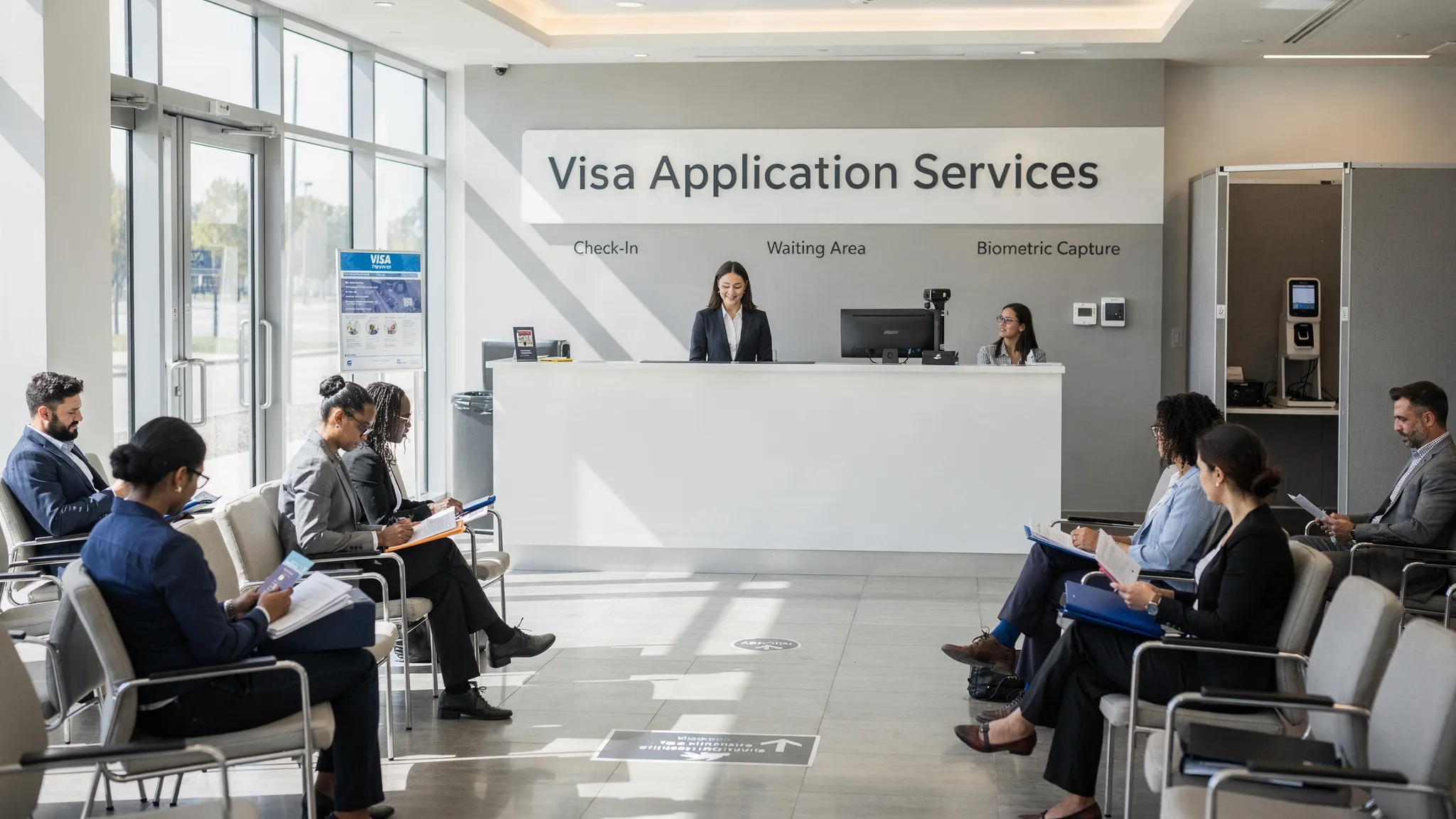
Visa services center vs embassy vs consulate vs online eVisa
Travelers often mix up these terms, and scammers rely on that confusion. Here is a practical comparison.
| Channel | What it is | What happens there | Who decides your visa? | Common for |
|---|---|---|---|---|
| Embassy | Diplomatic mission in a foreign country | Some interviews, complex cases, official services | Government authority | Long-stay, residency, special categories |
| Consulate | Branch office of an embassy | Many visa interviews and adjudication functions | Government authority | Visitor visas, work/study visas |
| Visa services center (VAC) | Administrative center, often outsourced | Biometrics, document intake, passport submission/return | Government authority | Schengen-type processes, outsourced programs |
| Online eVisa / eTA portal | Digital application channel | Apply and pay online, upload documents, receive electronic authorization | Government authority | Short stays, tourism, business visits, transit |
Important: A visa services center is not the same as an “online visa website.” A legitimate center typically appears on a government page as an official location for biometrics or document submission.
When do you need to go to a visa services center?
You usually need a visa services center when the process requires an in-person step. That in-person requirement is driven by the destination’s rules, the visa type, and sometimes your nationality or travel history.
1) You must provide biometrics
Biometrics (fingerprints and a facial image) are one of the most common reasons travelers must attend a center. Even if you complete the application online, the biometric step often cannot be done remotely.
You are more likely to need biometrics for:
- First-time applications under a specific program
- Certain consular visas (even if forms are submitted online)
- Situations where prior biometrics have expired or are not reusable
2) Your visa type requires passport submission
Many visa programs require the applicant to submit a passport for a sticker/label visa or for verification. A visa services center can serve as the secure handoff point for:
- Passport drop-off after an online submission
- Passport return via pickup or courier
3) Your destination uses an outsourced appointment system
Some governments outsource parts of the intake process to a provider that runs appointment scheduling, fee collection (service fees), and customer service around appointments.
If your instructions say “book at the VAC,” “visit the application center,” or “attend the service center,” that is your indicator.
4) You are applying as a group, family, or minor
Group and family applications are not always harder, but they are more likely to trigger:
- Appointment coordination
- Extra consent documents for minors
- Identity verification requirements
A center visit becomes the practical way to keep submissions consistent and avoid delays.
5) Your case needs in-person verification (even in an otherwise digital journey)
Even as eVisas and eTAs expand, many countries still require in-person steps when there are:
- Name or document inconsistencies
- Additional document requests
- Special categories (study, work, long stays)
If the government asks for more information, it may direct you to a center for submission, or to a consulate for an interview.
When you do not need a visa services center
You often do not need a visa services center if:
- Your destination offers a true end-to-end online eVisa (apply, pay, receive approval digitally)
- You are eligible for an eTA/ETA-style authorization that is issued electronically
- You are traveling under visa-free rules (still subject to passport validity and entry conditions)
If you are not sure which category applies, start with a structured requirements check instead of guessing. SimpleVisa has a helpful overview in Travel Visa Basics: What to Know Before You Book and a more detailed reference in Visa Requirements by Country: A Quick Reference.
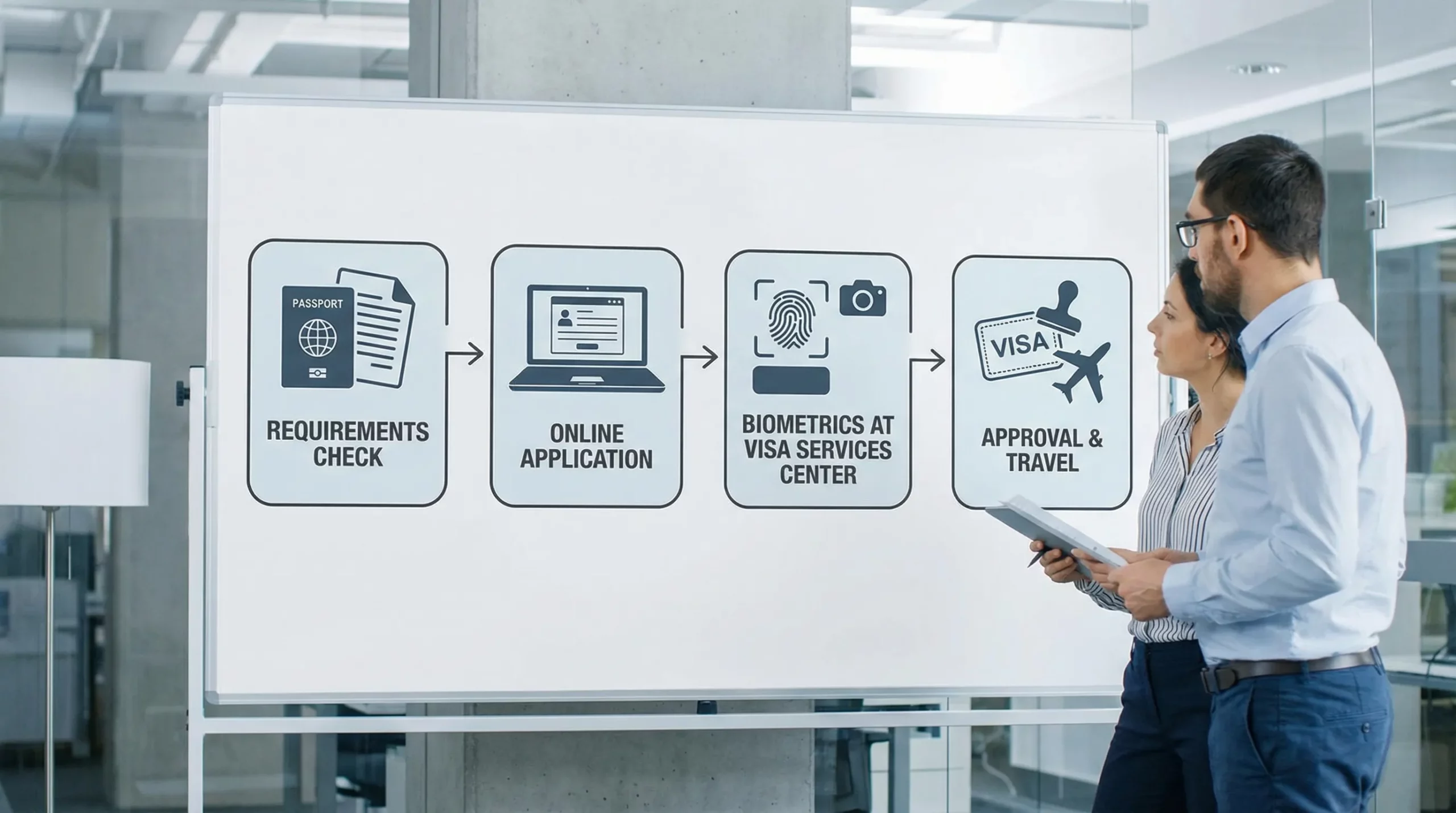
What happens at a visa services center appointment?
Appointments vary, but most follow a predictable flow.
Step 1: Check-in and identity confirmation
Staff verify your appointment confirmation and identity documents (typically your passport). Some centers also check that you have completed required online forms.
Step 2: Document intake (where applicable)
If your program requires document submission, staff may:
- Confirm you brought the required items
- Ensure photos meet basic specifications
- Verify that forms are printed and signed where required
They generally do not evaluate whether your evidence proves your eligibility. That is an adjudication function.
Step 3: Biometrics
Biometrics usually take only a few minutes. Most delays happen before this step due to queues, missing documents, or appointment issues.
Step 4: Submission receipt and passport logistics
You typically receive a receipt or tracking reference. If you surrender your passport, you are informed how you will get it back (pickup or courier). Processing time is handled by the authority, not the center.
Visa services center checklist (what to bring)
Always follow your specific program instructions first. As a general baseline, plan for:
- Passport (and any required copies)
- Appointment confirmation
- Application confirmation pages and reference numbers
- Supporting documents requested for your visa category
- Payment proof or payment method, if fees are collected at the center
For online applications, preparation details matter more than people expect, especially file formats and scan quality. See Checklist: Everything You Need Before Submitting an Online Visa Application if your process begins online.
How to find the right visa services center (and avoid scams)
The safest way to find the correct center is to start from official government guidance, not search ads.
Use official “Find a center” pages
Many governments provide official tools to locate centers. For example:
- The UK provides guidance on locating centers through official channels (start at UK visa and immigration).
- For U.S. visa categories, the authoritative starting point is the U.S. Department of State’s visa site.
Red flags that a “visa services center” is not legitimate
Be cautious if a site or agent:
- Claims to be “the official visa center” but cannot be verified from a government website
- Charges unusually high fees without clearly separating government fees vs service fees
- Pressures you with urgency, threats, or “guaranteed approval” language
If you want a practical framework for applying online safely, including scam avoidance, see Travel Visa Online: How to Apply Safely and Visa Online: Trusted Ways to Apply and Track.
For travel companies: why “visa services center confusion” hurts conversion
Even when a visa services center is a legitimate part of the process, confusion about it can cause:
- Checkout abandonment (travelers fear they will not be able to travel)
- Support overload (agents repeatedly answer the same “Do I need an appointment?” question)
- Last-minute disruptions (missed biometrics, wrong center, wrong documents)
The fix is not just better FAQs. It is a guided flow that tells the traveler exactly what applies to their passport, destination, and dates, and then routes them to the correct next step (online submission, appointment booking, document upload, or in-person visit).
This is the problem SimpleVisa focuses on: streamlining visa and border-requirements administration for travel businesses via API integration, a white-label visa application app, or data services, including no-code implementation options.
Quick decision guide: do you need a visa services center?
Use this as a fast sanity check, then confirm with official instructions.
| Your situation | Likely outcome |
|---|---|
| Destination offers an eVisa/eTA with no biometrics | No center visit, fully online process |
| You are instructed to give fingerprints/photo | Center visit required for biometrics |
| You must submit your passport for a visa sticker | Center visit (or courier to the center) likely |
| You have a consular interview requirement | Consulate visit, sometimes plus a center for intake |
| You are unsure which applies | Check official rules first, or use a trusted visa guidance workflow |
Frequently Asked Questions
Is a visa services center the same as an embassy? No. A visa services center usually handles administrative steps (biometrics, document intake, passport logistics). The embassy or consulate is a government office.
Can a visa services center approve or deny my visa? Typically no. The decision is made by the government authority. The center facilitates intake and identity steps.
Do I need an appointment for a visa services center? Often yes, especially for biometrics. Walk-ins may be limited or not allowed depending on the country and program.
What should I do if I booked the wrong center? Follow the official instructions for your destination and visa type, then reschedule as soon as possible. Using the wrong location can cause missed biometrics and delays.
Are visa services centers used for eVisas? Sometimes. Many eVisas are fully online, but some destinations combine online forms with in-person biometrics or document checks.
How do I know if a “visa services center” website is legitimate? Start from an official government website and follow its links to the authorized provider or location finder. Be cautious with search ads and lookalike domains.
Make the visa journey clearer for your travelers
If you are a travel business, visa services center steps are one of the biggest sources of pre-departure confusion, and one of the fastest ways to lose a booking when handled poorly.
SimpleVisa helps travel brands guide customers through border requirements and visa workflows with solutions that can be embedded into booking flows or delivered via a white-label app or data service.
Explore SimpleVisa at SimpleVisa.com to learn how visa processing automation and guided applications can reduce friction and unlock ancillary revenue.