Visa Trip Planning: Avoid Transit and Entry Mistakes
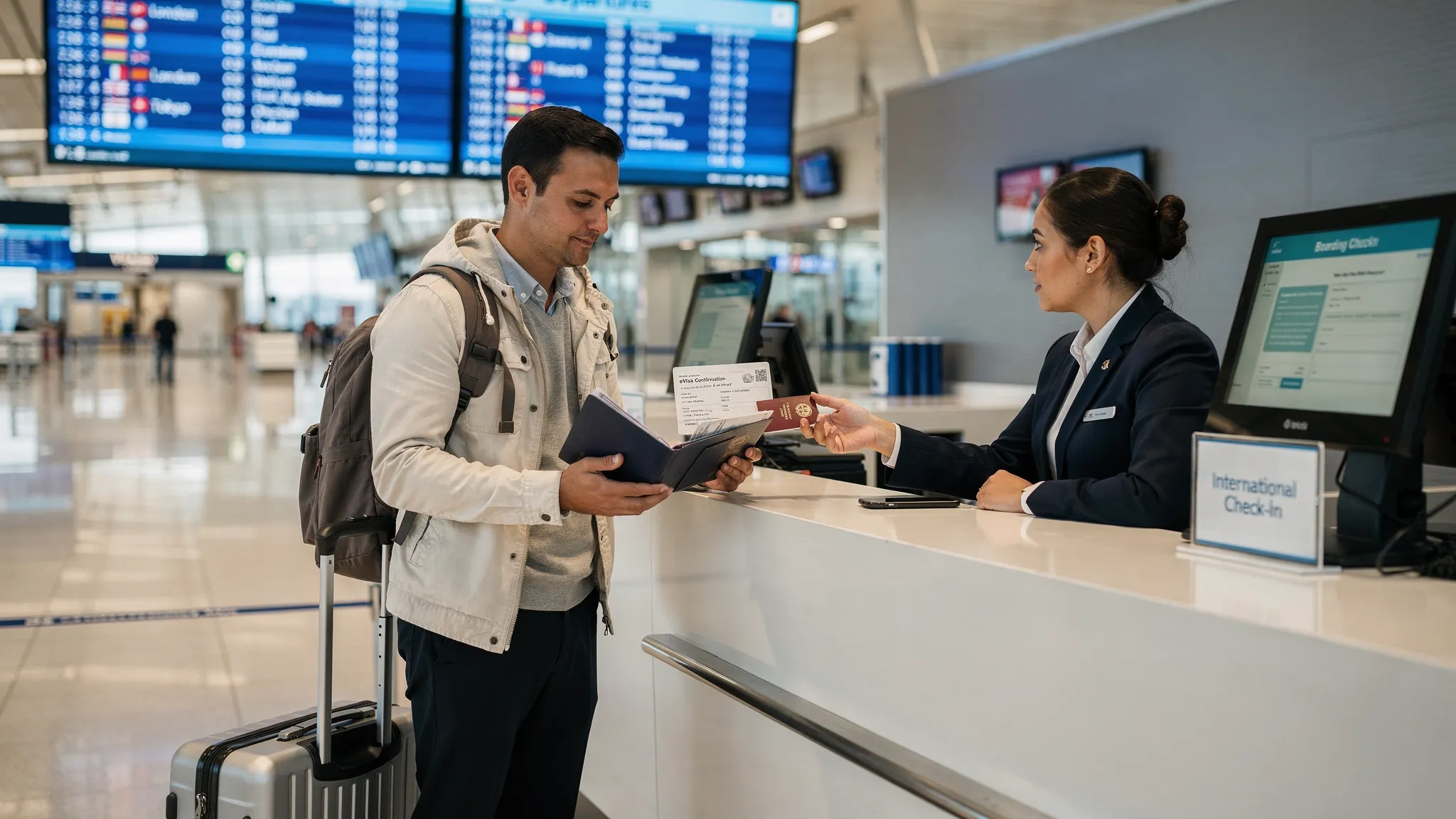
A “visa trip” can go wrong long before you reach immigration. Many travel disruptions happen at check-in because the airline believes you will be refused entry or stuck in transit, so they deny boarding to avoid penalties and rerouting costs.
The fix is not just “get the visa”, it’s planning your entire routing like a compliance map: every airport you touch, every border you cross, and every moment you might be forced to leave the sterile transit area.
Start with a visa map, not an itinerary
When you plan a multi-leg journey, there are at least four jurisdictions that can affect you:
- Departure country rules (document checks before you board)
- Transit country rules (even if you never “enter”, depending on your nationality, airport, and connection type)
- Destination country rules (visa or travel authorization, length of stay, purpose)
- Return or onward country rules (because airlines often check your ability to exit the destination)
A practical way to organize this is a “visa map” table you fill in before you book non-refundable components.
| Trip segment | Countries/airports involved | What to verify | Typical gotcha |
|---|---|---|---|
| Outbound | Origin, transit airport(s), destination | Entry requirement by passport, validity, permitted purpose | Transit visa needed after itinerary change or self-transfer |
| Side trips | Any additional country you add | Single vs multiple entry, re-entry rules | Using a single-entry visa but leaving the country for a day trip |
| Return | Destination, transit airport(s), home | Transit rules again (not always the same as outbound) | Different airport on the way back triggers stricter transit checks |
| Ground crossings | Neighboring borders, ferry routes | Land-border entry rules, extra forms/fees | eVisa valid at airports but not at land borders |
If you sell travel, this is also the moment where an embedded visa check in the booking flow prevents “surprise compliance” later. (More on that below.)
Transit mistakes that cause denied boarding
Travelers often assume “I’m not leaving the airport, so I’m fine.” In reality, airport transit rules vary by nationality, airport, and connection details.
Airlines commonly rely on the same type of rule sources used across the industry (for example, IATA’s Timatic database) to decide whether you can board. If your trip looks risky, you may be stopped before security.
Mistake 1: Booking a self-transfer (separate tickets) without checking transit rules
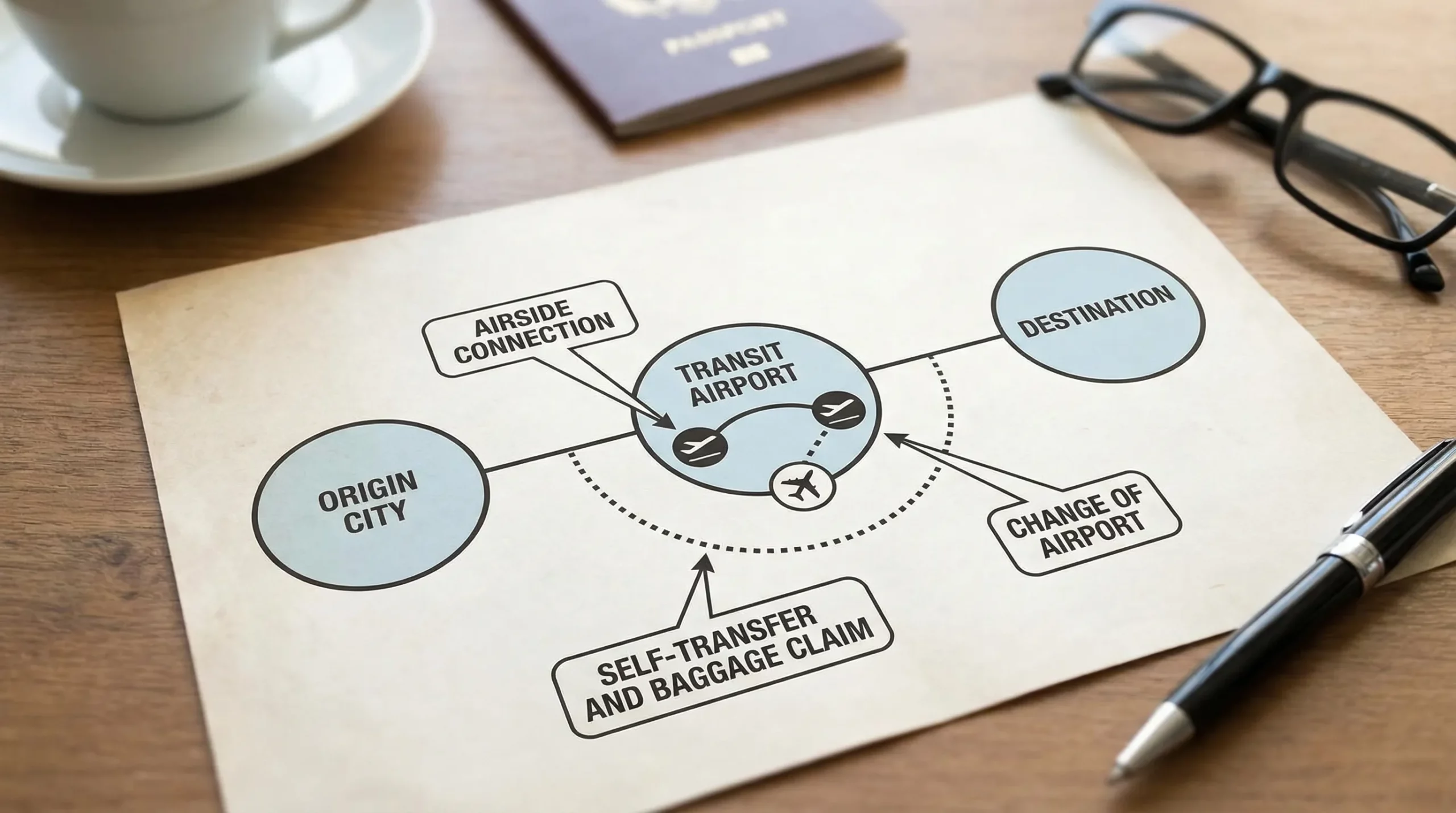
If you have separate tickets, you may need to:
- collect and recheck bags
- pass immigration (leave the sterile zone)
- re-enter the terminal and clear security again
That can turn a “transit” into an “entry” legally.
Planning rule: If your connection requires baggage reclaim or check-in landside, treat it like you must meet full entry requirements for the transit country.
Mistake 2: Changing terminals or airports during a connection
Some cities have multiple airports (or terminals that are not connected airside). A change that looks minor on a booking screen can trigger an entry requirement.
Planning rule: If you must take public transport, shuttle bus outside secure areas, or switch airports, assume you will enter the country.
Mistake 3: Assuming an overnight layover is always airside
Not all airports allow overnight airside stays, and some carriers force passengers to re-clear security.
Planning rule: If the layover is long (especially overnight), verify whether you can remain airside and what happens if the terminal closes.
Mistake 4: Not understanding “airport transit visa” vs “short-stay visa”
Some countries separate:
- Airside transit (you stay in the international zone)
- Landside transit (you pass immigration, even briefly)
The required document may change completely.
Mistake 5: Assuming transit rules are the same in both directions
Outbound routing and return routing often differ (different airports, different connection lengths, different airlines). That can expose you to a transit rule you never checked.
Planning rule: Do a transit check twice, once for outbound and once for return.
Entry mistakes that derail a visa trip at the border
Even with the right visa or eVisa, travelers can be refused entry if the details do not match the trip they are actually taking.
Mistake 1: Passport validity and “blank pages” assumptions
Many destinations require your passport to be valid for a minimum period beyond arrival (often measured in months), and some require available pages. eVisas reduce the page issue, but not always the validity rule.
Planning rule: Check passport validity rules for every country on the route, not just the final destination.
Mistake 2: Name or document mismatch across bookings and applications
Common triggers:
- missing middle name on one document but not another
- swapped given/family name order
- typo in passport number
- wrong date of birth format
Planning rule: Copy passport data directly (not from memory) when applying, and ensure flight bookings match the passport exactly.
Mistake 3: Confusing eVisa, ETA, and “visa-free”
“Visa-free” does not always mean “no pre-travel step.” Many countries now use electronic travel authorizations (for example, the U.S. ESTA and various ETA-style schemes), and Europe’s ETIAS is expected to affect many visa-exempt travelers once implemented.
Planning rule: Treat “visa-free” as “may still require pre-authorization,” then verify on an official source.
For related background, see SimpleVisa’s overview of border crossing requirements and travel visa basics.
Mistake 4: Buying the wrong “purpose of travel” category
A tourist authorization may not allow:
- paid work
- long-term study
- frequent business activity beyond meetings
Planning rule: Match your visa type to your real activity, not what sounds easiest.
Mistake 5: Misreading validity, entry window, and length of stay
Three different time concepts matter:
- Validity period: when the visa can be used
- Entry window: the last date you can enter (some visas)
- Duration of stay: how long you can remain once admitted
You can have a valid visa and still overstay if you misunderstand “90 days per visit” rules.
Mistake 6: Not having supporting documents that immigration expects
Even when you hold a valid visa or eVisa, border officers may ask for:
- onward/return ticket
- accommodation details
- proof of funds
- invitation letter or business contact
A good reference checklist is SimpleVisa’s everything you need before submitting an online visa application and the broader guide to online visa applications.
A quick “transit risk” decision table (use this before you book)
Use this as a fast screen for whether your connection is likely to require entry permission.
| Connection detail | Risk level | Why it matters | Safer alternative |
|---|---|---|---|
| Same ticket, bags checked through, stay in same terminal airside | Lower | Often remains sterile transit | Keep single PNR itinerary when possible |
| Separate tickets (self-transfer) | Higher | May require immigration and new check-in | Book protected connections or add buffer and check entry rules |
| Change airports in same city | Very high | Almost always requires entry | Choose same-airport connections |
| Overnight layover | Medium to high | Terminal closure or re-screening can force entry | Daytime connection, or verify airside overnight policy |
| Low-cost carrier requiring in-person document checks | Medium | You may be denied at check-in without correct docs | Use carriers with through-check options |
This table does not replace official rules. It helps you identify when you should slow down and verify.
Build a “border-ready” document pack (digital and paper)
Even in 2026, travel is not fully paperless. Phones die, apps fail to load, and some airlines still prefer printed confirmations.
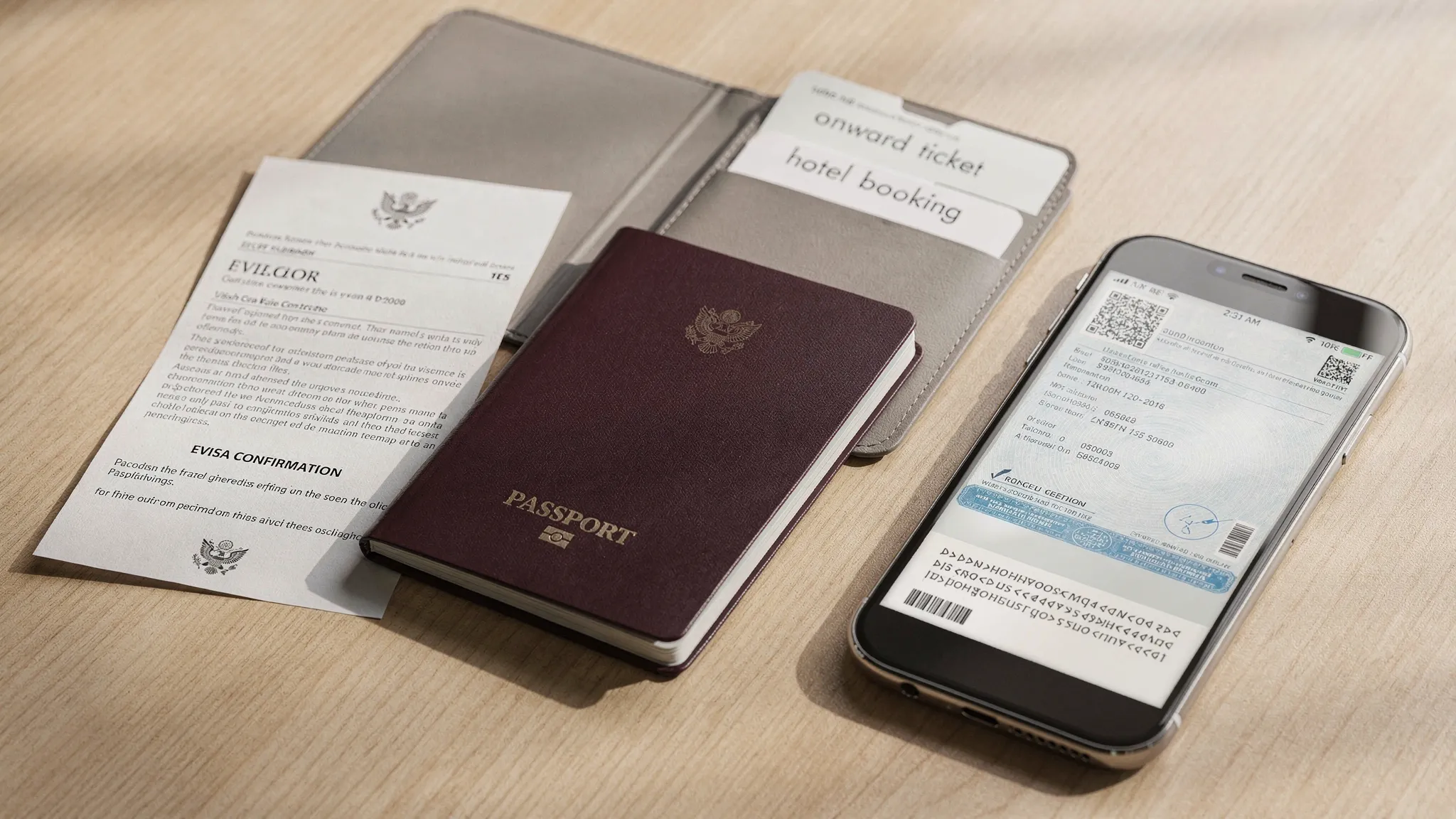
A practical pack includes:
- passport bio page scan (PDF + image)
- eVisa/ETA approval (PDF)
- a printed copy of your eVisa/authorization (when allowed)
- accommodation confirmation and onward ticket
- travel insurance policy details (if applicable)
- emergency contacts and embassy/consulate info
If you want a security-focused approach to online applications, SimpleVisa also covers scam avoidance in Travel Visa Online: How to Apply Safely.
Day-of-travel checks that prevent last-minute surprises
Most “visa trip” failures happen because the traveler discovers an issue at the airport counter with no time to fix it.
Before leaving for the airport, confirm:
- your passport is the same one used for the application (and not recently renewed)
- your visa/authorization details match your passport exactly
- your route matches what you were approved for (entry dates, ports, number of entries)
- your return/onward proof is accessible offline
If you are traveling with dual citizenship, using two passports, or traveling with minors, add extra time. Edge cases are where airline document checks are strictest.
How travel brands can reduce transit and entry mistakes at scale
If you operate an airline, OTA, tour operator, cruise line, or TMC, the goal is not just helping travelers. It’s reducing:
- denied boardings
- last-minute support tickets
- chargebacks and rebooking costs
- abandoned bookings when customers get confused
SimpleVisa’s core promise is to simplify border crossing administration for travel businesses by guiding customers through requirements and supporting API integration, a white-label visa application app, or data services, with a no-code implementation option.
In practice, that means you can surface the right prompts at the right time, for example:
- showing whether a route creates a transit-visa risk before purchase
- guiding the traveler through the correct application path post-booking
- offering visa and eVisa handling as an ancillary service
If you are evaluating solutions, SimpleVisa also publishes decision frameworks like What Is Travel Document Automation? and integration guidance such as API vs. White-Label App.
Final takeaway: treat every connection like a border until proven otherwise
The most reliable visa trip planning habit is simple: assume every airport touchpoint can become an entry, then work backward to confirm whether you can remain in sterile transit.
Do that, and you avoid the most expensive mistakes: denied boarding, missed connections, and entry refusals that turn a well-planned trip into a same-day cancellation.
For teams that want to reduce these issues across thousands of bookings, SimpleVisa’s visa automation and guided application flows can shift compliance from a last-minute scramble into a predictable part of the customer journey. Learn more at SimpleVisa.