Visas Cost Breakdown: Government Fees vs Service Fees
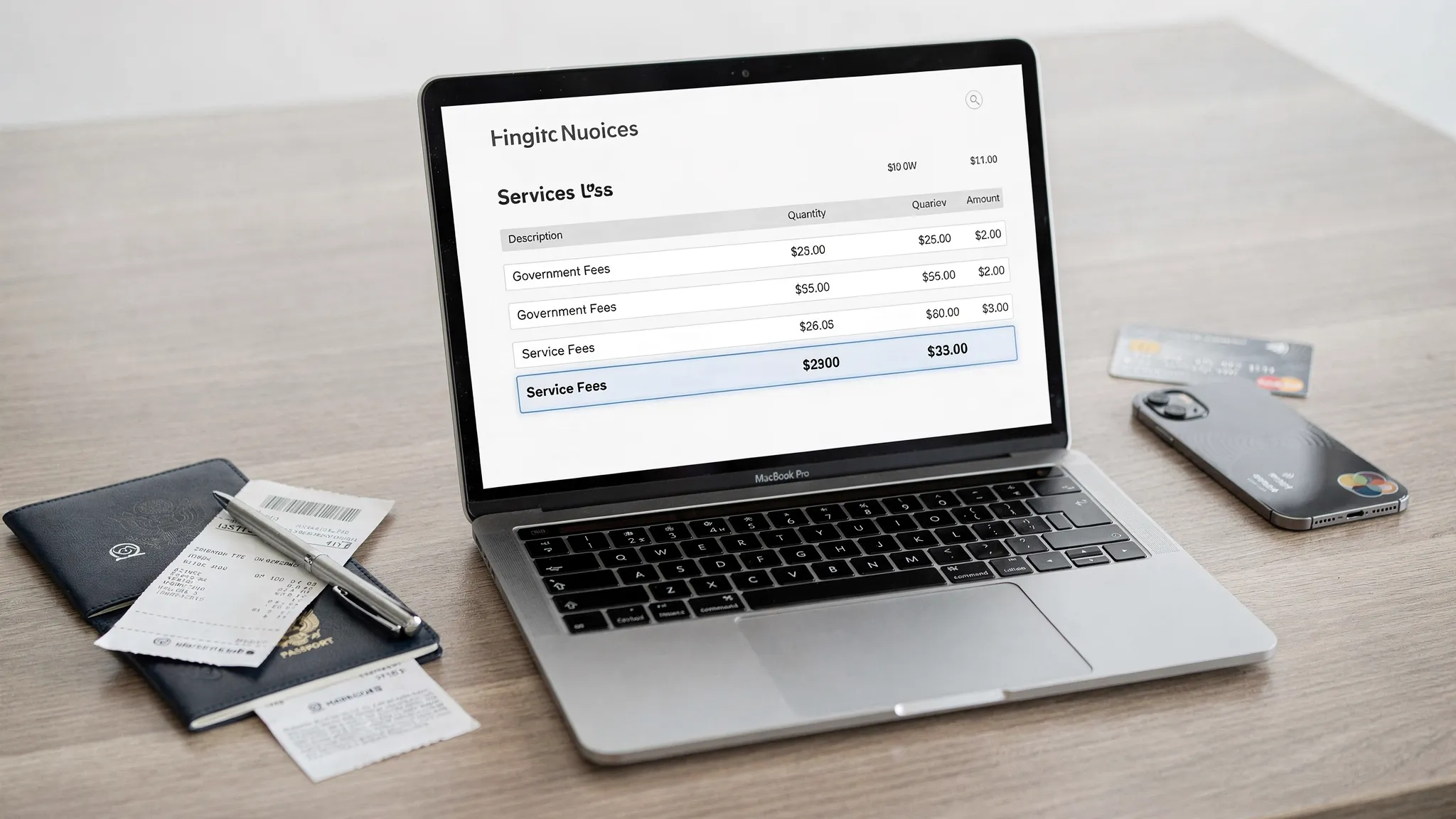
Visa pricing often feels inconsistent: one traveler swears a destination’s visa is “cheap,” while another gets a checkout total that’s 2x higher. In most cases, that confusion comes from mixing two very different line items:
- Government fees (set by the destination country)
- Service fees (charged by the platform, travel seller, or agency helping with the application)
Understanding the difference is the fastest way to sanity-check a quote, budget accurately, and avoid unpleasant surprises at the end of the application flow.
The two-part structure behind most visa totals
Most visa totals, whether you apply on a government portal, through an agency, or inside a travel booking flow, can be explained by one formula:
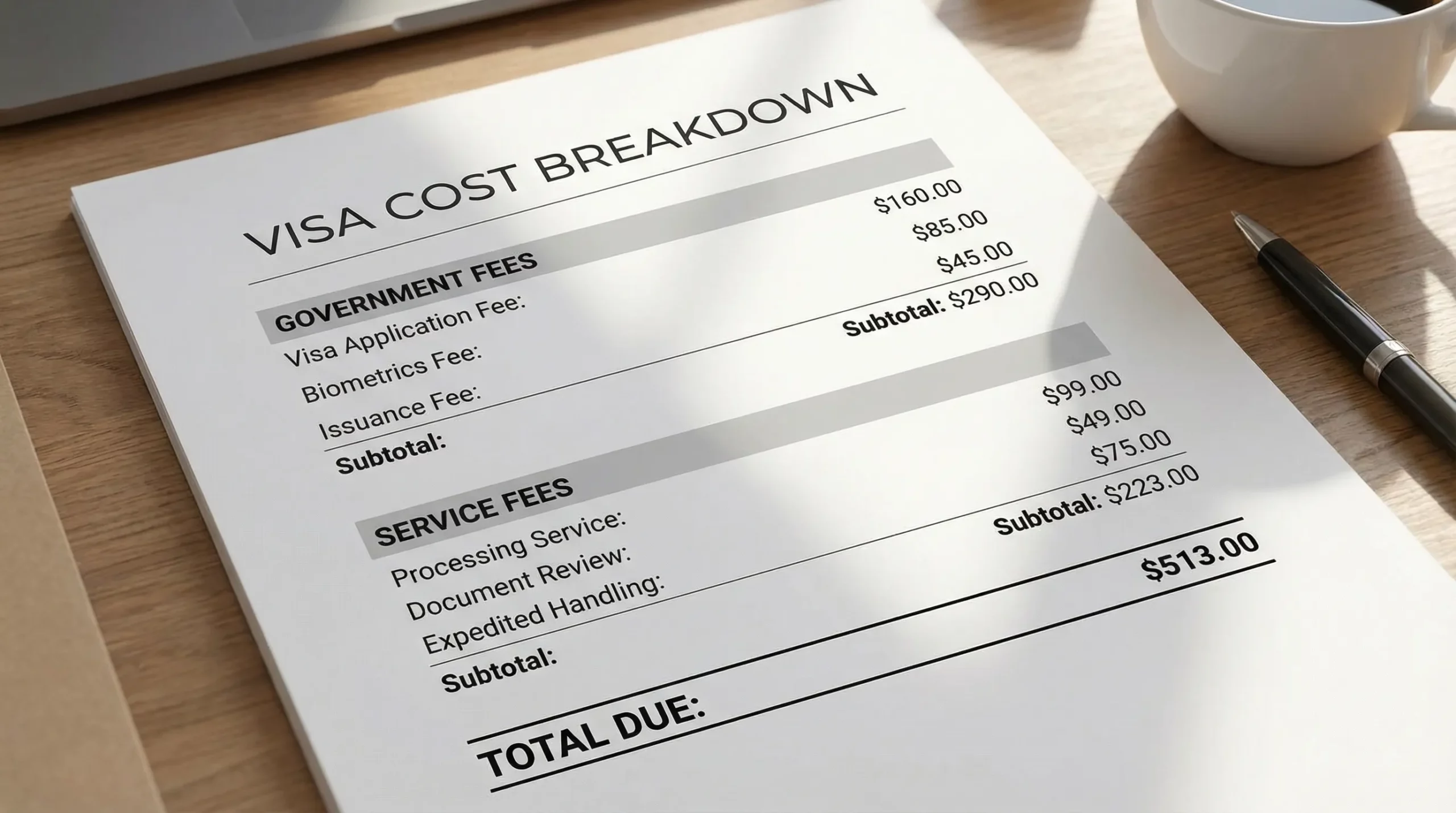
Total = Government fees + Service fees + (sometimes) pass-through extras
“Pass-through extras” are costs that are not truly service margin but still appear on the invoice, such as payment processing charges, SMS notifications, courier delivery for passports (for some consular processes), or currency conversion markups.
This article focuses on the core distinction that causes most pricing confusion: government fees vs service fees.
Government fees: what they are (and what they are not)
Government fees are charges imposed by an immigration authority or government-approved program. They are the price of the authorization itself (visa, eVisa, ETA, travel authorization) and any mandatory government-run steps connected to it.
Key characteristics:
- Set by the issuing authority, not by the platform you apply through.
- Usually non-negotiable and consistent for the same nationality, visa type, and processing speed.
- Often non-refundable once submitted, even if you change plans or make a mistake.
- Can vary based on nationality, visa class, number of entries, length of stay, and sometimes reciprocity rules.
To see how programs publish official fees, you can reference sources like the U.S. Customs and Border Protection page for ESTA fees (fees and rules can change, always verify before purchase).
Common types of government fees
| Government fee type | What it typically covers | Who collects it | Often refundable? |
|---|---|---|---|
| Application fee | The right to submit and be reviewed | Immigration authority | Rarely |
| Biometric fee | Fingerprints/photo capture when required | Government or authorized center | Rarely |
| Reciprocity fee | Nationality-based fee differences | Government | Rarely |
| Expedited processing fee | Faster review under a formal program | Government | Sometimes (policy-dependent) |
| Border/security levy | Program funding, screening, infrastructure | Government | Rarely |
Important nuance: A government fee does not buy a guaranteed outcome. Most immigration authorities explicitly state that paying the fee only covers processing, not approval.
Service fees: what you pay for when someone helps you apply
Service fees are charged by a third party (an agency, travel brand, or visa platform) to handle parts of the application journey beyond the government’s baseline portal.
Depending on the channel, service fees may cover:
- Eligibility checks and correct product selection (eVisa vs ETA vs consular visa)
- Guided application UX (plain language, validation, reducing mistakes)
- Document requirements prompts and upload handling
- Data quality controls (format checks, name consistency checks)
- Payment handling and receipts
- Status tracking, customer support, and exception handling
- Operational processing (reviewing submissions for common errors)
Service fees vary widely because the “service” varies widely. A simple form-forwarding site will charge differently than a provider embedded in a booking flow with automated checks, support, and status updates.
Three common pricing models you’ll see
| Channel | What you pay | Why service fees appear (or not) |
|---|---|---|
| Government portal | Mostly government fees only | You do everything yourself (and absorb the risk of mistakes) |
| Traditional visa agency | Government fees + agency service fee | Human processing, support, document handling |
| Digital visa platform or embedded checkout | Government fees + platform/service fee | Automation, guided UX, integrations, support, tracking |
A helpful way to think about service fees is: you’re paying to reduce time, reduce error risk, and increase clarity.
That trade-off exists in other parts of life too. For example, many people happily pay for a step-by-step visual guide to fix common wall damage because it saves time and prevents costly mistakes. Visa applications work similarly: guidance can be worth it when the cost of an error is high (denial, delays, rebooking, missed tours).
Why two people can get different totals for the “same” visa
When someone says, “This visa costs $X,” they often mean “the government fee is $X.” But the total visas cost a traveler sees at checkout can change based on several factors.
Variables that change government fees
- Applicant nationality (reciprocity and bilateral agreements can change pricing)
- Visa type and purpose (tourism vs business vs longer stay categories)
- Single entry vs multiple entry
- Processing speed options offered by the issuing authority
- Where you apply (some programs route through different authorized channels)
Variables that change service fees
- Support level (self-serve vs assisted)
- Complexity (single traveler vs family/group)
- Turnaround expectations (live support, faster internal handling)
- Fraud and quality controls (more checks typically costs more)
- Distribution model (direct-to-consumer brand vs travel seller adding it as an ancillary)
In other words, the same destination can have a stable government fee but an inconsistent total, because the service layer is different.
The refund question: what happens if the trip is canceled or the visa is refused?
Refunds are where travelers and travel businesses get burned, especially when fees are not separated clearly.
Typical refund patterns
- Government fees: commonly non-refundable after submission, even if refused.
- Service fees: depends on the provider’s policy and on whether work has started (or has been completed).
For travel companies, this is not just a customer service issue. It affects:
- Chargeback rates
- Trust and repeat purchase behavior
- The willingness of customers to buy visas during checkout
The practical takeaway: a transparent receipt should separate government fees from service fees so customers understand what is refundable and what is not.
How to spot opaque pricing (and avoid scams)
Not every high total is a scam, but many scams rely on the same signals: vagueness and urgency.
Red flags to watch for:
- The site does not clearly say which authority issues the visa
- “Government fee included” without showing the amount
- No explanation of what the service fee covers
- Pressure tactics (“limited slots,” “guaranteed approval,” “must pay now”)
- Suspicious domains that imitate official government sites
If you want a broader safety framework for online applications, SimpleVisa also covers practical security basics in its guide on applying for travel visas online safely.
For travel businesses: why fee transparency is a conversion lever, not just compliance
If you sell travel, visa fees are not only a cost center. They directly impact:
- Checkout conversion
- Support volume (“why did this cost more than my friend paid?”)
- Ancillary attachment (whether travelers add visa processing instead of abandoning)
The common mistake is hiding service fees until the end. The better approach is to treat fee transparency like you treat baggage fees: show them early, explain them simply, and keep receipts clean.
Practical best practices for presenting visa pricing
- Line-item the total: government fees, service fees, and pass-through extras.
- Use “from” pricing carefully: only when you also show what changes the price (nationality, processing speed, visa type).
- Localize currency: travelers abandon when they see a surprise FX conversion at the bank.
- Explain the value of the service fee in one sentence (guided application, document checks, status tracking).
- State refund rules upfront with clear language.
This is also where modern visa infrastructure helps. SimpleVisa is built to streamline visa processing for travel businesses through API integration, white-label application flows, and data services that can slot into a booking journey (including no-code implementation options). The goal is not just automation, it is making the border-crossing admin predictable and easy for customers, while opening a cleaner ancillary revenue stream.
A simple template you can use for a clean visa receipt
Whether you are a traveler validating a quote, or a travel brand designing a checkout, here is a straightforward way to present the breakdown.
| Line item | Example label | Notes to include |
|---|---|---|
| Government fee | “Immigration application fee” | “Set by issuing authority. Typically non-refundable after submission.” |
| Government add-on | “Expedited processing (government)” | Only if this is an official option from the issuing authority |
| Service fee | “Application support and processing” | “Covers guided form, validation, document checks, support, tracking.” |
| Pass-through extra (optional) | “Payment processing” or “SMS updates” | Call out that it is optional (if it is) |
| Total | “Total due today” | Include currency and date |
This structure reduces disputes because it answers the two questions customers always ask:
- “Who is charging me?”
- “What happens if something goes wrong?”
When paying a service fee is usually worth it
A service fee can be a smart choice when the cost of a mistake is high. Typical scenarios:
- Tight timelines (a rejection or correction could derail the trip)
- Multi-stop itineraries (multiple entry rules and validity windows)
- Group travel (families, tours, corporate groups)
- Applications requiring multiple documents and strict photo formats
In those situations, “cheapest” often becomes “most expensive” after rebooking costs, missed reservations, or support time.
Key takeaways
Government fees and service fees play different roles, and separating them is the fastest way to understand any visa quote.
- Government fees are set by the issuing authority and usually non-refundable after submission.
- Service fees pay for guidance, automation, checks, support, and smoother completion.
- The same destination can produce different totals because service layers differ and applicant details change the underlying government fee.
- For travel businesses, transparent fee design is a conversion strategy, not just a legal formality.
If you are a travel brand trying to make visa pricing clear inside your booking flow, SimpleVisa’s integration options (API, white-label, and no-code) are designed to help you present a trustworthy breakdown while guiding customers through border requirements on autopilot.