Visit Visas Explained: Types, Timelines, and Common Proofs

A “visit visa” sounds simple until you start planning a trip and discover three different terms (visa, eVisa, eTA), multiple subtypes (tourism, family, business visitor), and a long list of “proofs” that vary by country.
This guide breaks down visit visas in plain language, with a practical view of the main types, realistic timelines, and the documents immigration officers most commonly expect to see.
What a visit visa is (and what it isn’t)
A visit visa is a short-term entry permission issued by a destination government for travelers who are not citizens or residents. It typically covers trips like:
- Tourism and holidays
- Visiting family or friends
- Short business activities (meetings, conferences, negotiations)
- Short medical visits
- Transit or short stopovers (in some countries)
What it is not:
- A work permit (paid work is often prohibited on a visit visa)
- A study permit (longer courses typically require a student visa)
- A residency pathway (most visit visas do not lead to permanent status)
Also, a visit visa is not always a sticker in your passport. Depending on the country and your nationality, you might travel under:
- Visa-free entry (no application required, but rules still apply)
- An eVisa (an online visa, still a visa)
- An eTA/ETA/ESTA-style travel authorization (often not legally a visa, but still a required pre-travel clearance)
If you’re unsure which category applies, start with the destination’s official immigration guidance (for example, the U.S. visitor visa page or the UK Standard Visitor visa guidance).
Types of visit visas (the names change, the logic doesn’t)
Different countries label visit visas differently, but most programs fit into a few common buckets.
Tourist or holiday visit visa
Designed for sightseeing, leisure travel, and unpaid personal travel. Restrictions often include:
- No paid work
- No long-term study (short recreational courses may be allowed)
- Maximum stay per entry (varies widely)
Family or friends visit visa
Usually similar to a tourist visa but may place extra emphasis on:
- Host details (address, status in the destination)
- Invitation letter
- Proof the visitor will return home after the trip
Business visitor visa
Often misunderstood. A business visitor visa is typically for business activities without joining the local labor market, such as:
- Meetings with clients or suppliers
- Conferences and trade shows
- Contract negotiations
- Short training (depending on local rules)
If the traveler will be paid by a local entity or perform productive work locally, many countries require a work visa instead.
Medical visit visa
Some destinations issue a specific short-stay category for treatment. Common extras include:
- Letter from a clinic or hospital
- Treatment plan and cost estimate
- Proof of funds or sponsor
Transit or short-stay transit visa
Required in some countries for travelers connecting through an airport or crossing the country en route to a third destination.
Single-entry vs multiple-entry
A visit visa can also be defined by entry rights:
- Single-entry: one entry, then the visa is “used”
- Multiple-entry: multiple trips allowed within the validity period
Multiple-entry is not always “better.” It can come with stricter scrutiny and does not override per-visit stay limits.
| Visit visa type (common label) | Typical allowed activities | What often triggers a different visa category |
|---|---|---|
| Tourist / Visitor | Tourism, leisure, short personal stays | Remote work rules, long courses, extended stays |
| Family visit | Visiting relatives or friends | Long caregiving stays, living with partner long-term |
| Business visitor | Meetings, conferences, negotiations | Paid local work, hands-on services, employment |
| Medical visit | Short-term treatment, consultations | Long rehabilitation or repeated long stays |
| Transit | Connecting onward travel | Leaving the airport or multiple stopovers |
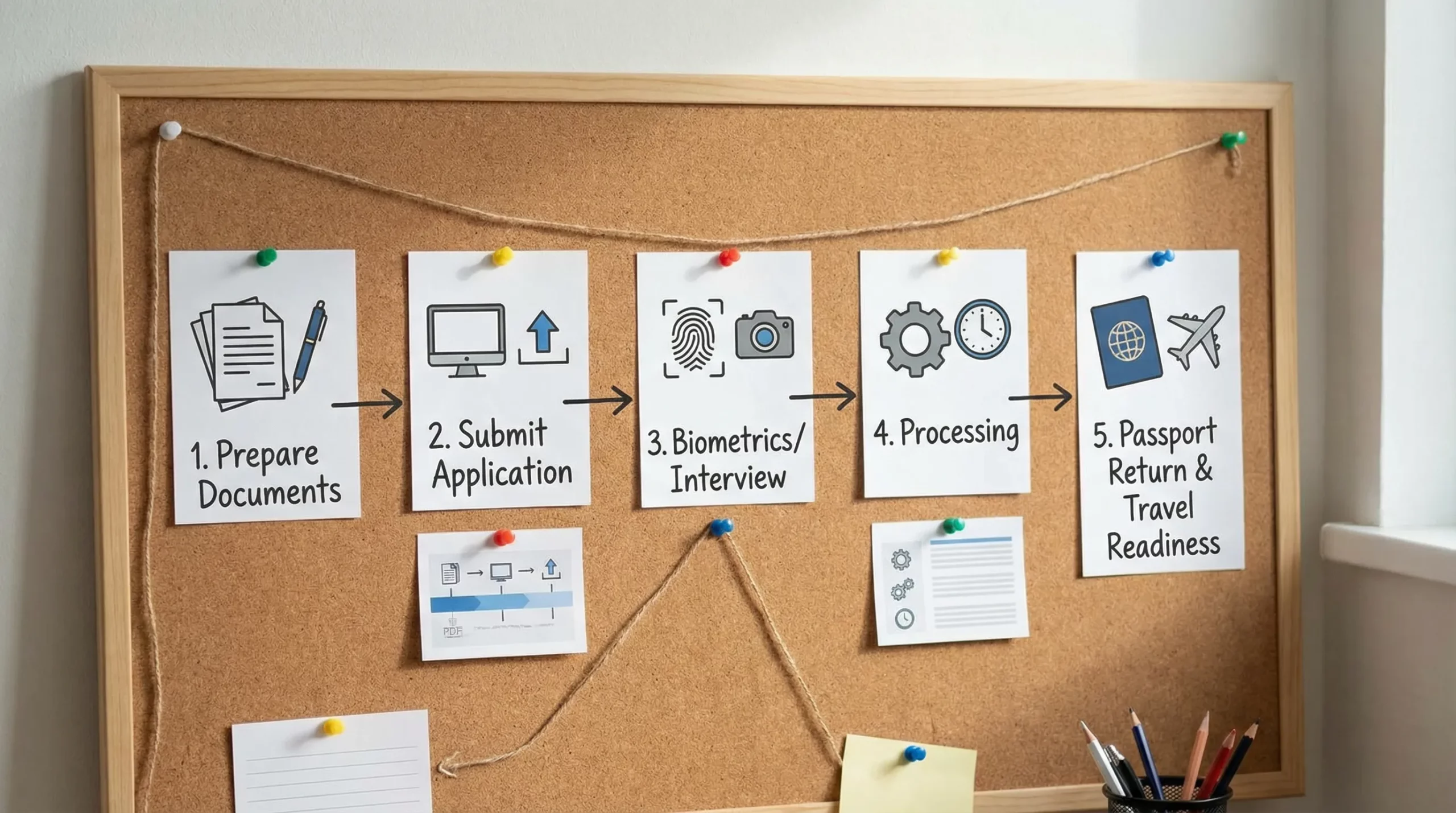
Visit visa timelines: what to expect from planning to passport return
Processing times vary by destination, season, and your personal profile. Instead of relying on a single number, it helps to think in stages.
Stage 1: Pre-check and document prep (often 3 to 14 days)
This is where most delays start. Travelers commonly underestimate:
- How long it takes to request bank letters or employment letters
- Translation and document formatting requirements
- Appointment availability for biometrics or interviews
Stage 2: Application submission (same day to several days)
Time here depends on whether the country uses:
- An online portal
- A visa application center (VAC)
- An embassy or consulate filing process
Stage 3: Biometrics and interview (appointment-dependent)
Some countries require fingerprints and photos. Some also require interviews. Appointment lead times can be the biggest variable.
Stage 4: Processing and decision (variable)
Applications can be approved quickly or moved to additional checks. Factors that can extend processing include:
- Peak travel season
- Incomplete or inconsistent documentation
- Security or travel history flags
- Needing extra documents after submission
Stage 5: Passport return and travel readiness (2 to 10+ days)
If a physical visa vignette is issued, you may need to submit your passport for stamping and wait for courier return.
A practical planning window
Because appointment availability and backlogs fluctuate, many travelers use a conservative buffer.
| Trip start date is… | A safer time to begin preparing | Why it helps |
|---|---|---|
| 3+ months away | Start now | Leaves room for appointments, rework, extra document requests |
| 6 to 10 weeks away | Start immediately | Minimizes risk from seasonal backlogs |
| Under 6 weeks away | Start today and consider priority options if offered | Less room for errors, missing documents, or rescheduling |
Always confirm the destination’s official guidance, because some countries restrict how far in advance you can submit.
The “proof” logic behind most visit visa decisions
While forms and terminology differ, many immigration systems evaluate visit visa applications through three lenses:
- Identity and admissibility: Are you who you say you are, and are there legal reasons you might be refused entry?
- Purpose and plan: Does your trip plan match the visit visa category you selected?
- Credibility and return intent: Do your circumstances support that you will follow the rules and leave on time?
This is why “proofs” matter. They are less about creating a perfect itinerary and more about presenting consistent evidence.
Common proofs for visit visas (and how to make them stronger)
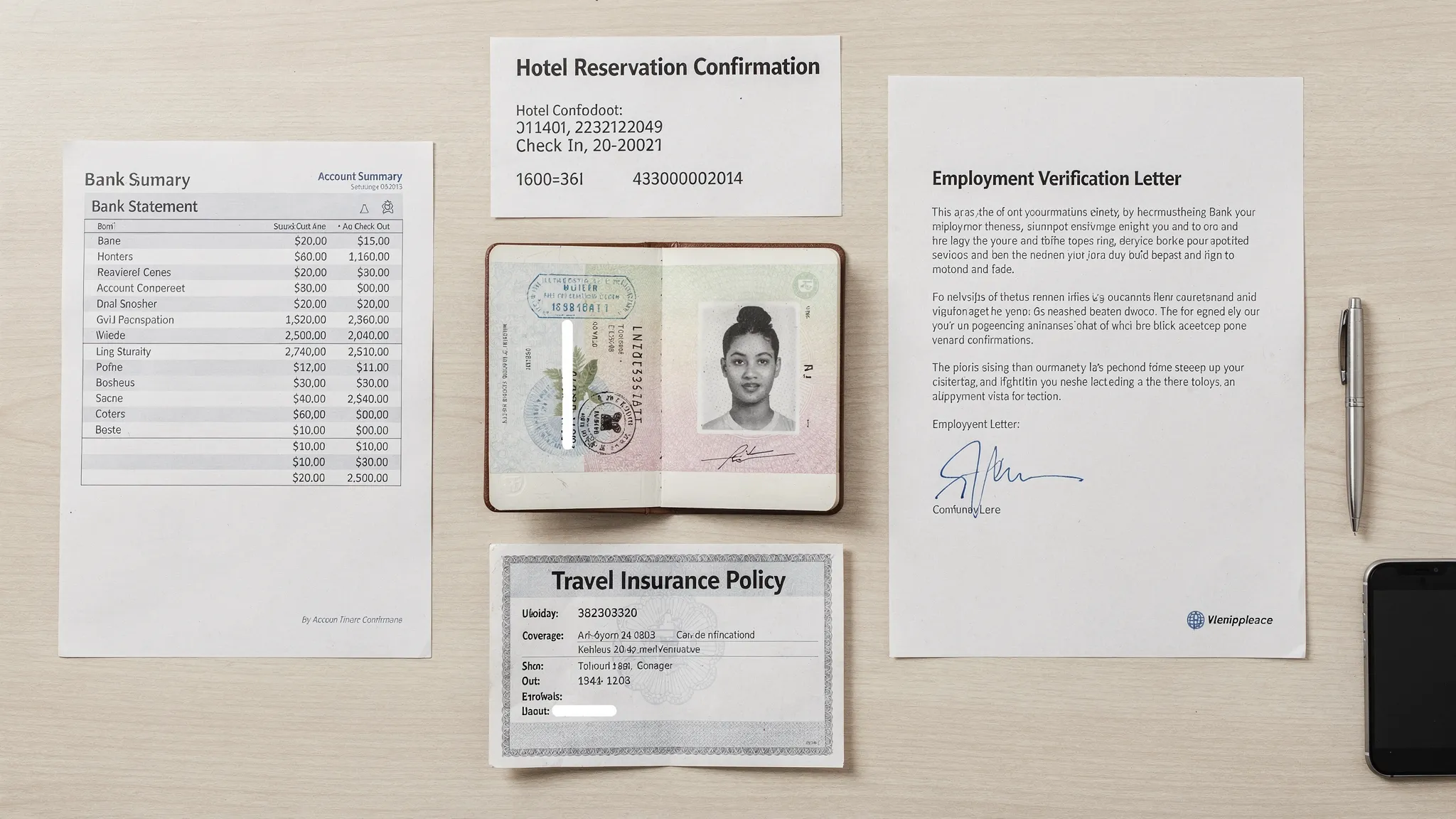
Below are documents frequently requested across many destinations. Always tailor your set to the exact checklist for the country and visa type.
1) Passport and identity documents
Common expectations include:
- Passport validity that covers the required period (some countries require extra months beyond departure)
- Clear scans of the biographical page
- Previous passports or prior visas (when requested)
Consistency matters more than people realize. Your name spelling, passport number, and date of birth should match across every document.
2) Photo (if required)
If the application requires a digital photo, follow the official size and background rules exactly. Photo rejections are a frequent, avoidable delay.
3) Proof of trip purpose
This is where you show the story of the visit.
Common supporting items:
- A short itinerary (cities, dates, key activities)
- Event registration (conference ticket, invitation)
- Family context (who you’re visiting, relationship)
Tip: Many authorities do not require fully paid flights upfront. If you submit reservations, ensure your dates align with your requested entry and exit.
4) Accommodation proof
Typical options include:
- Hotel bookings
- A lease or proof of address for a host
- An invitation letter stating where you’ll stay
5) Proof of funds (financial capacity)
This is one of the most common “proof” categories for visit visas.
What reviewers often look for:
- Recent bank statements (often multiple months)
- Regular income or a credible funding source
- Balances that match the length and cost of the trip
Avoid these common pitfalls:
- Large unexplained deposits right before applying
- Statements with missing pages
- Mismatched currency assumptions (for example, costs in the destination vs savings shown)
6) Proof of ties to your home country
“Ties” are documents that show you have strong reasons to return, such as employment, study, family responsibilities, or assets.
Common examples:
- Employment letter stating role, salary, and approved leave dates
- Recent payslips
- School enrollment letter
- Business registration and operating evidence
- Property ownership or a lease
- Dependent family documents (when relevant)
7) Business-owner or self-employed proofs
If you are self-employed, you may need to demonstrate that you have an established business and income history.
This often includes:
- Business registration documents
- Recent business bank statements
- Contracts or invoices
- Tax filings (country-specific)
If you’re a U.S. business that files excise taxes, having organized records can help when you need to produce formal proof quickly. For example, some teams use an IRS-authorized service to e-file Form 720 excise tax returns as part of keeping compliant documentation accessible.
8) Invitation letters (when visiting someone)
A strong invitation letter is specific and consistent. It typically includes:
- Host’s name, address, and status in the destination (citizen, resident, visa holder)
- Relationship to the applicant
- Visit dates and purpose
- Who pays for what (if the host is sponsoring)
If sponsorship is involved, sponsors may also need to show their own financial documents.
9) Travel insurance (when required or advisable)
Some countries require coverage meeting specific minimums, especially in regions with standardized short-stay frameworks.
Even when not required, insurance can reduce risk for travelers and can support the credibility of a well-prepared trip.
10) Special documentation for minors
Common add-ons for children include:
- Birth certificate
- Consent letter from non-traveling parent(s) or legal guardians
- Custody documents (if applicable)
Why visit visas get delayed or refused (and how to reduce the risk)
No guide can guarantee approval, but many negative outcomes cluster around a few avoidable issues.
Inconsistencies across forms and proofs
Examples:
- Different employment dates in your CV vs your letter
- Different spelling of a name across documents
- Travel dates that do not match flight or accommodation evidence
Fix: Build a single “master profile” document (name format, address, employer details, travel dates) and copy from it.
Weak explanation of purpose
Fix: Keep your itinerary and supporting letters simple and aligned with the visa category. Do not overcomplicate the story.
Financials that do not support the plan
Fix: Show realistic trip costs and credible funding, and avoid last-minute unexplained transactions.
Wrong visa category
Fix: If your activities resemble work or long-term study, stop and reassess before filing. A miscategorized application can cause refusal and future complications.
Applying too late
Fix: Work backward from the trip date and add buffer for appointments, extra document requests, and passport return logistics.
eVisa, eTA, and visit visas: how they connect
A visit visa can be issued digitally (eVisa) or through a consulate. The underlying idea is the same: permission to visit under defined conditions.
If you want a deeper explainer on electronic pathways specifically, SimpleVisa has related resources like:
- Travel visa basics: what to know before you book
- Tourist visa basics: requirements, costs, processing times
- Checklist: everything you need before submitting an online visa application
For travel businesses: reducing friction in visit visa journeys
If you sell travel, visit visa uncertainty creates predictable pain points: booking abandonment, support tickets, and day-of-travel disruptions.
SimpleVisa’s role is to simplify border-crossing administration by helping travel companies guide customers through requirements and applications, whether that’s via API integration in the booking flow, a white-label app, or data services.
If your customers often ask “Do I need a visit visa?” or “What proofs do I need?”, the highest-impact approach is to surface the right requirements early, then guide them through a structured application flow that reduces errors.
Key takeaways
Visit visas are mostly about matching the right category to your real trip purpose, applying early enough to absorb delays, and submitting a consistent set of proofs that support your intent and ability to travel responsibly. Once you understand the types, timeline stages, and the logic behind common documents, the process becomes far more predictable.