What to Expect From a Visa Application Company

Choosing a visa application company can feel like hiring someone to shepherd your most important travel document through a maze of rules, portals, and deadlines. Done well, it saves time, reduces errors, and lowers the risk of being surprised at check-in or the border. Done poorly, it can cost you money, expose your personal data, or leave you with a denied application and no clear next step.
Below is what you should realistically expect from a reputable visa application company, what you should not expect, and how to evaluate whether a provider is the right fit for your trip or your travel business.
What a visa application company actually does (and what it isn’t)
A visa application company is a third-party service that helps travelers (or travel brands) navigate entry requirements and complete visa or digital travel authorization applications. Depending on the country and document type, that can mean anything from guided form completion for an eVisa or ETA to appointment support for a consular visa.
A reputable provider is not the government, not an embassy, and not a border authority.
- They can help you submit an application correctly and on time.
- They cannot issue a visa themselves.
- They cannot guarantee you will be approved.
If you want a baseline “source of truth” for requirements, always cross-check official government guidance (for example, the U.S. Department of State’s visa information pages are a good starting point for U.S. travel documents: U.S. visas).
The typical experience: step-by-step, from eligibility to approval
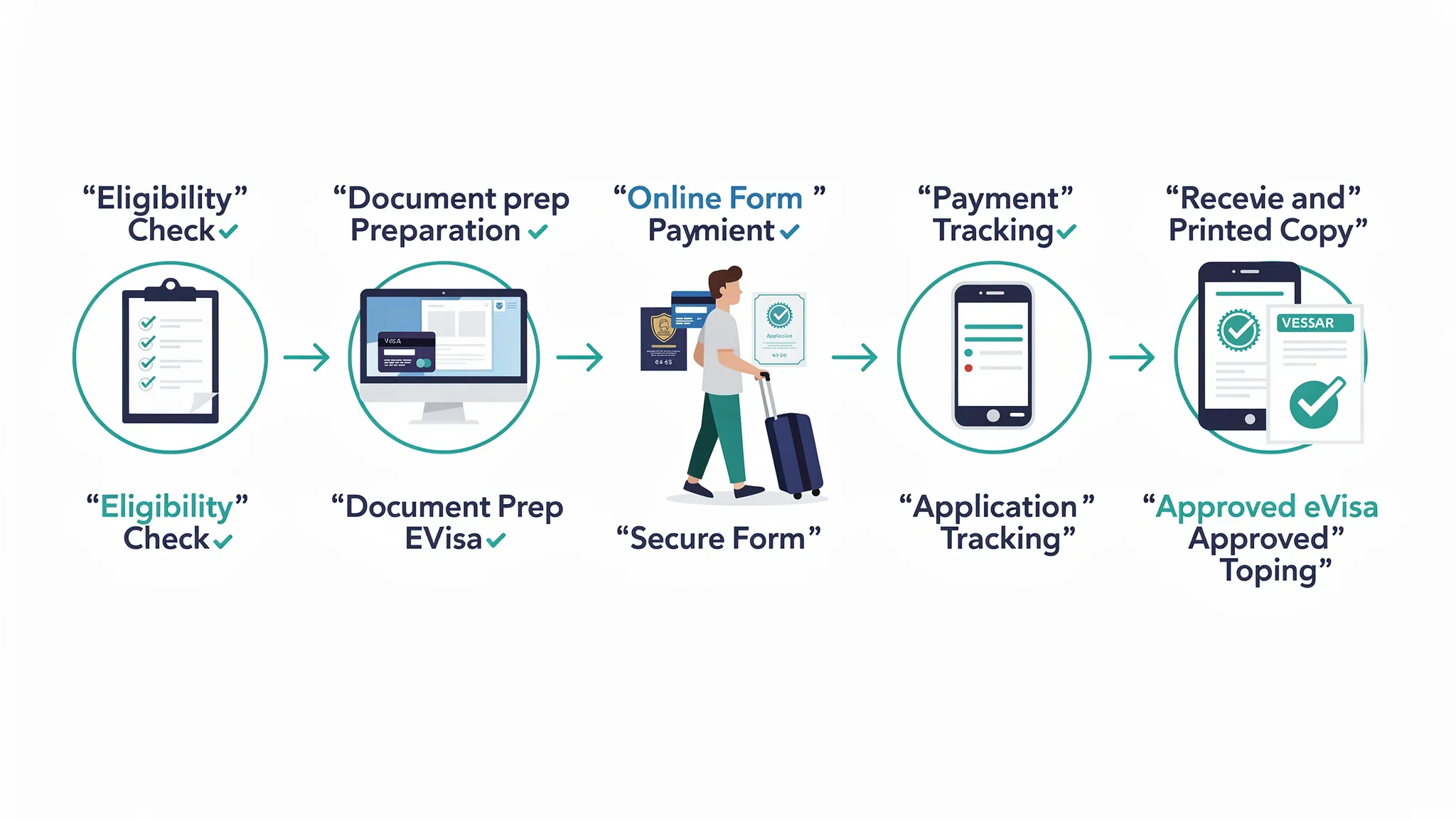
While every country and visa type is different, most visa application companies follow a similar workflow.
1) Eligibility and requirements screening
You should expect the provider to ask for key details that determine your requirements, such as:
- Nationality and passport type
- Destination(s) and transit points
- Purpose of travel (tourism, business, study, work)
- Dates of entry/exit and number of entries
A strong provider will use that information to clarify what document you need (eVisa vs. ETA vs. consular visa), what documents to prepare, and any common pitfalls (passport validity rules, photo format requirements, name mismatches, and so on).
2) Document checklist and upload guidance
Most delays happen because of document issues, not because travelers “didn’t try hard enough.” A good visa application company will provide clear guidance on:
- Passport scan quality and file formats
- Photo specifications (size, background, glare, expression)
- Supporting documents (itinerary, accommodation, proof of funds, invitation letters)
- Translation or notarization needs (when applicable)
You should also expect practical guardrails like validation prompts (for example, “your file is too large” or “your passport expires too soon”).
3) Form completion support (and error prevention)
For online applications, the provider should help you complete forms accurately and consistently across:
- Names and passport fields
- Address and employment history (where required)
- Security and background questions
- Travel history sections
A reputable provider will also explain ambiguous questions in plain language and flag answers that commonly trigger rework.
4) Submission and payment handling
Depending on the country, submission may happen through:
- An official government portal
- A government-authorized partner flow
- A platform that routes the application data to the appropriate system
You should expect transparent separation between:
- Government fees (set by the destination)
- Service fees (set by the provider)
- Optional add-ons (for example, premium support)
5) Status tracking and notifications
A visa application company should provide a clear way to track progress, ideally with:
- Confirmation of submission
- Status updates (received, processing, approved, refused, more info needed)
- A way to respond if the authority requests additional documents
If the provider cannot tell you what’s happening after you pay, that is a red flag.
6) Delivery and “what to do next” instructions
For eVisas and digital authorizations, you should expect guidance on:
- How you will receive the approval (PDF, email, portal download)
- Whether you should print a copy
- What to carry to the airport (approval notice, hotel booking, onward ticket)
A good provider will also remind you of a critical truth: approval is not the same as guaranteed entry. Border officials can still refuse entry if you cannot meet entry conditions.
A quick table: what they handle vs. what you still own
| Stage | What a visa application company should handle | What you are still responsible for |
|---|---|---|
| Eligibility | Clarify which document you need, surface requirements and timelines | Providing accurate trip and identity details |
| Documents | Checklist, formatting guidance, basic quality checks | Supplying genuine documents and correct supporting evidence |
| Application | Guided completion, consistency checks, submission help | Answering questions truthfully and fully |
| Payment | Clear fee breakdown, secure checkout | Paying fees, keeping receipts |
| Processing | Status updates, reminders for additional info requests | Responding quickly if more info is requested |
| After approval | Delivery instructions, border-readiness tips | Carrying required documents and complying with entry rules |
What you should not expect (and any company claiming otherwise should worry you)
A trustworthy provider will set realistic expectations. Be cautious if you hear promises like these:
- “Guaranteed approval.” No third party can honestly guarantee a government decision.
- “We can influence the embassy.” That is a major red flag.
- “We can get it done instantly for any country.” Some eVisas are fast, many are not, and consular visas can require appointments.
- “No need to verify anything.” Requirements change. Good providers keep rules up to date and encourage verification.
Also note: visa application companies are not automatically immigration law firms. If you need legal advice (for example, complex overstays, inadmissibility concerns, or work authorization strategy), you may need a licensed immigration attorney.
Processing times and communication: what “good” looks like
Processing time depends mostly on the issuing authority and the visa type, not the provider. What a provider can control is communication and operational clarity.
You should expect:
- Clear timelines before purchase, including whether processing days are business days
- A realistic buffer recommendation (for example, “apply X weeks before travel”)
- Defined escalation paths if something goes wrong (missing email, portal error, document re-request)
If you are applying for a European pre-travel authorization like ETIAS (once in effect), you should expect the provider to clearly explain how it differs from a visa, and what data is required, referencing EU guidance where possible (the EU’s overview is here: ETIAS).
Fees: what you’re paying for, and what should be itemized
A common pain point is “I paid, but I don’t know what I paid for.” A reputable provider will separate mandatory government fees from service fees.
| Fee type | Who sets it | What you should see in a transparent checkout |
|---|---|---|
| Government fee | The destination government | The official fee amount and currency, plus whether it’s refundable |
| Service fee | The visa application company | What’s included (guidance, validation, support, resubmission help) |
| Optional add-ons | The provider | Clearly optional, clearly described (for example, expedited handling where allowed) |
| Payment processing | Payment network/provider | Any card or FX fees (if applicable) |
If a provider will not show the government fee separately, or hides fees until the last step, consider alternatives.
Data security and privacy: minimum expectations in 2026
Visa applications contain sensitive personal data (passport numbers, addresses, travel history, sometimes family details). You should expect a visa application company to treat this like financial-grade information.
At a minimum, look for:
- Secure website connections (HTTPS) and reputable payment processing
- Strong account protection (multi-factor authentication is a plus)
- Clear privacy policy and data retention practices
- Phishing and scam awareness guidance (especially for email communications)
If you are applying online, it is also wise to review practical anti-fraud guidance. Many government and cybersecurity bodies recommend avoiding links from unsolicited emails and verifying domains carefully.
If you’re a travel business: what to expect from a visa application partner
For airlines, OTAs, tour operators, cruise lines, and TMCs, the expectation is different. You are not just buying help for one trip, you are embedding compliance into a customer journey.
A business-grade visa application company should be able to provide:
Integration options that match your tech reality
- API integration for embedding eligibility checks and applications into your booking flow
- White-label application experience if you want a branded, hosted journey
- No-code implementation options when engineering resources are limited
- Custom data services if you only need requirements and rules, not full processing
Support for customer completion (not just “data dumps”)
Look for guided applications, document validation, and a workflow designed to reduce abandonment.
Operational confidence
You should expect partner-ready capabilities like:
- Reliable coverage across destinations relevant to your customers
- A path for handling exceptions (manual review, document re-requests)
- Clear reporting on completion and approval outcomes (without overpromising)
Commercial alignment
Many travel brands work with visa services to create ancillary revenue while reducing denied boarding risk. A strong partner should be upfront about how revenue is generated and what trade-offs exist (conversion vs. friction, support load vs. automation).
SimpleVisa, for example, is designed for travel businesses to streamline visa processing with automation, offer API integrations or a white-label app, and support no-code implementation where needed. (If you are evaluating providers, you can also compare approaches using a structured checklist like SimpleVisa’s guide on how to evaluate a visa processing company.)
A real-world sanity check: plan the trip beyond the paperwork
One subtle sign of a high-quality visa application company is that they help you think past the approval email and into “border readiness.” That can include reminders like:
- Keep a printed copy if the destination or airline sometimes requests it
- Save offline copies on your phone
- Carry supporting documents that match what you submitted
And of course, visas are only one part of travel readiness. If your trip includes winter sports, for example, you might handle the visa first and then sort essentials like outerwear and equipment from a specialist retailer such as the Fabbrica Ski Sises online shop before you depart.
Red flags checklist: when to walk away
Use this quick checklist to avoid scams and low-quality operators:
- They claim guaranteed approvals or special government influence
- They won’t clearly separate government fees from service fees
- They don’t provide a privacy policy or any security explanation
- Their support is unreachable after payment
- Their domain or emails look inconsistent (common in phishing)
If you want more practical guidance on applying online safely, SimpleVisa also has a helpful explainer on how to apply for a travel visa online safely.
Frequently Asked Questions
Do visa application companies guarantee approval? No. They can reduce errors and improve completeness, but the final decision is always made by the issuing authority.
Are visa application companies the same as embassies or government portals? No. They are third-party services that help you apply. You should still verify requirements with official sources.
What documents will a visa application company typically ask for? Often a passport scan, a compliant photo, travel dates, and sometimes itinerary, accommodation details, proof of funds, or invitation letters, depending on the destination and visa type.
Will using a visa application company make processing faster? It can speed up your preparation and reduce back-and-forth caused by errors. It usually cannot speed up government processing times unless an official expedited option exists.
How do I know if a visa application company is legitimate? Look for transparent pricing, clear policies, secure payment, verifiable customer support, and realistic claims. Avoid providers that promise influence or guaranteed approvals.
What should travel businesses expect if they embed visa services into booking? Multiple integration options (API, white-label, no-code), guided customer completion, reliable support, and measurable outcomes like reduced form abandonment and a clear ancillary revenue model.
Make visa support a seamless part of your travel experience
If you’re a travel business, the best visa application experience is the one customers complete without leaving your booking journey. SimpleVisa helps travel brands streamline visa processing through automation, with flexible delivery options including API integration, a white-label visa application app, and no-code implementation.
Explore how it works at SimpleVisa, or talk to the team about the right integration model for your customer flow.