Why 400+ Travel Sites Now Embed Visa Support
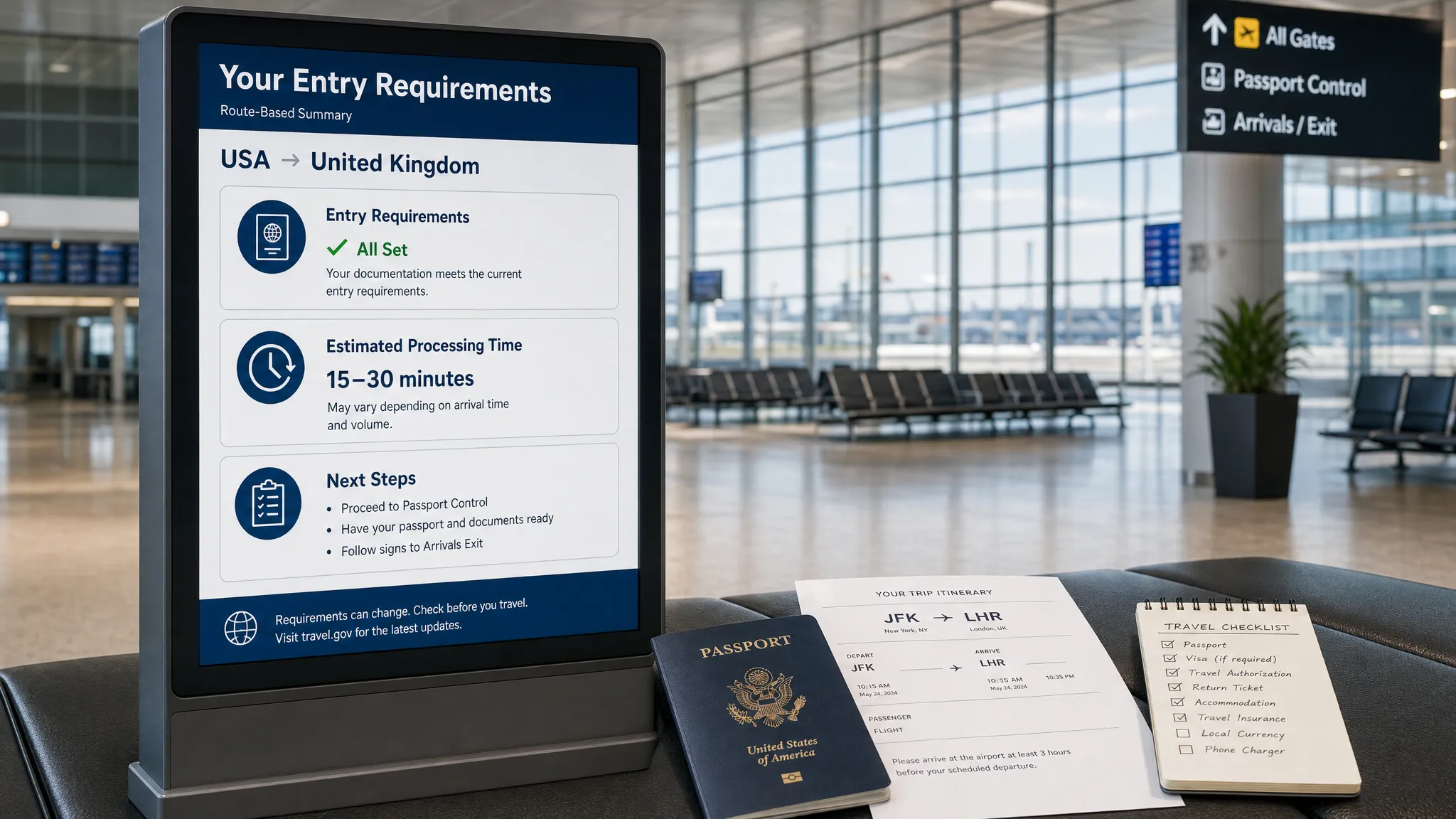
For years, many travel sites treated visa questions as a post-booking problem. The booking flow handled flights, hotels, tours, insurance, and payments, while border paperwork sat in a help-center article or a confirmation email. That model no longer fits how travelers plan international trips.
A traveler can choose the perfect itinerary and still be stopped by a missing electronic visa, an overlooked transit rule, or a passport validity requirement. For the business that sold the trip, that creates friction at the worst possible moment: after trust has been built, but before the trip is complete.
That is why more than 400 travel sites now embed visa support directly into the customer journey. The shift is not just about compliance. It is about conversion, customer confidence, operational efficiency, and a better way to earn ancillary revenue from a service travelers genuinely need.
Visa support moved from back-office task to booking-layer expectation
International travel is back at scale, and complexity came back with it. UN Tourism reported that international tourist arrivals reached 97% of pre-pandemic levels in the first quarter of 2024. As cross-border demand recovered, so did the volume of travelers navigating entry rules, electronic travel authorizations, eVisas, transit requirements, and destination-specific documentation.
At the same time, travelers expect the same simplicity from border paperwork that they get from digital check-in or mobile boarding passes. They do not want to search government portals, interpret legal language, or compare conflicting advice across forums and airline pages. They want to know, in plain terms, whether they need a visa and what to do next.
For travel businesses, visa support has become a product experience issue. If a customer discovers too late that they need an online visa application, the brand that sold the trip often absorbs the frustration, even if the traveler is legally responsible for their own documents. IATA Travel Centre reinforces that passengers must meet passport, visa, and health requirements, but most travelers still look to the company that sold the journey for guidance.
Embedding visa support brings that guidance into the place where travel decisions already happen.
The real reason 400+ sites are embedding visa support
The number matters because travel sites do not add new steps to their booking flows lightly. Anything placed in the funnel has to justify its presence. Visa support has spread because it solves a recurring business problem across many types of travel companies.
It answers a high-intent question at the moment it matters. It reduces the chance that a traveler leaves the site to research requirements elsewhere. It also creates a relevant ancillary service, because travelers who need an eVisa are often willing to pay for guided support, clearer instructions, and a smoother application process.
The result is a rare combination: better customer experience and a new revenue opportunity. That is why visa support is now appearing in booking flows, post-booking pages, manage-my-trip areas, destination content, insurance journeys, and metasearch experiences.
What embedded visa support actually means
Embedded visa support is not one single feature. It is a layer of travel document automation that helps customers understand and complete border requirements inside, or alongside, the travel brand’s digital experience.
Depending on the business model, this can be delivered through a travel API, a white-label visa application app, a no-code widget, or a custom data service. The goal is the same: make visa requirements actionable without forcing the customer to start from scratch on an external website.
| Embedded visa layer | What the traveler experiences | Why the travel business cares |
|---|---|---|
| Eligibility and requirement checks | Clear guidance based on trip, nationality, and destination | Fewer abandoned sessions and fewer basic support questions |
| Guided visa application flow | Step-by-step help completing the right visa application | Less confusion and a more premium travel experience |
| eVisa processing support | Help submitting and managing eligible electronic visa requests | A practical ancillary service tied to real traveler need |
| API or data integration | Requirements surfaced inside existing booking logic | More control for product and engineering teams |
| White-label or no-code deployment | A branded experience without a large internal build | Faster launch and lower implementation burden |
Not every site needs every layer. A metasearch brand may want requirement indicators and post-click monetization. An online travel agency may need checkout prompts and post-booking reminders. A tour operator may prioritize guided applications for specific destinations. The best embedded setup matches the traveler journey, not the other way around.
Travelers need certainty before they commit
International trips are conditional purchases. A flight price may look attractive, but the traveler still has to answer practical questions before feeling confident: Can I enter the country? Do I need an electronic visa? Is a transit visa required? Is my passport valid long enough? How long will approval take?
When those questions are not answered in the booking environment, the customer may pause. They may open a government site, search another travel brand, or postpone the purchase until they understand the requirement. Even if they return later, the original site has lost momentum.
Embedded visa support reduces that uncertainty. A simple requirement check or visa prompt can reassure travelers that the trip is viable and show them the next step if an application is needed. For high-value international itineraries, that reassurance can be the difference between hesitation and completion.
Visa requirements are too dynamic for static help pages
Many travel sites still maintain destination pages or FAQs that summarize visa requirements. Those pages can be useful for general education, but they are not enough for operational decision-making.
Visa rules often depend on multiple variables: passport nationality, country of residence, destination, transit points, length of stay, purpose of travel, arrival method, and sometimes even recent travel history. A static page that says visitors may need a visa can leave too much ambiguity.
Electronic visa programs also continue to evolve. Governments add digital authorizations, adjust processing times, change eligible nationalities, or update document requirements. Manual content maintenance becomes difficult at scale, especially for travel brands covering hundreds of destinations.
A visa management platform or data service helps move the experience from generic information to itinerary-relevant guidance. That does not replace official government rules, but it gives travelers a clearer starting point and helps businesses avoid relying on outdated content.
The visa application is a natural ancillary product
Ancillary revenue works best when it is relevant. A visa service is not a random upsell. It is directly connected to the trip the customer is buying.
If a traveler needs an eVisa for their destination, the service has immediate utility. It can save time, reduce confusion, and help them avoid mistakes in the application process. For the travel business, it creates revenue from a real travel need rather than adding friction with unrelated offers.
This is why embedded visa support is becoming relevant beyond traditional online travel agencies. Travel insurance sellers, metasearch sites, airlines, tour operators, and destination platforms can all benefit when the timing and presentation are right. For example, SimpleVisa has covered how travel insurance sellers benefit from embedded visa services because visa readiness and trip protection often appear in the same planning window.
The key is to treat visa support as assistance first and monetization second. When the offer is triggered by the traveler’s actual itinerary, it feels helpful rather than intrusive.
Embedded support lowers avoidable service demand
Visa questions are repetitive, but they are rarely simple. Customer service teams may receive questions such as whether a traveler needs a visa for a layover, how long approval will take, what documents are accepted, or whether children need separate applications.
Without embedded support, agents often have to redirect travelers to official sources or provide general guidance while avoiding legal responsibility. That creates a poor experience for both sides: the traveler wants a concrete answer, and the support team cannot manually interpret every case.
A guided flow helps by collecting the relevant trip details and presenting a structured next step. It can also reduce the volume of basic questions by making requirements visible earlier in the journey. For businesses with high international volume, even small reductions in repetitive support contacts can matter.
Implementation no longer requires a long product roadmap
One reason visa support has scaled across hundreds of travel sites is that deployment has become more flexible. A large travel brand with engineering resources may want a travel API that fits into its existing booking logic. A smaller business may prefer a white-label app or no-code implementation that can launch without a custom build.
That flexibility changes the business case. Visa support no longer has to compete with core booking infrastructure for months of product capacity. Teams can test demand, measure customer engagement, and expand the integration over time.
If your team is comparing deployment paths, SimpleVisa’s guide to online visa processing options explains the trade-offs between sending travelers to government portals, using a white-label solution, and integrating through an API. For teams that want a lighter launch path, its overview of no-code visa integration for travel sites shows why implementation is no longer limited to large engineering teams.
Which integration model fits which type of travel site?
Different travel businesses embed visa support in different ways. The best model depends on product maturity, traffic volume, brand control, and how much of the application experience the company wants to own.
| Integration model | Best fit | Main advantage |
|---|---|---|
| No-code widget | Content sites, travel insurance sellers, smaller OTAs, tour operators | Fast deployment with minimal technical work |
| White-label app | Brands that want a guided visa application experience under their own identity | More control over customer experience without building processing tools internally |
| Travel API | OTAs, metasearch platforms, super apps, and enterprise travel platforms | Deep integration into search, checkout, account, and post-booking flows |
| Custom data service | Platforms that need requirement data inside complex itinerary or partner workflows | Flexible use of visa data across internal systems and customer touchpoints |
Before choosing a model, travel companies should consider coverage, data quality, application guidance, user experience, security, support, and commercial structure. SimpleVisa’s breakdown of visa management platform features is a useful reference for teams building an evaluation checklist.
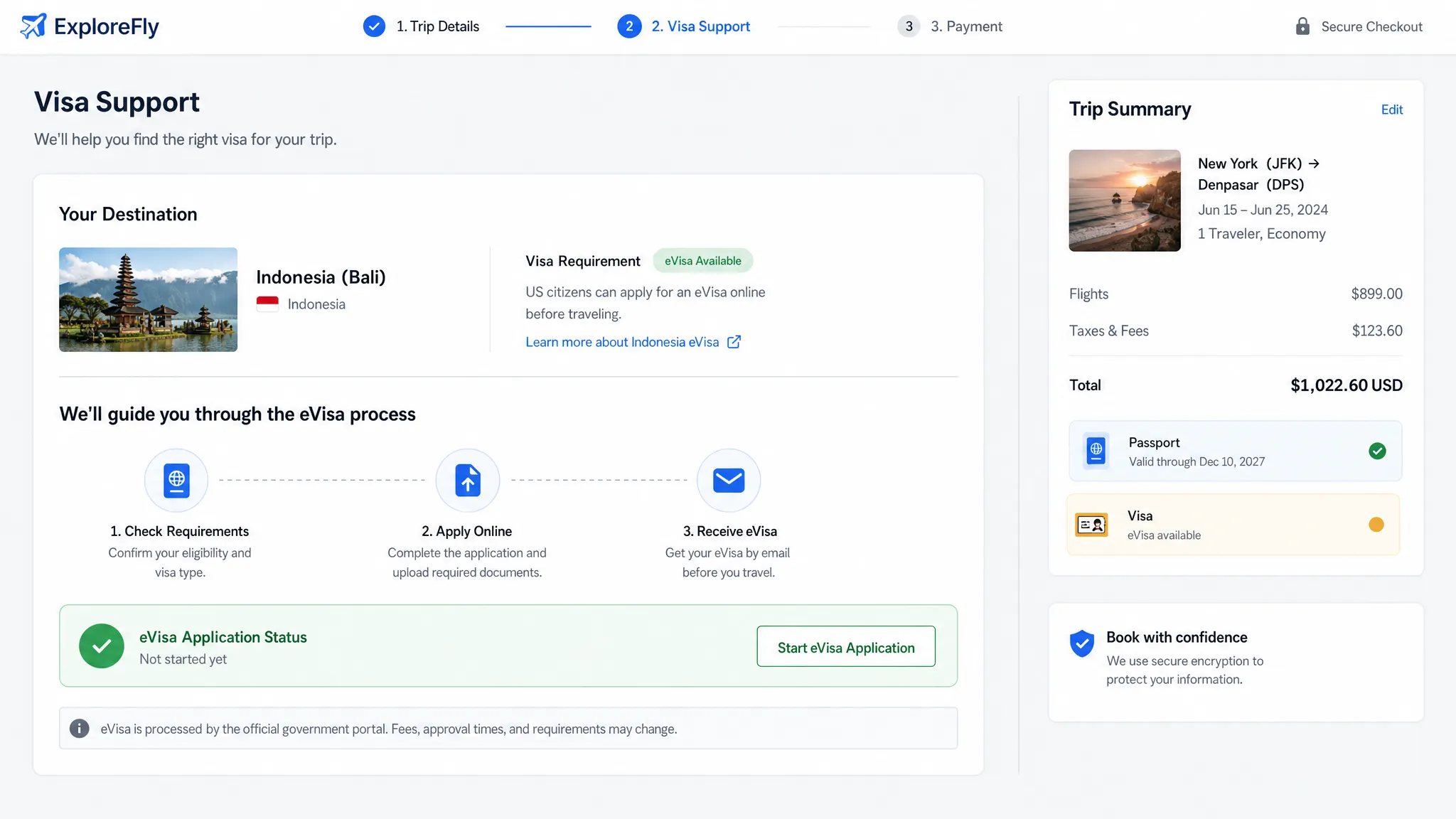
Where visa prompts belong in the traveler journey
The most effective embedded visa experiences are contextual. They do not interrupt every user at every step. Instead, they appear when the requirement is relevant and the traveler has enough information to act.
A traveler researching domestic hotels does not need visa guidance. A traveler booking a multi-country itinerary likely does. A customer who already purchased a trip may need a reminder before the application window closes. The more precisely a travel site matches the prompt to intent, the more helpful the service feels.
| Journey stage | Useful visa support moment | Example experience |
|---|---|---|
| Search and discovery | Early requirement awareness | A destination note or badge indicating that entry documents may be needed |
| Product page | Trip-specific reassurance | A prompt to check visa needs based on nationality and destination |
| Checkout | High-intent application offer | An option to start an eVisa or guided visa application after trip details are selected |
| Confirmation email | Post-purchase reminder | A clear next step for travelers who still need documentation |
| Manage booking | Ongoing support | A link back to visa status, application guidance, or requirement information |
This funnel-based approach protects conversion. It gives travelers the right help at the right time instead of adding a heavy compliance step too early.
What 400+ embedded travel sites teach the market
The growth of embedded visa support points to a broader lesson in travel technology: regulatory friction is now part of customer experience. Travelers do not separate booking from readiness. If they cannot board, enter, or complete the trip smoothly, the travel brand still feels responsible in their eyes.
The first lesson is that timing matters. Visa support performs best when it appears close to a real need, such as after a destination is chosen or after an international booking is confirmed. Generic banners are less effective than itinerary-aware prompts.
The second lesson is that relevance protects trust. A visa offer should be framed as help, not pressure. Clear language, transparent fees, and realistic processing expectations are essential.
The third lesson is that automation beats manual maintenance. Travel document automation helps companies keep guidance scalable across destinations, nationalities, and booking scenarios. That is difficult to replicate with static content alone.
The fourth lesson is that ancillary revenue and customer experience can work together. When an add-on solves a mandatory travel problem, monetization does not have to feel like distraction.
How to decide whether your travel site should embed visa support
Embedding visa support is most valuable when your customers frequently cross borders or purchase products connected to international trips. That includes online travel agencies, metasearch platforms, travel insurance sellers, airlines, tour operators, cruise sellers, destination marketplaces, and corporate travel platforms.
A practical assessment starts with a few questions:
- Do customers regularly ask your support team about entry requirements?
- Do your itineraries include destinations with eVisa or electronic travel authorization rules?
- Do travelers leave your site to research documents before completing a purchase?
- Do you want to add ancillary revenue without promoting unrelated products?
- Do you need a faster alternative to building visa data and application workflows internally?
If the answer to several of these is yes, embedded visa support is likely worth testing. The first implementation does not have to be complex. Many teams begin with a targeted placement, such as a post-booking prompt for international trips, then expand into checkout, account areas, or API-driven personalization.
Why SimpleVisa is built for this shift
SimpleVisa helps travel businesses simplify border crossing administration for their customers. Its solutions support visa processing automation, API integration for travel sites, white-label visa application experiences, custom data services, guided customer applications, premium eVisa management, ancillary revenue generation, and no-code implementation options.
For travel companies, the value is not only that customers can apply for a visa online. The value is that visa support can be embedded where the customer already is, in the flow that already drives bookings and trip readiness. That is what turns visa handling from a disconnected task into a scalable service layer.
As more travel brands compete on convenience, embedded border crossing solutions are becoming part of the modern travel tech stack. The companies adopting them are not trying to become government portals. They are trying to make international travel feel less fragmented for the customer and more commercially efficient for the business.
Frequently Asked Questions
What does it mean to embed visa support on a travel site? It means adding visa requirement checks, guided application flows, eVisa support, or visa-related data directly into a travel brand’s booking, post-booking, or customer account experience.
Does embedded visa support replace official government requirements? No. Travelers are still responsible for meeting official entry requirements. Embedded support helps them understand likely requirements and complete eligible applications more easily.
Which travel businesses benefit most from embedded visa support? OTAs, metasearch sites, travel insurance sellers, tour operators, airlines, cruise sellers, and destination platforms can benefit when they serve customers booking international travel.
Is a travel API required to offer visa support? Not always. Some businesses use an API for deep integration, while others use a white-label app, no-code widget, or data service depending on their technical resources and customer journey.
How does embedded visa support create ancillary revenue? It offers a paid service tied to a real travel need. When a customer needs an electronic visa or guided visa application help, the travel site can earn revenue while improving the customer experience.
Make visa support part of your travel experience
If your customers book international trips, visa uncertainty is already part of their journey. The question is whether they handle it alone, leave your site to research it, or get guided support from your brand.
SimpleVisa helps travel businesses embed visa support through flexible solutions including API integration, white-label applications, custom data services, and no-code options. If you want to simplify border crossing administration and build a more useful ancillary revenue stream, now is the right time to explore embedded visa support.