Your In-Travel Visa Tasks: What to Do Mid-Trip
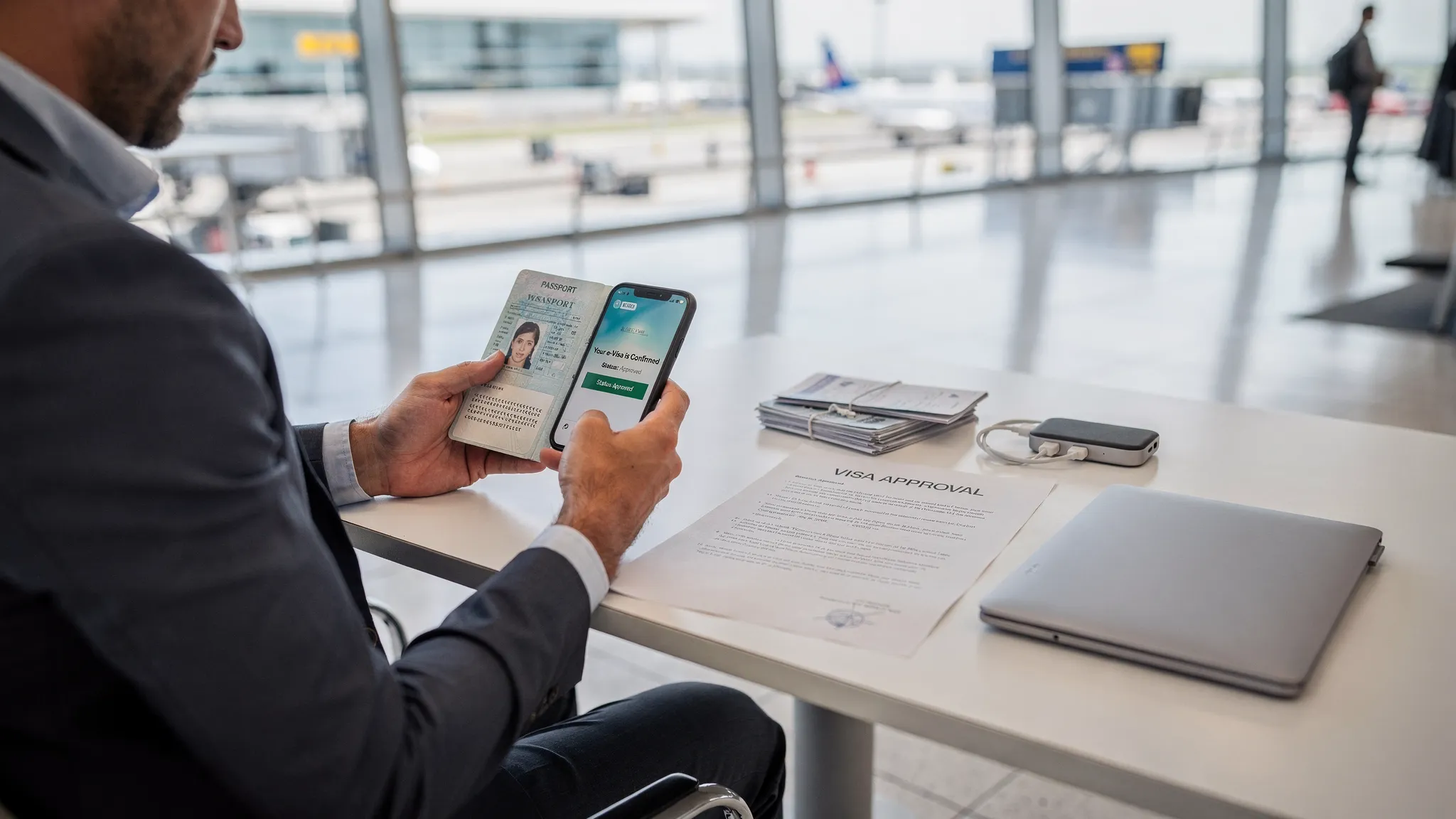
Visa approval is not the finish line. Once you are on the road, a handful of small “in-travel” tasks determine whether your next flight check-in goes smoothly, whether a spontaneous side trip is even possible, and whether you accidentally overstay.
This guide is a practical mid-trip playbook. Use it to keep your visa or eVisa compliant, accessible, and ready for the moments that matter: airport check-in, hotel registration, border crossings, and plan changes.
What “in-travel visa tasks” really means
Your in-travel visa tasks are the actions you take after you have started your trip to stay compliant with entry and stay rules.
That usually includes:
- Confirming your permitted length of stay (and the exact dates that matter).
- Keeping the right documents ready for airlines, hotels, and immigration.
- Managing onward travel, re-entry, or transit rules if your itinerary changes.
- Acting quickly if you lose access to your eVisa, your passport, or your email.
If you want a pre-trip refresher, see Travel Visa Basics: What to Know Before You Book.
The 15-minute “visa health check” (do this on day 1)
Most mid-trip visa problems come from one of three things: misunderstanding the allowed stay, losing access to documents, or assuming a side trip “counts as the same destination.”
Spend 15 minutes early in the trip checking the items below.
Your essential checks
- Allowed stay vs validity: “Valid until” is not always “you can stay until.” Many visas have a validity window and a separate maximum stay per entry.
- Number of entries: Single-entry, double-entry, multiple-entry. This decides whether leaving the country (even for one day) cancels your permission to come back.
- Conditions and restrictions: Purpose (tourism, business), prohibited activities, required registration, or limitations on regions.
- Passport details match: Your name, passport number, date of birth, and nationality must match exactly.
- Proof you may be asked to show: Onward ticket, accommodation details, proof of funds, travel insurance, invitation letter (varies).
Here is a quick reference table you can screenshot.
| What to check mid-trip | Where it usually appears | Why it matters in practice |
|---|---|---|
| Maximum stay per entry | Visa grant letter, eVisa PDF, immigration stamp, entry email | Prevents accidental overstays and denied extensions |
| Validity window | Same as above | If you leave and return, you may fall outside validity |
| Entries allowed | Visa/eVisa details | Determines whether a side trip breaks your plan |
| Purpose and conditions | Visa/eVisa details, official guidance | Wrong purpose can lead to refusal at the border |
| Required supporting docs | Border guidance, airline check-in prompts | Airlines may deny boarding if you cannot show these |
For a destination-by-destination view of what borders can request, use Border Crossing Requirements: ID, Visas, and Proofs.
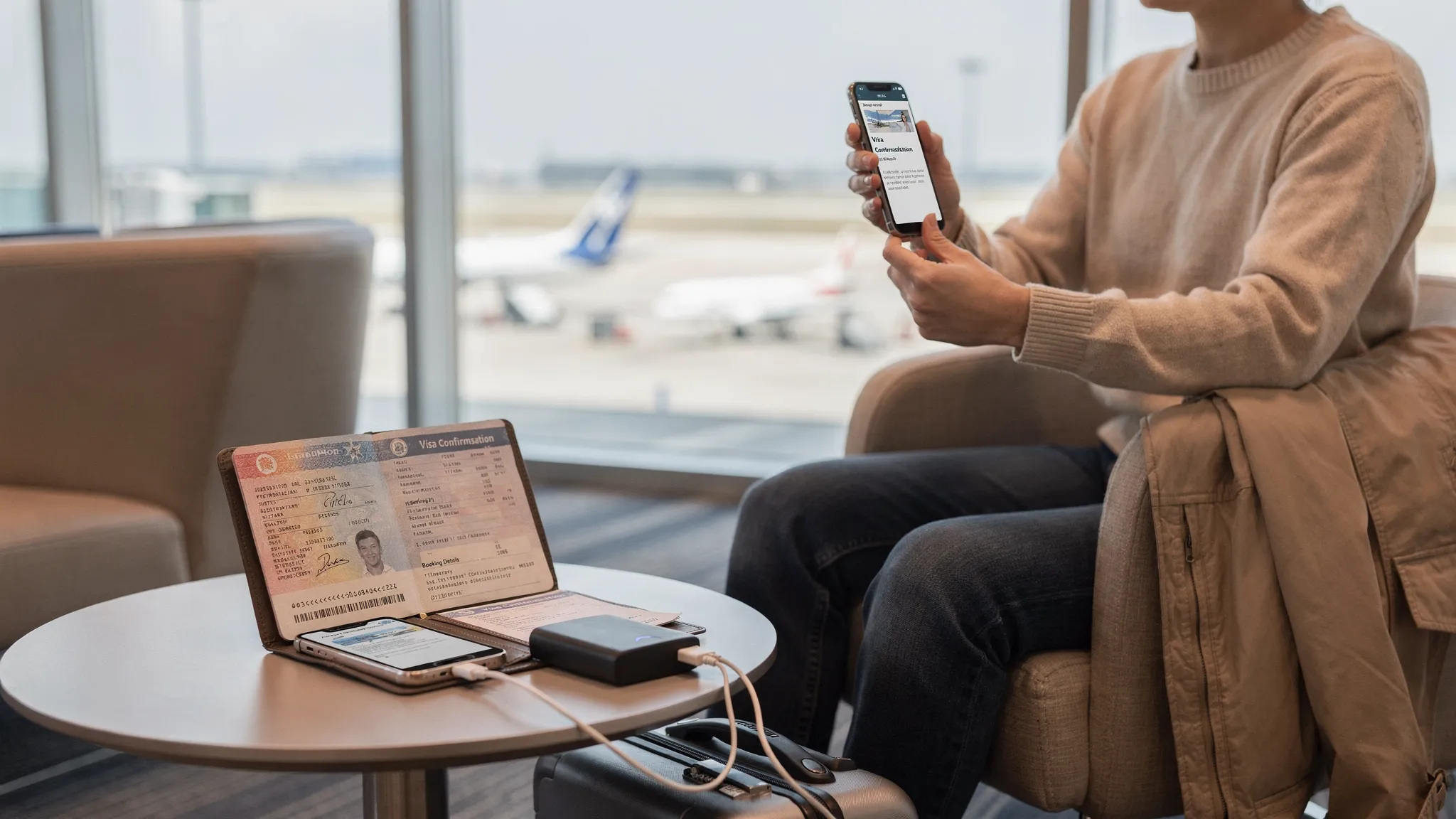
Keep your visa documents “border-ready” (even if you never plan to print)
Even when a visa is electronic, the real world is a mix of scanners, offline counters, and staff who need to see something quickly. Your goal is simple: access your authorization in under 30 seconds, without relying on one device, one email inbox, or one data connection.
A reliable document setup
- Offline access: Save a copy locally on your phone (not only in email).
- Cloud backup: Store a copy in a cloud drive you can access from any device.
- One physical backup: Keep a printed copy or at least key details in your bag (visa number, validity, entry conditions).
- Power and connectivity: Carry a power bank. If your visa is only on your phone and your phone dies at check-in, you have a problem.
Whether you must print depends on destination and checkpoint realities. This explainer helps you decide: Do You Need to Print an Electronic Visa?
Border crossings mid-trip: side trips, transits, cruises, and land borders
“Mid-trip” is when travel gets dynamic. A new city, a new country, a missed connection, a cruise stop, or a last-minute reroute can silently change what you need.
Common mid-trip border crossing traps
1) Leaving cancels a single-entry visa
If you hold a single-entry visa and you leave (including for a short side trip), you may not be allowed back in without a new visa.
2) Transit rules can apply even if you do not leave the airport
Some airports and routings trigger transit authorization requirements depending on nationality, terminal changes, or baggage re-check rules.
3) Land borders can be stricter about “proof”
Land crossings sometimes involve more questioning about onward travel, funds, and itinerary because enforcement styles vary.
4) Cruise and shore excursions can have separate requirements
Cruise itineraries sometimes include short stops where entry rules differ from arriving by air.
If you need a reliable way to sanity-check requirements when routes change, travel teams often use tools like the IATA Travel Centre as a starting point, then confirm via official government guidance.
If plans change: extensions, overstays, and “I cannot leave on time” scenarios
Flight cancellations, illness, family emergencies, or a work opportunity can push you past your permitted stay. The important thing is timing: in many countries, your options shrink dramatically once you have already overstayed.
What to do as soon as you suspect you will stay longer
- Re-check your allowed stay per entry (not just visa validity).
- Look for extension eligibility and lead times. Some systems allow online extensions, others require in-person appointments.
- Collect proof for why plans changed (airline notices, medical letters, police reports). Even if not required, it can help.
- Avoid informal “border runs” unless you are sure your visa allows it. For some destinations, repeated exits and re-entries create scrutiny.
For a step-by-step extension walkthrough, see How to Extend Your Stay with an Electronic Visa. If you are close to the end of validity, this guide helps you think about renewal and risk: When Does an Electronic Visa Expire and How to Renew It?
When something goes wrong: quick actions that prevent trip-ending issues
Mid-trip problems are stressful, but most have a “best next step” that works across many countries. The table below is designed for fast decision-making.
| Situation | What it usually means | What to do right now |
|---|---|---|
| Airline says “not authorized to travel” | Mismatch, missing document, wrong visa type, or status not verified | Pull up your visa grant and passport, confirm details match, ask what data field failed (name, passport number, expiry). Escalate early before bag drop closes. |
| You cannot find your eVisa email | Access problem, not necessarily a visa problem | Check spam, search by country name and “visa,” retrieve from the portal if available, use your saved offline copy if you made one. |
| Passport is lost or stolen | Identity issue first, visa issue second | File a local report if needed, contact your embassy/consulate, then address visa transfer or re-issuance rules. |
| Your visa details are wrong | Data entry or processing error | Do not travel onward until corrected. Contact the issuing authority or your visa service with evidence (passport bio page, application receipt). |
| You might overstay due to delays | Compliance risk | Contact local immigration channels early, apply for an extension if possible, keep written proof of disruptions. |
If your eVisa or passport access is compromised, start here: 10 Things to Do If Your Electronic Visa is Lost or Stolen.
If you are using SimpleVisa through a travel provider and need urgent help, follow the fastest path outlined in Visa Contact Us: Get Instant Support.
Stay secure while handling visas on the road
In-travel visa tasks often happen on hotel Wi-Fi, airport networks, or borrowed devices. That is exactly when travelers get targeted by phishing and fake “urgent visa” messages.
Practical safeguards that reduce risk:
- Avoid clicking visa links from messages (SMS, social DMs, unsolicited email). Navigate to known official portals or your trusted provider directly.
- Do not upload passport scans on public computers unless absolutely necessary.
- Use a secure connection (many travelers use a VPN on public Wi-Fi).
- Keep your confirmation numbers private (application IDs can sometimes be used for unauthorized status checks).
If you want a clear list of red flags and what to do if you already paid a fraudulent site, read Electronic Visa Scams: How to Protect Yourself from Fraud.
For travel businesses: how to reduce mid-trip visa friction for customers
If you sell travel, in-travel visa issues show up as missed flights, emergency support tickets, chargebacks, and unhappy customers.
A strong mid-trip experience usually includes:
- Proactive reminders about documents to carry, entry conditions, and timing windows.
- A single place for customers to retrieve visa outputs (not just “check your email”).
- Clear escalation paths when a traveler is at the airport and time is limited.
- Coverage for complex itineraries, including multi-country trips, side trips, and transits.
SimpleVisa is designed to simplify border crossing administration for travel businesses through options like an API integration, a white-label visa application app, and custom data services, so travelers can complete and manage visa steps within your journey instead of leaving it.
Frequently Asked Questions
Can I leave and re-enter on the same visa during my trip? It depends on whether your visa is single-entry or multiple-entry, and whether you remain within the validity window. Check the “entries” field before you book side trips.
What is the difference between visa validity and length of stay? Validity is the period when you are allowed to enter (or use the visa), while length of stay is how long you are allowed to remain after entry. They are often different.
Do I need to print my eVisa while traveling? Some destinations accept fully digital presentation, but airlines, land borders, or local checkpoints may still ask for a printed copy. A printout is a low-effort backup. See Do You Need to Print an Electronic Visa?.
What should I do if I realize I might overstay? Act early. Check your allowed stay, then look for an extension or emergency stay process before your permitted days expire. Keep proof of disruptions (cancellations, medical issues).
If my passport is stolen, is my eVisa still valid? Many eVisas are linked to a specific passport number, so a new passport can require a transfer or re-issuance. Follow the recovery steps in 10 Things to Do If Your Electronic Visa is Lost or Stolen.
Who should I contact first when something breaks mid-trip, the embassy or my visa provider? If it is an identity or emergency travel document issue (lost passport, detention, urgent protection), contact your embassy/consulate. If it is an application, document, or status issue, contact the provider first, they can often confirm details and guide next steps quickly.
Keep in-travel visa tasks simple for your customers
If you are a travel brand, the best time to prevent mid-trip visa problems is before they happen: inside the booking flow and post-booking journey.
SimpleVisa helps travel businesses streamline visa applications and border requirement guidance through flexible integration options (API, white-label app, data services, and even no-code implementation). To see what this could look like for your itineraries and customers, explore SimpleVisa and request a demo through the site.