E Visa for Indian Passport Holders: Top Options
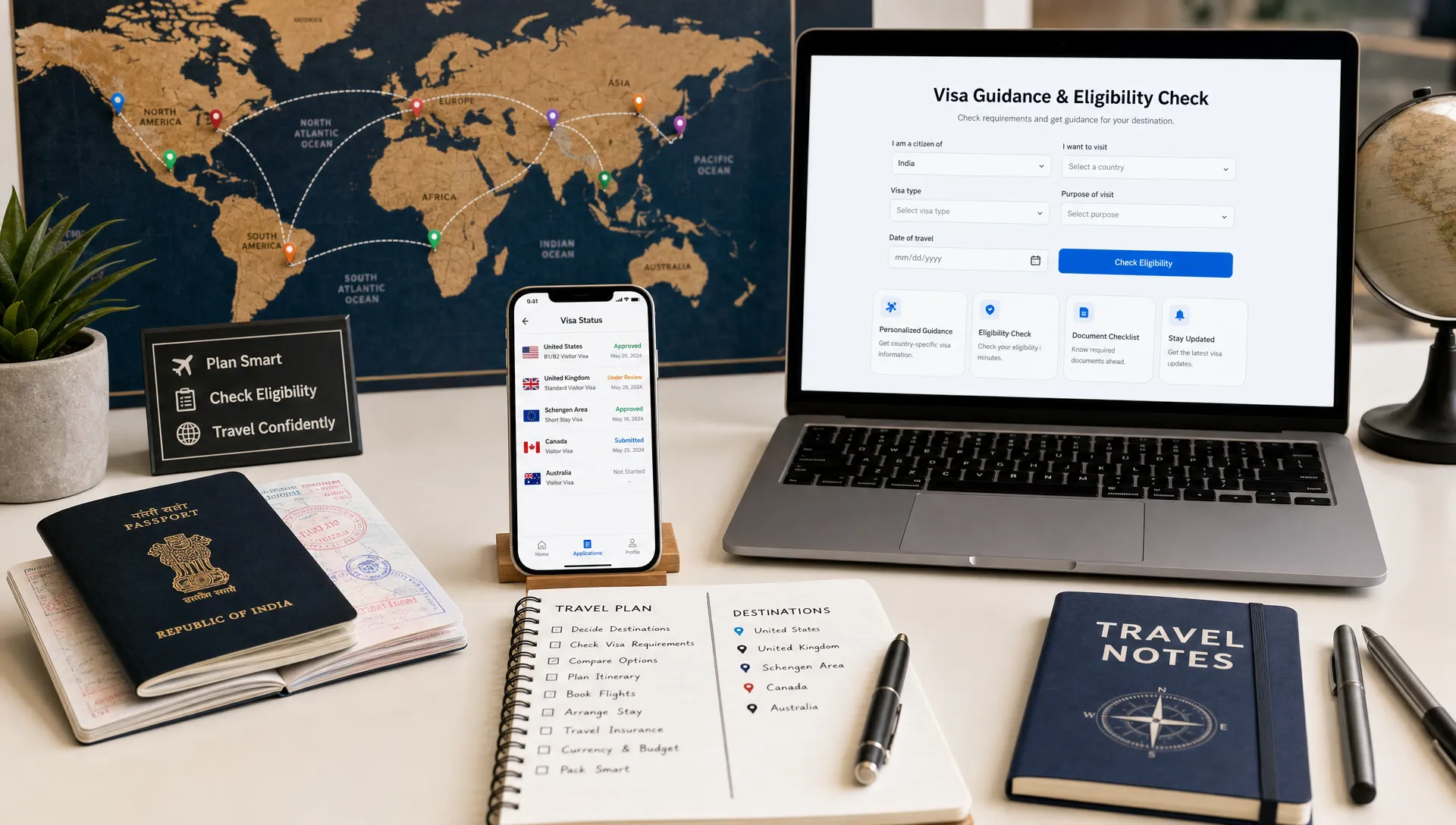
Indian passport holders now have far more online visa routes than they did a decade ago. For travelers, that means fewer embassy visits, faster planning, and more last-minute trip options. For travel companies, it means visa support can become part of the booking experience instead of a post-purchase headache.
Still, the best eVisa options are not simply the countries with the shortest forms. A good destination for an Indian passport holder depends on the trip purpose, airline routing, passport validity, current immigration policy, and whether the traveler holds other visas or residence permits. If you need a broader primer before comparing destinations, SimpleVisa also has a detailed guide to eVisa rules for Indian citizens.
Below is a practical, 2026-focused look at top e visa for Indian passport holders options, with the main caveats travelers and travel sellers should check before booking.
What counts as an eVisa for Indian passport holders?
Countries use different names for digital entry permissions. Some are true eVisas, some are electronic travel authorizations, and some are standard visitor visas submitted online. From a traveler experience perspective, they feel similar because the application, payment, and approval usually happen online. From an immigration perspective, the differences matter.
| Term | What it usually means | Planning note for Indian passport holders |
|---|---|---|
| eVisa | A visa applied for and approved online before travel | Check validity, entry count, permitted purpose, and eligible entry points |
| ETA or eTA | Electronic travel authorization, often lighter than a visa | It may not be called a visa, but airlines can still require proof before boarding |
| e-VOA | Electronic visa on arrival approval or pre-arrival payment | Usually valid only at selected airports or ports, and conditions can be narrow |
| Online visitor visa | A regular visa submitted digitally through an immigration portal | Often more documentation and longer processing, but no embassy visit in many cases |
The safest rule is simple: use the official terminology for the destination and do not assume an online approval covers every purpose. Tourism, business meetings, employment, study, medical treatment, and transit can all have different requirements.
Top eVisa options at a glance
The following destinations are popular because they either offer online visa applications, electronic authorizations, or digital visitor visa processes that can work well for Indian passport holders. Rules can change quickly, so travelers should verify requirements on the official immigration portal or through a trusted visa partner before paying for flights.
| Destination | Common online route | Best for | Watch out for |
|---|---|---|---|
| Vietnam | eVisa | Leisure trips, longer Southeast Asia itineraries, repeat entries when permitted | Entry point, validity, and single or multiple entry selection must match the trip |
| Indonesia | e-VOA or online visitor route | Bali holidays, short leisure stays, selected business visit purposes | Only certain activities are allowed, and extension rules vary by visa type |
| Singapore | eVisa processed through authorized channels | City breaks, cruises, business events, family trips | Many applicants need an authorized agent or local contact rather than direct self-service |
| UAE | Online tourist visa through airlines, hotels, agencies, or sponsors | Dubai and Abu Dhabi holidays, stopovers, family visits, events | The route depends on airline, sponsor, emirate, and traveler profile |
| Sri Lanka | ETA or online authorization | Short beach, culture, and wellness trips | Sri Lanka has changed its online visa systems before, so confirm the current portal |
| Thailand | eVisa when required, with changing exemption policies | Resorts, islands, family vacations, medical and wellness trips | Indian travelers may fall under visa exemption at some times, so check before applying |
| Cambodia | Tourist eVisa | Angkor Wat, short regional trips, backpacking routes | Not accepted at every land border or entry point |
| Azerbaijan | ASAN eVisa | Baku city breaks, Caucasus itineraries, event travel | Apply before travel and keep a digital and printed copy available |
| Armenia | eVisa | Cultural trips, nature routes, regional add-ons | Approval and permitted stay depend on the exact visa category selected |
| Turkey | Conditional eVisa for eligible Indian passport holders | Istanbul stopovers and holidays for travelers with qualifying visas or residence permits | Indian citizens generally need a valid US, UK, Schengen, or Ireland visa or residence permit for the eVisa route |
| Australia | Visitor visa application submitted online | Family visits, tourism, cruises, longer-haul trips | It is digital, but not a quick eVisa in the usual sense, and processing can take longer |
| South Africa | eVisa where available | Safari, Cape Town trips, business events | Processing times and documentation can be less predictable than simpler tourist eVisas |
| Tanzania | eVisa | Safaris, Zanzibar holidays, Kilimanjaro travel | Yellow fever, routing, and purpose rules may apply depending on itinerary |
This is not an exhaustive list. It is a shortlist of practical options that tend to matter most for Indian outbound travel, travel agencies, online travel platforms, and tour operators.
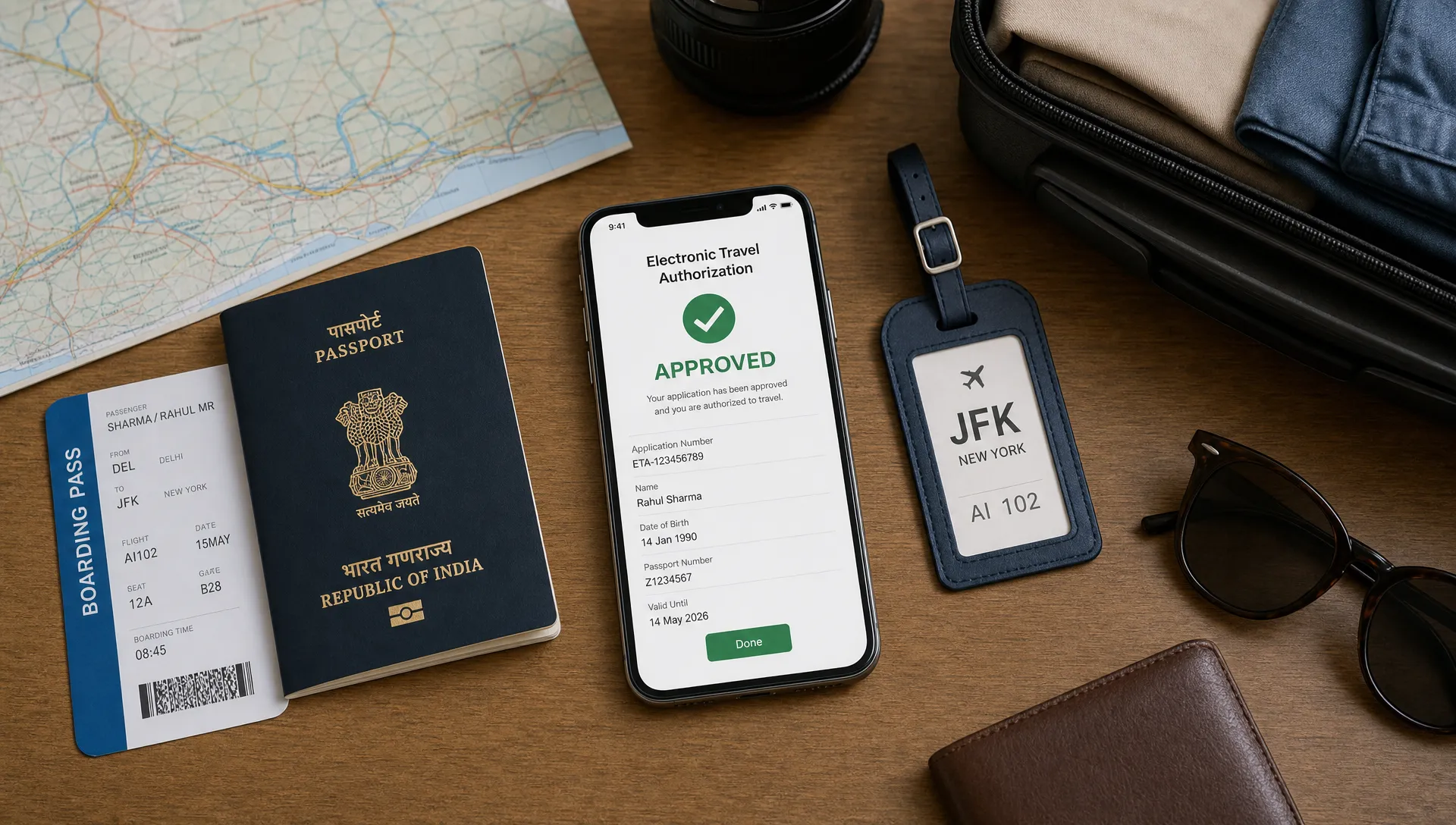
Best easy leisure options in Asia
For many Indian travelers, Asia offers the best mix of short flight times, familiar airline routes, competitive travel costs, and online entry permissions. Vietnam is one of the strongest options because its digital visa system is widely used by international visitors and works well for both standalone holidays and multi-country Southeast Asia trips. It is especially appealing for travelers who want Hanoi, Ho Chi Minh City, Da Nang, Hoi An, and Phu Quoc in one itinerary.
Indonesia is another major choice, especially for Bali. Indian travelers should pay close attention to whether they are using an e-VOA, a different online visitor visa, or a visa-free route if any special policy is in force. The allowed activities matter. A traveler attending a casual meeting, scouting venues, or joining a retreat should not assume that a tourist permission covers every business-related activity.
Singapore is highly popular but works differently from many self-service eVisa destinations. Indian passport holders commonly apply through authorized visa agents or eligible local contacts. The approval may be electronic, but the process is not always a simple direct-to-government form. For travel sellers, Singapore is a good example of why visa guidance should be built into the booking journey rather than sent later as a generic email.
Sri Lanka, Thailand, Cambodia, and Laos can also be strong choices for short leisure trips. Sri Lanka often uses an ETA-style model, Thailand’s requirements for Indian travelers have changed in recent years, and Cambodia and Laos have eVisa systems with entry-point restrictions. The key is not just whether an online application exists, but whether it fits the traveler’s exact airport, border crossing, trip length, and purpose.
Best Middle East and nearby options
The UAE is one of the most important online visa markets for Indian passport holders because of its air connectivity, diaspora links, stopover potential, shopping, events, and family travel. The process is usually handled through an airline, hotel, travel agency, or sponsor rather than a single universal self-serve portal for every visitor. This makes the UAE a prime destination for travel businesses that want to offer visa support as an ancillary service.
Bahrain can also be relevant for Indian travelers, especially for regional business and family visits. Azerbaijan and Armenia are attractive nearby options for travelers who want something different from the standard Southeast Asia or Gulf itinerary. Their online visa systems can be convenient, but travelers still need to check passport validity, arrival dates, and the exact category of permission.
Turkey is a high-interest destination, but it is not a universal eVisa option for Indian passport holders. The Turkish eVisa route is generally conditional for Indian citizens and often depends on holding a valid visa or residence permit from countries such as the US, UK, Ireland, or Schengen area. Travelers who do not meet those conditions may need a different visa process.
Purpose also matters. An entrepreneur visiting a fashion trade fair in Dubai might prepare samples, lookbooks, and custom woven labels and patches well before departure, but the visa application still needs to reflect the true purpose of the trip, such as tourism, business meetings, exhibitions, or commercial activity. Incorrect purpose selection is one of the easiest ways to create avoidable border friction.
Best longer-haul digital visa options
Australia is not always described as an eVisa destination in the simple tourism sense, but its visitor visa process is largely digital through the official immigration account system. For Indian passport holders visiting family, taking cruises, or planning longer holidays, Australia can be a strong option if travelers allow enough time and prepare complete supporting documents.
New Zealand also uses digital application channels for many visitor visa cases, although it should not be confused with visa-waiver authorizations available to some other nationalities. Indian passport holders should expect a more documentation-heavy process than a typical Southeast Asian eVisa.
In Africa, South Africa, Tanzania, Ethiopia, and Kenya are worth watching. Tanzania and Ethiopia have online visa options for many travelers, South Africa has used eVisa channels for eligible applicants, and Kenya now uses an electronic travel authorization model rather than a traditional tourist visa for many visitors. These can be excellent destinations for safaris, honeymoons, conferences, and adventure travel, but the documentation and health-related requirements may be more complex than a simple city-break eVisa.
How to choose the right eVisa option
The best destination is the one where the visa route matches the traveler’s risk profile and timeline. A budget traveler with flexible dates may tolerate a longer or less predictable application. A family traveling during school holidays, a cruise passenger, or a business traveler with fixed event dates needs more certainty.
| Traveler profile | Stronger destination fit | Why it works |
|---|---|---|
| First-time international traveler | UAE, Singapore, Thailand, Sri Lanka | Familiar routes, frequent flights, strong tourism infrastructure |
| Short-notice leisure traveler | Vietnam, Indonesia, Cambodia, Azerbaijan | Online systems can be relatively straightforward when documents are ready |
| Family traveler | UAE, Singapore, Australia | Clearer itinerary planning, family-friendly infrastructure, strong airline networks |
| Multi-country backpacker | Vietnam, Cambodia, Laos, Thailand | Regional routing is easy, but entry-point and validity checks are essential |
| Business event traveler | UAE, Singapore, Bahrain, Turkey if eligible | Good event infrastructure, but purpose and invitation documents matter |
| Long-haul vacationer | Australia, South Africa, Tanzania | High-value trips where early visa planning reduces cancellation risk |
For travelers, this comparison helps avoid choosing a destination only because it sounds easy. For travel companies, it shows where a visa recommendation engine can improve conversion by matching the destination to the traveler’s actual trip.
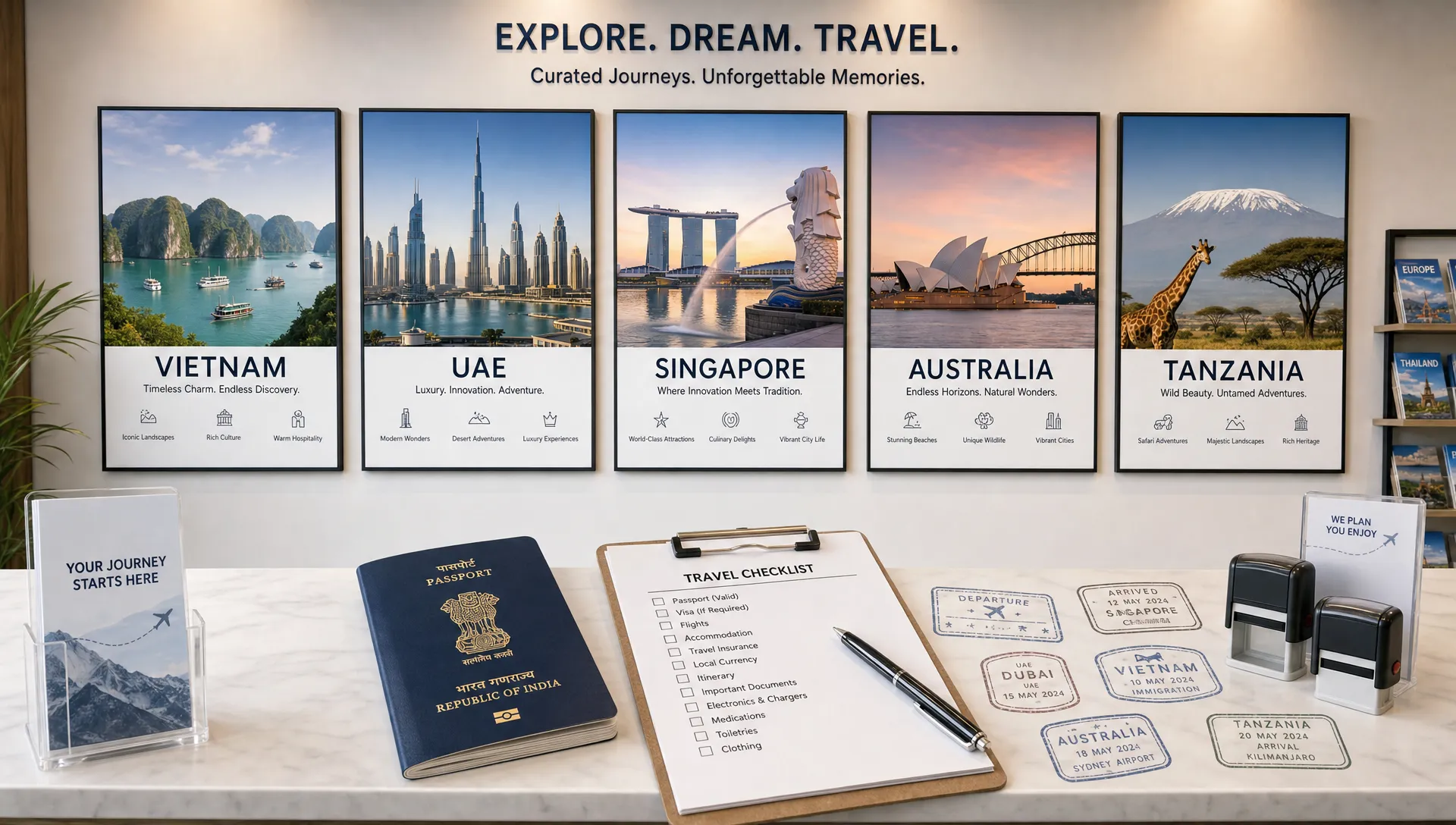
Documents Indian travelers should prepare before applying
Most online visa systems ask for similar core documents, even when the destination and visa type differ. Having these ready before starting the form reduces failed uploads, payment delays, and mismatched information.
Common requirements include:
- A passport valid for the required period, often at least 6 months beyond arrival
- A clear passport bio-page scan with all details visible
- A recent passport-style photo that meets size, background, and face-position rules
- Confirmed or provisional travel dates, accommodation, and return or onward flight details
- Proof of funds, employment, business ownership, or student status when required
- Invitation letters, conference registration, or sponsor details for business travel
- Copies of qualifying visas or residence permits for conditional eVisa routes
- A payment card that works for international online transactions
Travelers should also keep the approved document accessible offline. Even when a visa is electronically linked to the passport, airline check-in staff or border officers may ask to see the approval notice.
Common mistakes that cause eVisa problems
The most common problems are not dramatic. They are small errors that make the application look inconsistent or make airline staff uncertain at check-in.
| Mistake | Why it causes issues | Safer approach |
|---|---|---|
| Name order does not match passport | Indian passports can have different given name and surname formats | Copy names exactly as shown on the passport bio page |
| Wrong purpose selected | Tourism, business, transit, and work are treated differently | Choose the category that reflects the real trip activity |
| Old country rules used | Visa exemptions and eVisa portals change often | Recheck requirements close to booking and again before departure |
| Entry point ignored | Some eVisas are valid only at listed airports or borders | Match the eVisa to the arrival airport, seaport, or land border |
| Conditional eligibility assumed | Turkey, Saudi Arabia, and Morocco-style routes may depend on other visas or residence permits | Verify the qualifying document before selling or applying |
| Application submitted too late | Online does not always mean instant | Build in buffer time, especially around holidays and peak travel seasons |
These details are also why the benefits of electronic visas are strongest when the process is paired with accurate eligibility checks. A digital application saves time only if the traveler is applying under the right route.
Notes for travel companies serving Indian passport holders
If you sell flights, hotels, packages, cruises, or tours to Indian travelers, visa guidance should not be treated as a static PDF. It belongs inside the customer journey. The ideal moment to surface visa information is before checkout, when the traveler still has time to choose a better destination, change dates, or prepare documents.
A useful workflow asks for nationality, passport country, residence country, destination, transit points, travel purpose, and trip dates. It then shows the likely visa route, the urgency, and the documents required. This is especially important for Indian passport holders because eligibility can depend on additional visas, residence permits, sponsor routes, airline partnerships, or temporary visa-exemption policies.
Travel businesses can also use visa support to increase ancillary revenue in a way that genuinely helps customers. The key is transparency. Travelers should understand what the service includes, what the government fee covers, what the processing timeline looks like, and what documents they are responsible for providing.
Frequently Asked Questions
Which countries offer an eVisa for Indian passport holders? Popular online or electronic options include Vietnam, Indonesia, UAE routes, Singapore through authorized channels, Sri Lanka, Cambodia, Azerbaijan, Armenia, Tanzania, South Africa where available, and Australia through an online visitor visa process. Eligibility and terminology vary by destination.
Is an eVisa the same as visa on arrival? No. An eVisa is usually approved before travel, while visa on arrival is granted at the border. Some countries use e-VOA systems that combine online pre-application with arrival formalities, so travelers should check the exact process.
Can Indian passport holders get a Turkey eVisa? Often only if they meet conditional requirements, such as holding a valid visa or residence permit from specified countries like the US, UK, Ireland, or Schengen area. Travelers who do not qualify may need a different Turkey visa route.
Do Indian travelers need to print an eVisa approval? It is wise to carry both a printed copy and an offline digital copy. Even if the approval is linked electronically to the passport, airlines and border officers may ask to review the document.
How early should Indian passport holders apply for an eVisa? For simple tourist eVisas, applying at least one to two weeks before travel is safer than waiting until the last minute. For Australia, South Africa, business trips, family travel, or peak-season travel, allow more time.
Can a travel company automate eVisa guidance for Indian customers? Yes. Travel businesses can integrate visa requirement checks and guided applications into booking flows, which reduces confusion and creates a smoother customer experience.
Make eVisa guidance part of the trip, not an afterthought
For Indian passport holders, the right online visa option can turn a complicated trip into a manageable one. For travel businesses, it can also reduce support tickets, prevent avoidable booking failures, and create a valuable ancillary service.
SimpleVisa helps travel businesses streamline visa applications with automation, API integration, white-label app options, and custom data services. If your customers are choosing destinations like Vietnam, UAE, Singapore, Australia, or beyond, adding guided visa support early in the booking flow can make travel feel simpler from the start.