e Visa Umrah Rules, Timing, and Common Mistakes
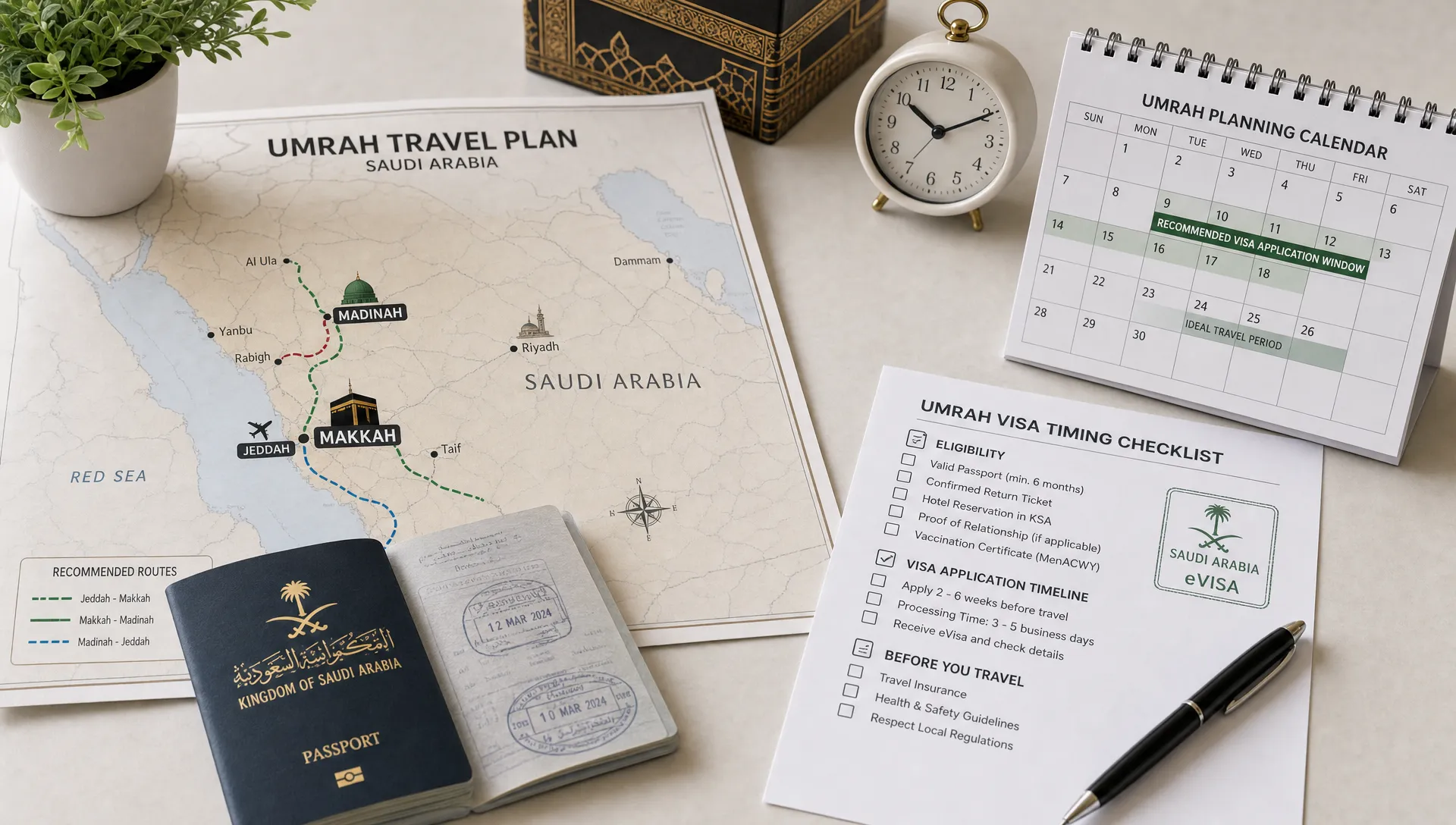
For many travelers, e Visa Umrah planning looks simple: apply online, receive approval, fly to Saudi Arabia, and perform Umrah. In practice, the small details matter. A single typo in a passport number, choosing the wrong visa route, or misunderstanding the Hajj season restriction can disrupt an otherwise well-planned journey.
For travel businesses, the stakes are even higher. Umrah customers often travel in families, groups, or seasonal peaks, and they expect visa guidance to be accurate before they commit to flights, hotels, and ground transportation. The goal is not just to submit an application. It is to match the traveler to the right visa path, at the right time, with the right supporting information.
Below is a practical guide to the rules, timing, and common mistakes that matter most when planning Umrah with an eVisa.
What an e Visa for Umrah usually allows
Saudi Arabia allows many eligible travelers to perform Umrah using a tourist eVisa, subject to current Saudi rules and seasonal restrictions. This is different from a Hajj visa, which is a separate route and is required for Hajj.
In simple terms, an Umrah eVisa route may be suitable when the traveler is eligible for Saudi Arabia’s tourist eVisa and plans to perform Umrah outside the official Hajj period. However, not every traveler qualifies for the same route. Eligibility can depend on nationality, residency, existing visas, passport validity, travel purpose, and current Saudi policy.
That distinction matters because travelers often use the phrase Umrah eVisa as if it were one universal product. In reality, the correct path may be a tourist eVisa, an Umrah-specific arrangement, a visa on arrival for eligible travelers, or another consular route. Before applying, check the latest eligibility rules and make sure the visa type matches the traveler’s actual trip.
For a deeper application walkthrough, SimpleVisa has a separate guide on how to apply for an Umrah eVisa online without creating avoidable errors.
Core eVisa rules Umrah travelers should know
Saudi visa rules can change, especially around peak pilgrimage periods, health requirements, and entry procedures. Still, several rules consistently affect most Umrah eVisa journeys.
| Rule area | What to check | Why it matters |
|---|---|---|
| Visa purpose | Confirm the visa allows tourism and individual Umrah where applicable | An eVisa that supports Umrah is not the same as permission to perform Hajj |
| Hajj season | Verify whether Umrah travel is allowed during the planned dates | Tourist eVisa holders are generally not allowed to use it for Hajj |
| Passport validity | Confirm the passport is valid for the required period, commonly at least six months from entry | Airlines and border officers may refuse travel if the passport is too close to expiry |
| Personal details | Match names, date of birth, nationality, and passport number exactly | Data mismatches are one of the most common causes of delay or travel disruption |
| Stay duration | Check the visa validity and permitted length of stay | Overstaying can create penalties and future travel problems |
| Health requirements | Review current vaccination or health documentation rules | Requirements may vary by country, season, and official Saudi guidance |
| Family and minors | Check whether minors need separate applications and adult accompaniment details | Group or family errors can affect the whole booking |
| Entry conditions | Remember that an approved visa does not guarantee entry | Final admission is decided by border authorities |
The most important rule is also the simplest: an eVisa is not a substitute for checking the traveler’s full itinerary. Flights, transit points, hotel dates, and pilgrimage timing should all align with the visa conditions.
Timing: when to apply for an Umrah eVisa
Some Saudi eVisa applications are processed quickly, but fast processing should not be treated as a planning strategy. Approval timing can vary based on eligibility route, application accuracy, system checks, peak demand, public holidays, and whether extra review is required.
For individual travelers, it is usually safer to apply after the passport, travel dates, and accommodation plans are stable, but before the trip becomes difficult or expensive to change. For travel businesses, the visa check should happen even earlier, ideally before final payment or ticketing, so customers know whether their intended route is realistic.
| Travel scenario | Suggested planning approach | Main risk to avoid |
|---|---|---|
| Individual Umrah trip in a quieter period | Start checking eligibility several weeks before departure | Waiting until flights are nonrefundable |
| Ramadan Umrah | Begin visa and document checks much earlier | Peak demand, limited accommodation, and tighter travel windows |
| Family or group booking | Validate every passport before confirming the group | One incorrect document delaying several travelers |
| Traveler with dual nationality or residency-based eligibility | Confirm which passport and eligibility route will be used | Applying with details that do not match the travel document |
| Last-minute trip | Apply only after confirming eligibility and document quality | Assuming quick processing means guaranteed approval |
A useful rule of thumb is to separate eligibility timing from submission timing. Eligibility should be checked as early as possible. Submission should happen when the traveler’s information is accurate, the passport is valid, and the itinerary is sufficiently confirmed.
Travel businesses should also build in time for customer corrections. If a traveler uploads a blurry passport scan or enters a shortened name, the issue should be caught before submission, not after an application is already in review.
The travel sequence that prevents most problems
The safest Umrah eVisa process follows a clear order. First, confirm the traveler’s nationality, residency, and passport validity. Second, verify that the intended travel dates are outside restricted periods for the visa type. Third, match the visa route to the traveler’s purpose. Fourth, collect and validate the required data. Fifth, submit the application and keep the approval linked to the correct passport.
Only after those steps should travelers treat the visa as part of a confirmed journey. Even then, they should carry the same passport used in the application, keep a copy of the visa approval, and follow any current instructions related to Umrah permits, appointments, or official Saudi platforms such as Nusuk.
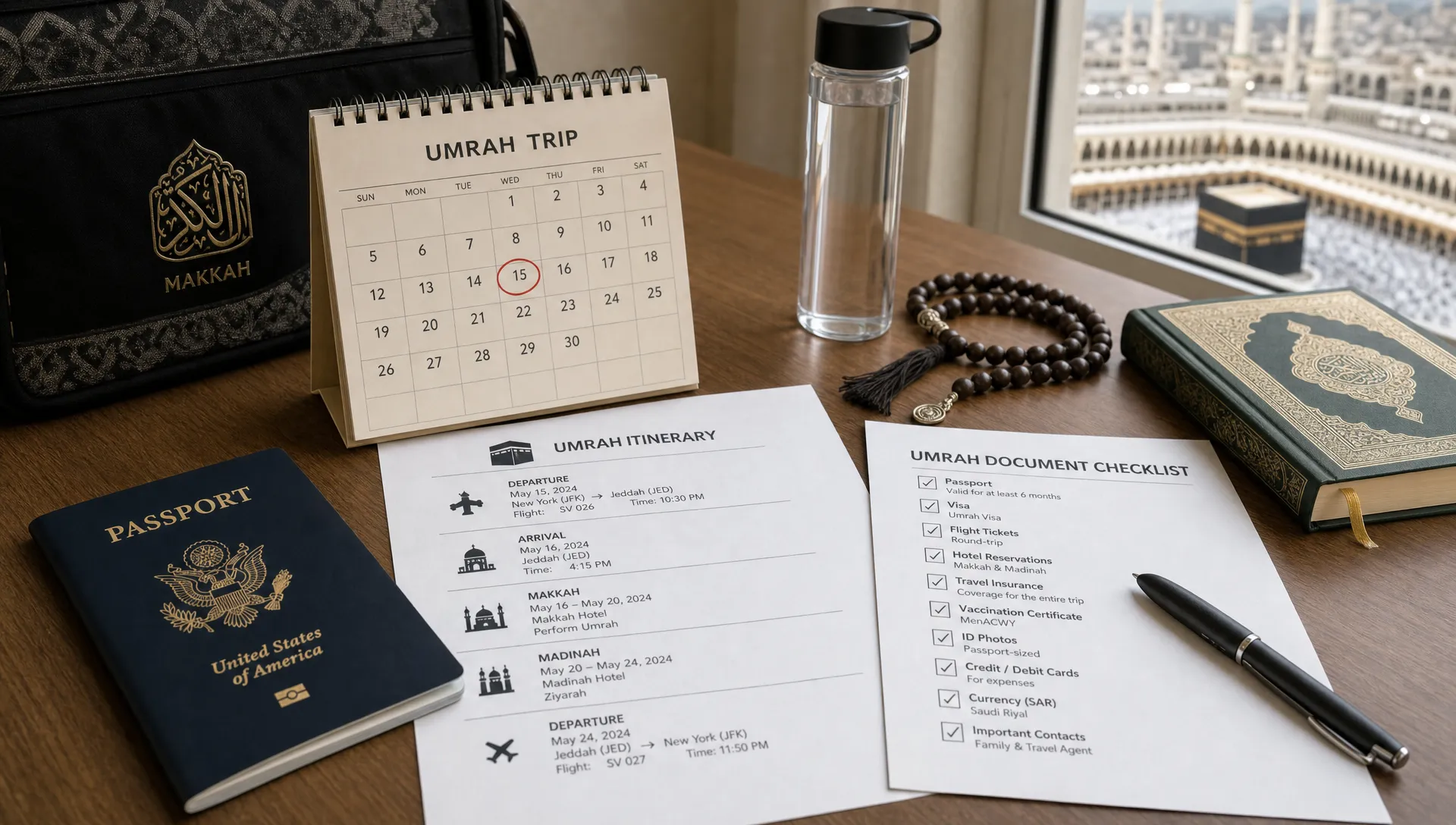
For agencies and online travel platforms, this sequence should be embedded into the booking flow. Visa eligibility should not be hidden in a post-purchase email. If a customer discovers a visa issue after buying flights and hotel nights, the visa process becomes a customer support problem, not just an administrative task.
This same principle applies to any cross-border growth plan: validate requirements before committing resources. Travel companies, retail brands, and commerce teams looking at Saudi Arabia or the wider GCC can reduce risk when they validate GCC market expansion opportunities before investing in new channels, partners, or campaigns.
Common e Visa Umrah mistakes that cause delays
Most Umrah eVisa problems are not caused by unusual legal issues. They are caused by predictable mistakes that can be prevented with better checks.
Choosing the wrong visa route
The most serious mistake is assuming every online Saudi visa supports every religious travel purpose. Umrah and Hajj are not interchangeable. A tourist eVisa may allow eligible travelers to perform Umrah outside restricted periods, but it does not authorize Hajj.
If a traveler’s real intention is Hajj, or if the trip falls inside a restricted pilgrimage period, the application route needs to be reconsidered. Travel businesses should avoid vague labels such as pilgrimage visa unless the exact visa category and permitted use are clear.
Entering names differently from the passport
Names must match the passport exactly. Problems often happen when applicants omit middle names, switch given names and surnames, use nicknames, or remove hyphens and spacing without checking how the passport displays the name.
This is especially common for group bookings where data is copied from spreadsheets, booking forms, or loyalty profiles. The visa application should be based on the passport, not on the customer’s preferred spelling in a booking account.
Using an expiring or soon-to-change passport
If the passport will expire soon, the traveler may need to renew it before applying. If the traveler applies with an old passport and later renews it, the visa may no longer match the travel document used at the airport.
For families, check every passport individually. One child’s expiring passport can affect the timing of the entire trip.
Applying too close to departure
Last-minute applications are risky because there is no room for correction. Even when processing is fast, an application can be delayed by missing information, payment issues, system review, or a document quality problem.
Travel brands should set different lead-time warnings for different trip types. A solo traveler in a low-demand period may have more flexibility than a Ramadan group with fixed hotel inventory and connecting flights.
Ignoring Hajj season and peak travel windows
Umrah timing is not only about when the traveler wants to go. It is also about whether the visa route permits the journey during those dates. The Hajj season is the clearest example, but Ramadan and school holidays can also create operational pressure.
Customers may focus on spiritual or personal timing, while travel businesses must also account for visa processing, flight availability, hotel capacity, and ground handling.
Uploading poor-quality documents
Blurry passport images, cropped machine-readable zones, glare, shadows, and unreadable scans can all create avoidable friction. Even if an application platform accepts the file upload, the data may still be difficult to verify.
A good document check should confirm that the full passport page is visible, the text is readable, the photo is clear, and the uploaded document belongs to the same traveler named in the application.
Assuming approval means no border questions
An approved eVisa is essential, but it does not remove all entry conditions. Airlines may check documents before boarding, and Saudi border authorities make the final admission decision.
Travelers should be ready to explain their trip purpose, show accommodation or itinerary details if requested, and comply with current health or arrival requirements.
For a broader breakdown of data-entry problems, see SimpleVisa’s guide to eVisa form mistakes that cause delays.
What travel businesses should do differently
For travel sellers, the Umrah eVisa process should be treated as part of the customer journey, not an afterthought. The best approach is to move from static information to guided, rules-based support.
A scalable process usually includes clear visa prompts before checkout, eligibility checks based on nationality and residency, passport data validation, document quality controls, and automated reminders when travel dates are approaching. It should also explain what the visa does not cover, especially the difference between Umrah and Hajj.
This is where automation becomes valuable. SimpleVisa helps travel businesses guide customers through border requirements, integrate visa support into booking flows, and offer options such as API integration, white-label apps, custom data services, and no-code implementation. The business benefit is practical: fewer avoidable customer errors, better conversion on ancillary services, and less manual support work when customers are preparing to travel.
Travel brands can also learn from common operational failures in online visa processing for travel brands, especially when visa information is shown too late or maintained manually.
Quick checklist before an Umrah eVisa submission
Before submitting an application, confirm the following:
- The traveler is eligible for the selected Saudi visa route.
- The travel purpose and dates are allowed under that visa type.
- The trip is not being confused with Hajj travel.
- The passport is valid for the required period and will be used for travel.
- Names, passport number, date of birth, and nationality match exactly.
- Uploaded documents are clear, complete, and current.
- Family members and minors have separate, correct records where required.
- The traveler understands that border authorities make the final entry decision.
A short checklist like this can prevent most of the issues that lead to delays, rework, or customer frustration.
Frequently Asked Questions
Can I perform Umrah with a Saudi tourist eVisa? Many eligible travelers can perform Umrah with a Saudi tourist eVisa outside the Hajj season, subject to current Saudi rules. Always check the latest official guidance before applying.
Is an Umrah eVisa the same as a Hajj visa? No. Hajj requires a specific Hajj visa or official Hajj authorization route. An eVisa used for tourism or Umrah should not be used for Hajj.
How long does an Umrah eVisa take to process? Some applications may be processed quickly, but timing is not guaranteed. Apply with enough buffer for corrections, peak season demand, and any additional review.
What is the most common Umrah eVisa mistake? The most common mistakes are choosing the wrong visa route, entering passport details incorrectly, applying too close to departure, and misunderstanding Hajj season restrictions.
Should travel agencies help customers with Umrah visa checks before booking? Yes. Visa eligibility should be checked early in the booking journey so customers do not buy flights or packages that conflict with their visa options.
Make Umrah visa guidance easier to manage
Umrah travel is deeply personal for customers, but the visa process is operationally demanding for travel businesses. Rules change, eligibility varies, and small form errors can create major disruption.
SimpleVisa helps travel companies simplify this process by guiding customers through border requirements and integrating visa support into the travel booking experience. Whether you need API integration, a white-label visa application app, custom data services, or a no-code implementation option, the right visa workflow can reduce friction and create a better customer journey from search to departure.